
When Is the Best Time
The Viktualienmarkt is my favourite place in Munich to shop for fresh delicatessen, cheese, ham, bread, seasonal fruits and vegetables, and excellent wine. Just a five‑minute walk from Marienplatz, this historic open‑air market is full of colour, scents and flavours — the perfect spot to enjoy a glass of wine or a Maß Bier and soak up the lively atmosphere.
The Viktualienmarkt Experience
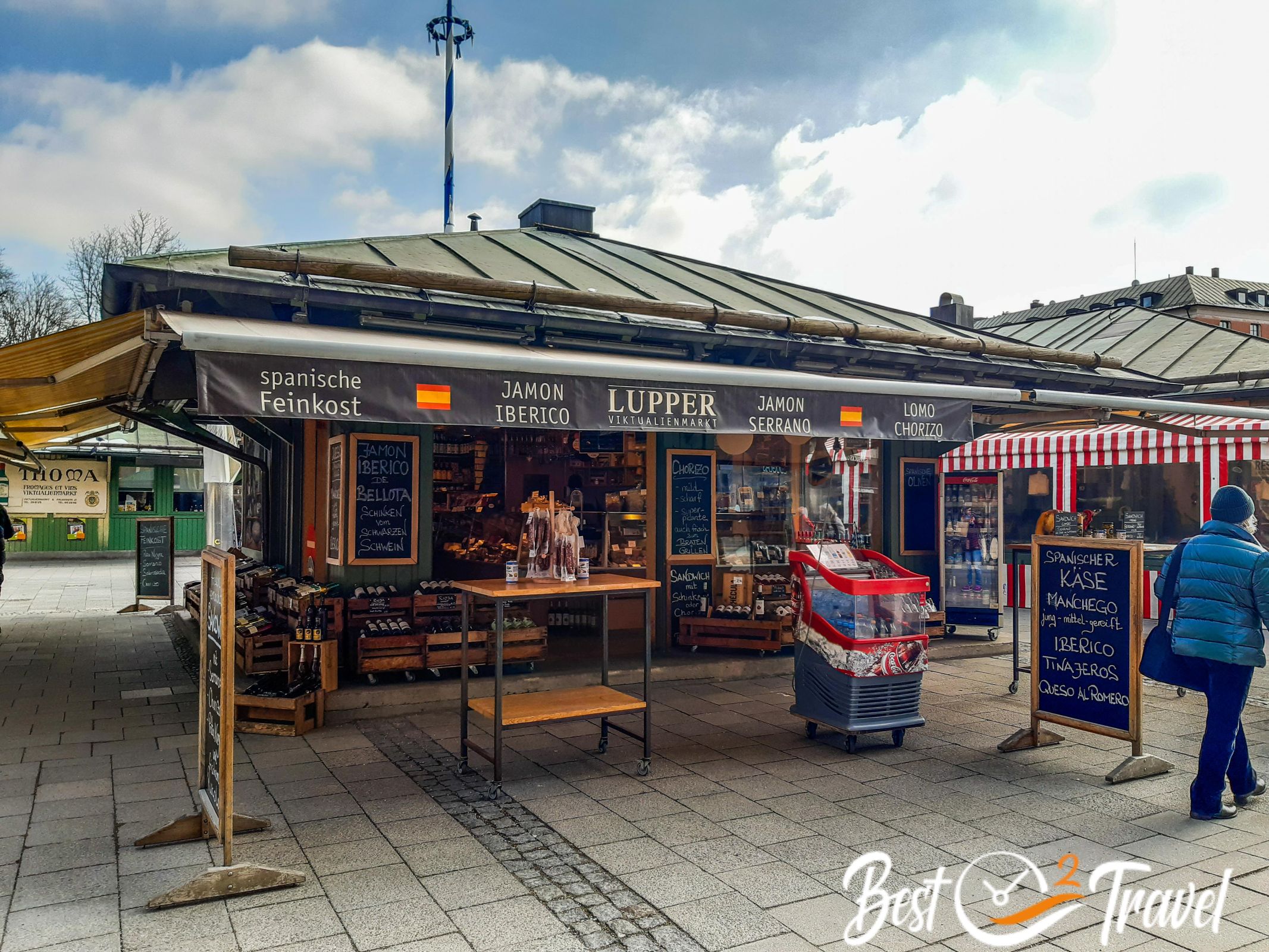
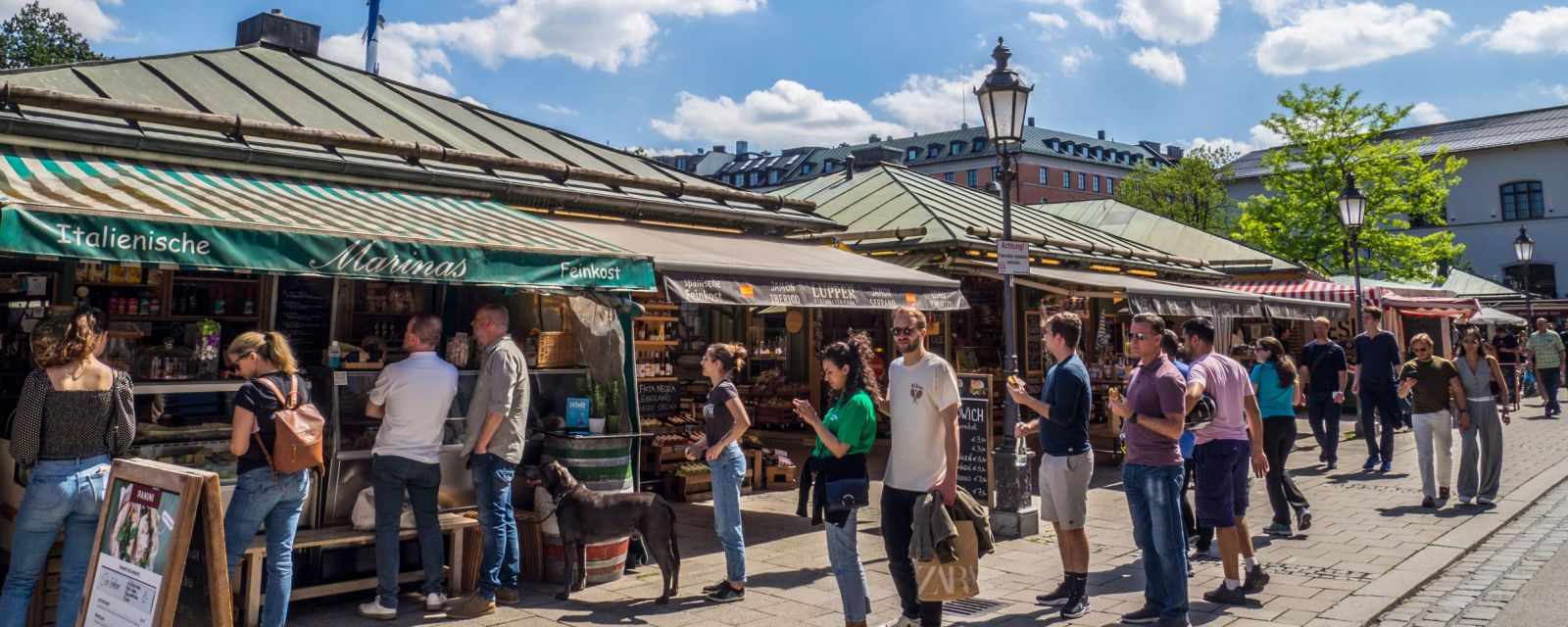
More than a hundred merchants offer everything from Bavarian classics like Leberkäs’ Semmeln to vegetarian and vegan meals, fresh juices and international delicacies. Prices can be a little higher due to the central location, but the quality is outstanding. One of my favourite stalls is the Spanish ham and cheese shop — try their spicy or Mediterranean ham spread.
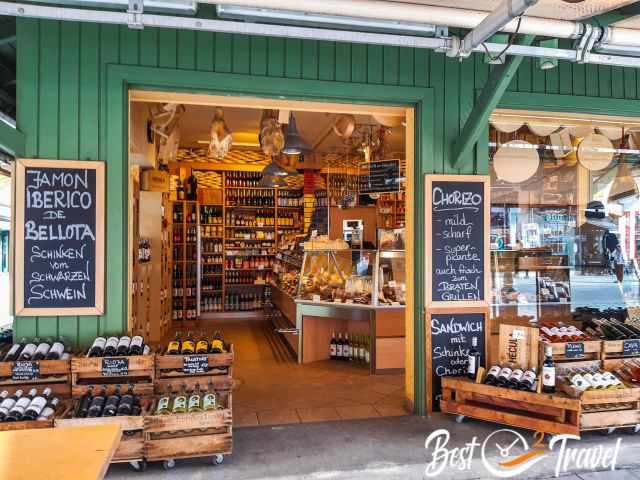
Munich has been my “hometown” for seven years, and I regularly update what’s new at the Viktualienmarkt. Some stalls have been here for decades, while others change from time to time. This keeps the market’s selection fresh, slightly different throughout the year, and strongly seasonal.
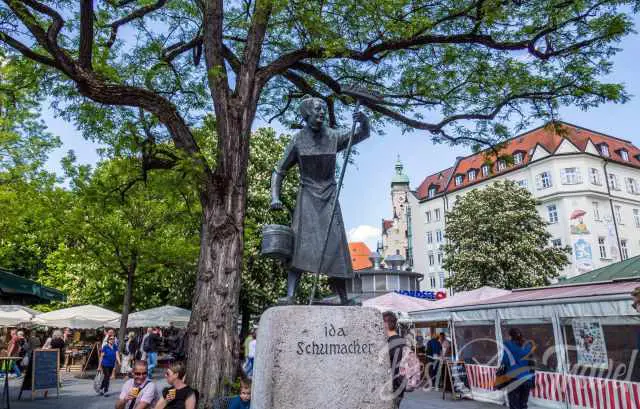
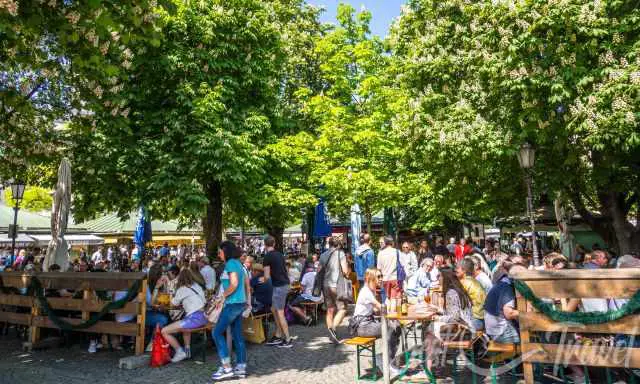
With more than 200 years of tradition, the Viktualienmarkt has grown from a farmers’ and herb market into a vibrant meeting place for locals and visitors from around the world. You’ll hear many languages, and if you sit down in one of the beer gardens under the chestnut trees, you’ll quickly mix with tourists and Munich residents alike. Except early in the morning, it’s always busy — but that’s exactly what makes this place so special. The name comes from the Latin word viktualien, meaning groceries or victuals.
When to Visit Viktualienmarkt
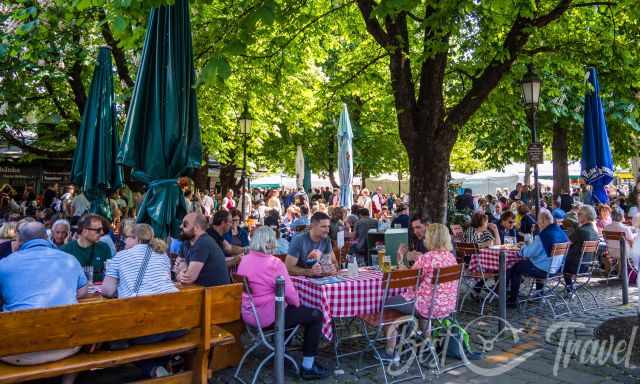
The Viktualienmarkt is busiest around midday, especially in spring and summer when every seat in the beer garden is taken. If you want to experience the typical flair — the mix of locals, tourists, food lovers and market regulars — visit from Thursday to Saturday around noon. Many stalls stay closed on Mondays, so the market feels quieter.
If you only want to buy groceries, come early in the morning before the crowds arrive. This is when vendors have time for a chat, and you can browse fresh produce without the midday rush.
Opening Hours
- Officially open Monday to Saturday, 8 am – 8 pm
- Closed on Sundays
- Many shops open as early as 7 am
- Some stalls open later or remain closed on Mondays
Fountains at Viktualienmarkt
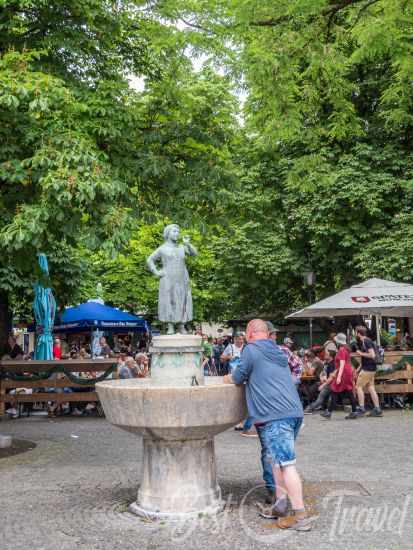
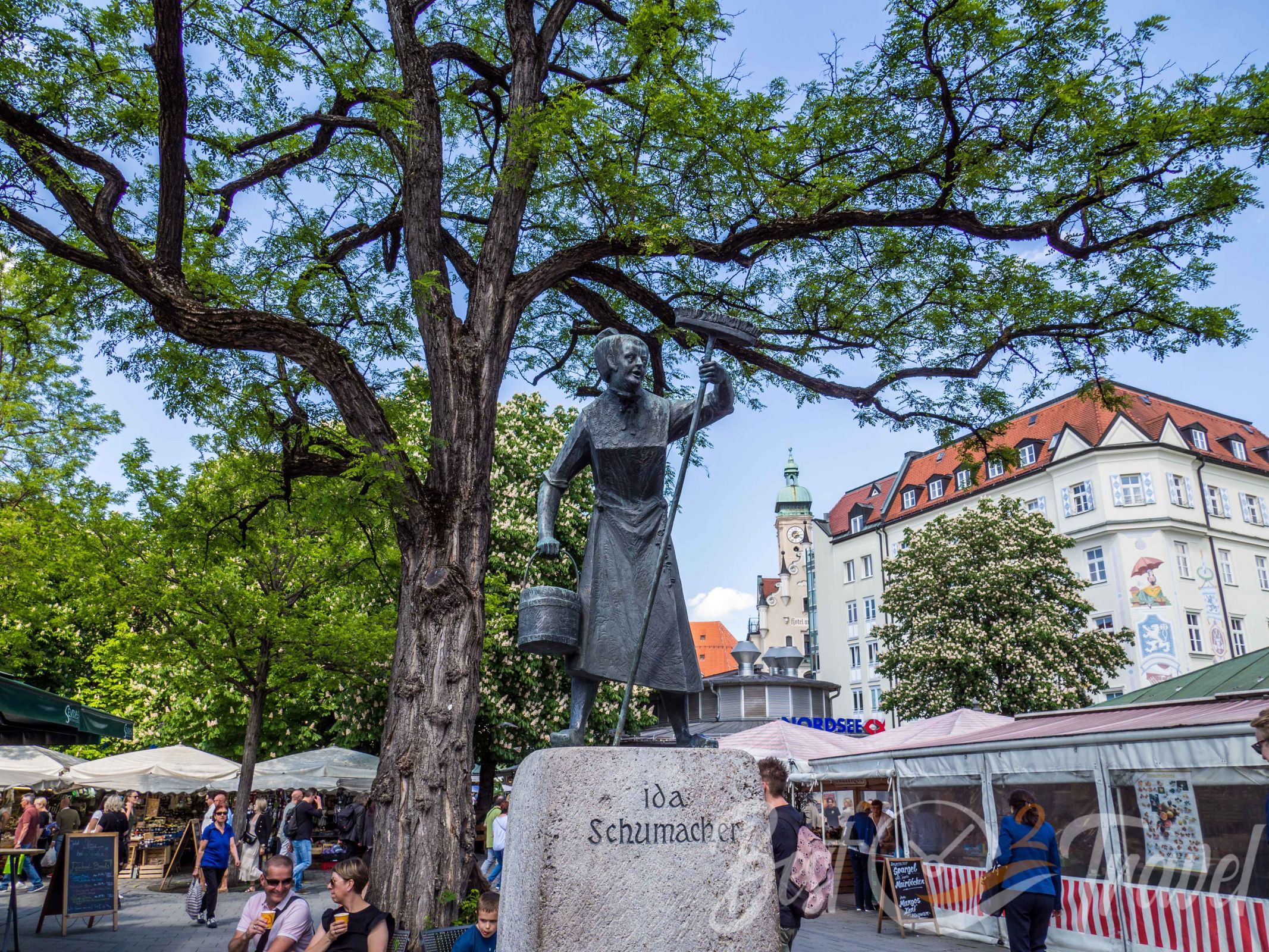
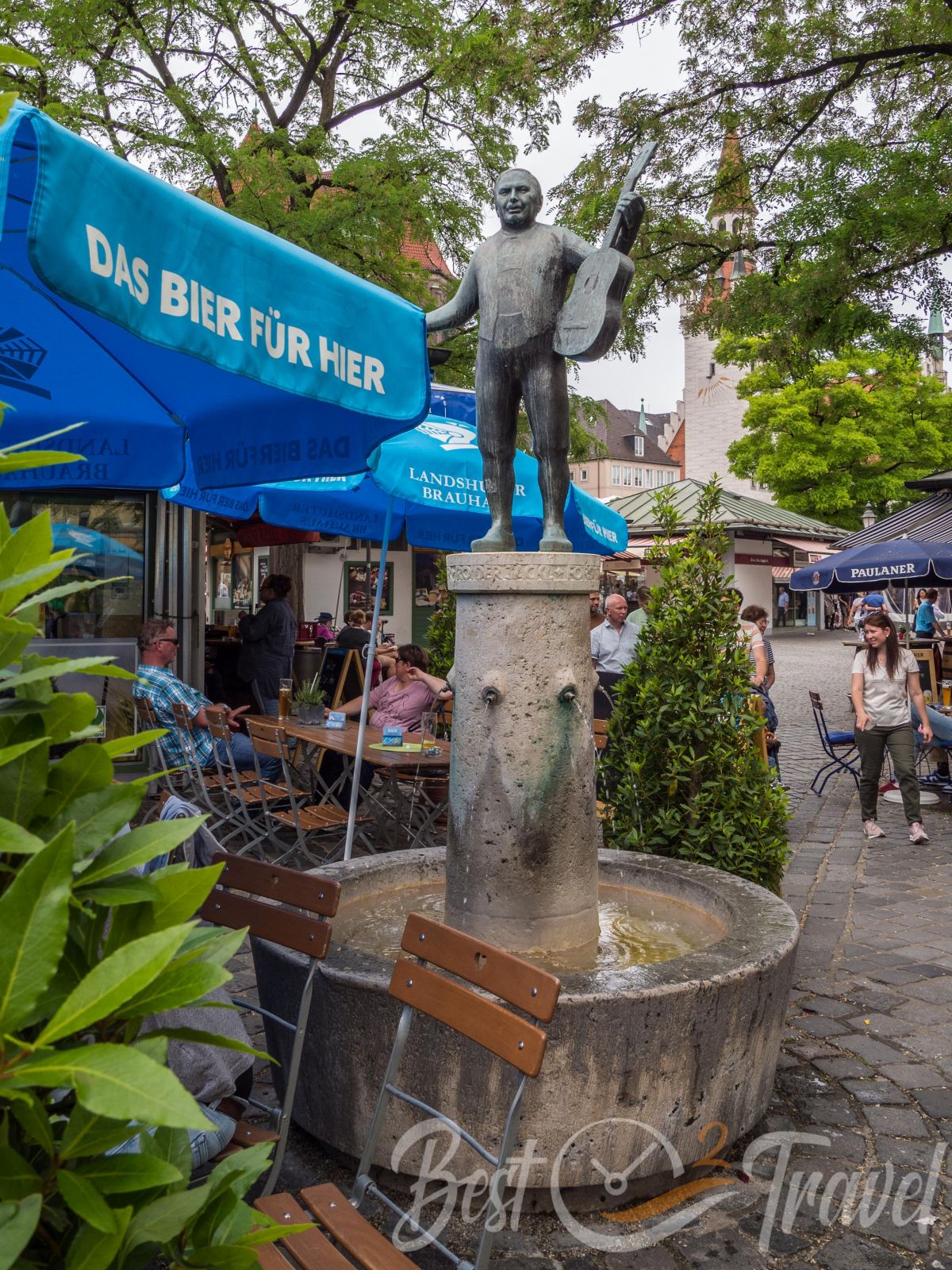
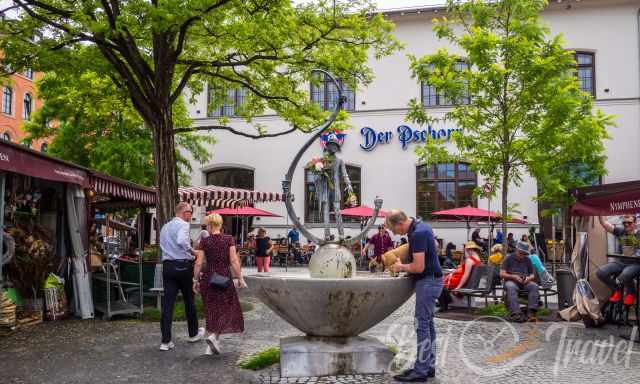
Four fountains are spread across the market, including the Karl‑Valentin Fountain, dedicated to famous Munich artists. They’re perfect for washing your hands, refilling your water bottle, or letting your dog drink.
Traditional Bavarian Food
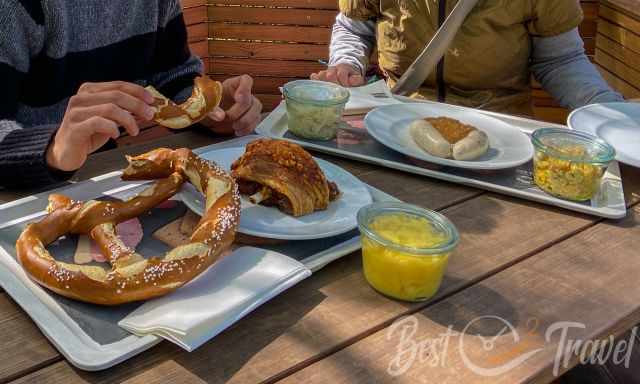
The Viktualienmarkt is a paradise for Bavarian food lovers. In the beer garden you’ll find classics like Brezel, Schweinshaxe, and Weißwürstel with sweet mustard. Meat‑eaters will be in heaven, but vegetarians also have good options — and there’s even a small stall offering tasty vegan dishes.
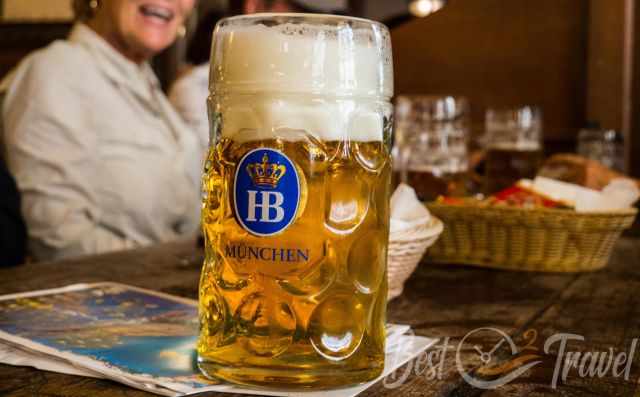
A Maß Bier (one litre) is part of Bavarian culture and another reason why Munich is so famous for its beer gardens.
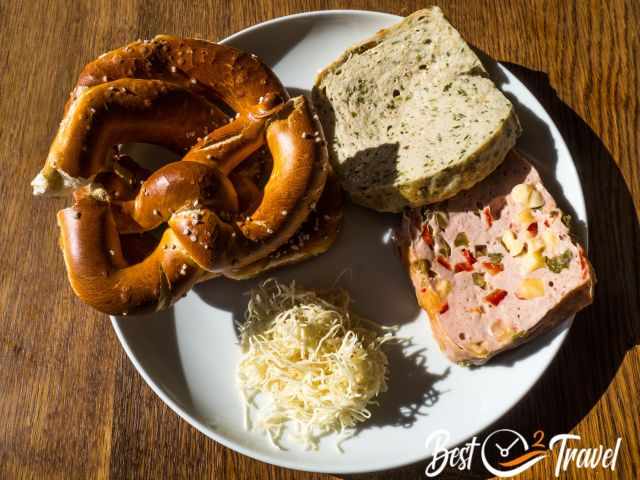
One speciality you shouldn’t miss is Kren — freshly grated horseradish. It’s spicy, aromatic and traditionally served with dishes like Tafelspitz with Meerrettichcreme, thinly sliced beef with a creamy horseradish sauce. Be careful when trying it for the first time — we love it, but it has a kick.
You’ll also find variations of Leberkäse, including Pizza Leberkäse and Weißwurst Leberkäse, made like the typical Bavarian white sausage.
What Is Leberkäse?
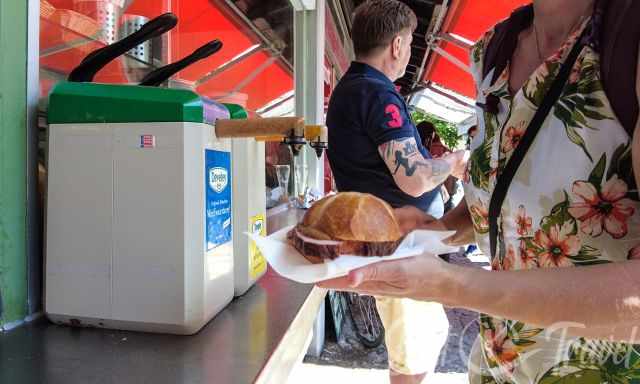
Leberkäse is a traditional Bavarian speciality often served in a Semmel (bread roll) with sweet or spicy mustard. Despite the name, it usually contains no liver today. The mixture is made from finely minced pork or beef, blended with bacon, potato starch, water, onions and a generous amount of spices. It’s baked in the oven in a loaf pan, similar to meatloaf, until the top forms a crispy brown crust.
Historically, Leberkäse was prepared with pork or veal liver — that’s where the name originates — but the modern version is liver‑free and much milder in taste. At the Viktualienmarkt, you’ll find excellent Leberkäs’ Semmeln, often with a choice of sweet or spicy mustard on top.
Do & Co Hotel Munich – My Top Pick in the City Center
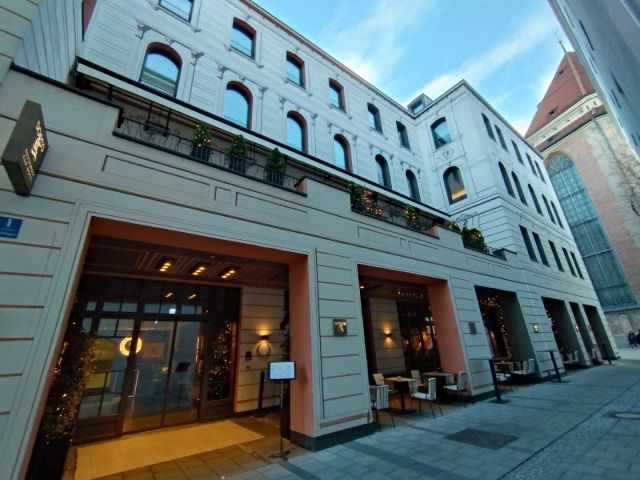
My top hotel recommendation in central Munich is the Do & Co Hotel. It’s modern, extremely central yet surprisingly quiet, with large, functional rooms and excellent cleanliness. The staff is friendly and helpful, and the hotel’s restaurants are outstanding. From here, you can walk to most major attractions, and the nearby underground station makes it easy to explore the entire city.
For a great route through Munich, see my Munich by Bike Guide.
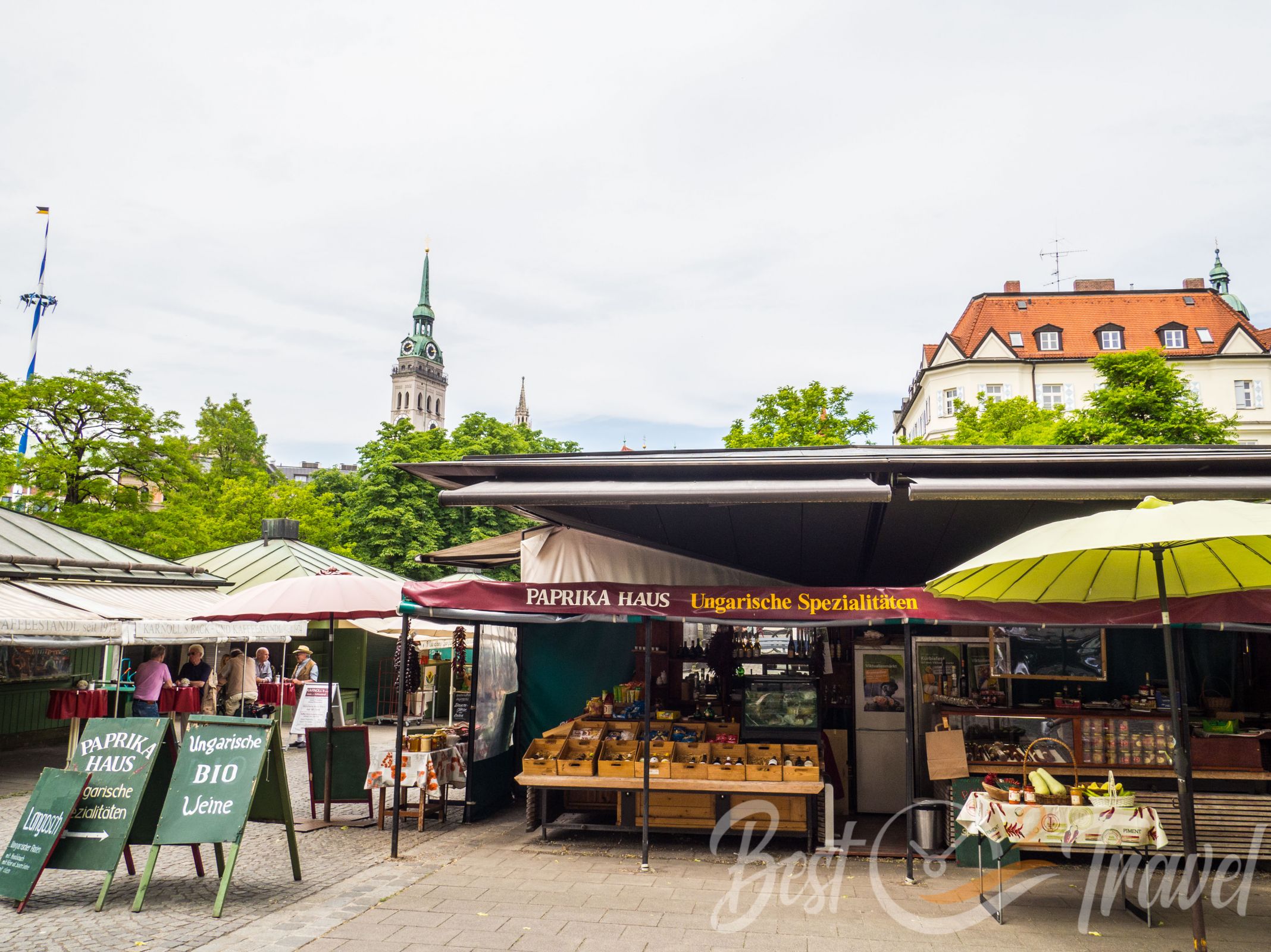
Traditional Maypole at Viktualienmarkt
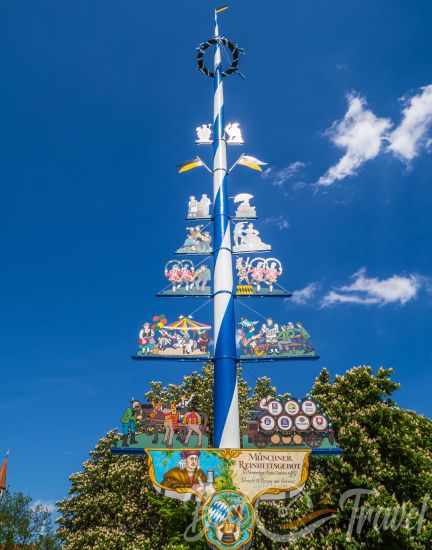
A 35‑meter spruce maypole stands in the middle of the Viktualienmarkt, one of Munich’s most beloved traditions. A new maypole is erected every year for the first of May, and preparing it is a surprisingly long and detailed process. The tree is logged months in advance, the bark and branches are removed, and the trunk must dry for around three months before it is painted white in April.
Since 1962, the raising of the maypole on May 1st has been a major festivity in Munich, attracting locals and visitors alike. It’s a colourful symbol of Bavarian culture and an unmistakable landmark of the Viktualienmarkt.
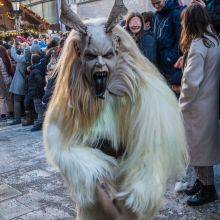
If you enjoy local traditions, Munich’s Krampus Run is another highlight.
What Can You Buy at Viktualienmarkt?
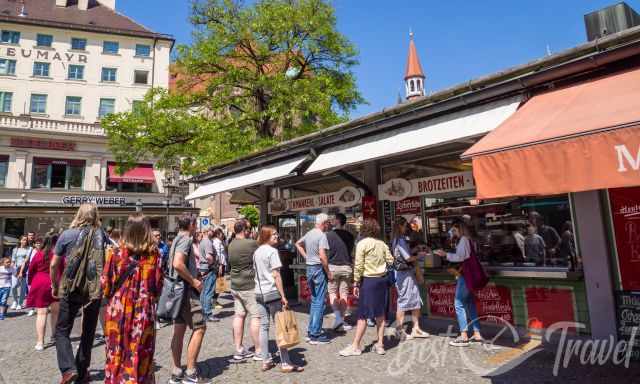
Two hundred years ago, the Viktualienmarkt supplied Munich with everyday food essentials. Today, it offers a mix of local Bavarian products and delicacies from around the world — fresh fruit, vegetables, cheese, meat, fish, flowers, baked goods, antipasti, honey, and handmade souvenirs. With around 140 stalls, the market is a paradise for food lovers and curious visitors.
Fruits and Vegetables
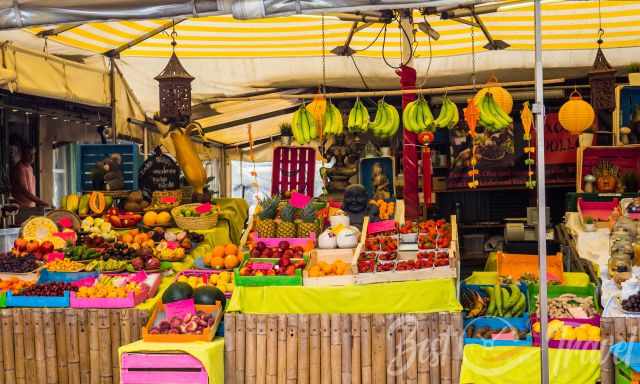
Seasonal and exotic fruits and vegetables are available at several stalls. May and June are especially delicious months for strawberries and asparagus. You’ll also find tropical fruits, herbs, and beautifully arranged veggie displays.
Local and European Cheese
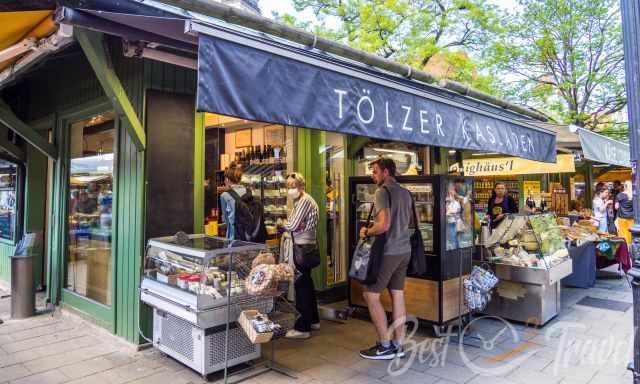
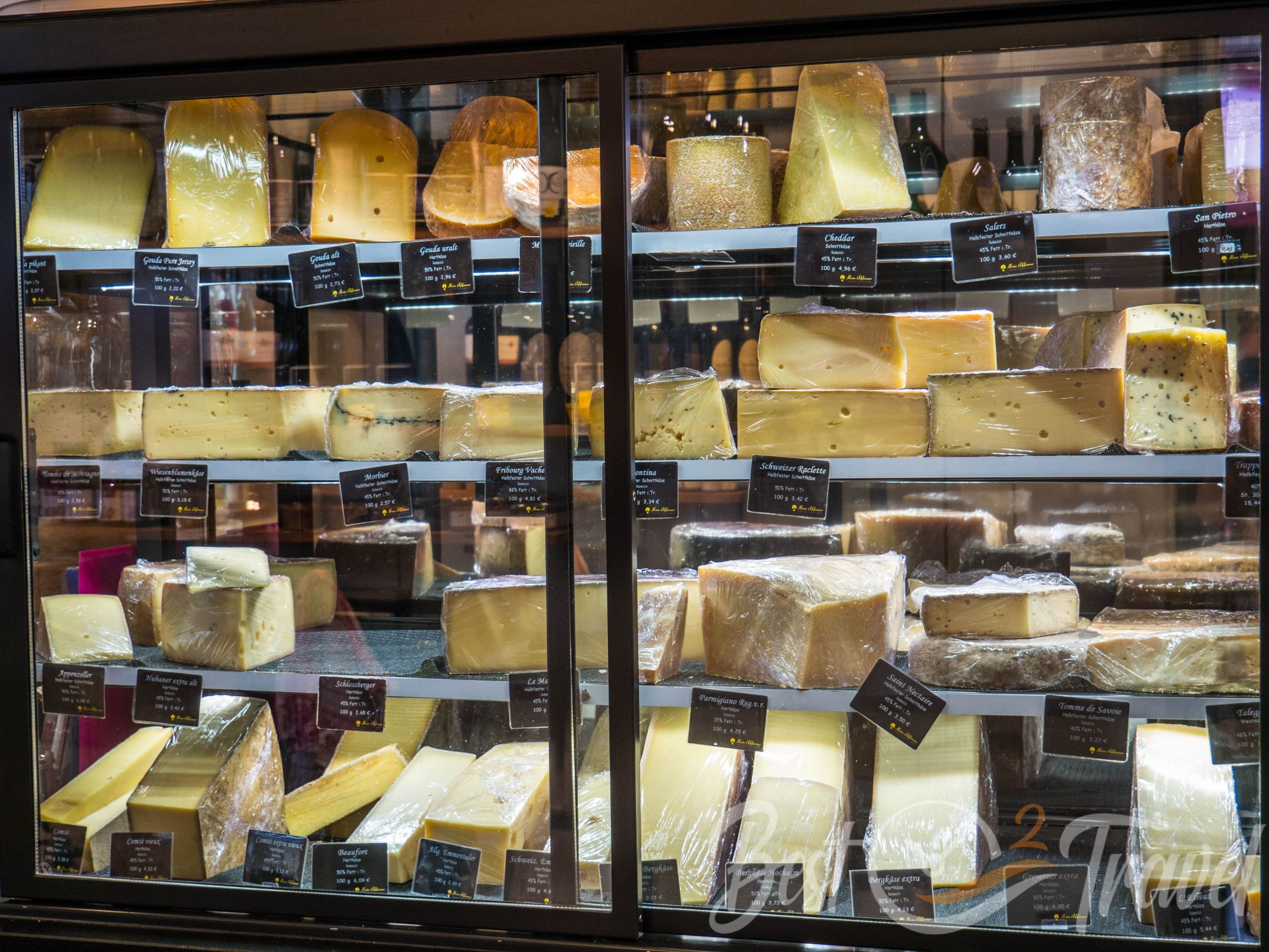
Around ten cheese stalls offer dairy products from the nearby Alps and across Europe. Our favourite is Tölzer Käseladen, known for exceptional quality and friendly staff who happily explain where each cheese comes from. I love their old Swiss Emmentaler and the Wiesenblumenkäse, a cheese coated with meadow flowers.
Butcher Shops
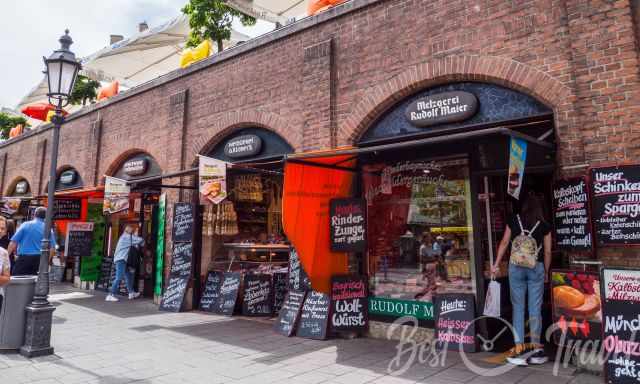
Most butcher shops are located next to each other. Meat and ham have been sold in Munich for more than 700 years — originally on the outskirts due to the smell and lack of cooling.
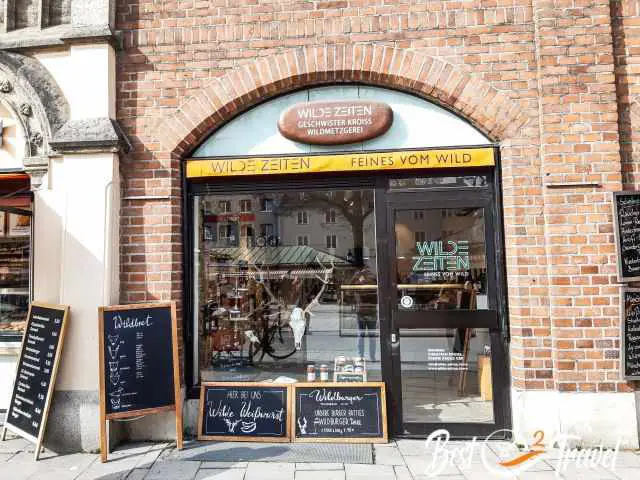
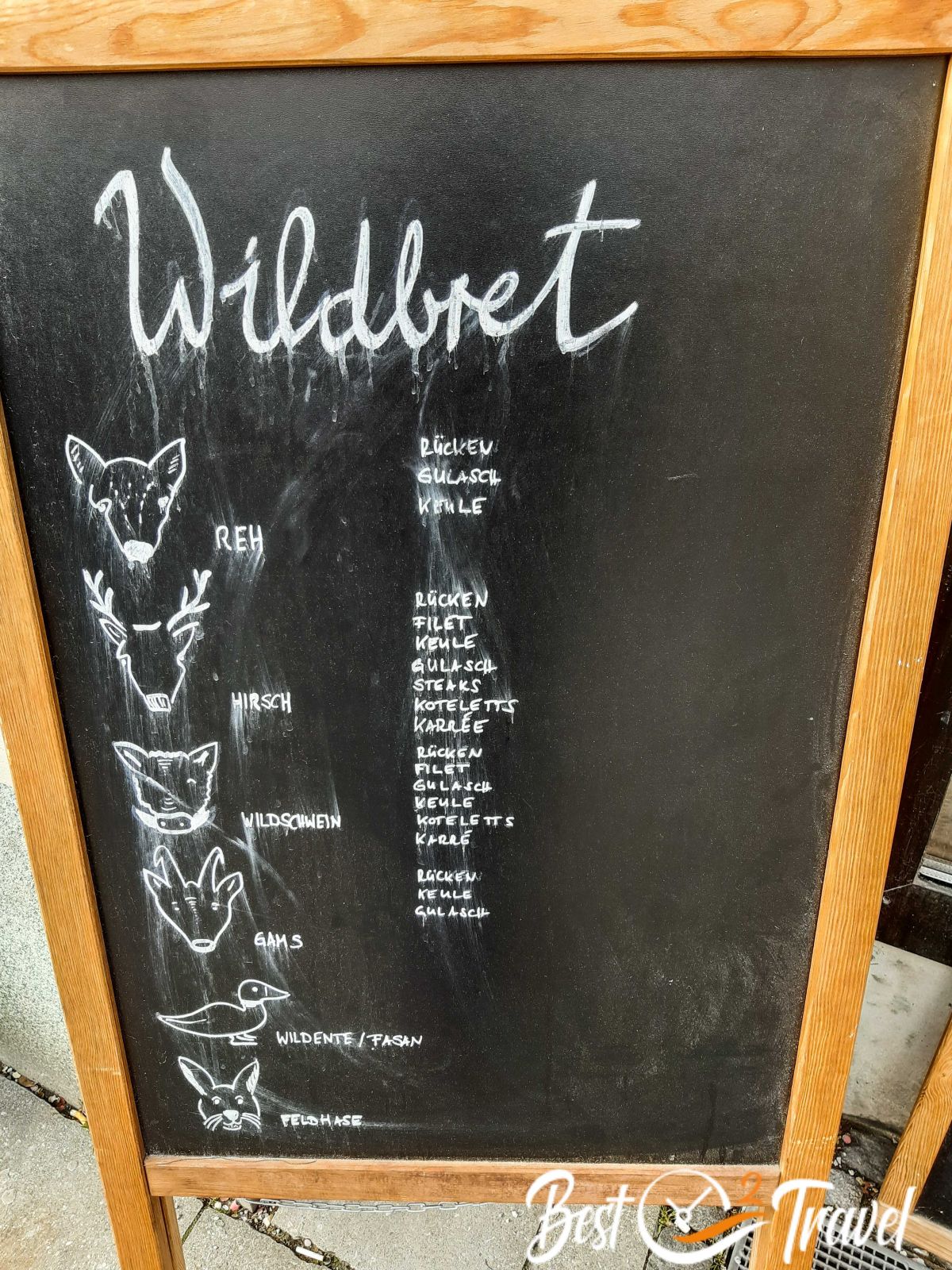
Today, you’ll find traditional butchers as well as modern ones like Wilde Zeiten, a new stall specialising in game meat, which has become increasingly popular in Germany. Do you wish to know what they exactly offer? Check out this photo.
Munich Soup Kitchen
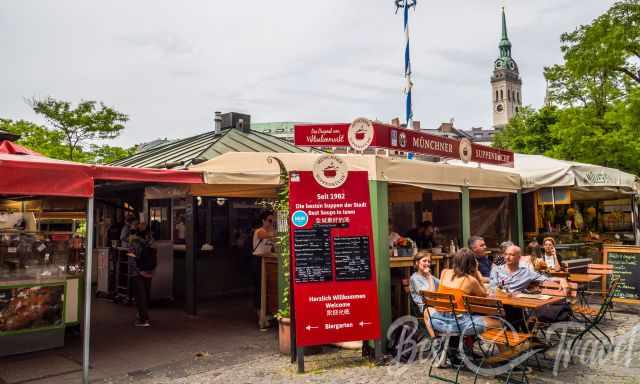
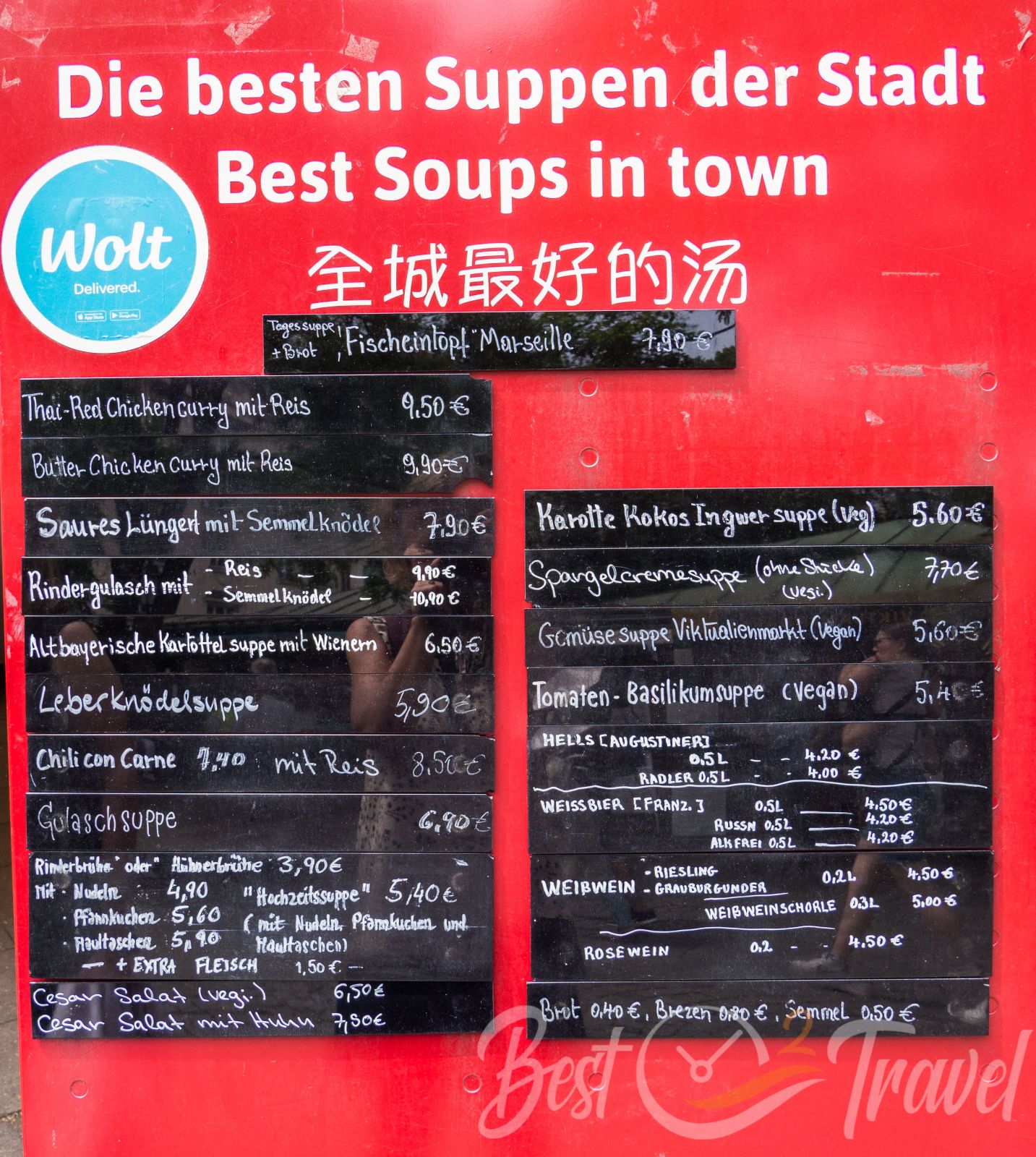
The Munich Soup Kitchen offers a large selection of delicious soups — vegetarian, vegan, and meat options — all at reasonable prices. It’s ideal for a quick lunch, though you may have to wait a few minutes because it’s so popular. Soup menu in detail
Mushrooms
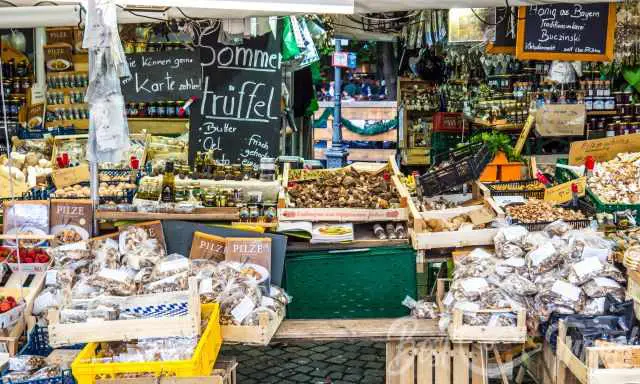
The mushroom stall sells fresh mushrooms mainly in autumn, including fragrant porcini. They also offer dried porcini, truffles, herbs, spices, oils and more.
Greek‑Style Spreads and Olives
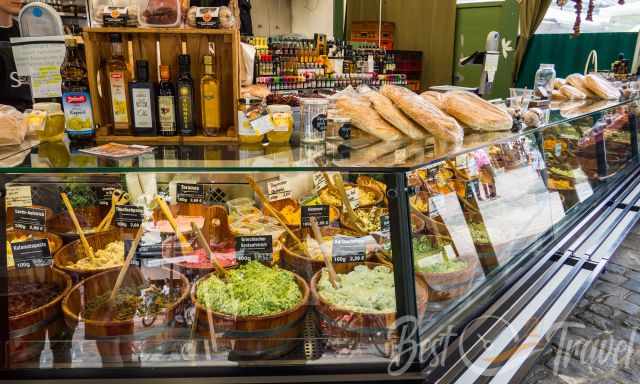
This stall offers antipasti, olives, fresh pasta, olive oils and pita bread. Their spreads are perfect to take to the English Garden for a picnic.
Juice Bar
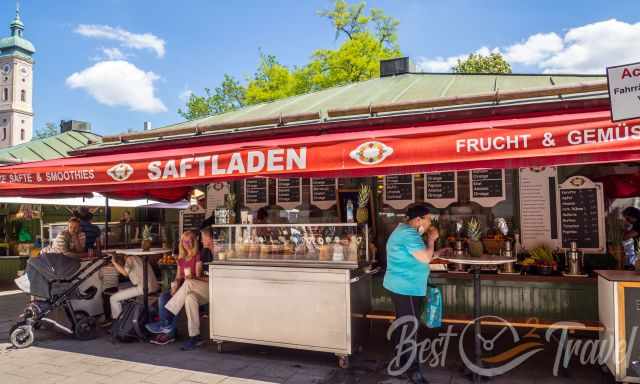
Freshly squeezed fruit and vegetable juices provide a healthy energy boost. Despite the central location, prices are reasonable. Several stalls offer juices, but this one is my favourite.
Seafood From Around the World
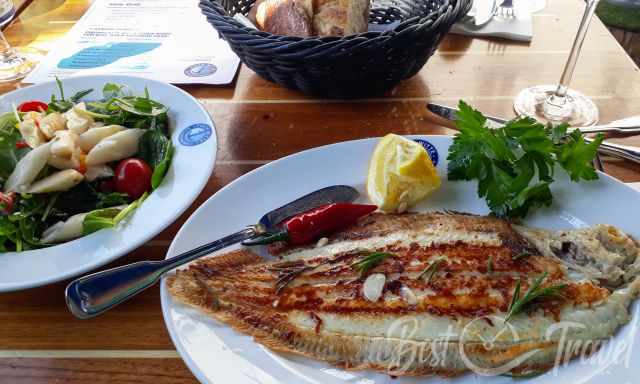
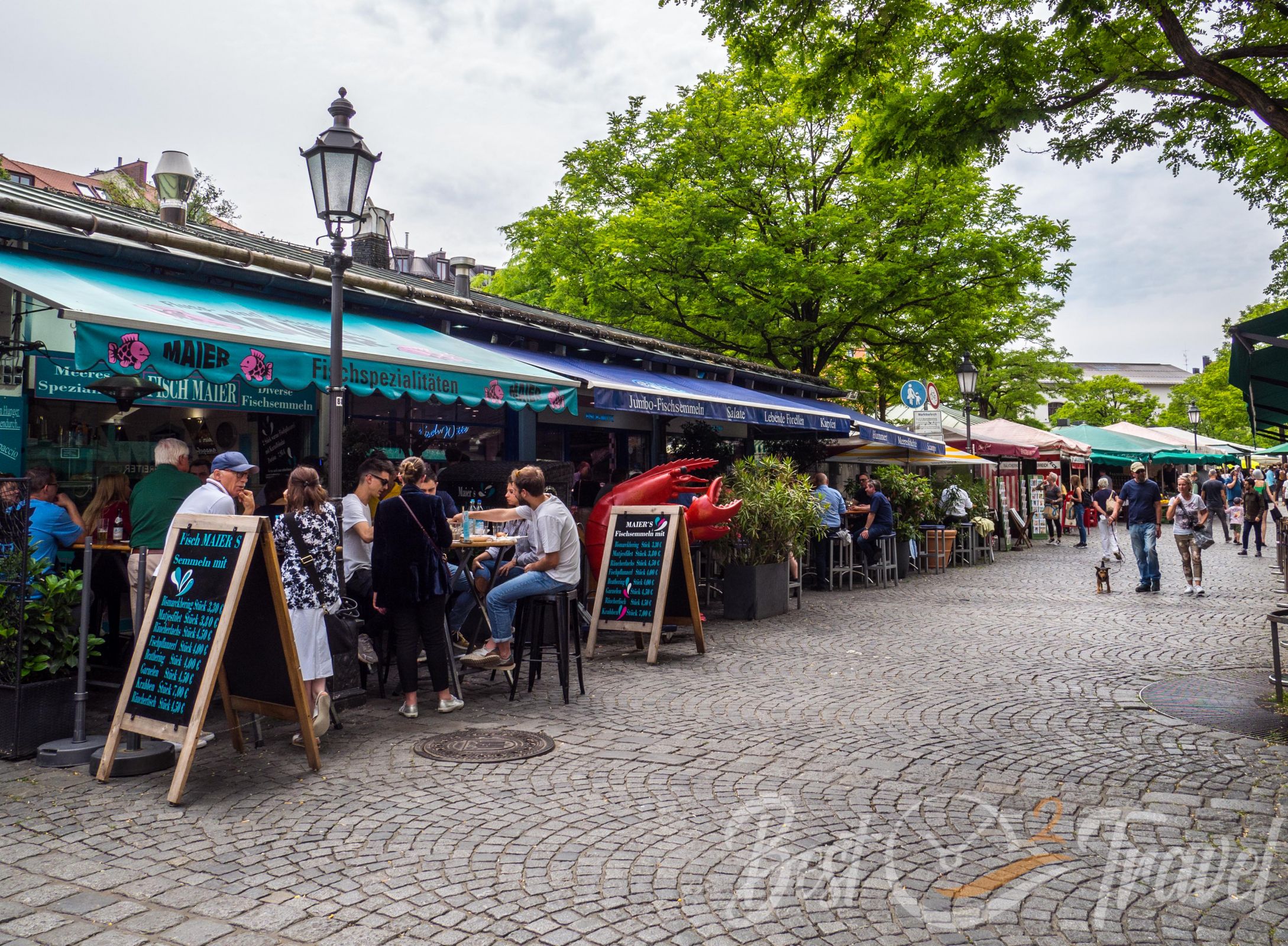
Four seafood shops and restaurants serve fresh fish and clams. Indoor and outdoor seating is available, but reservations are recommended. Prices are a bit higher, yet the quality is excellent — my grilled sole was outstanding.
Typical Bavarian Bakeries
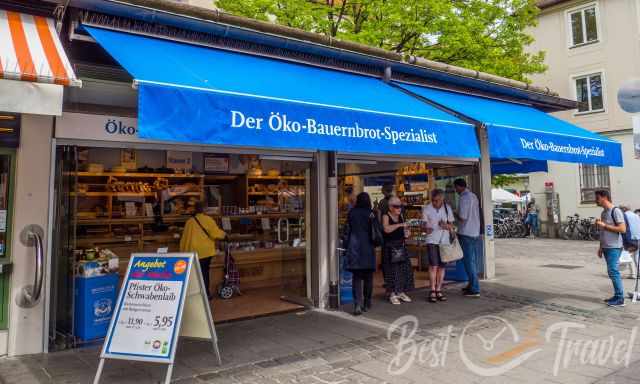
Around ten bakeries sell giant pretzels, bread, cakes and cookies. Hofpfisterei, once the emperor’s bakery under Ludwig IV, is famous for its stone‑oven bread and natural sourdough. Fritz bakery and many others also offer excellent quality.
Organic Food
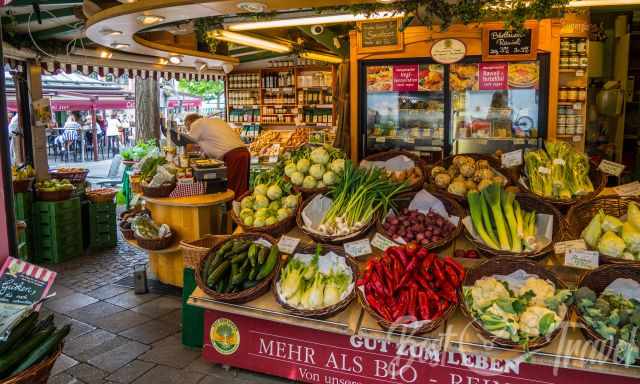
For organic products, visit Lebe Gesund (“Live Healthy”). They offer a wide variety of organic vegetables, fruits, bread, pestos and homemade goods.
Fresh Flowers
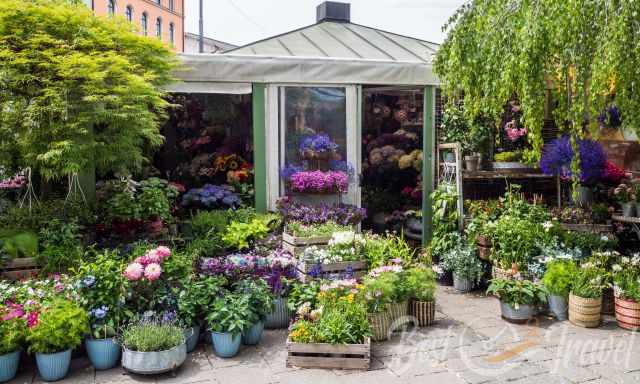
Several flower stalls sell seasonal and exotic flowers, adding colourful spots throughout the market. Flowers bought here last noticeably longer.
Honey
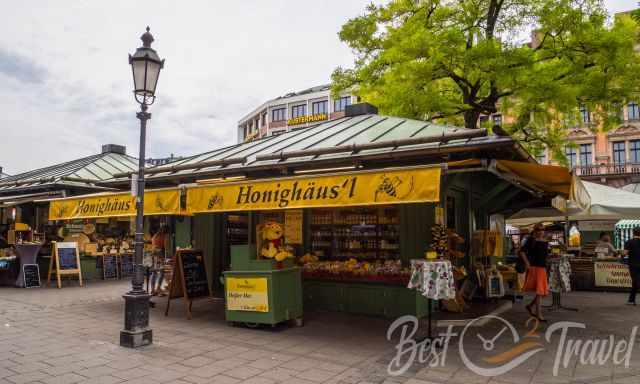
If you love honey, this is the place. You’ll find different types of honey, honey wine, sweets, and natural care products. The honey wine is sweet — and a bit treacherous.
Souvenirs
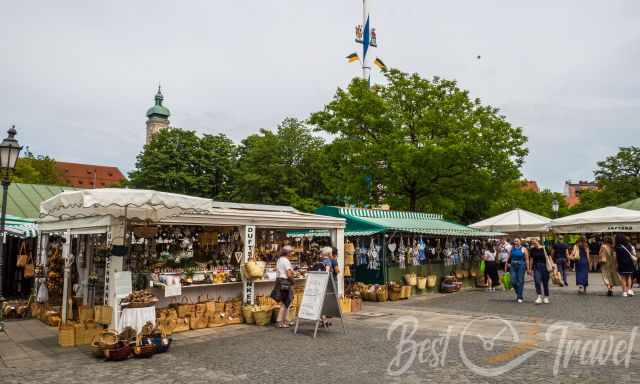
Craft and souvenir stalls are spread across the market, offering baskets, handmade goods, and small gifts to bring home.
History of the Viktualienmarkt
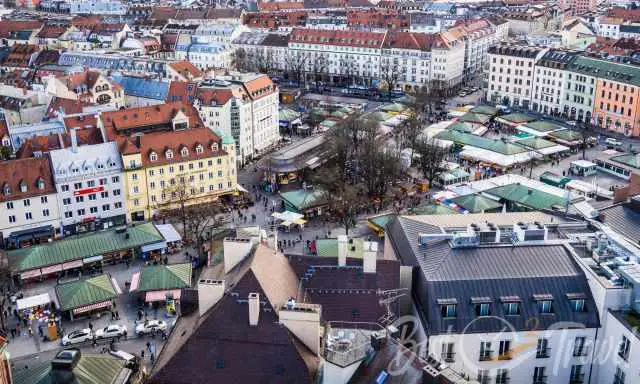
The Viktualienmarkt has been Munich’s central food market for more than 200 years. Originally, farmers and herb sellers traded at Marienplatz — then called Schrannenplatz — until the early 19th century. As the city grew, the market needed more space and moved about 200 meters to its current location. By the late 1800s, it already covered around 19,000 square meters, becoming one of the largest markets in Bavaria.
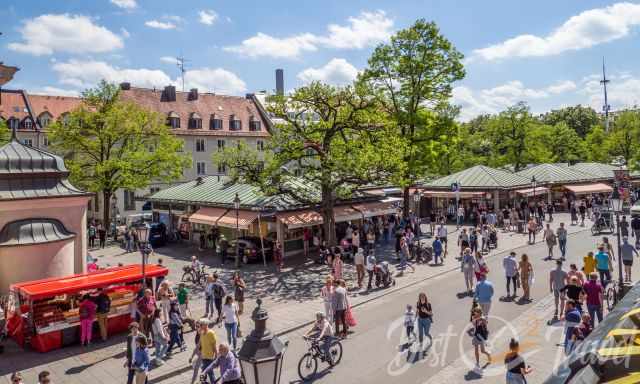
In 1852, the Schrannenhalle was built next to the old city wall, a large market hall that today forms part of Munich’s Großmarkthalle. During World War II, the Viktualienmarkt suffered heavy damage, and there were serious discussions about demolishing it entirely to make room for apartment blocks and office buildings.
Fortunately, the city council decided to rebuild the market — a costly but culturally important decision. Thanks to this effort, a piece of Munich’s history was preserved. This commitment to tradition is one of the reasons Munich feels so unique to me.
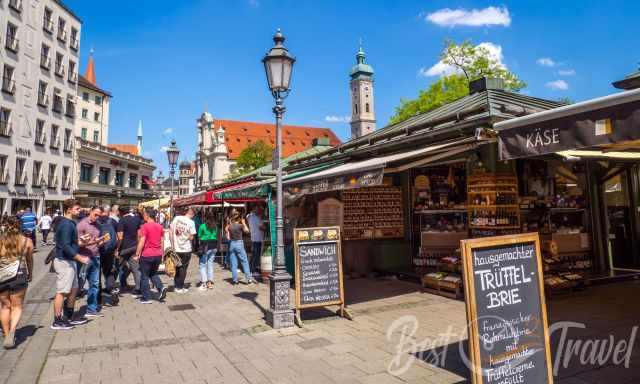
Today, the Viktualienmarkt is not only a place to shop but a lively meeting point for locals and visitors, blending centuries‑old heritage with modern food culture.
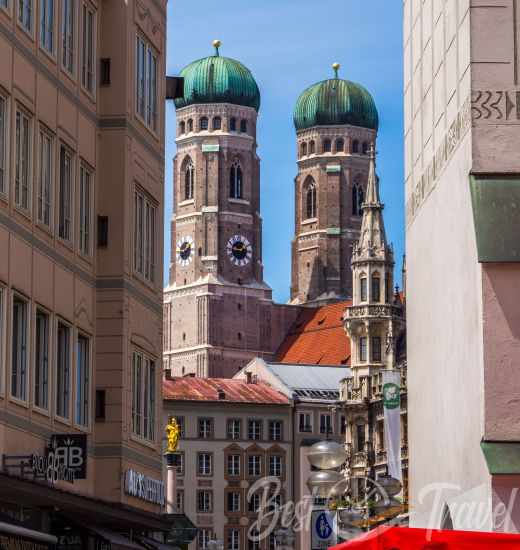
For more Munich experiences, check out my Munich by Bike Guide or visit the city in December for the dramatic Krampus Run.
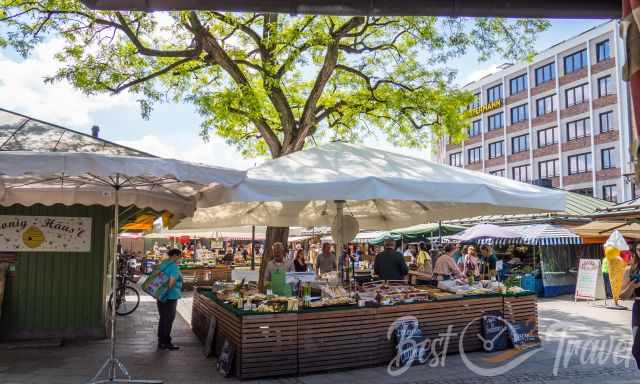
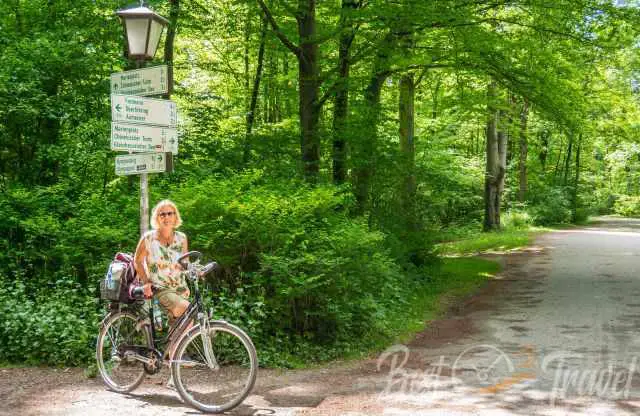
Viktualienmarkt has around 140 stalls, far more than I can cover here, but the ones above are my personal favourites. The quality across the market is outstanding. And when I need a break from the bustle, I hop on my bike and cycle through the English Garden — one of the best ways to experience Munich.
These are my recommended tours via GetYourGuide, which has an excellent cancellation policy. Thx for booking via my website! With your support, I am able to provide all the information first-hand. Tour prices are at no extra cost!
Best Months to Visit
Location and Tips

More than a hundred merchants offer their goods, some shops sell snacks and meals also for vegetarians and vegans, take a vitamin power and drink a fresh juice. Most of the vendors speak English, and credit cards are widely accepted.
Do you want to obtain the usage right for my images? Contact me, but I will take action against picture theft.