
When Is the Best Time
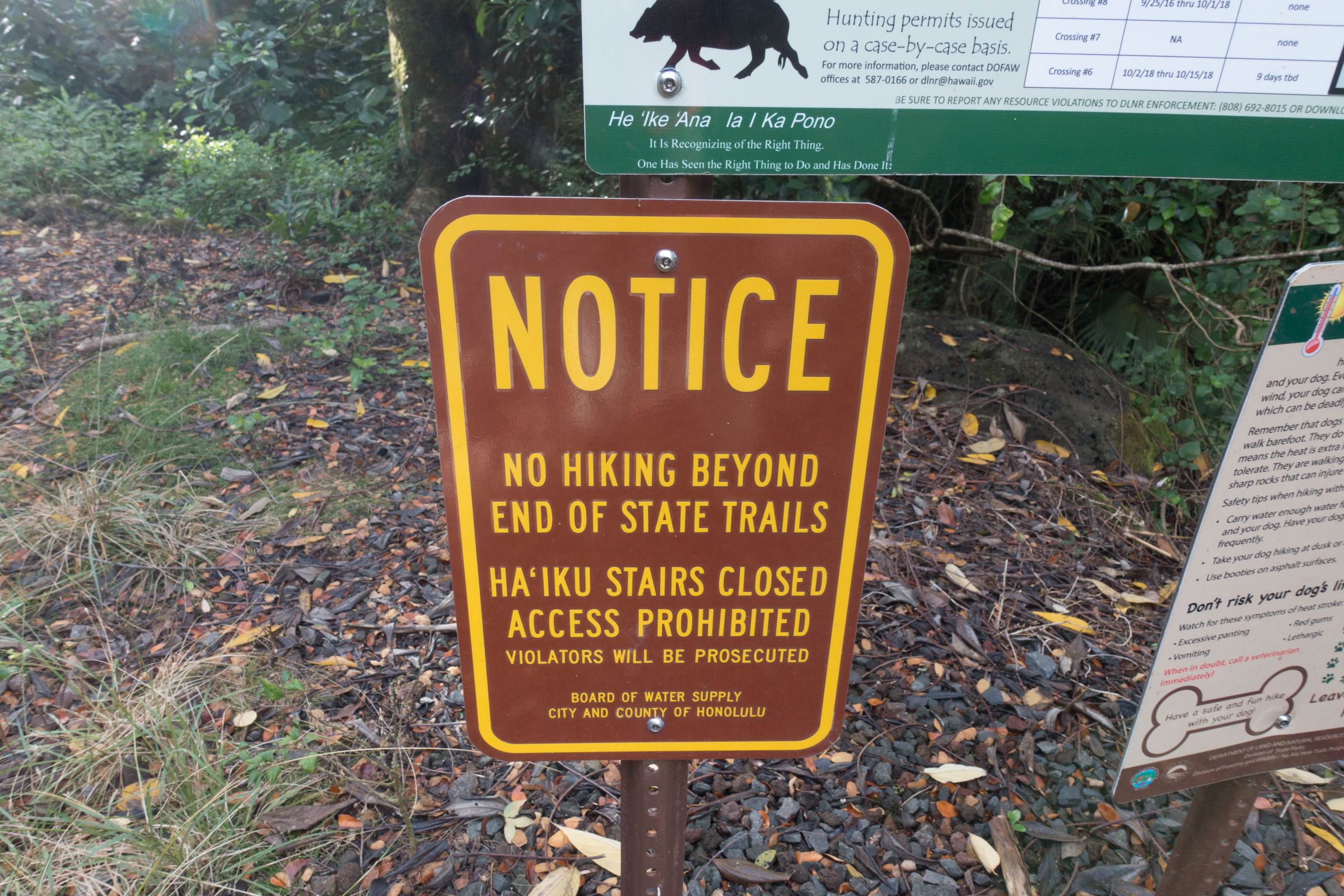
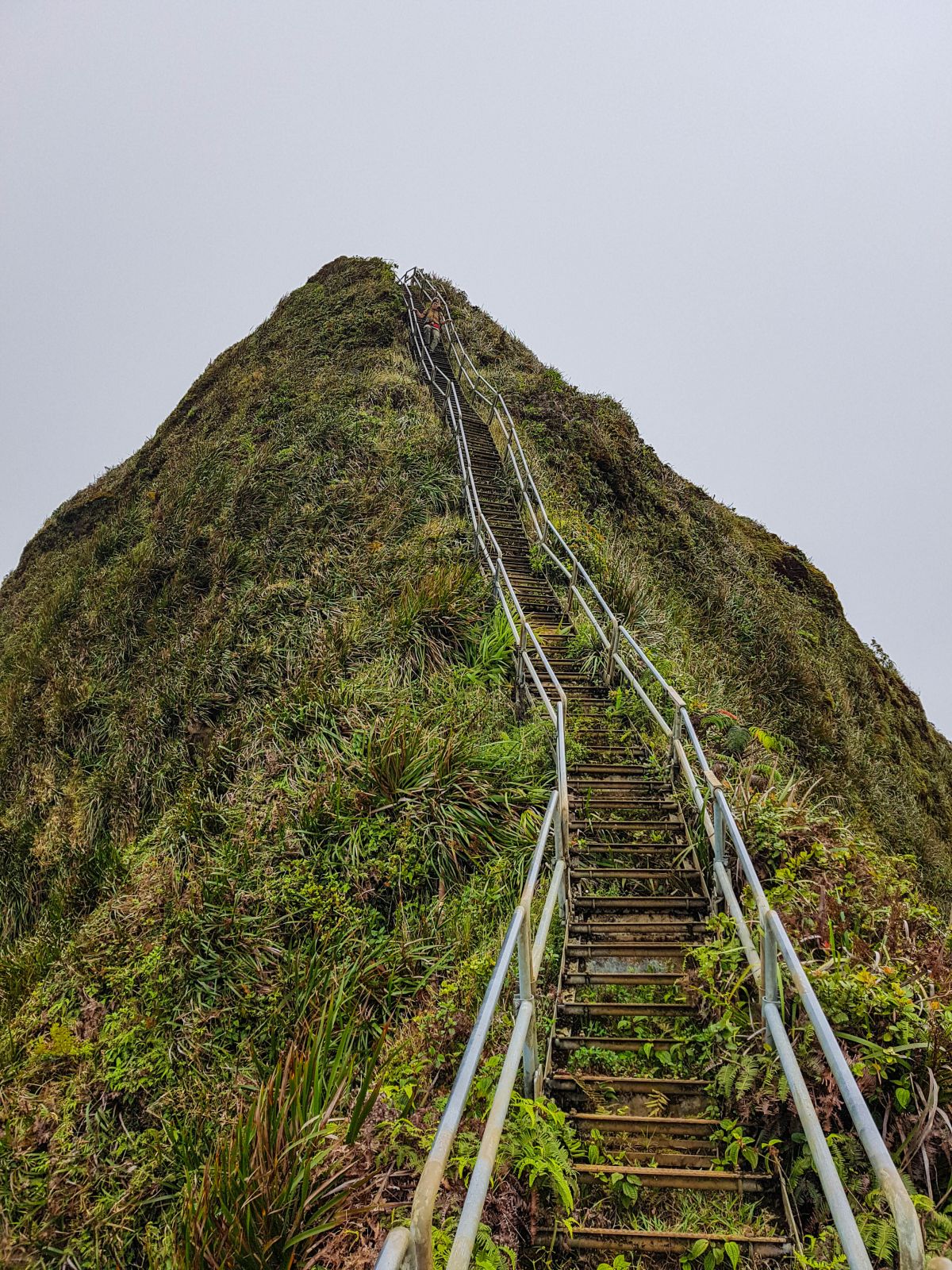
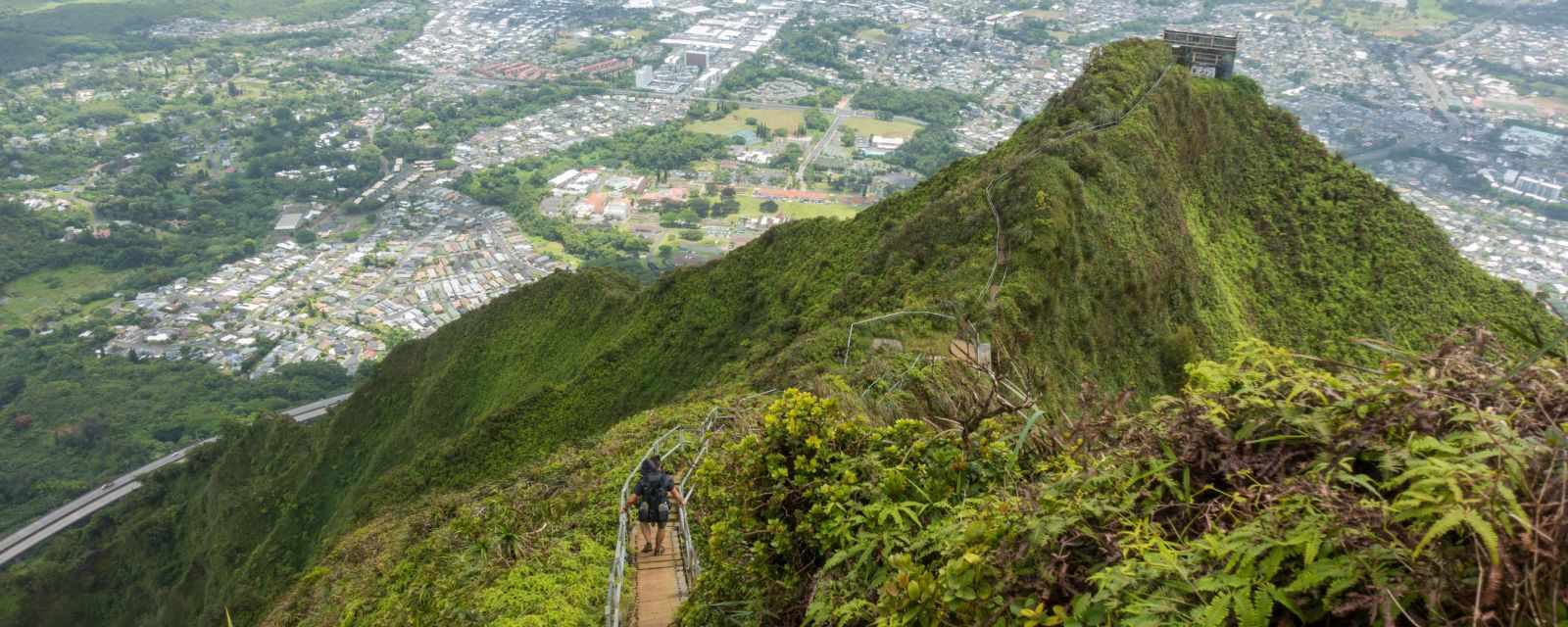
The Haiku Stairs on Oʻahu — better known as the Stairway to Heaven — are one of Hawaii’s most iconic and controversial landmarks. Today the stairs are officially closed, and hiking them is illegal. Anyone caught trespassing faces a $1,000 fine, a mandatory court appearance, and increasing police enforcement, including helicopter patrols and officers stationed at the summit. Despite the closure, dozens of hikers are still caught every week.
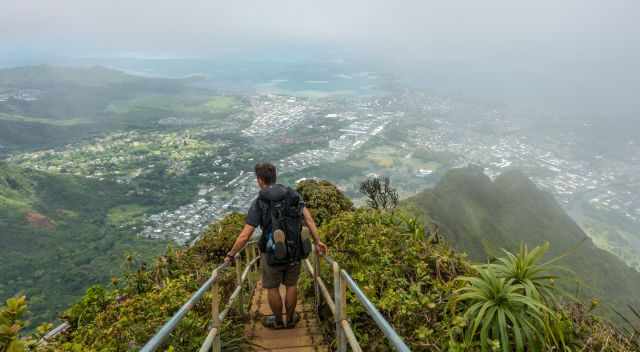
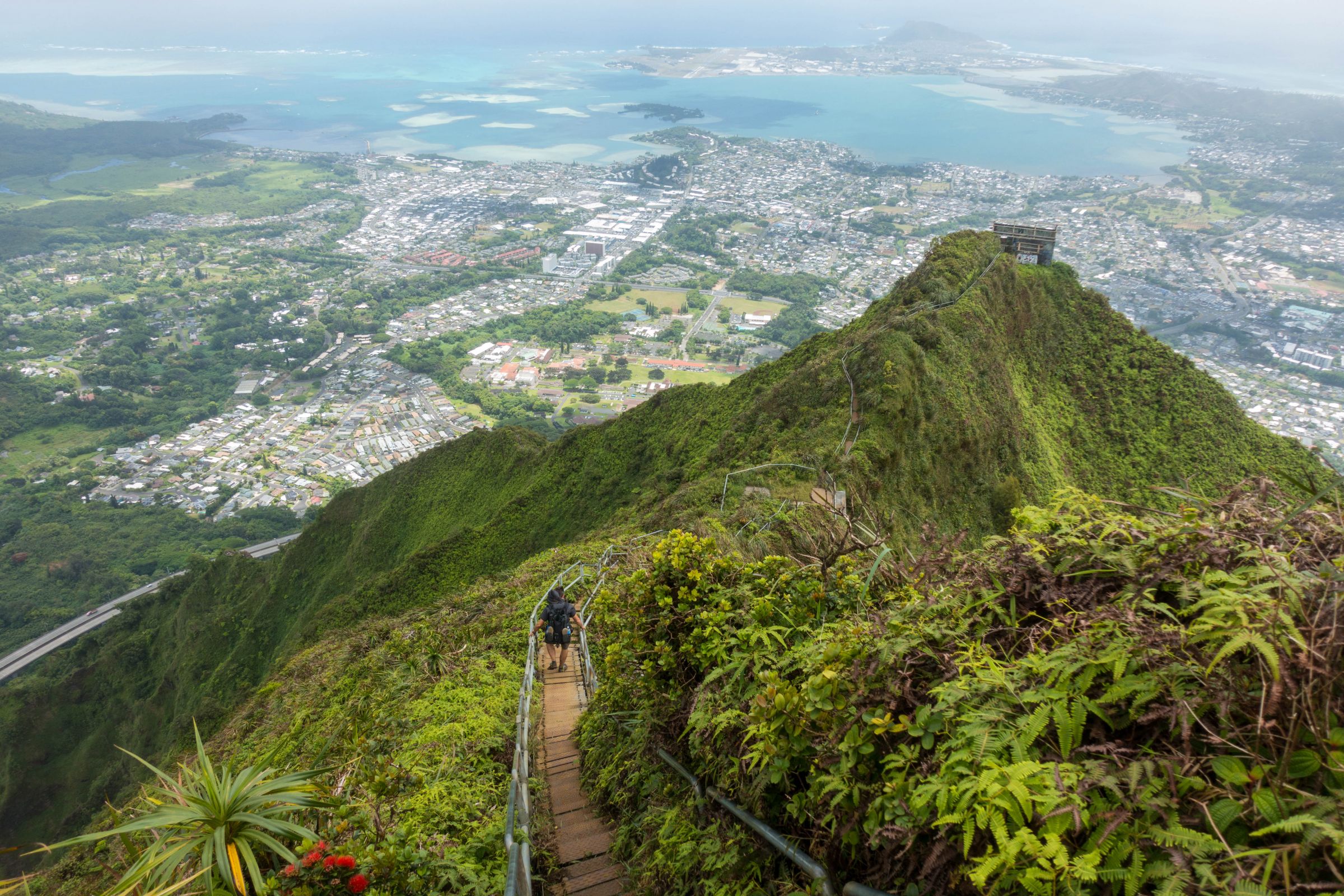
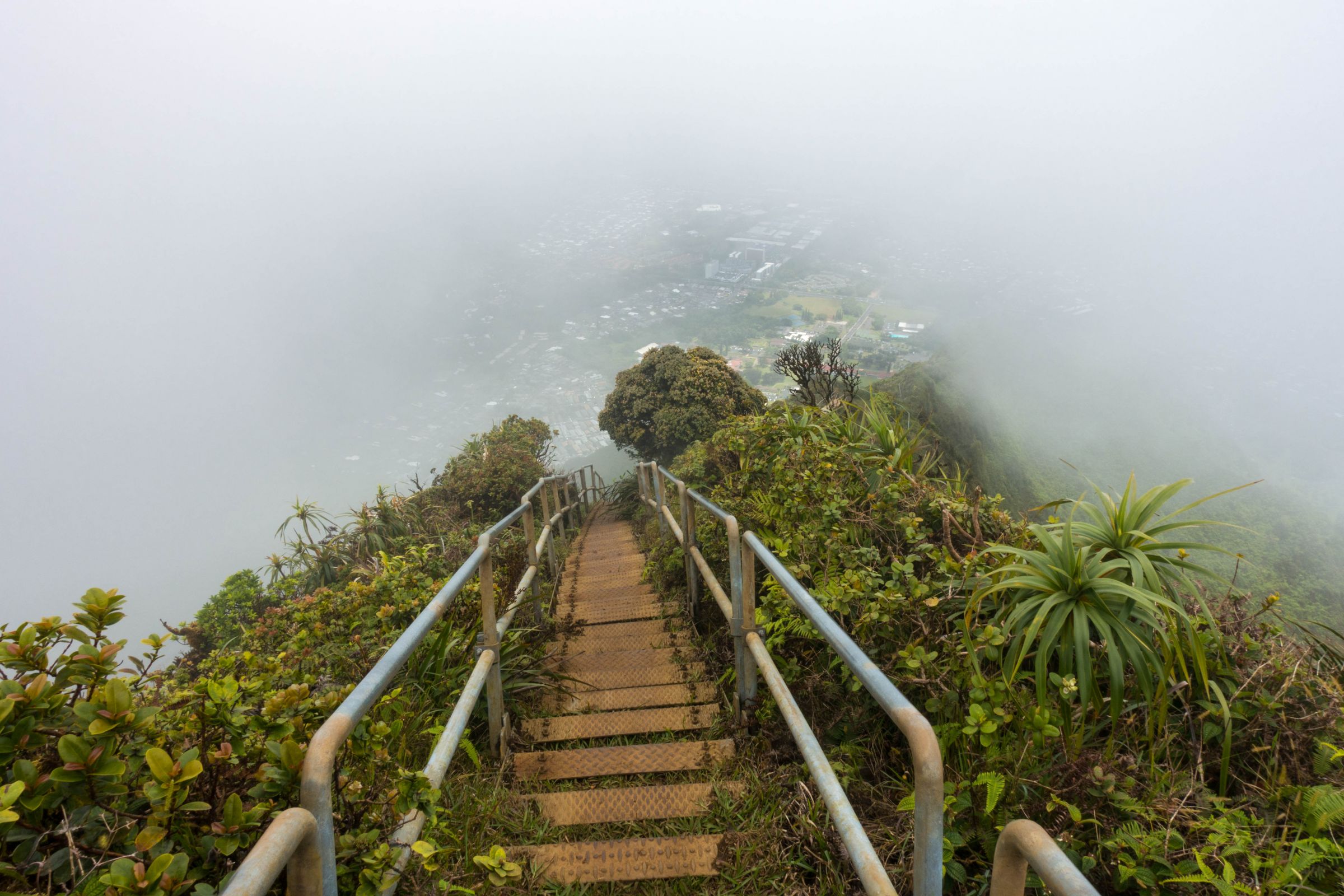
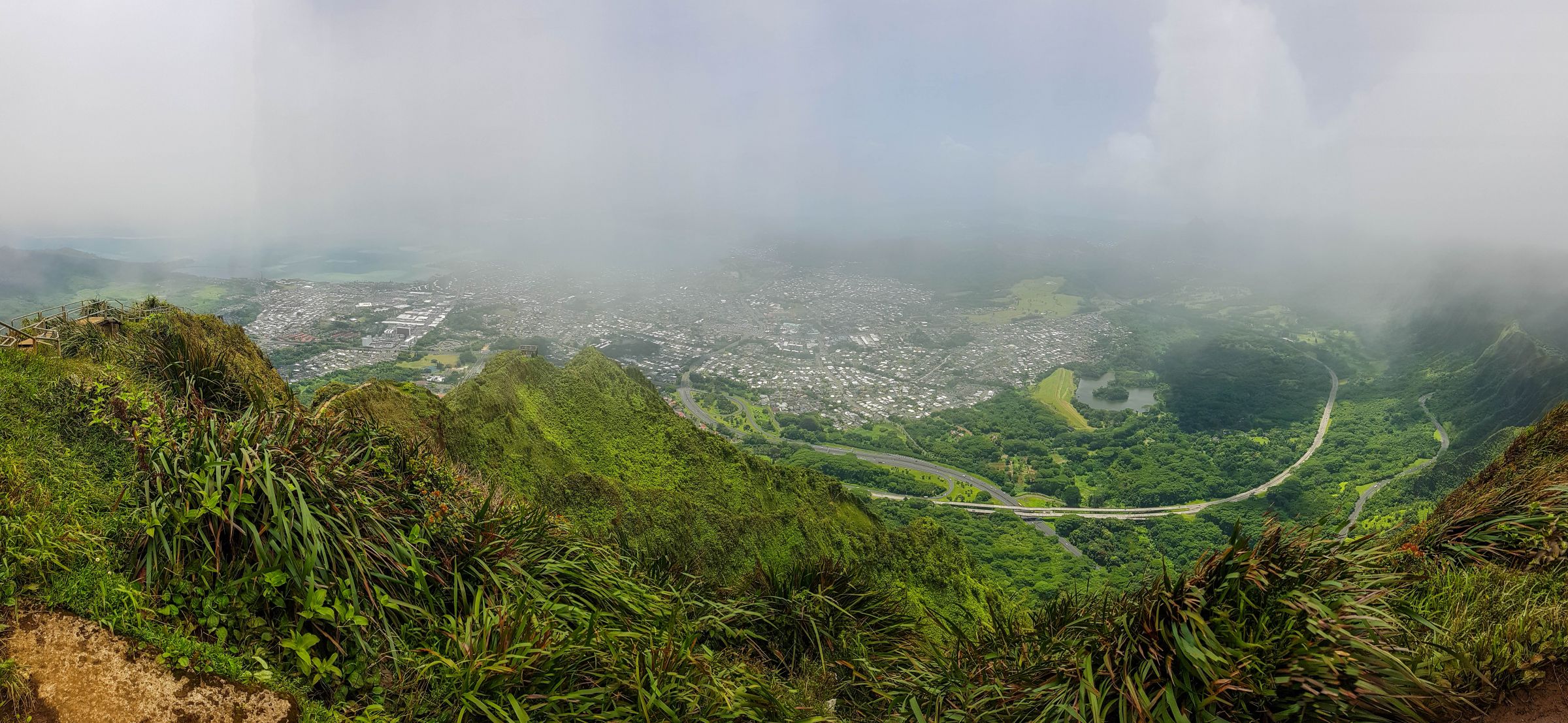
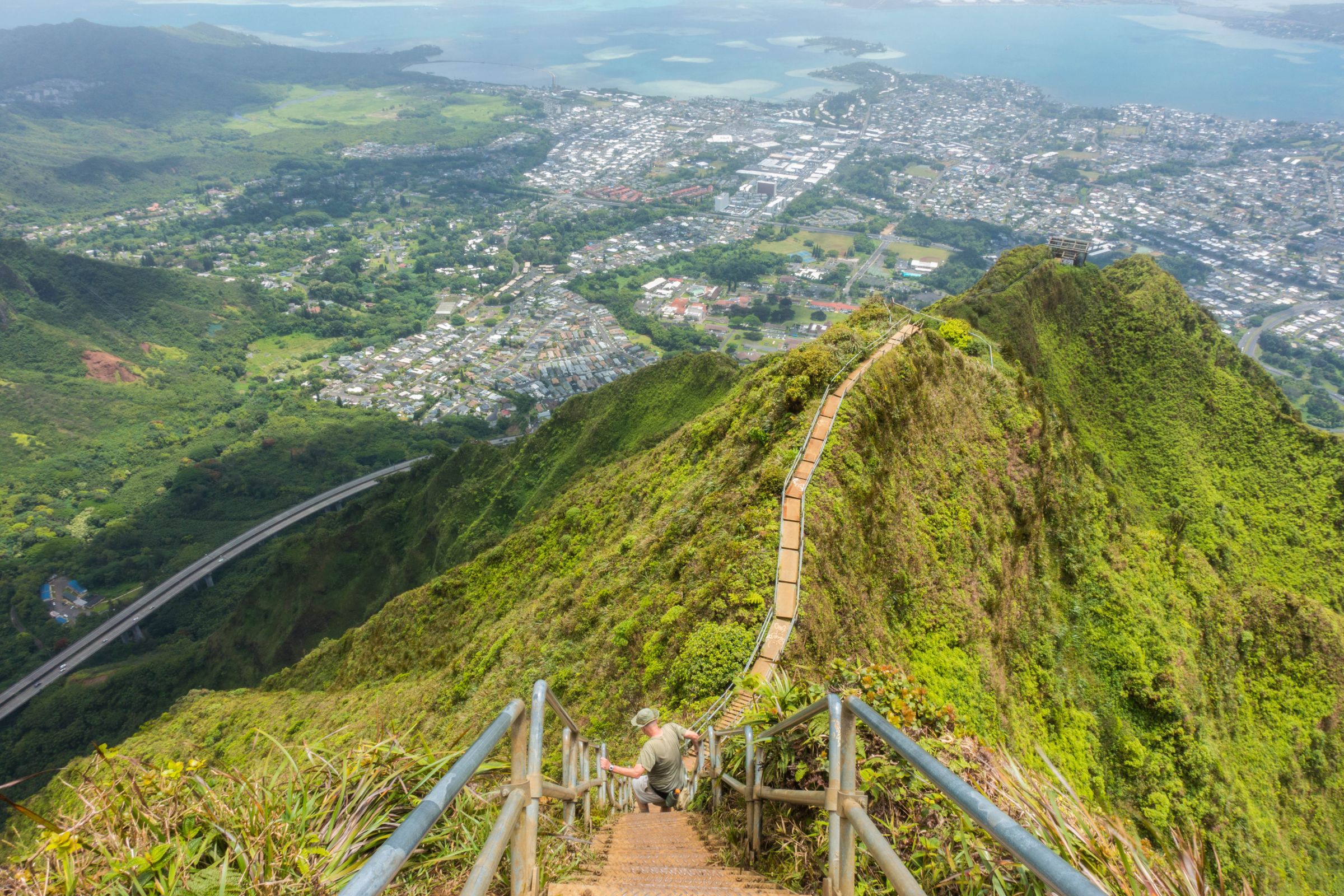
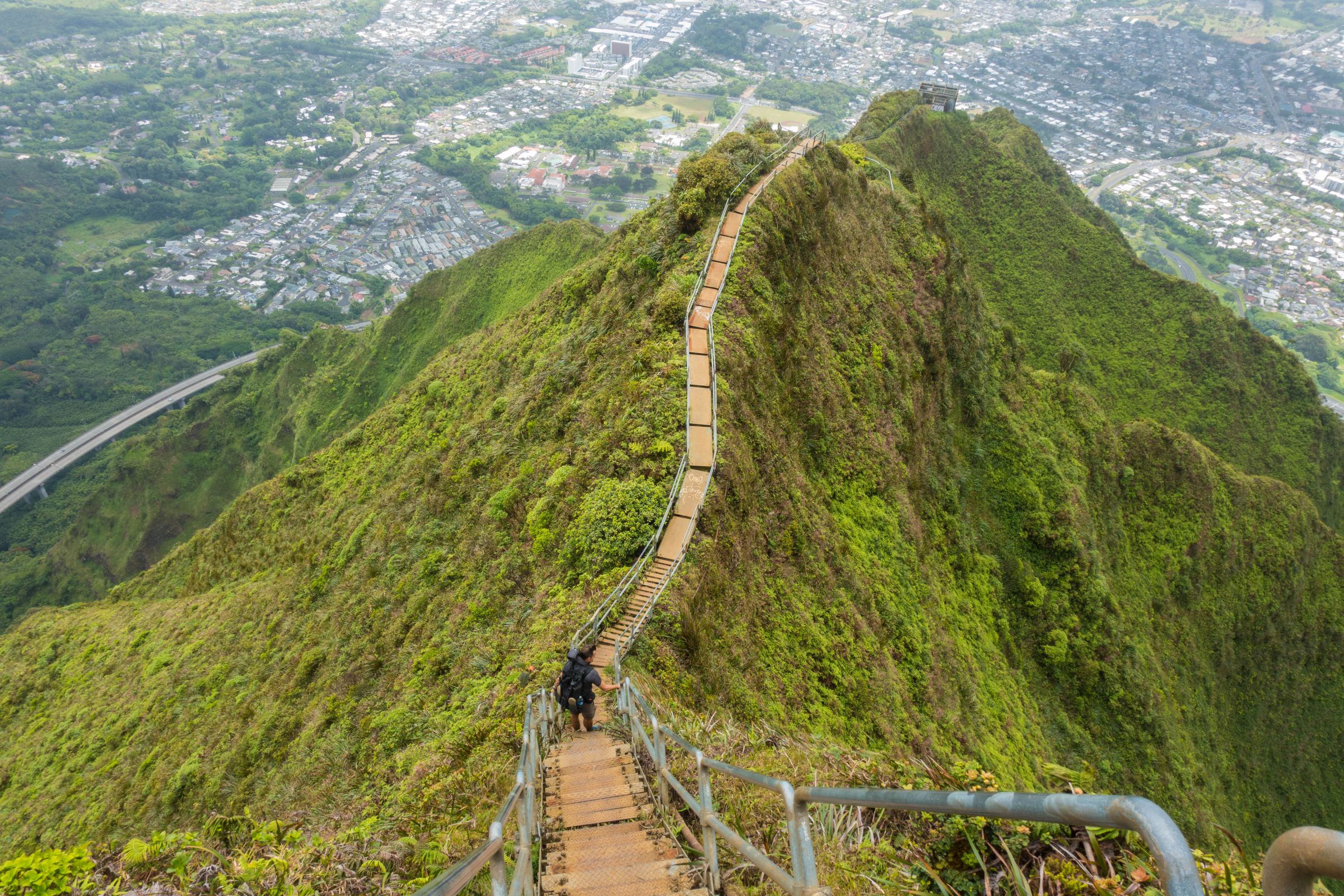
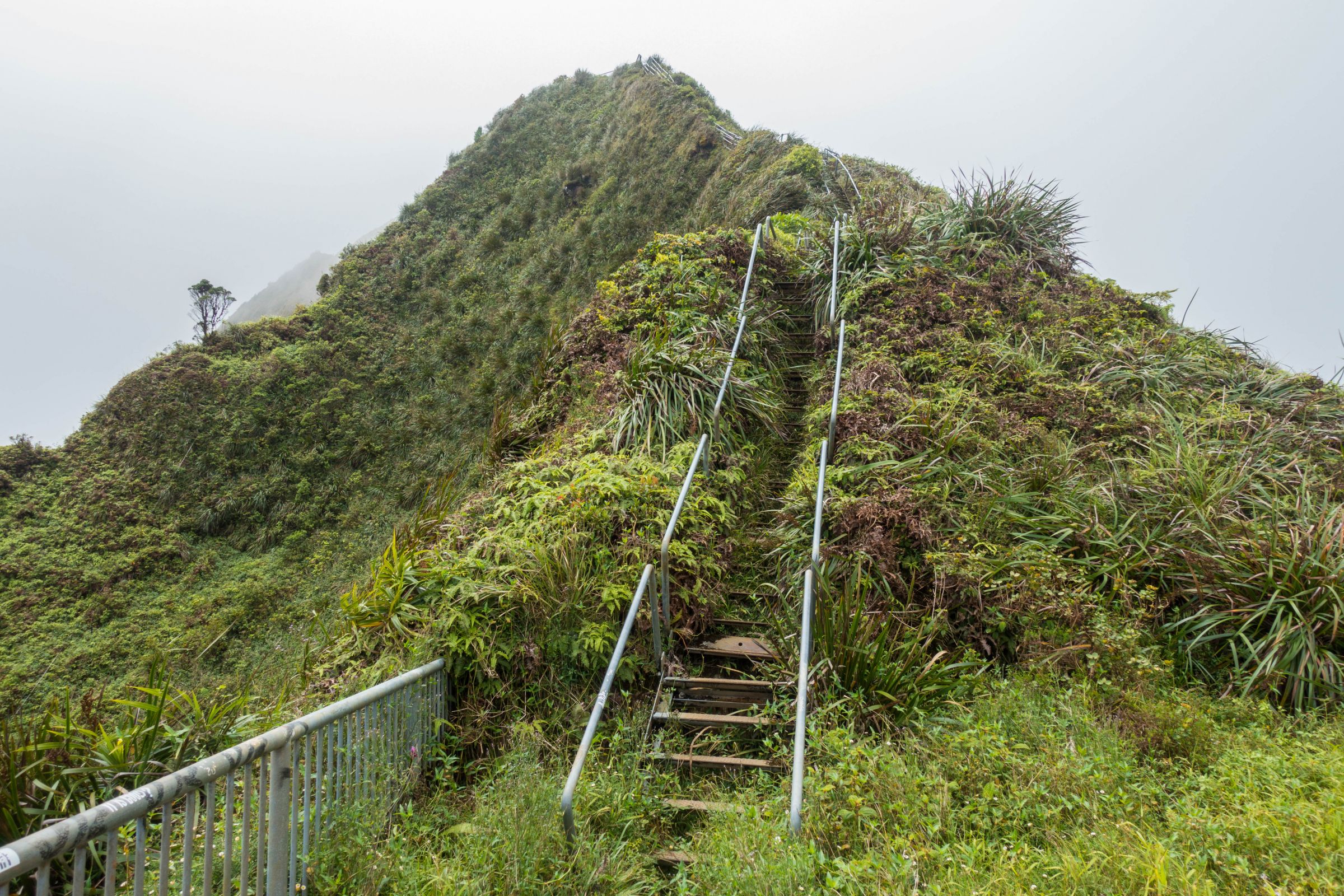
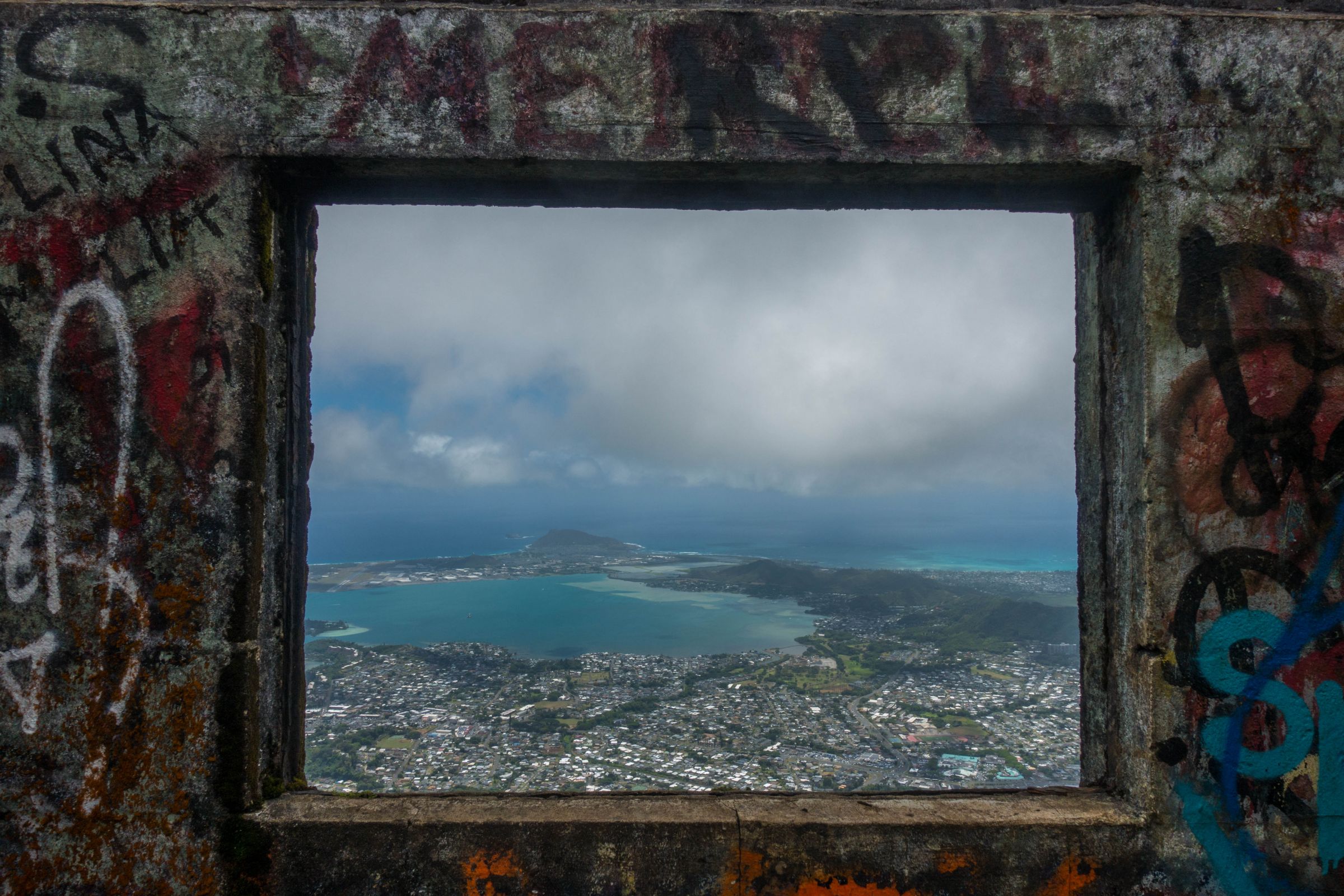
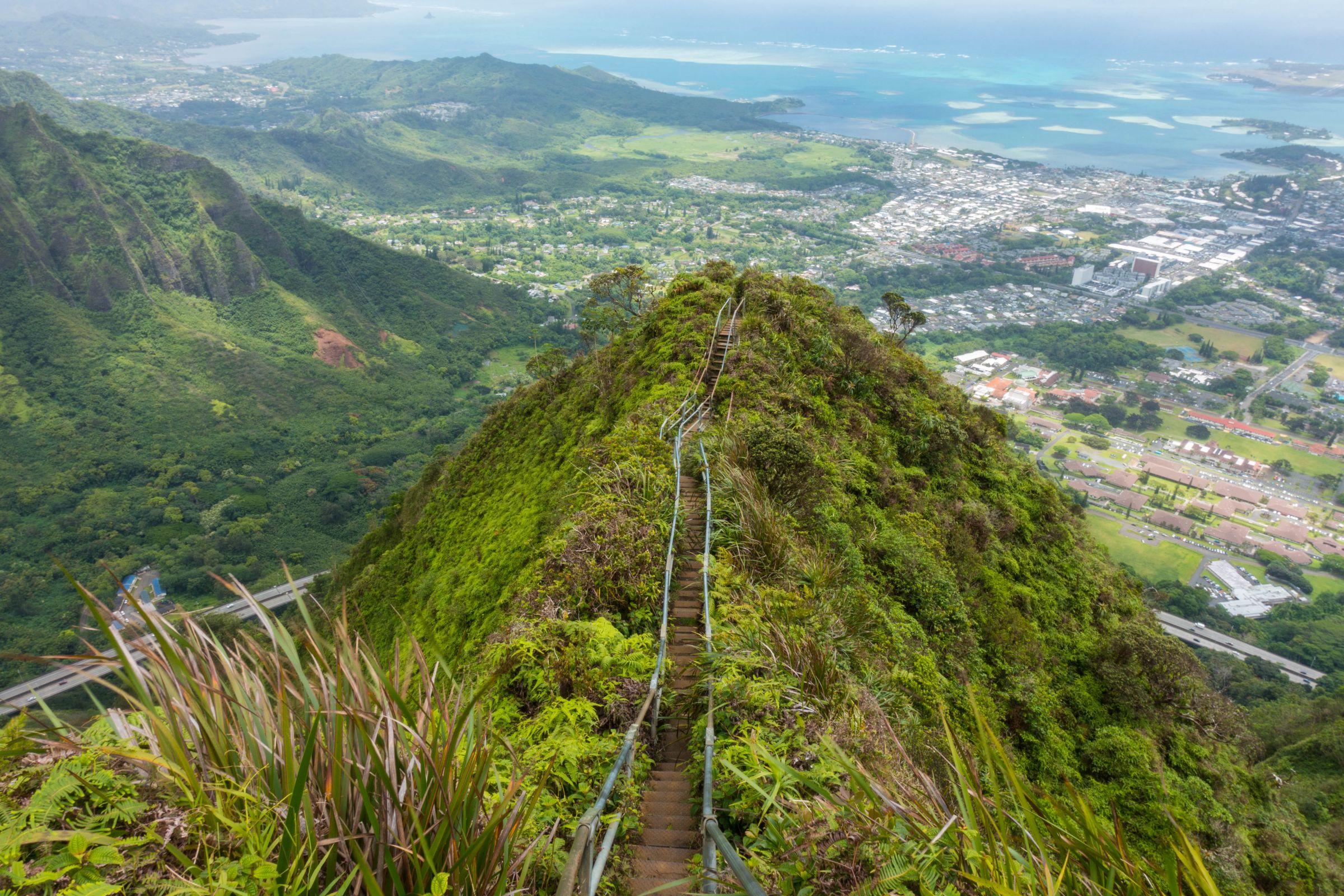
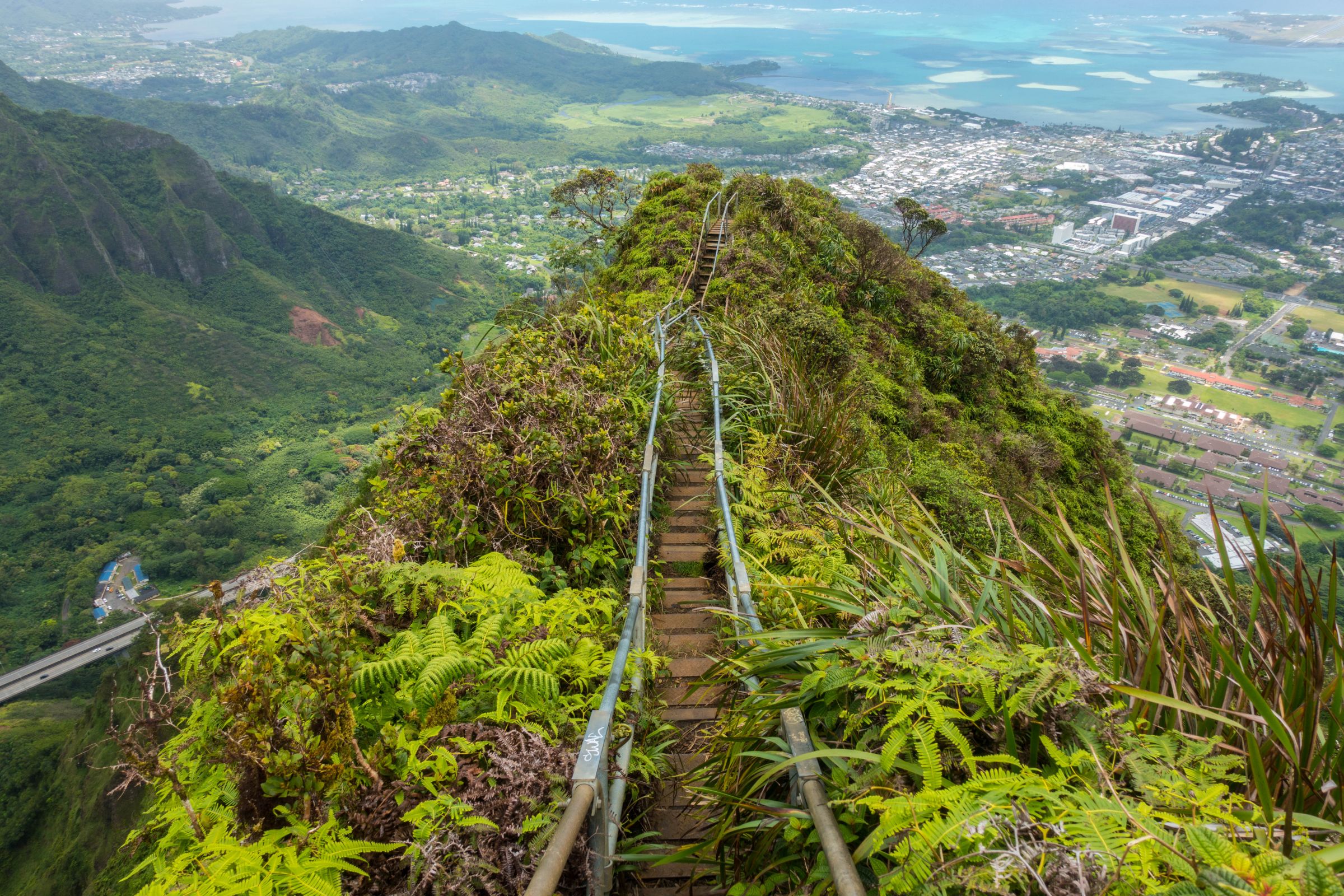
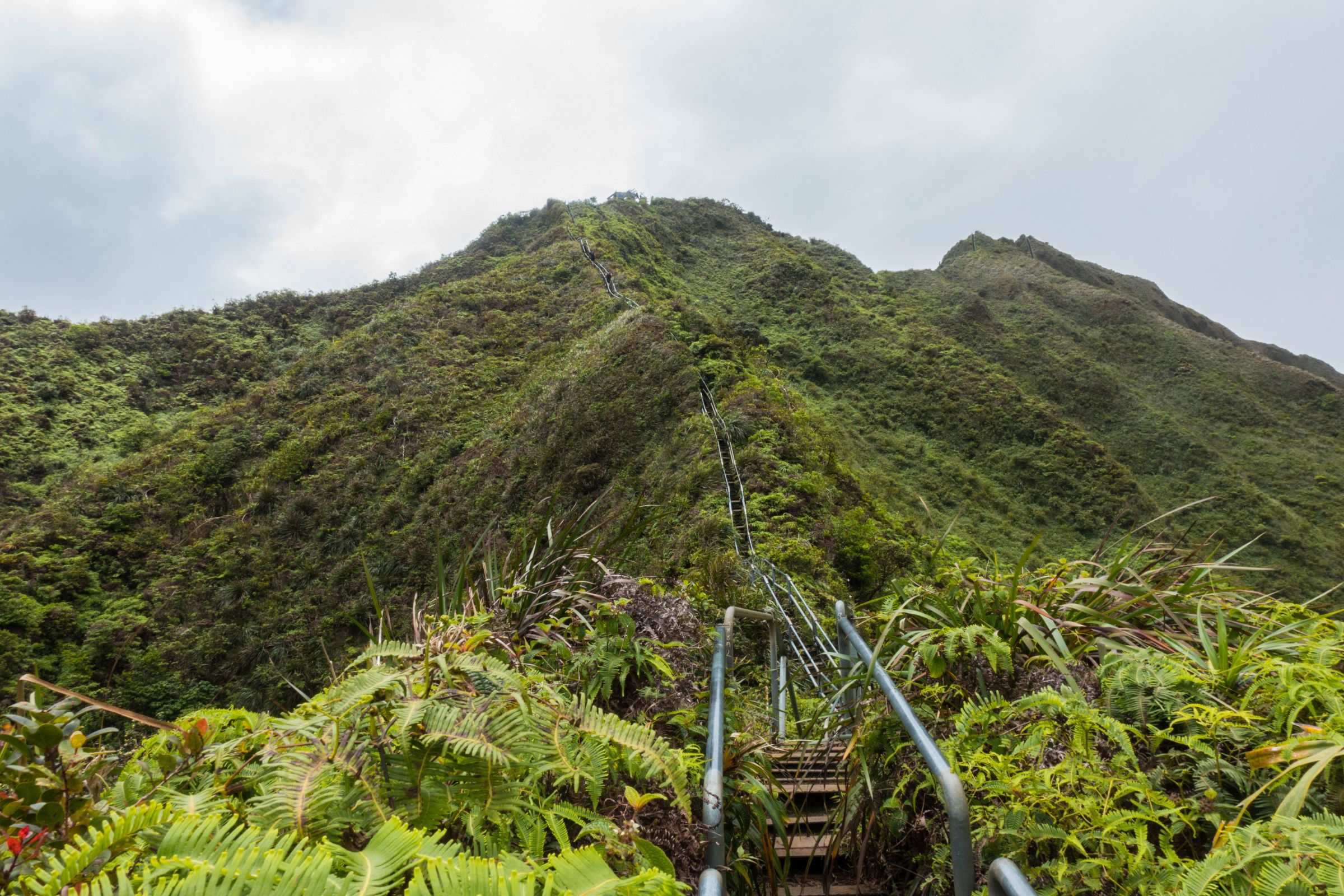
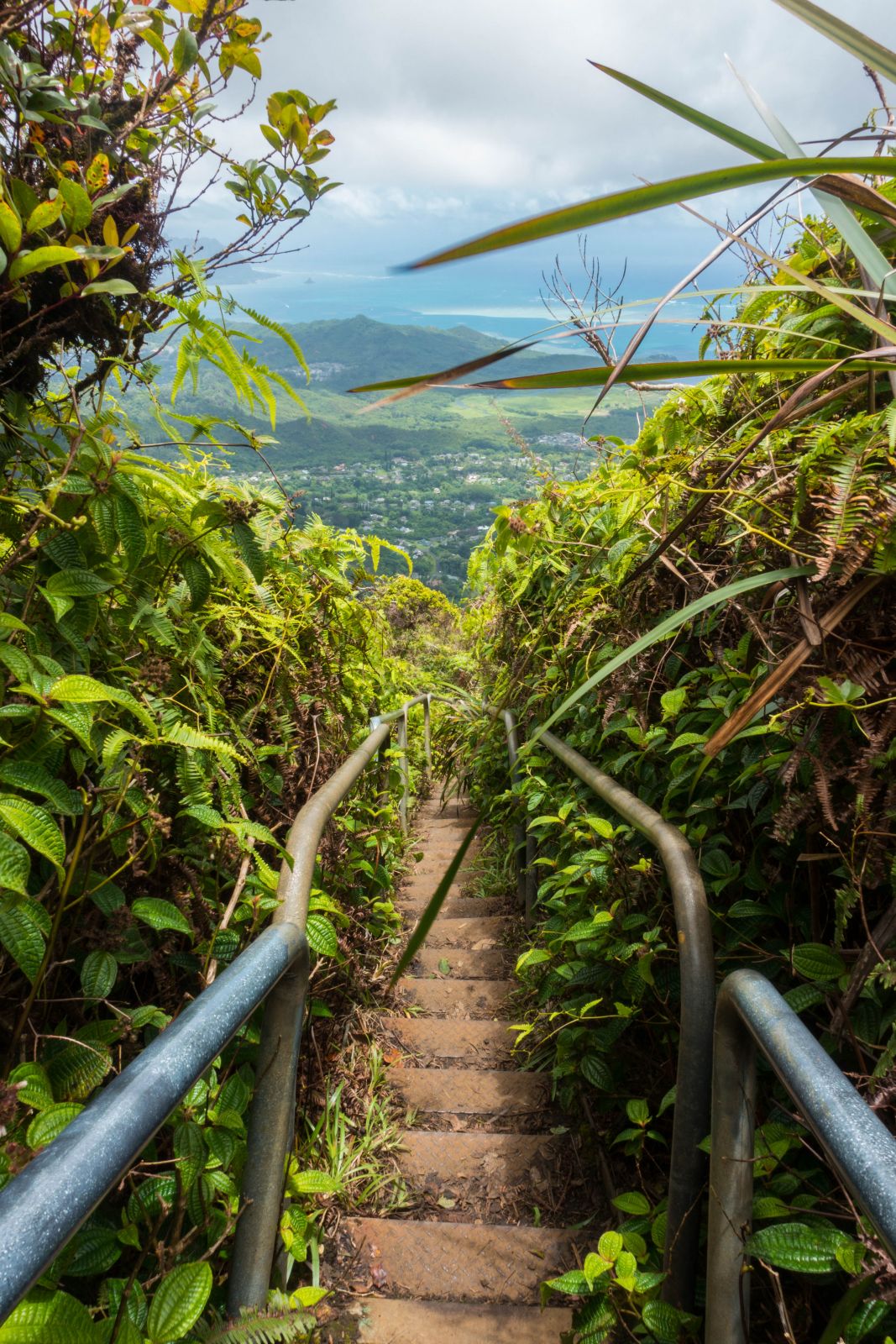
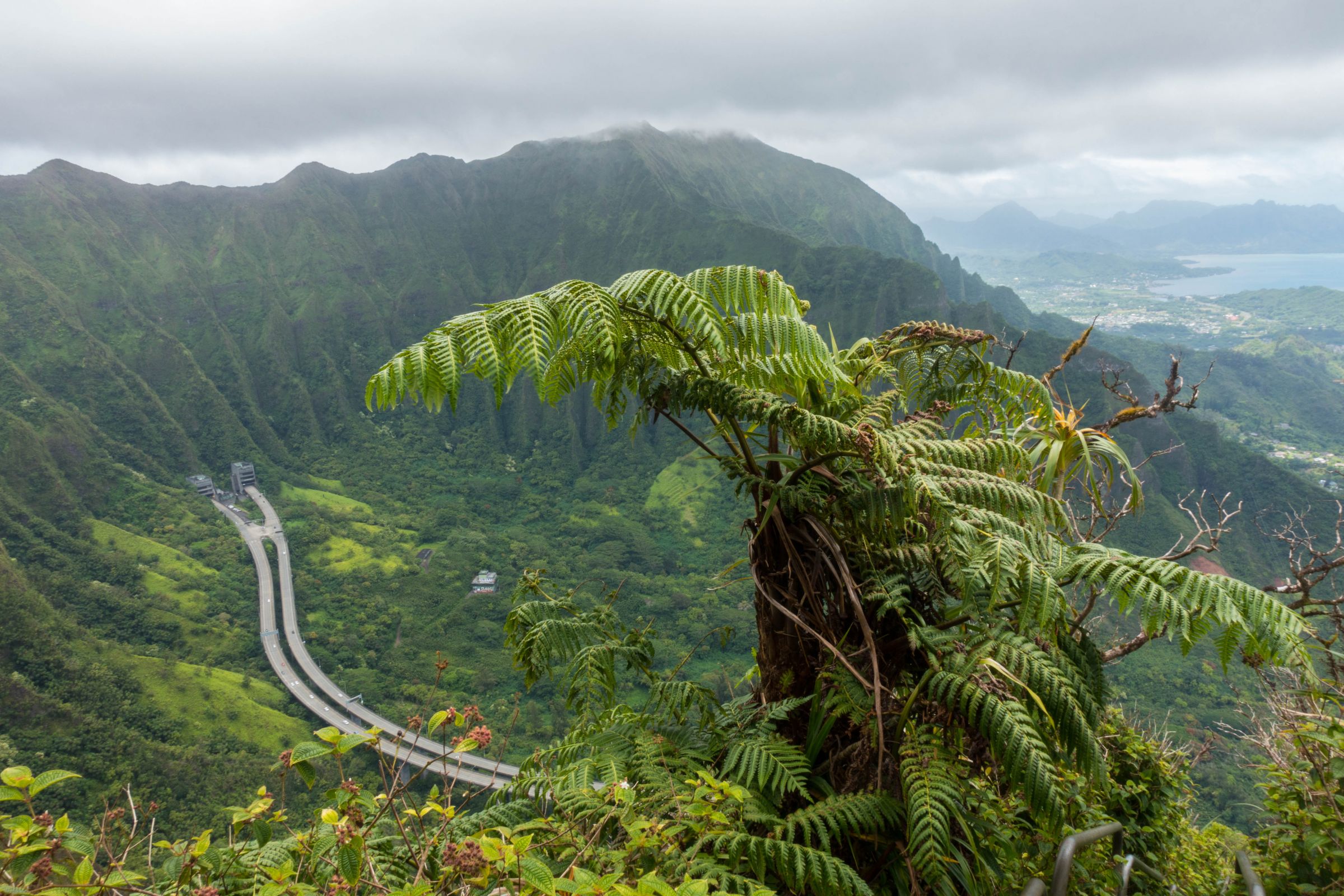
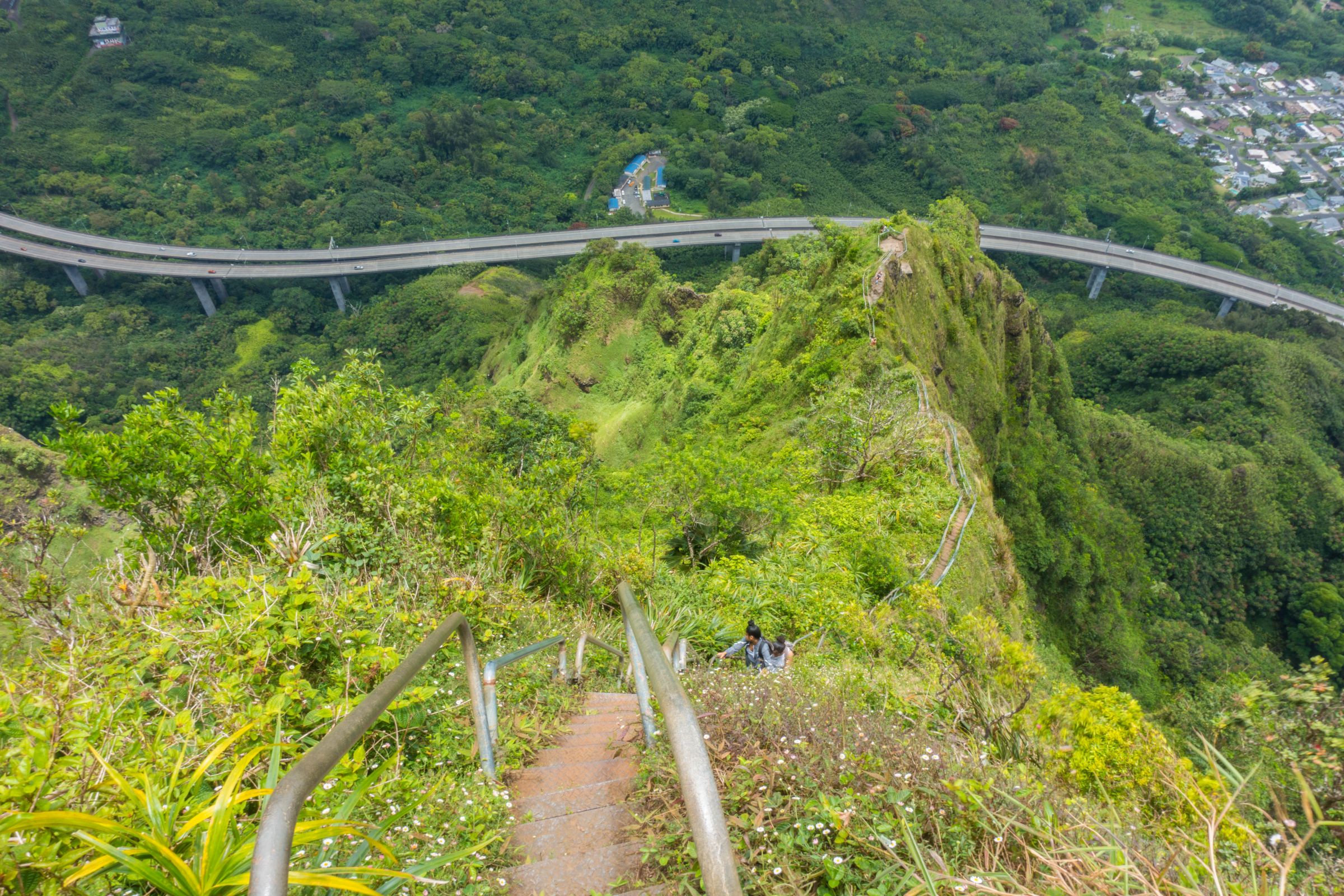
I was fortunate to climb the Haiku Stairs years before demolition began, and the photos in this article show what the legendary trail once looked like. Back then, we avoided the illegal access and chose the long and demanding Moanalua Valley to Moanalua Ridge Trail, the only legal route to the summit. Even this trail has seen numerous rescues — several in 2022 alone — as hikers underestimate the steep, exposed ridge and quickly changing weather.
The Uncertain Future of the Haiku Stairs
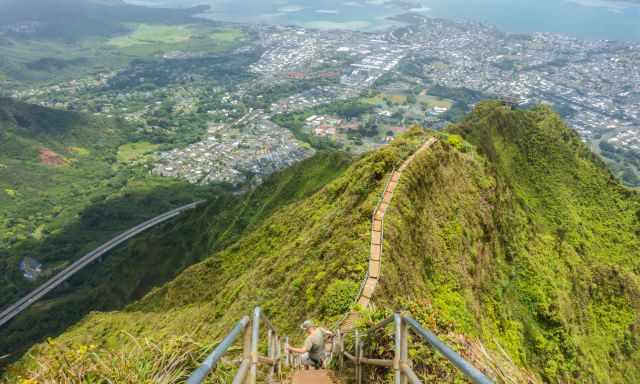
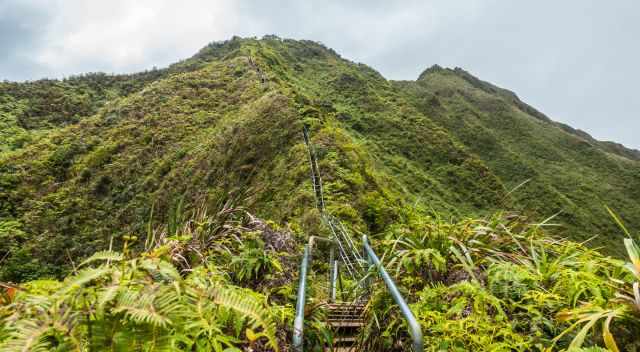
The future of the Haiku Stairs remains uncertain, but the outlook is grim. Honolulu approved full demolition, a project estimated to cost at least $2.6 million, and removal work began in 2024 before lawsuits temporarily halted the process. The nonprofit Friends of Haʻikū Stairs continues to fight for a managed‑access solution with daily limits and a shuttle system, but political pressure from nearby residents and land‑ownership conflicts have stalled every attempt for more than 30 years.

For many locals, the Haiku Stairs are a historic treasure — an 80‑year‑old engineering relic with one of the most breathtaking views in Hawaii. Native Hawaiian groups emphasize the cultural importance of mountain access and hope for a compromise that preserves both safety and heritage. Yet with the legal access route now closed and demolition underway, the Stairway to Heaven may soon exist only in memories and photographs.
Why We Chose the Legal Route to the Haiku Stairs
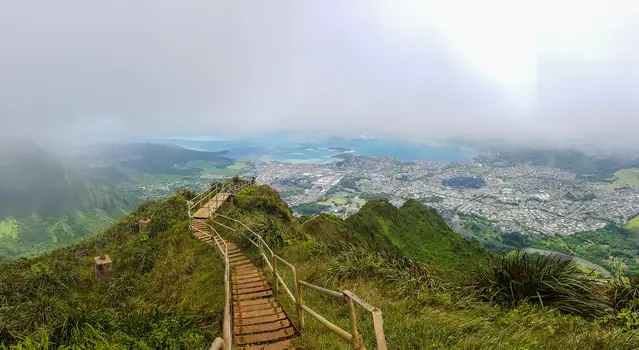
The Haiku Stairs had been on our bucket list for years, but only when we arrived on Oʻahu did we realize that accessing the stairs is illegal. Trespassing comes with a $1,000 fine, a mandatory court appearance, and increasing police enforcement. Because of this, we chose the only legal option at the time: the long and demanding Moanalua Valley to Moanalua Ridge Trail, which leads to the top of the Haiku Stairs from the opposite side.
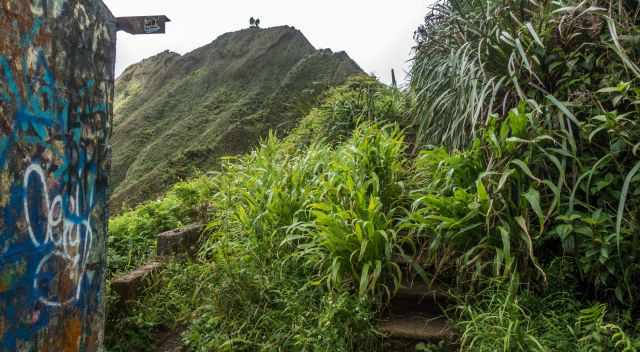
It still feels unbelievable that the dangerous and exposed Moanalua Ridge was open to the public while the Haiku Stairs — a far safer, engineered structure — were closed. But that was the reality back then. Today, the stairs are officially closed, partially dismantled, and under threat of full demolition. Please respect the closure. Trespassing now can negatively impact ongoing legal proceedings and the efforts of those fighting to preserve this historic landmark.
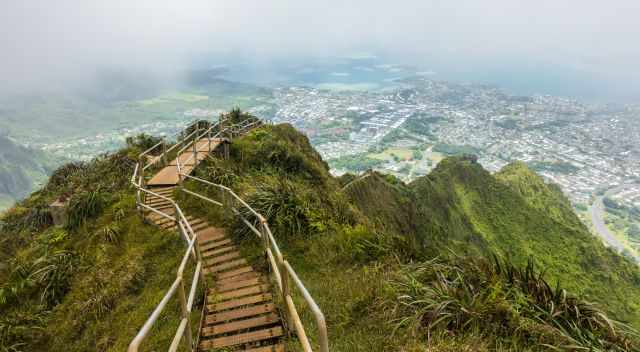
It still feels unbelievable that the dangerous and exposed Moanalua Ridge was open to the public while the Haiku Stairs — a far safer, engineered structure — were closed. But that was the reality back then. Today, the stairs are officially closed, partially dismantled, and under threat of full demolition. Please respect the closure. Trespassing now can negatively impact ongoing legal proceedings and the efforts of those fighting to preserve this historic landmark.
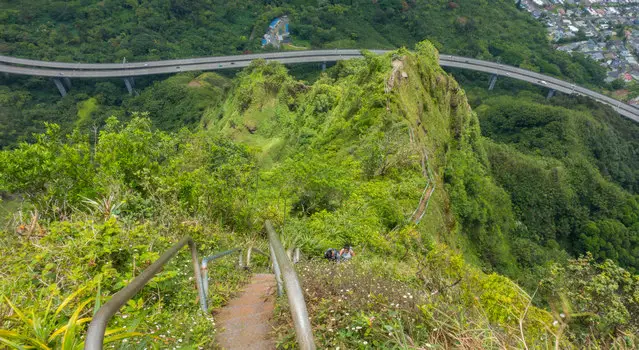
The Haiku Stairs became famous after appearing in an episode of Magnum P.I. in the 1980s. Television and social media transformed this once‑hidden military structure into a global bucket‑list destination, drawing thousands of hikers to Oʻahu every year — and ultimately contributing to its closure.
The Former Legal Route: Moanalua Valley Trail

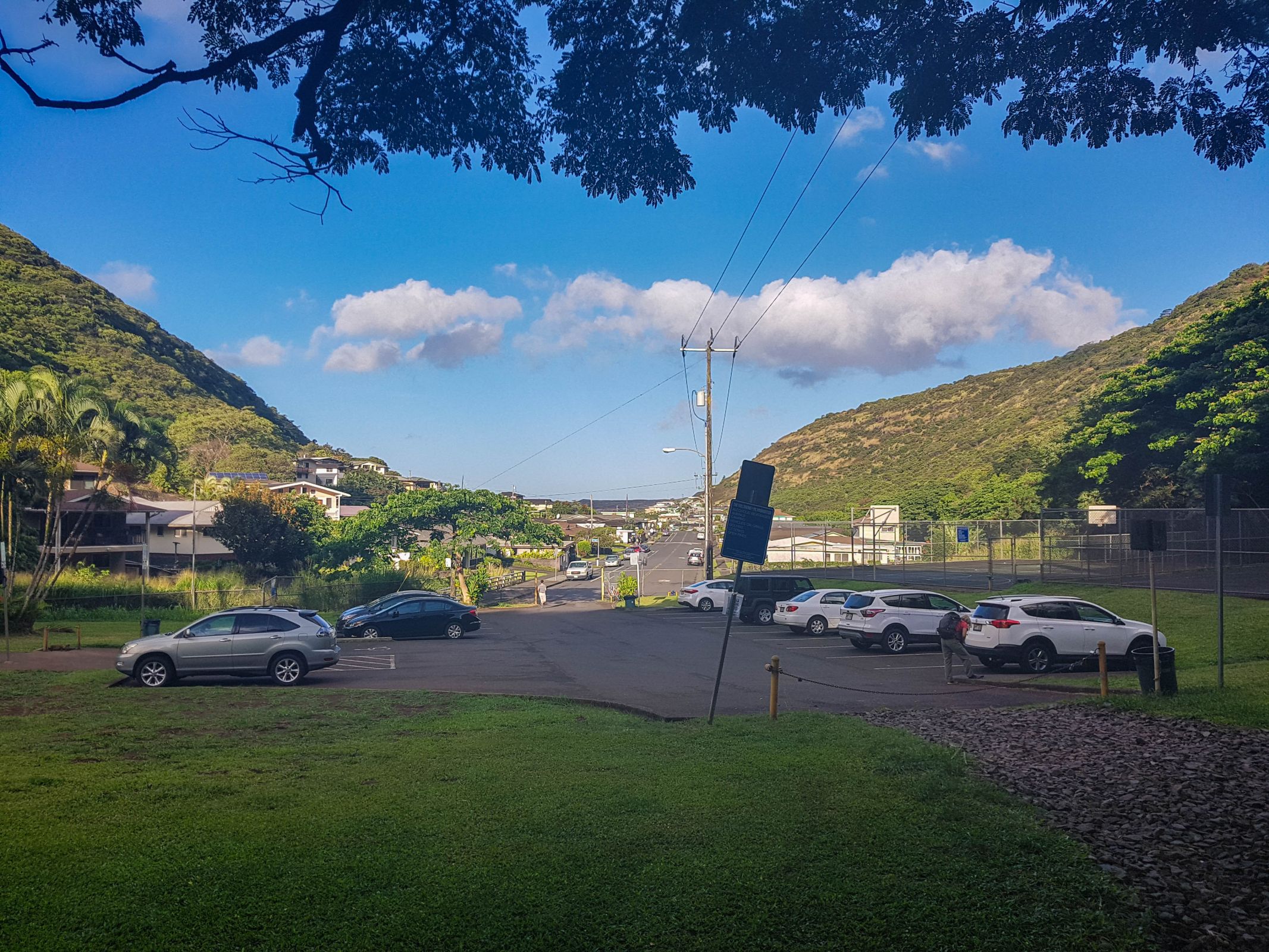
Trailhead Parking
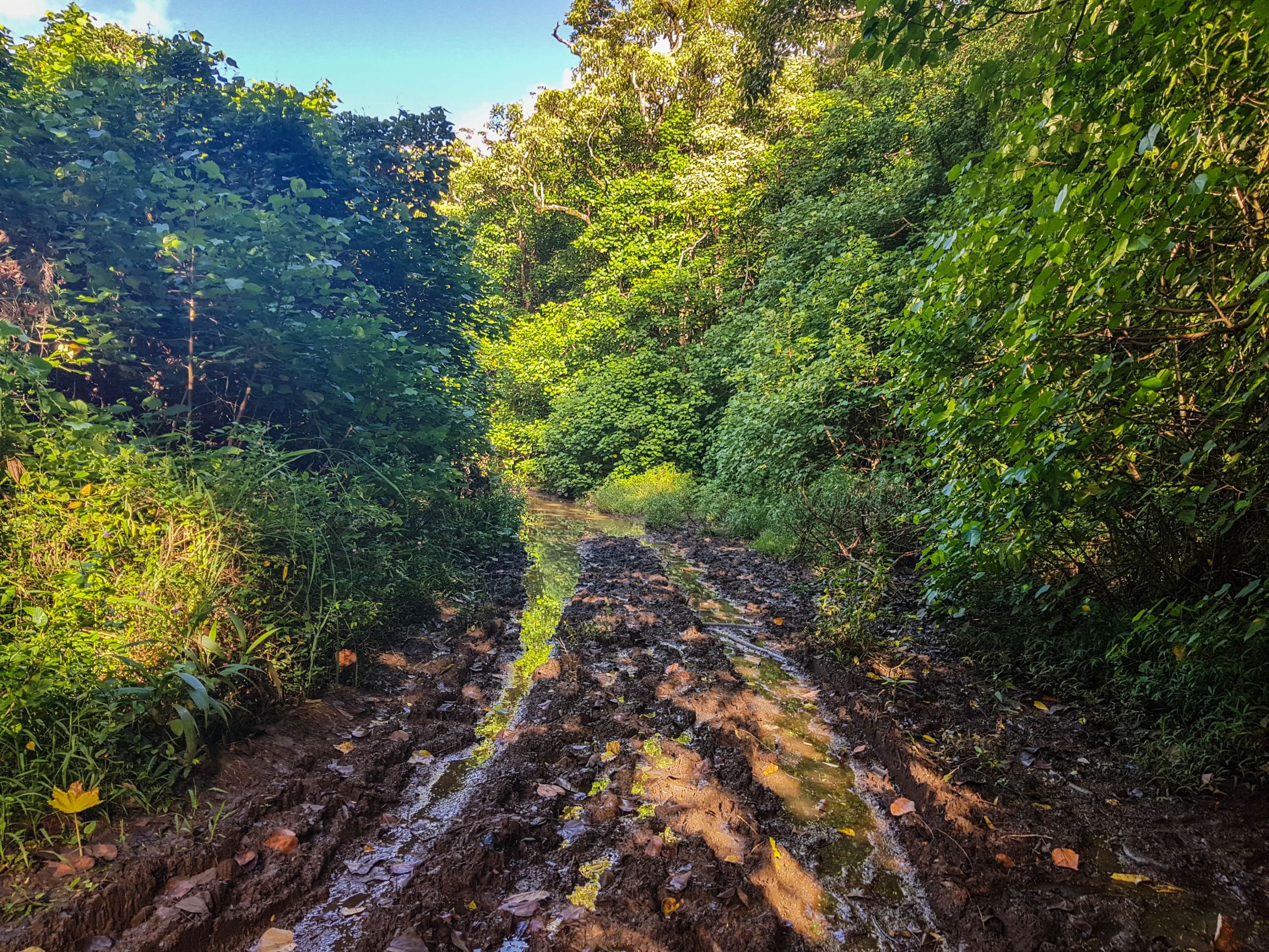
We spent a week on Oʻahu in June, and our main goal was this once‑in‑a‑lifetime adventure. On our final day, the weather finally cleared — the first morning without heavy clouds or passing rain showers. The dry night before was crucial, because the more it had rained, the muddier and more slippery the Moanalua Valley Trail became.
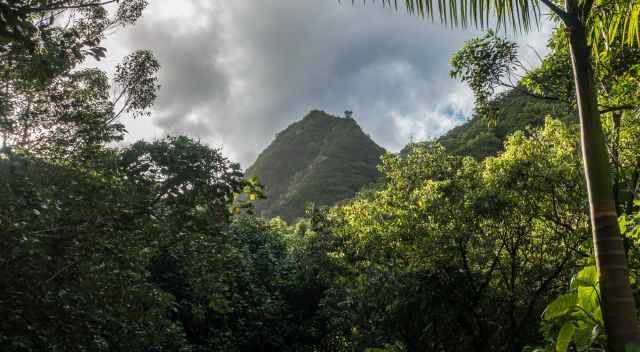
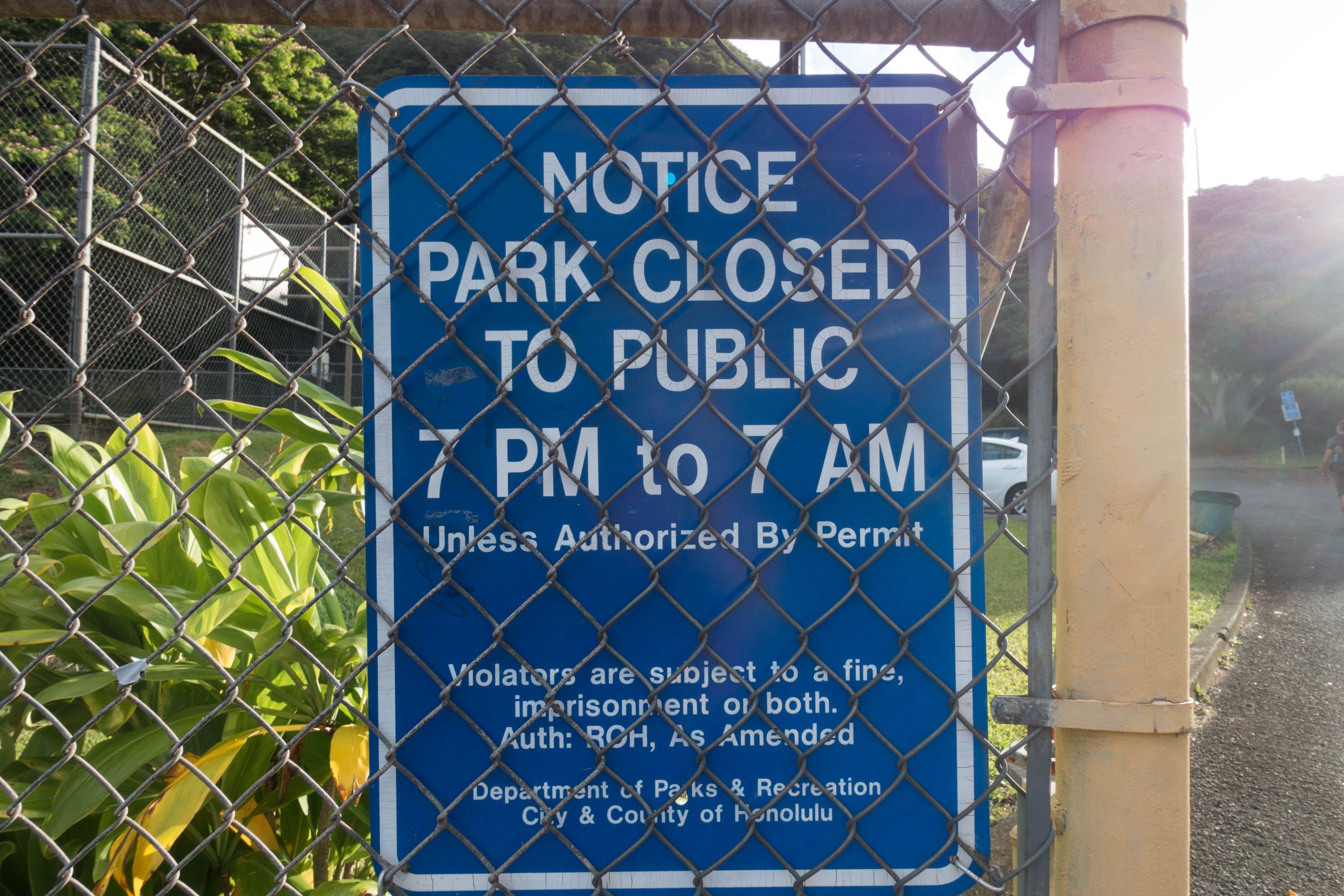
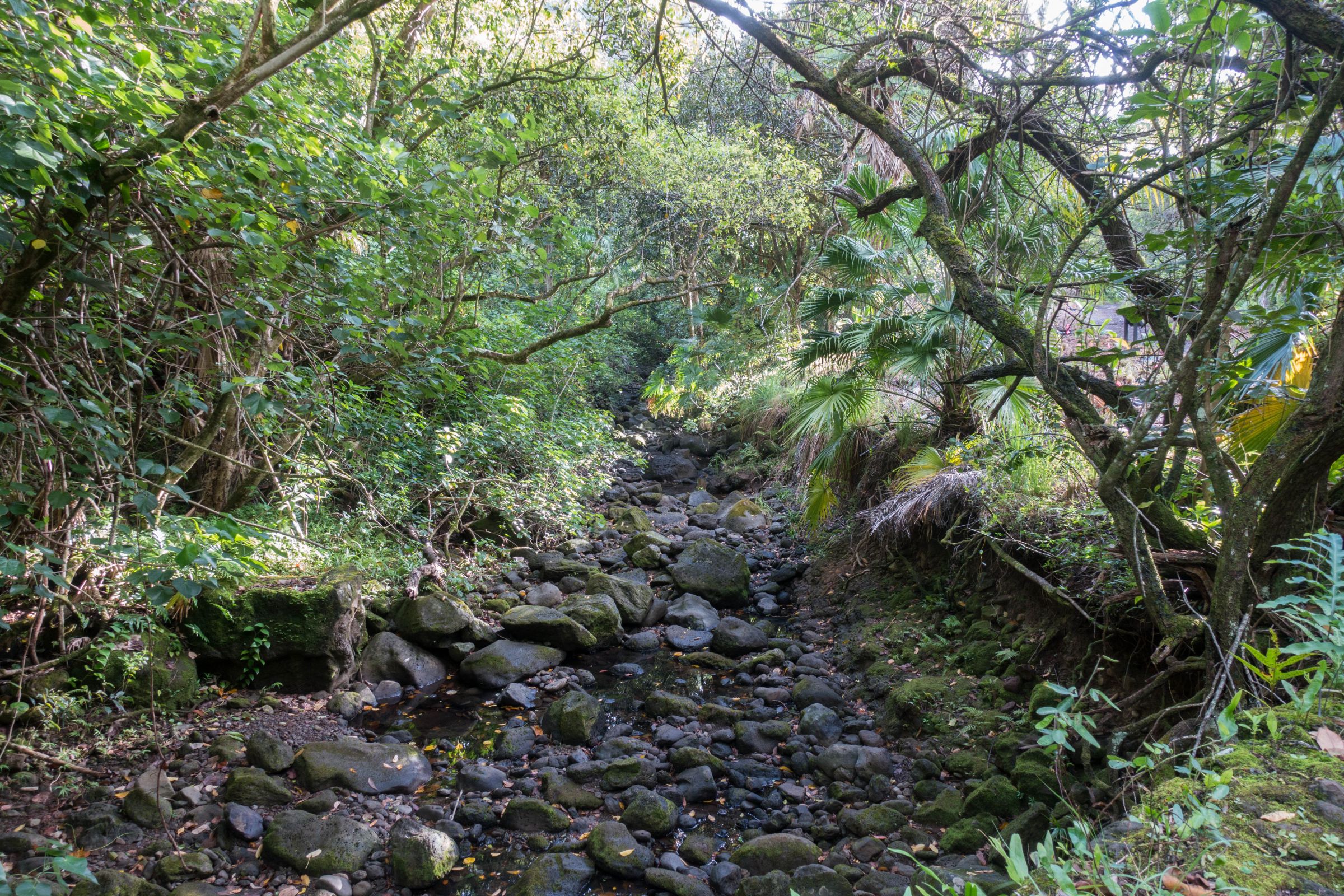
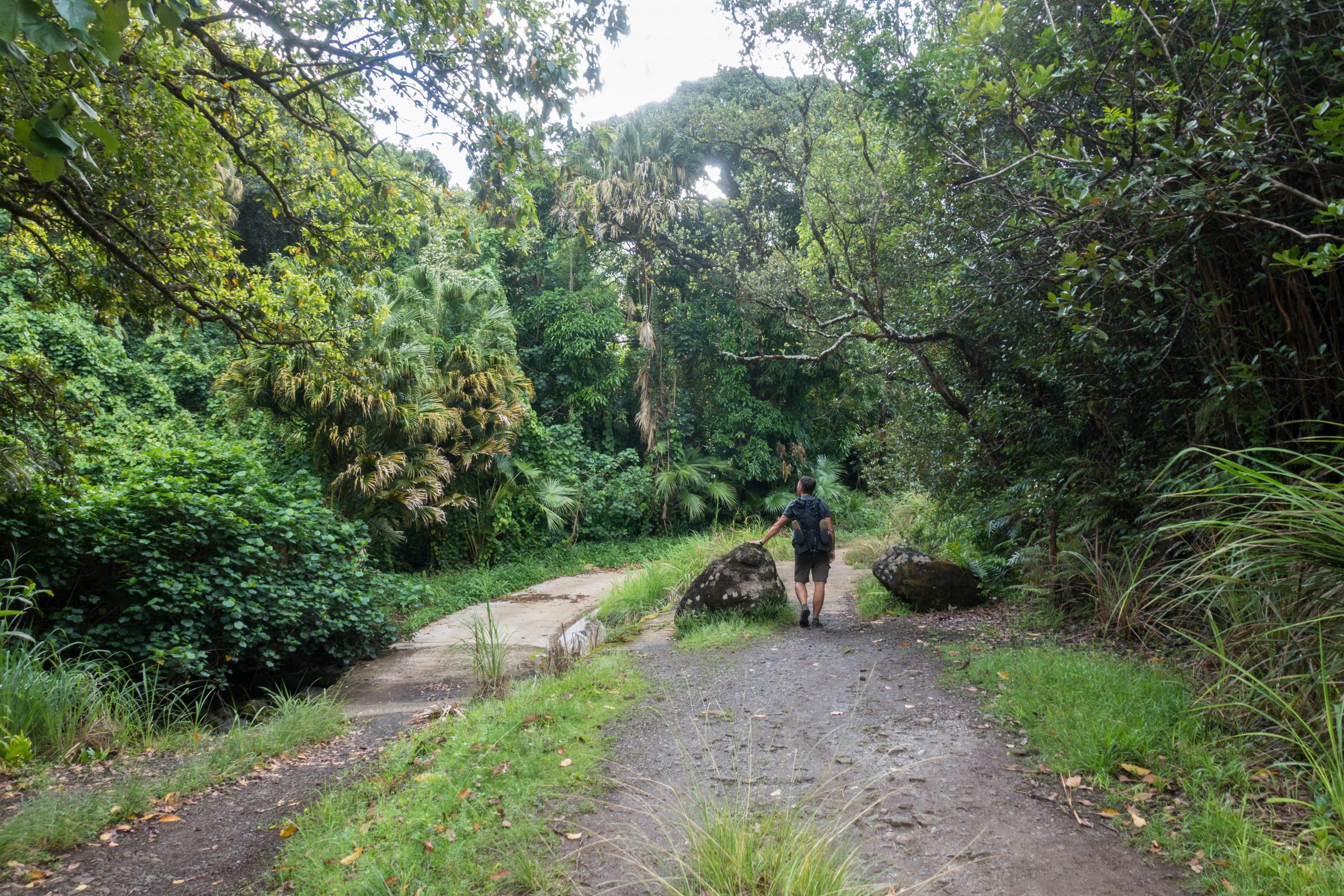
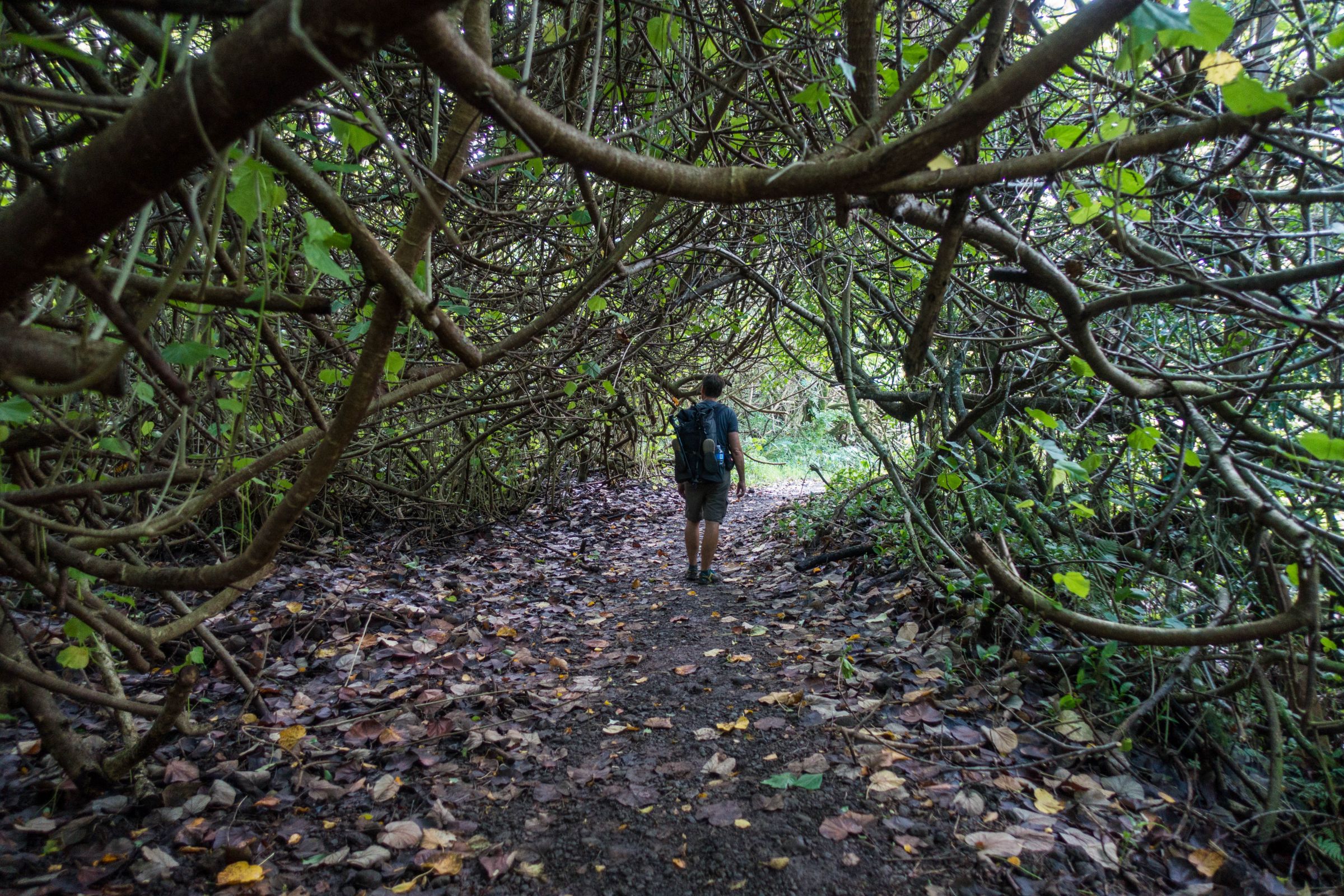
We started our hike around 7 a.m. and parked in the neighborhood before the park gate. Back then, the Moanalua Neighborhood Park offered parking and restrooms, and the gate closed at 7 p.m. The first part of the trail was an easy 4.5 km (almost 3 miles) walk through the lush Moanalua Valley. Of course, it was muddy — avoiding dirt was impossible. And once the climb began, mud was everywhere unless the trail had been dry for several days.

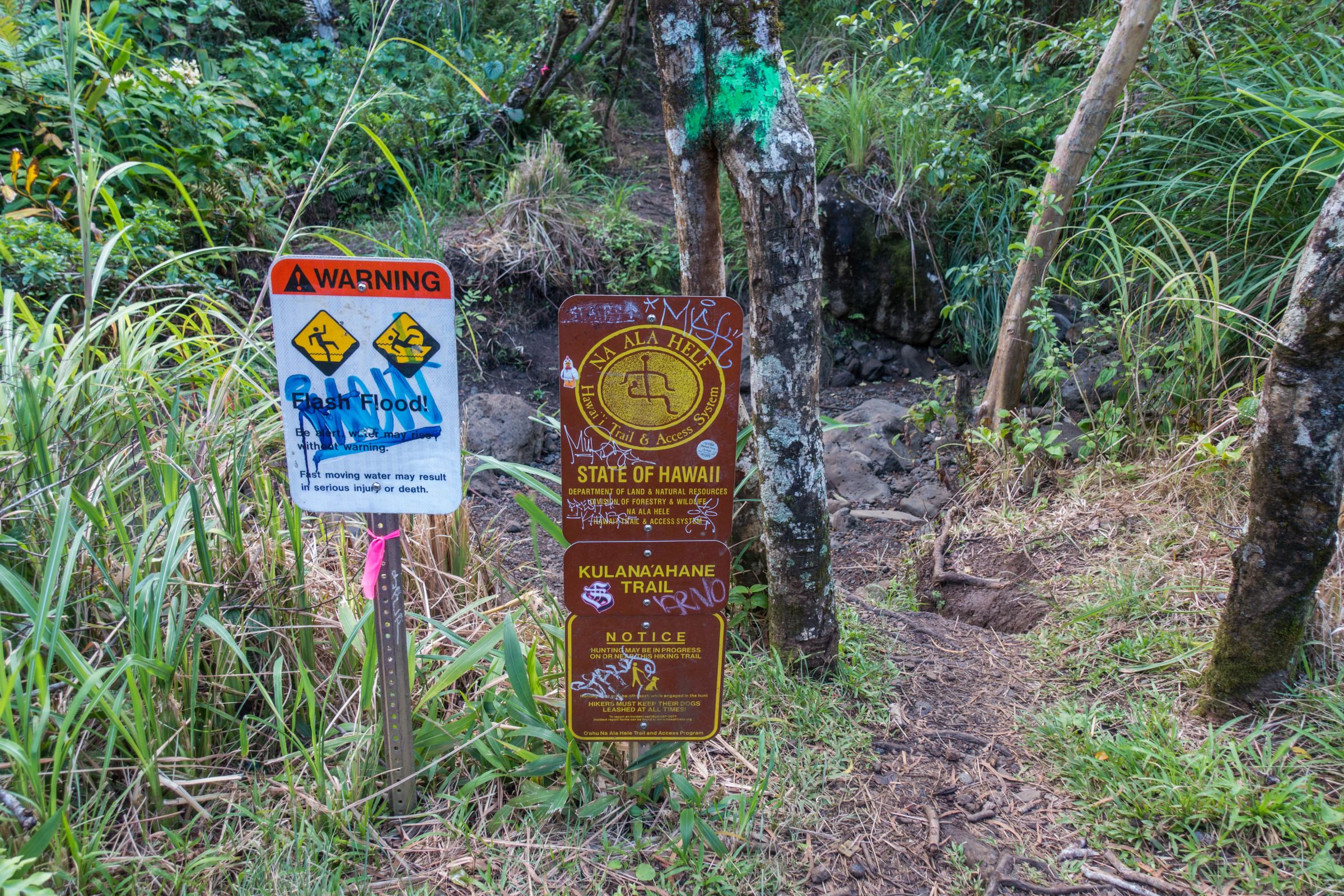
At the Kulanaʻahane Trail sign, we continued straight for a few more seconds until we spotted a green spray‑painted “H” on a tree. That was the marker for the old route toward the Haiku Stairs. Pink ribbons tied to branches helped guide the way, and using a hiking app like Locus Pro was extremely helpful.
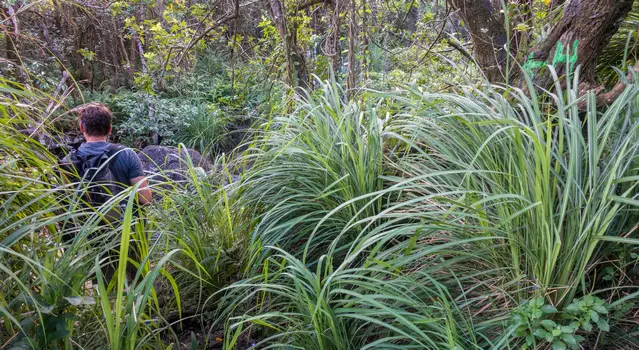
Do you see the green H for Haiku on the right?
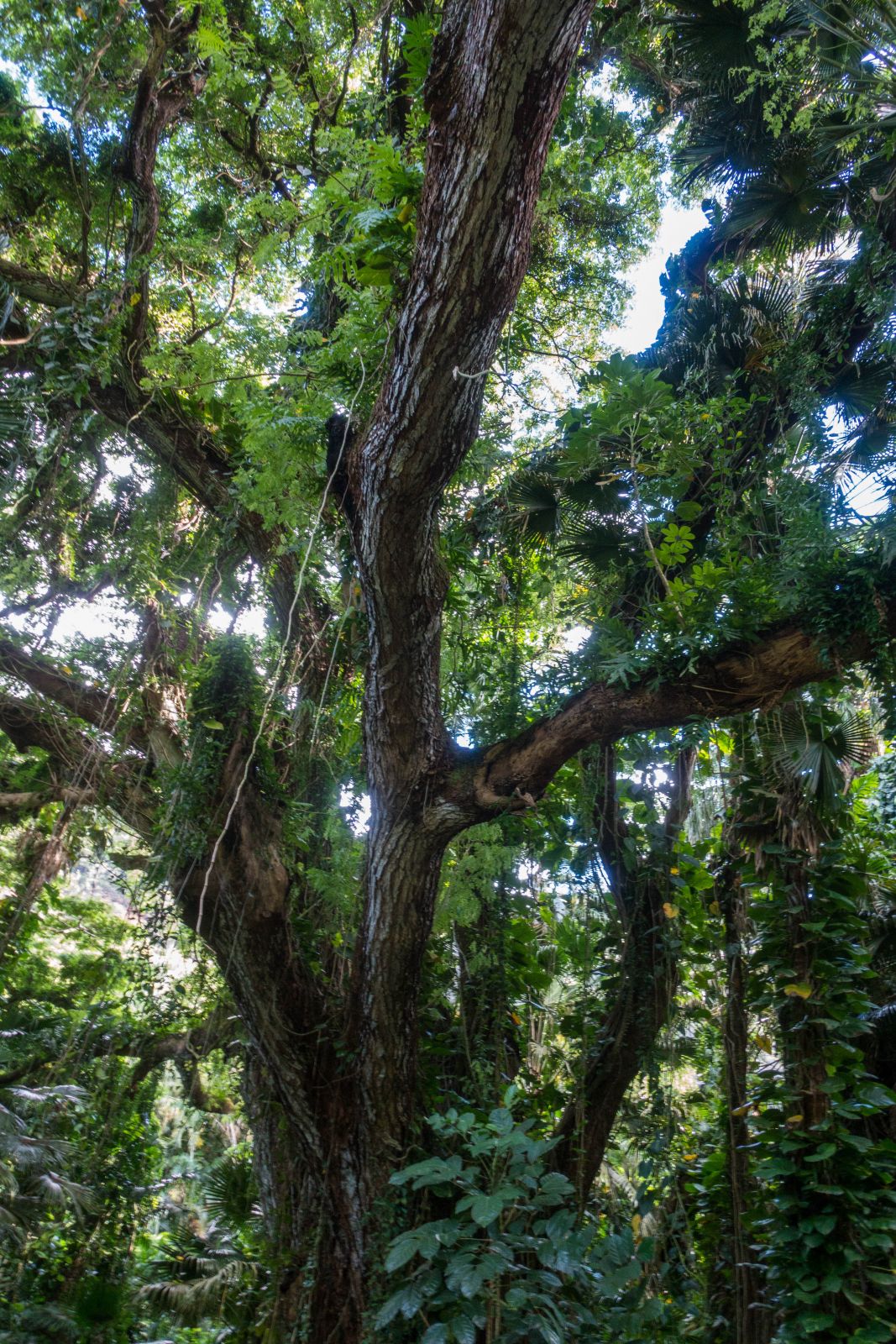
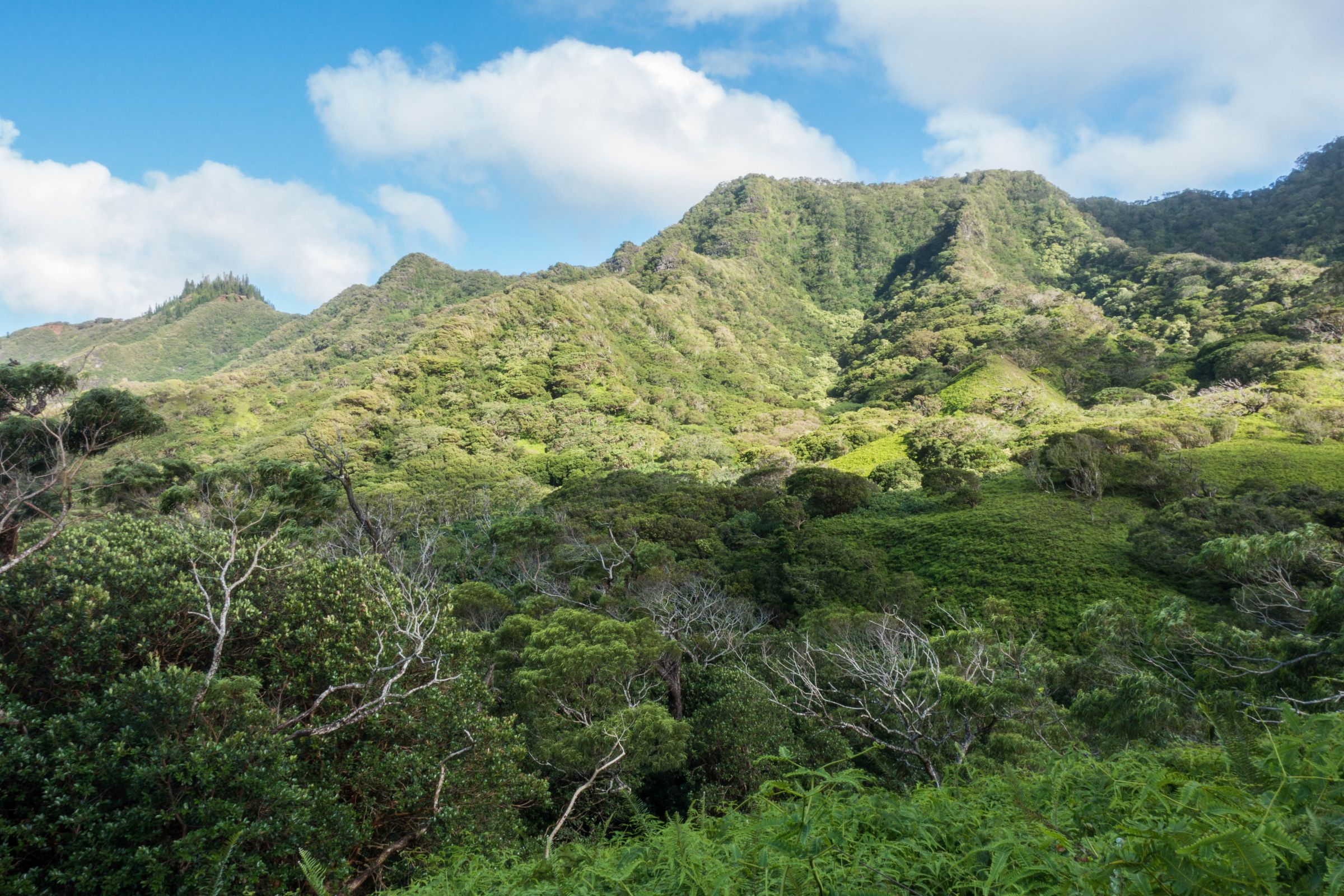
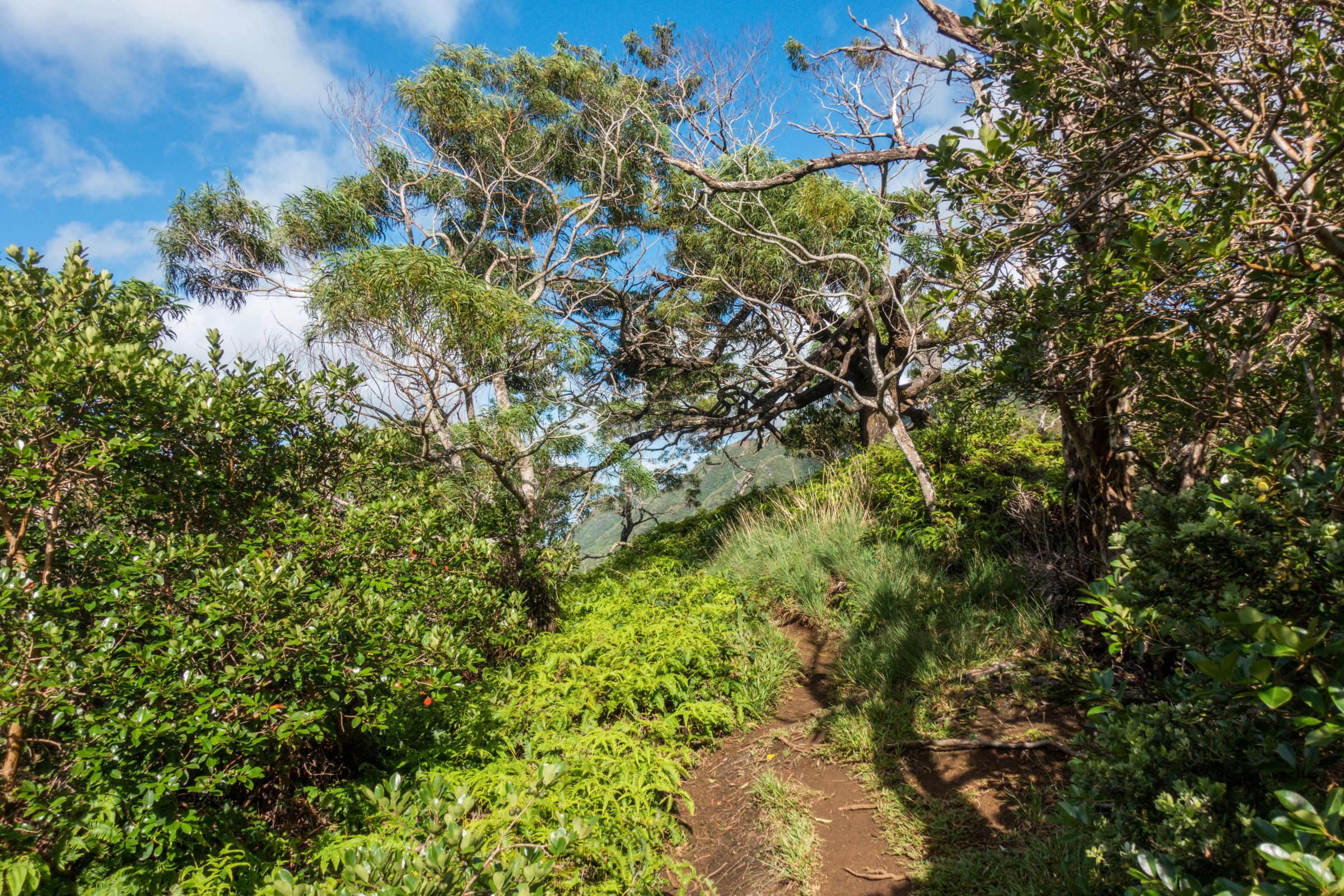
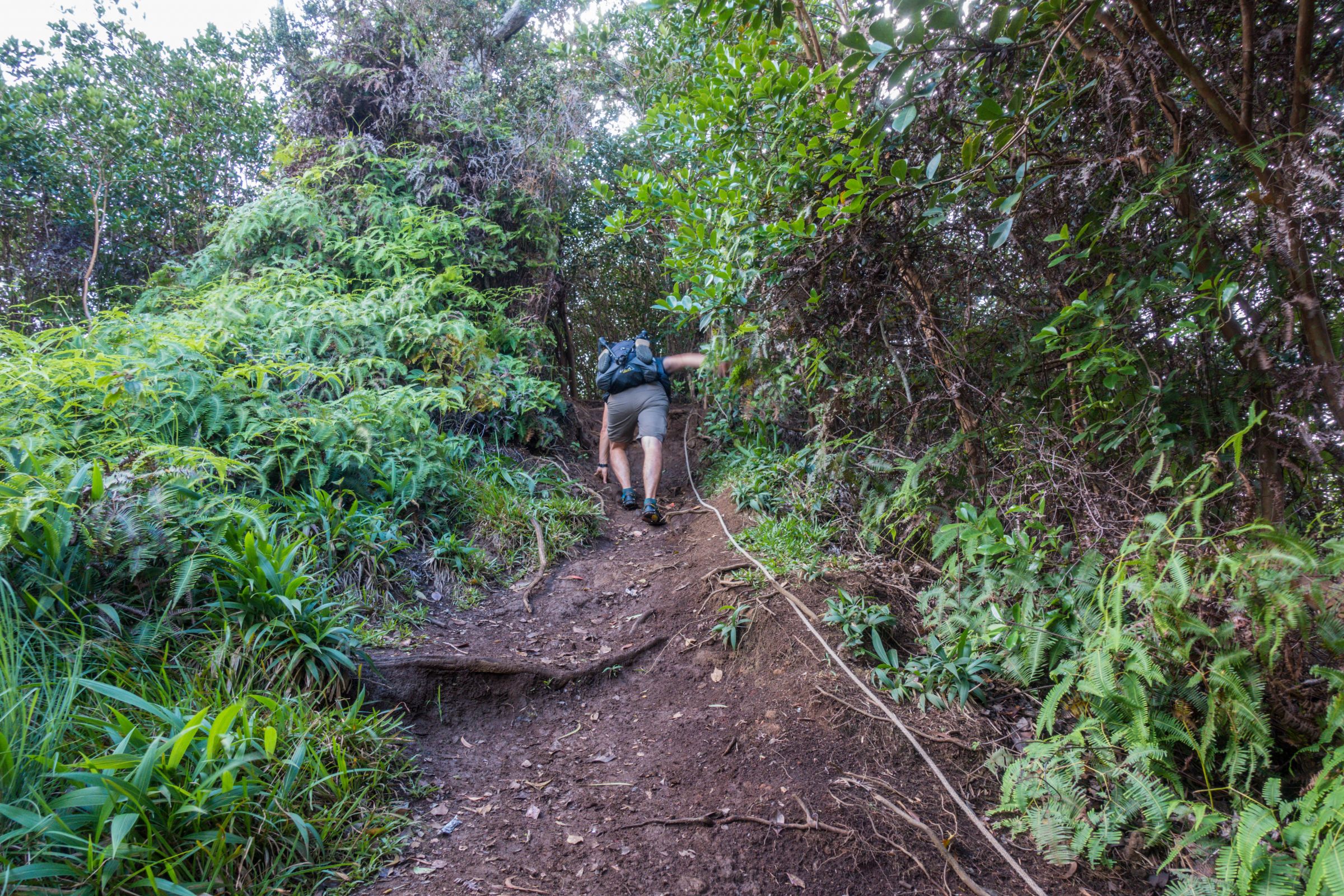
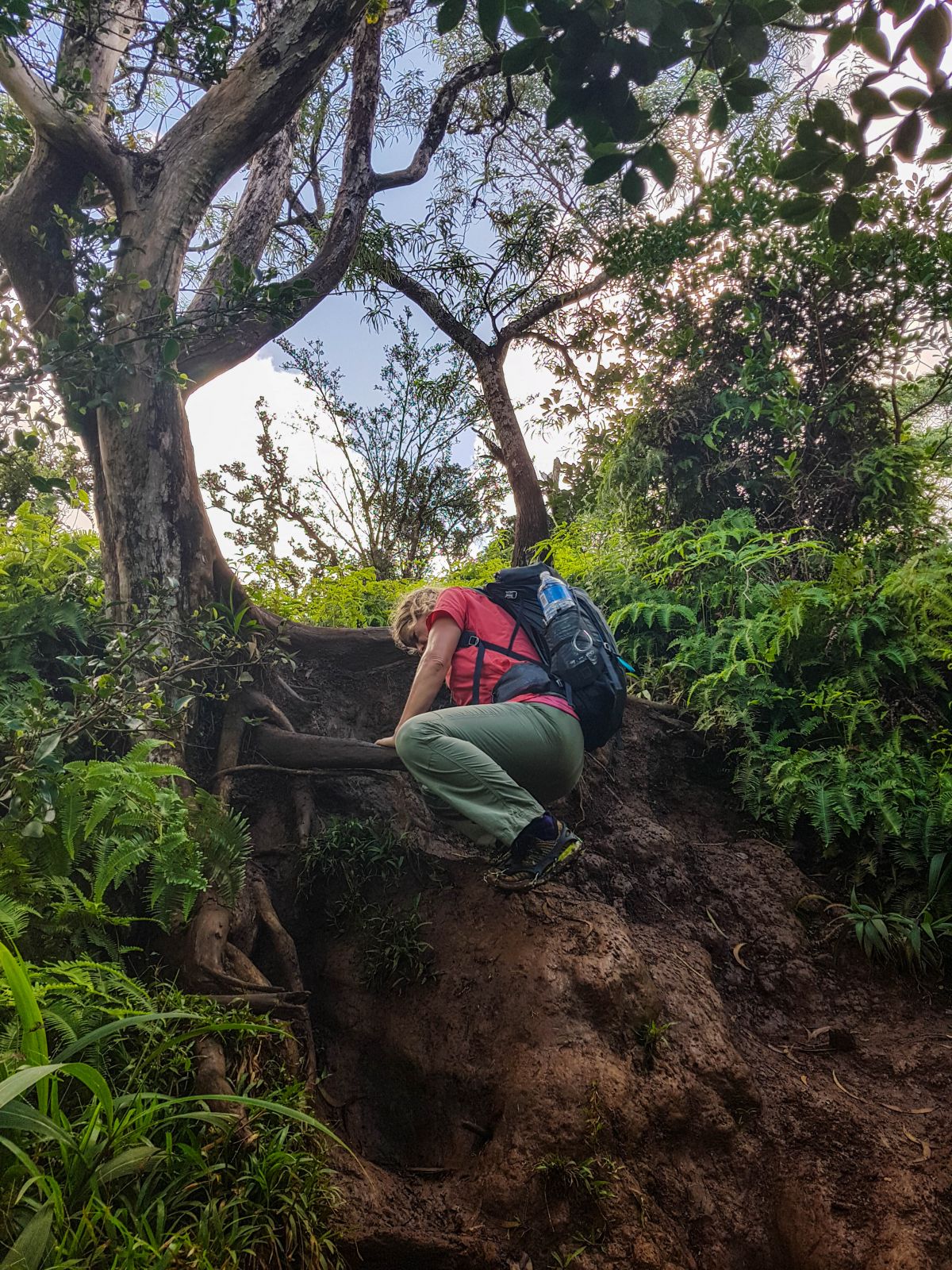
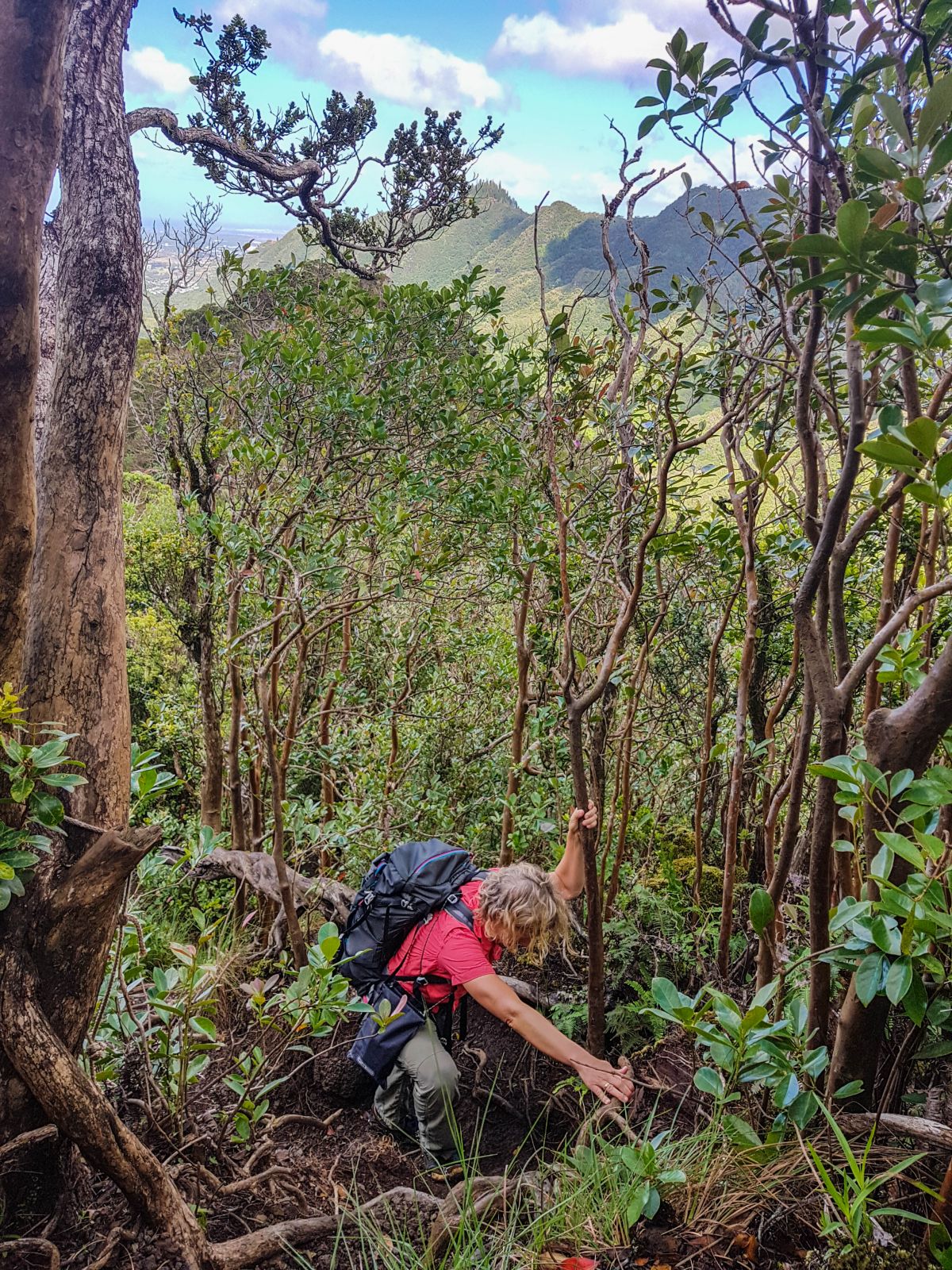
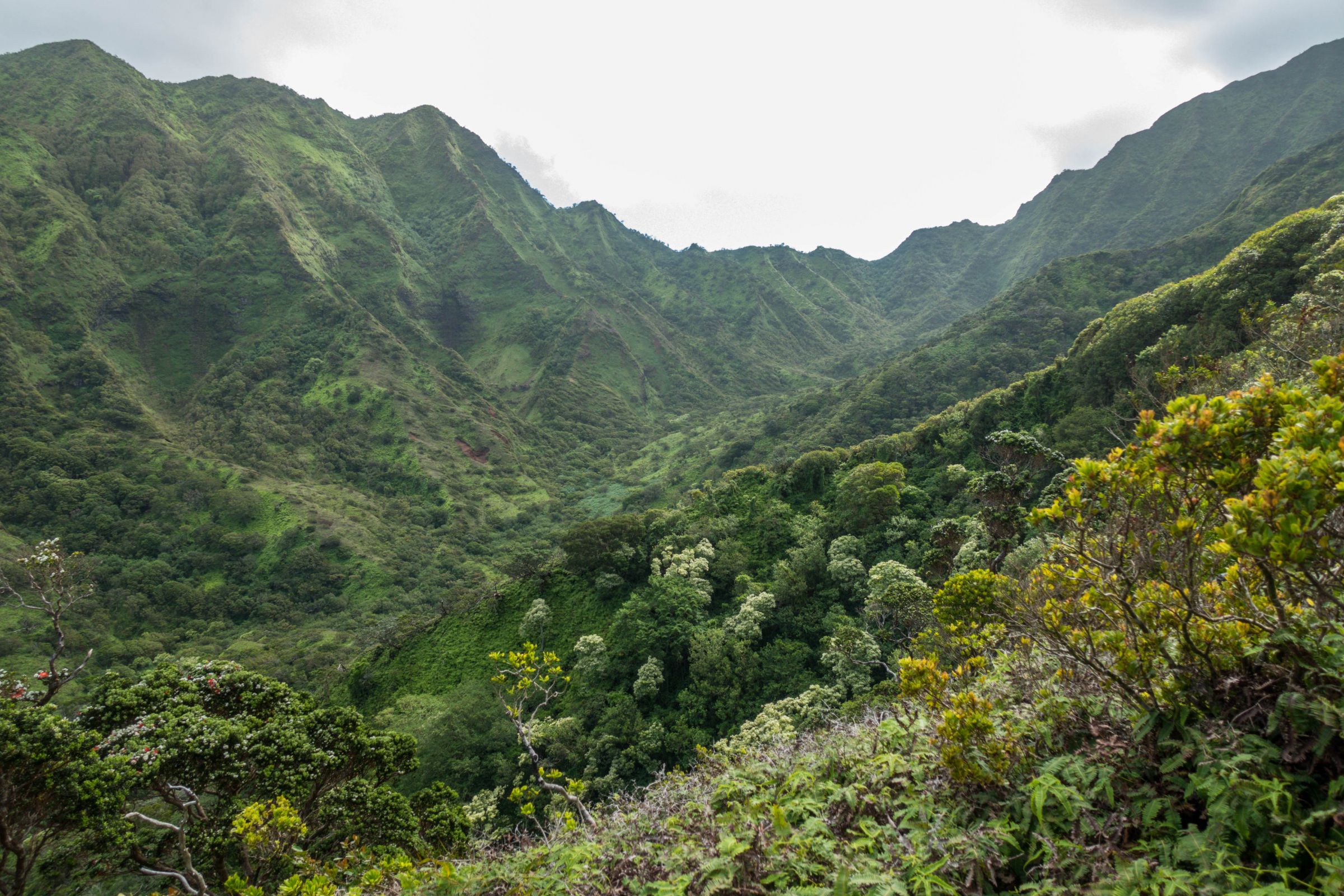
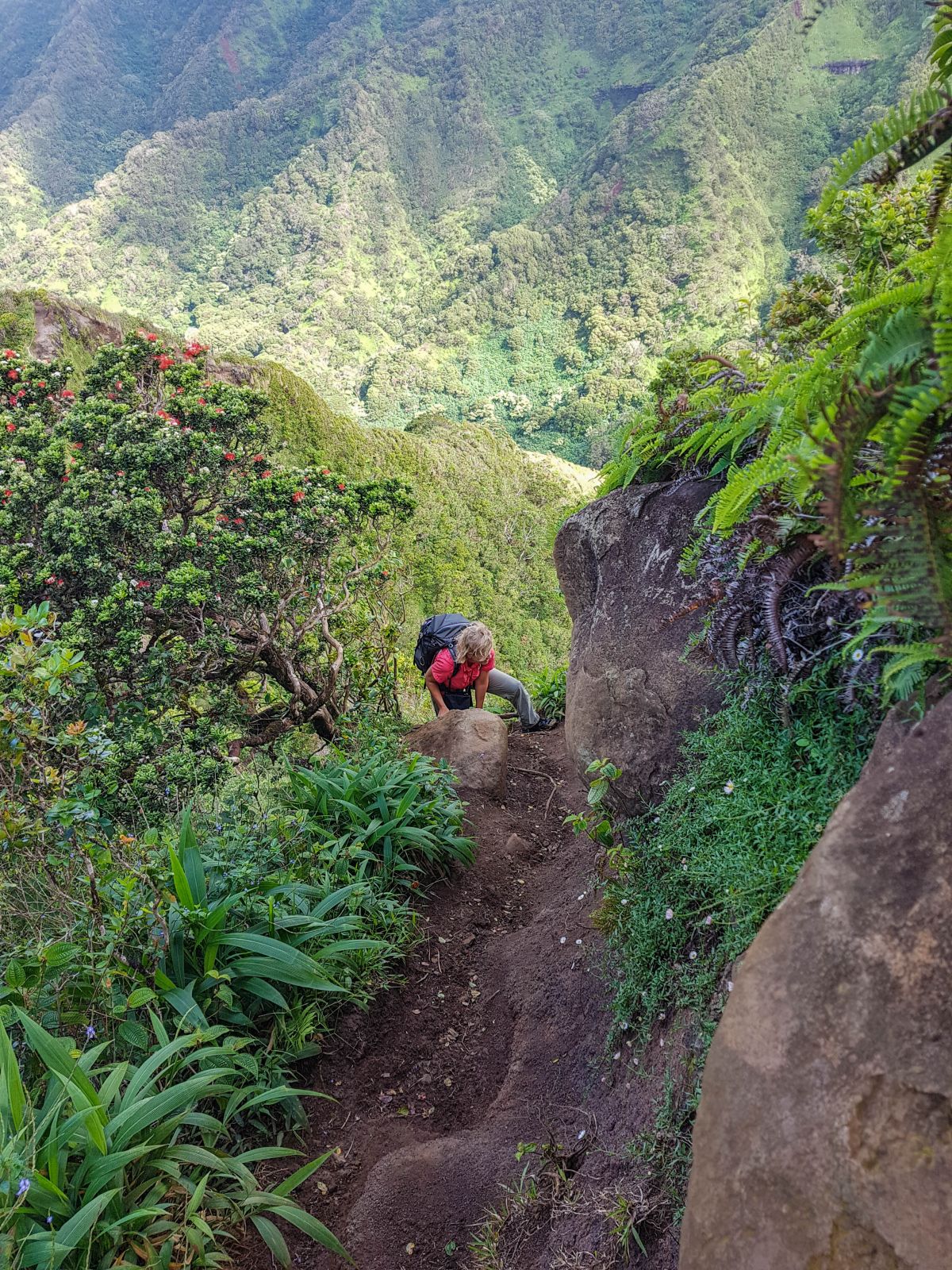
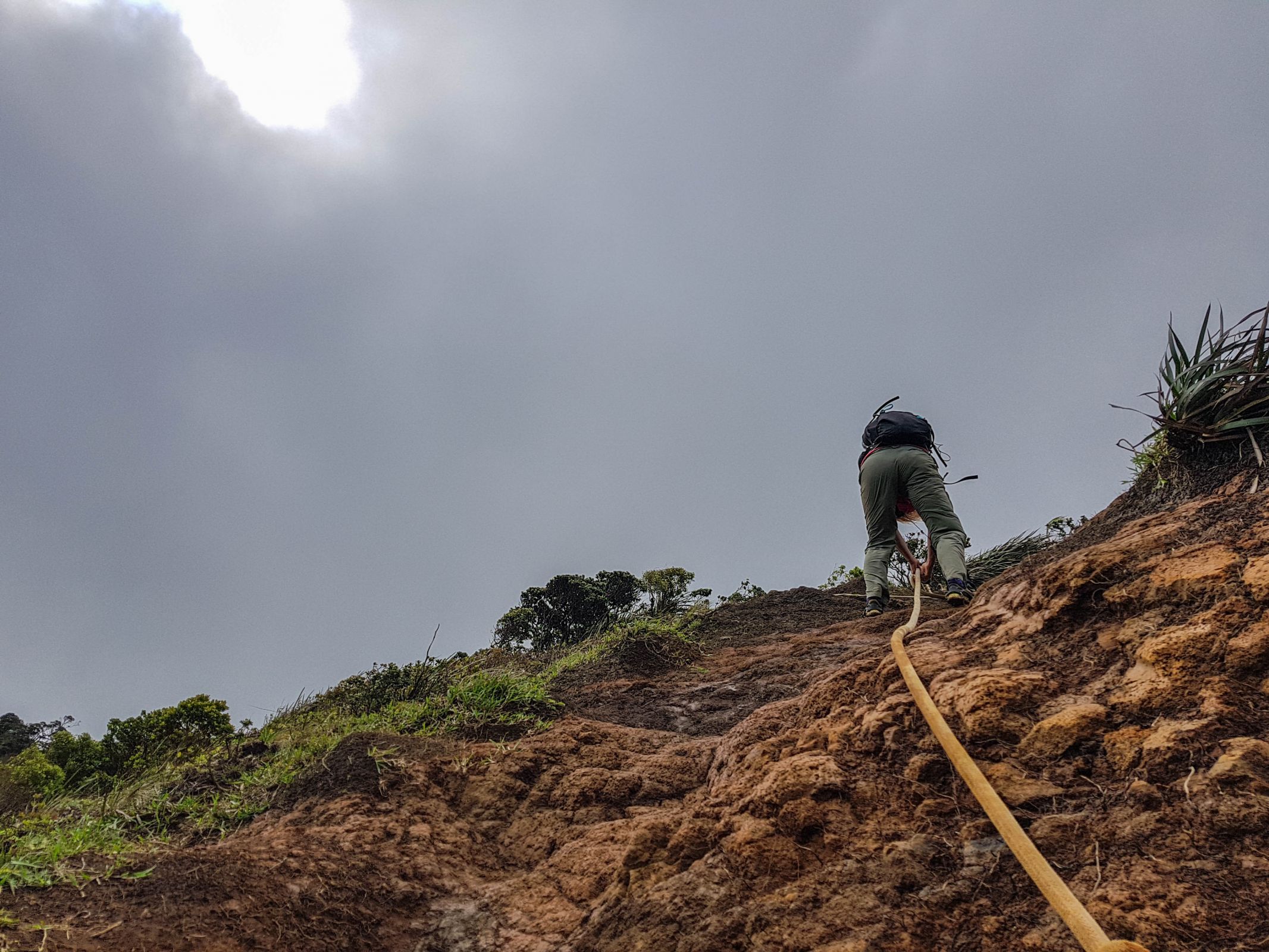
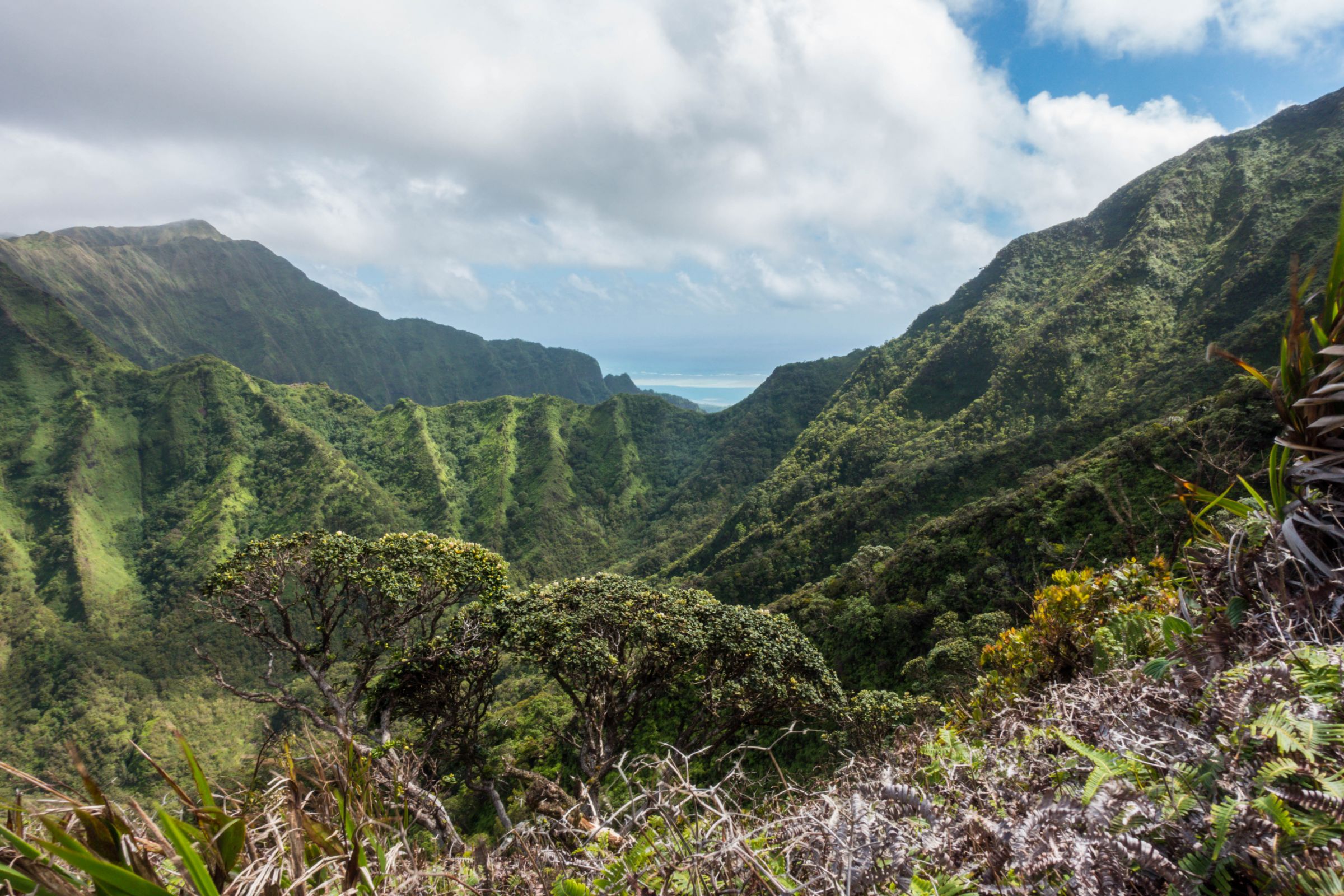
The trail led through wild, untouched nature, changing microclimates, and dense vegetation. At one point, we put on our crampons — one of the best decisions we made. Without them, the steep, muddy slopes would have been far more difficult. The landscape was stunning, with native plants and dramatic views unfolding as we climbed higher.
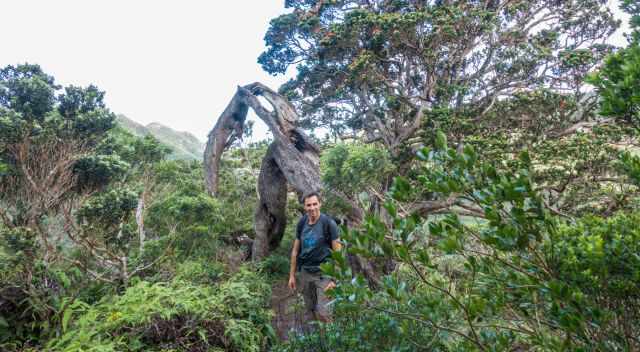
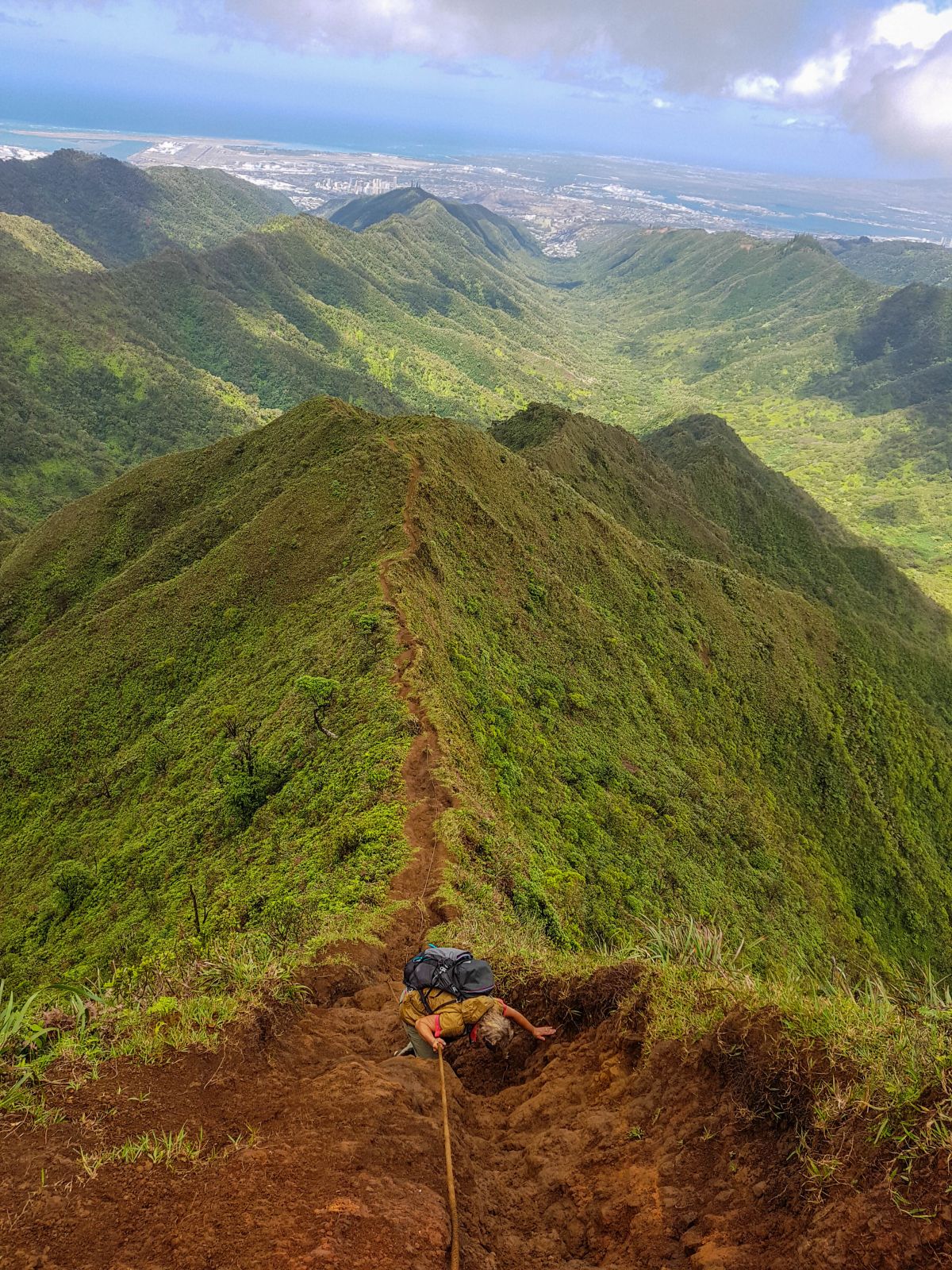
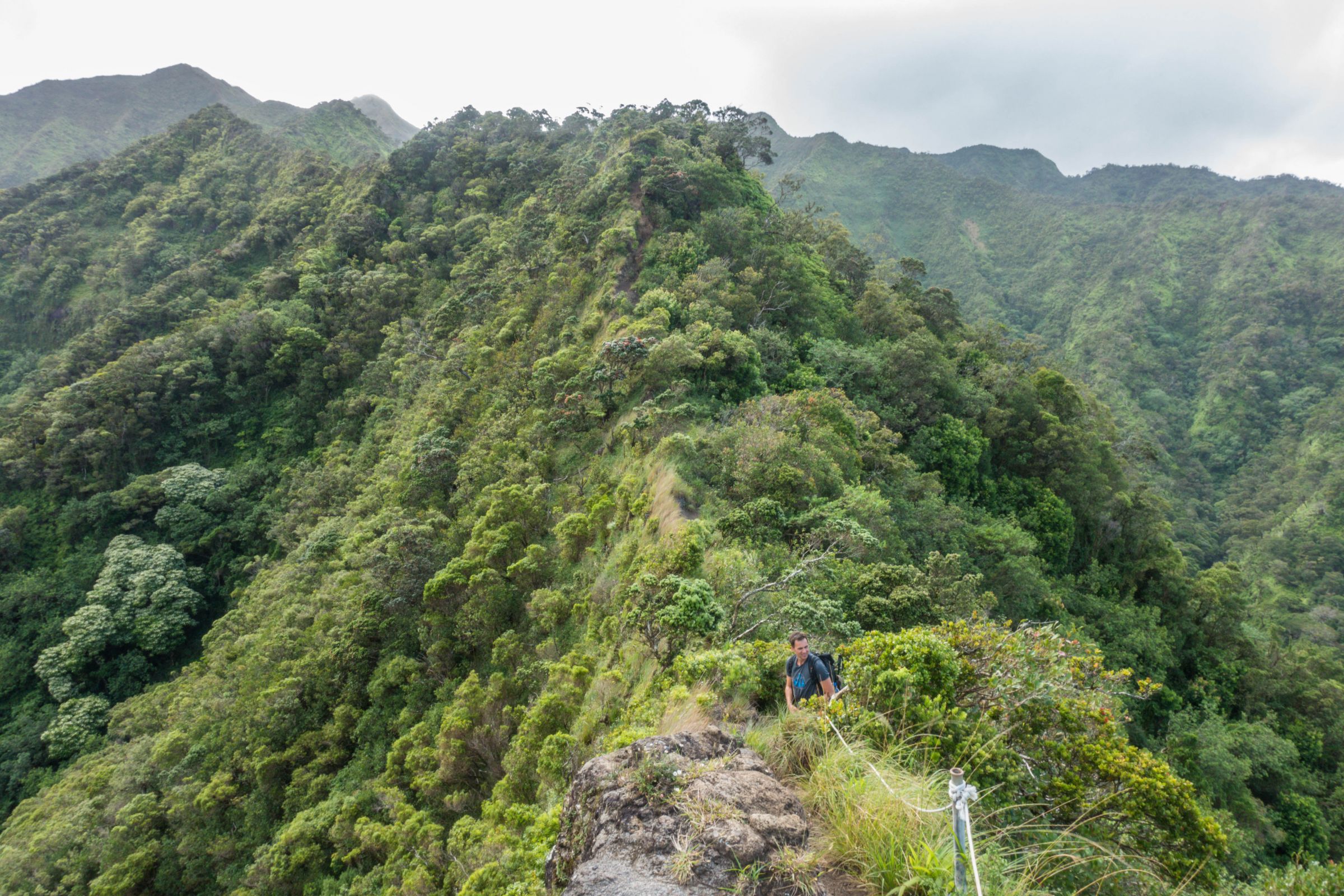
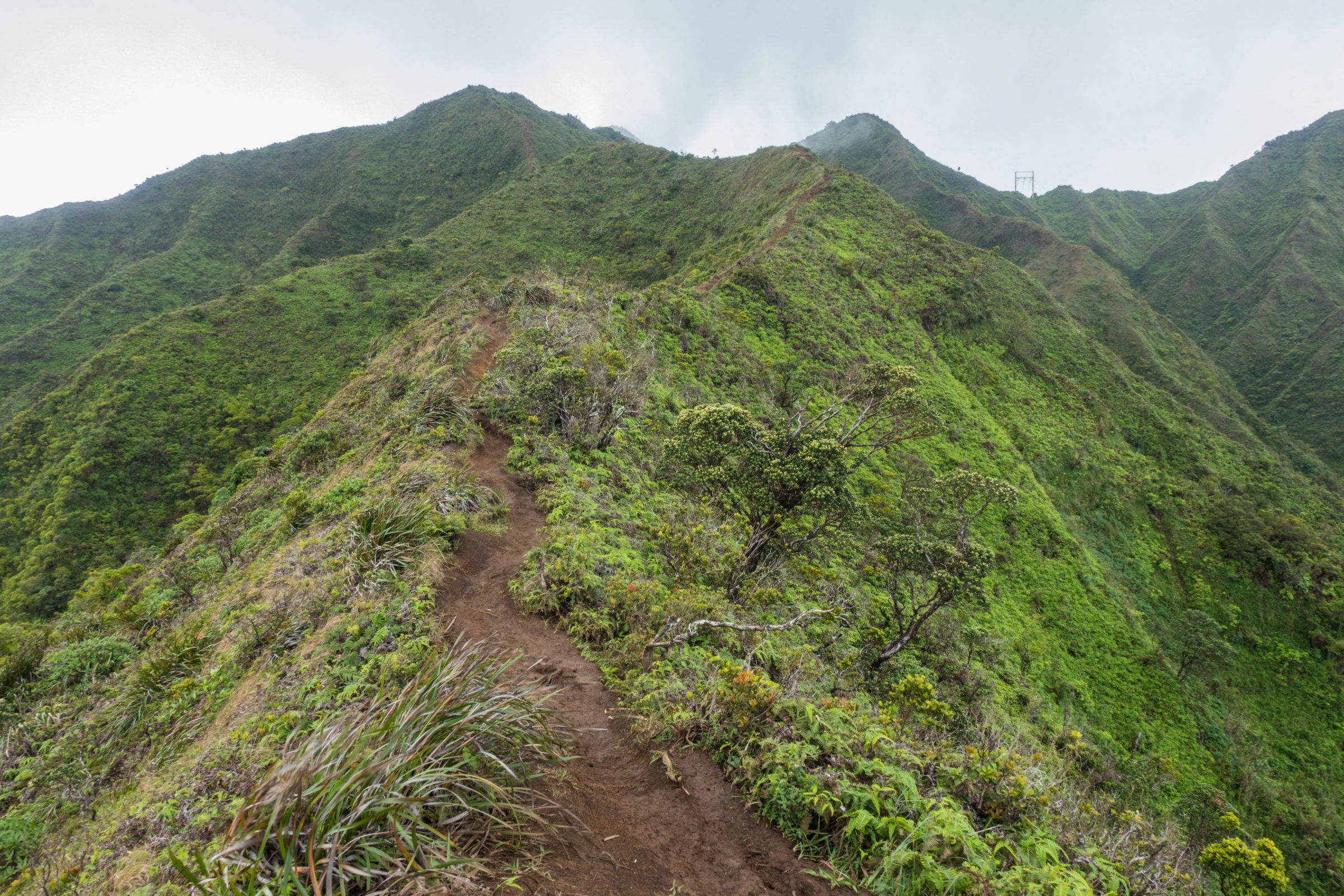
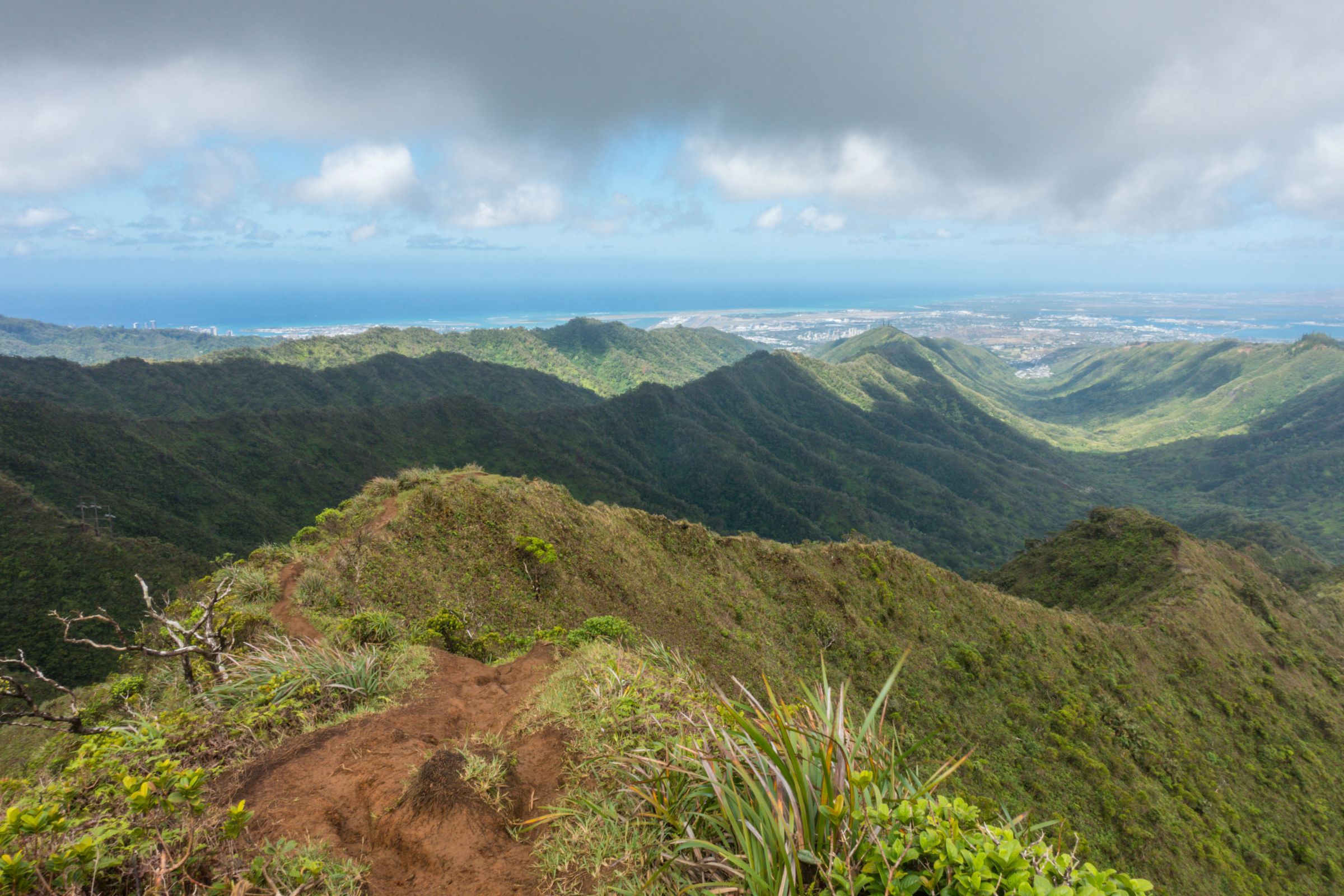
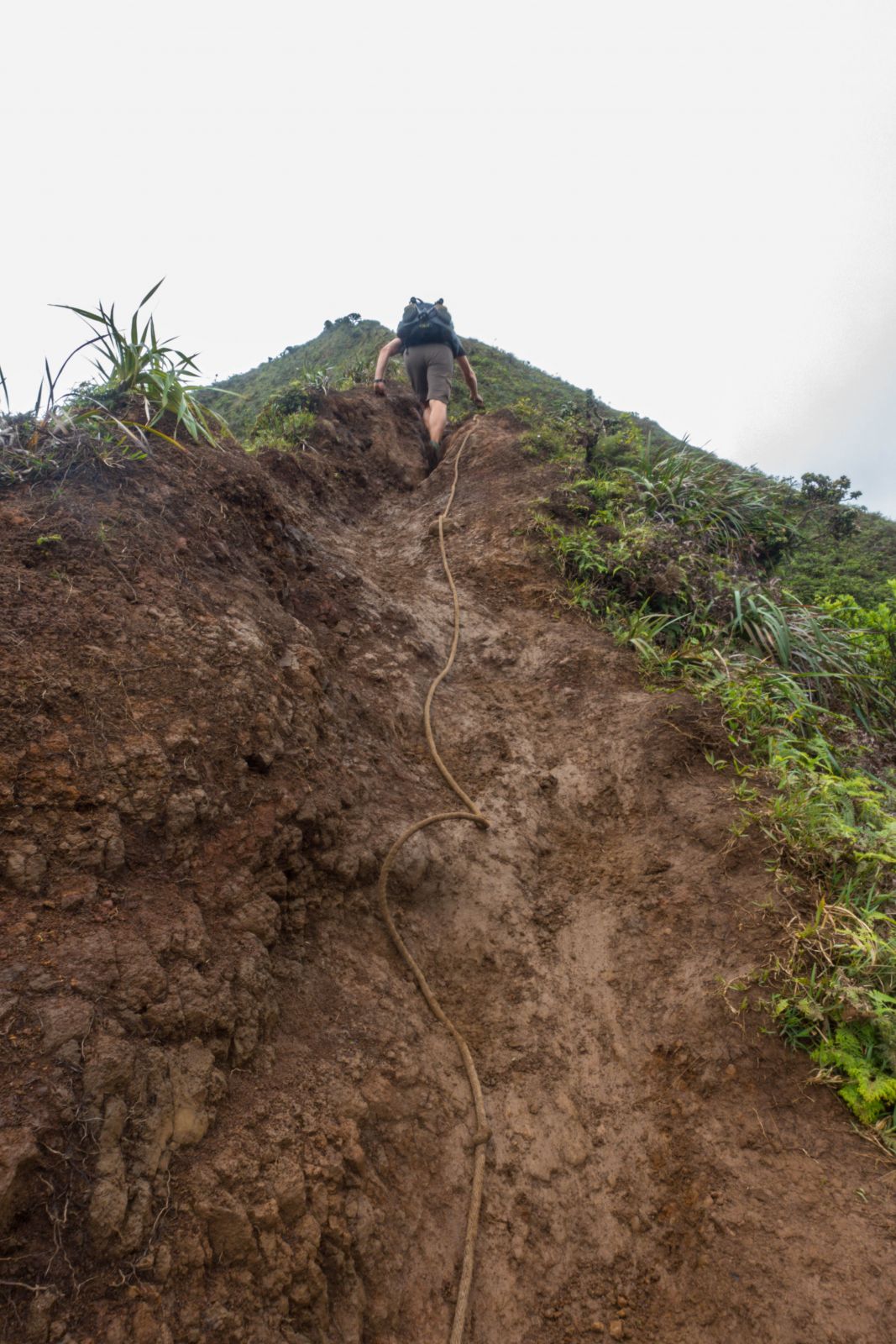
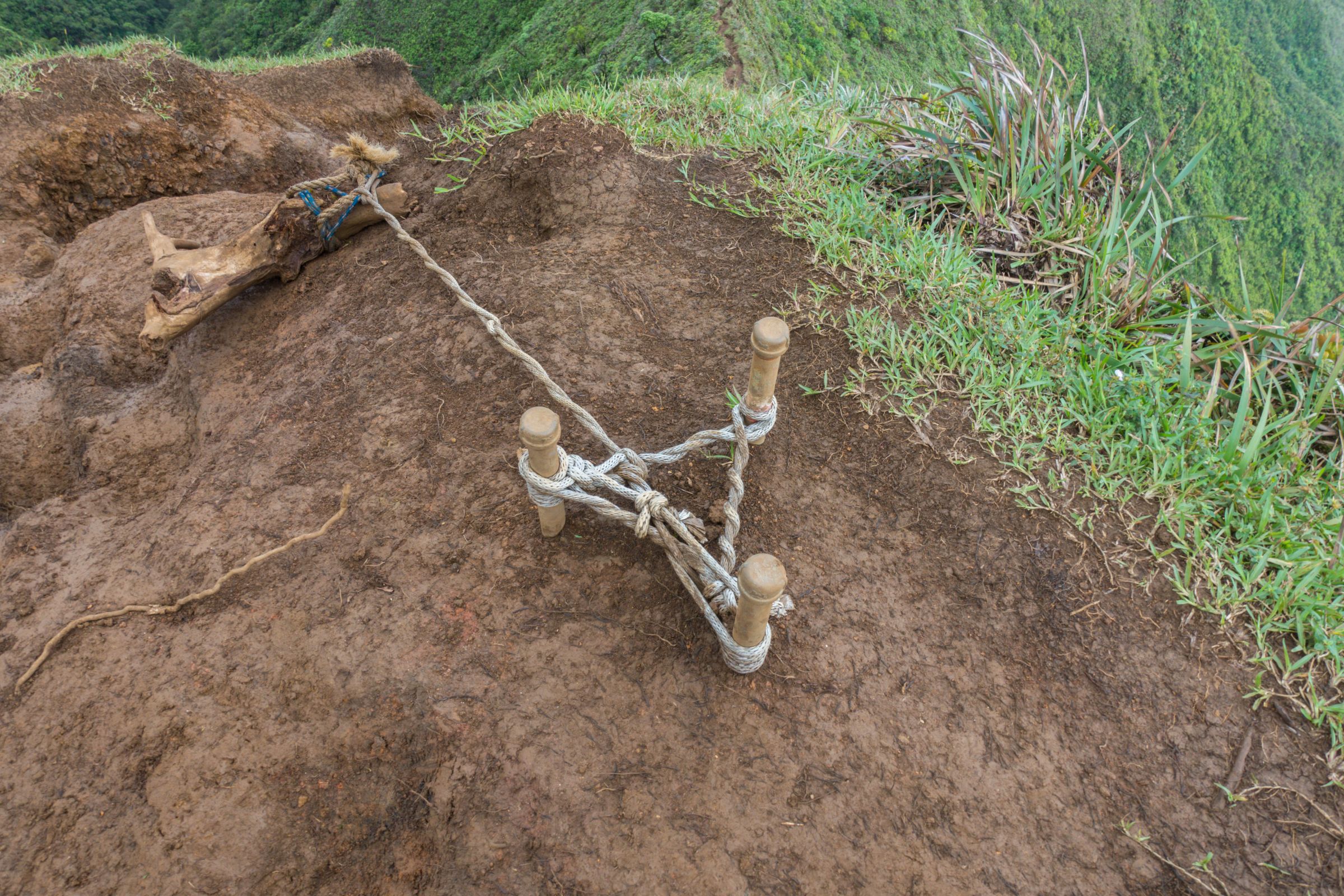
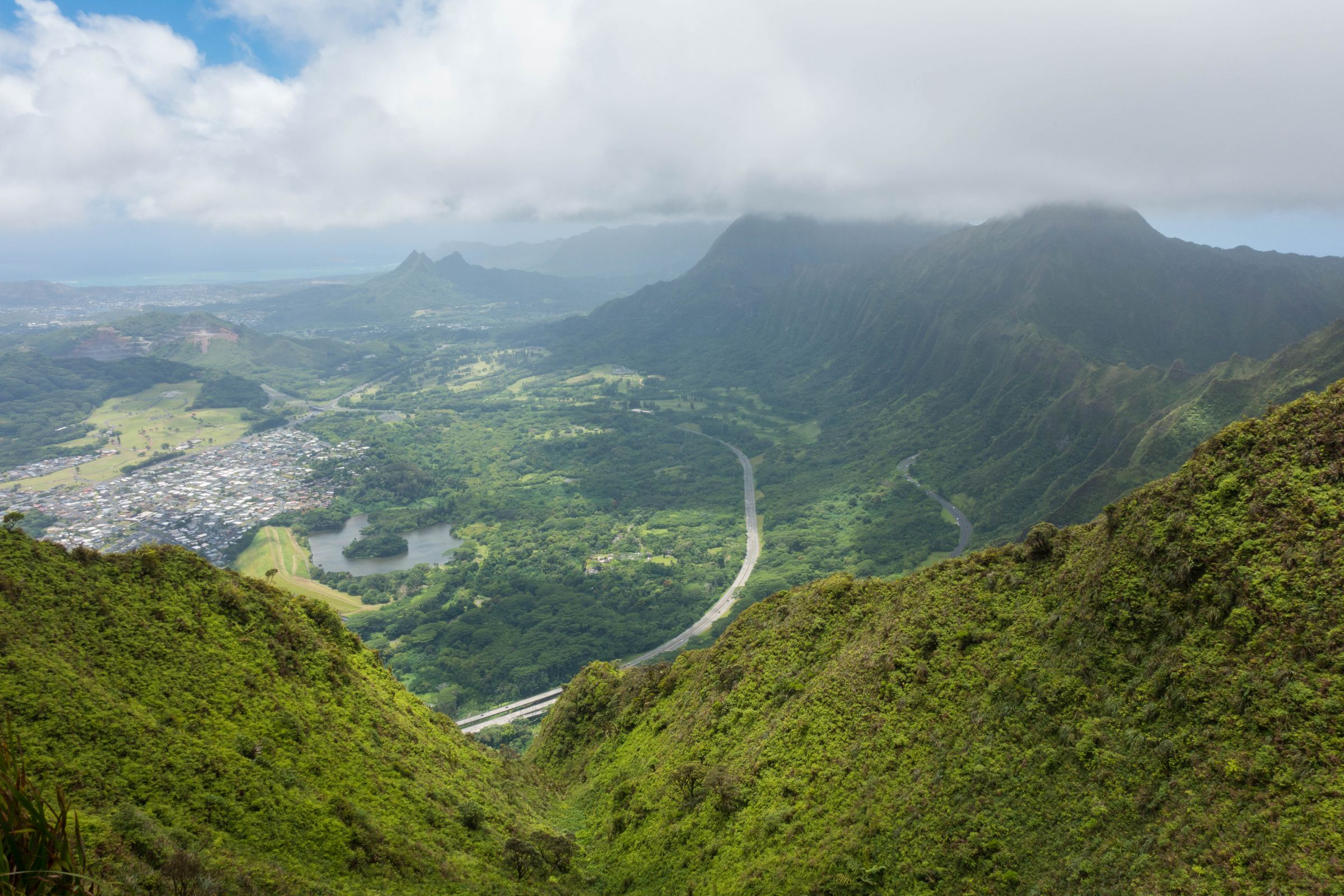
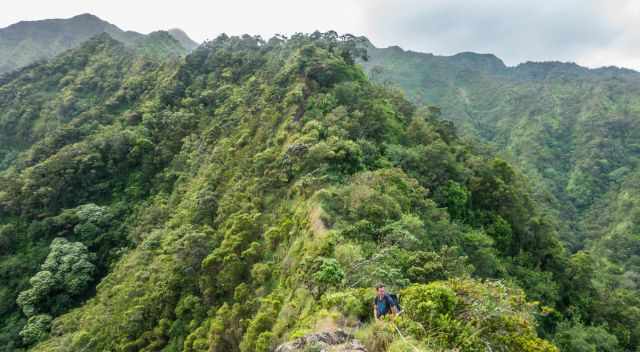
Ropes had been installed in some of the steepest sections, but we never fully trusted them. Still, in a few places, they were essential to pull ourselves up. Once we reached the ridge, the scenery became mind‑blowing. From the narrow crest, we could see the ocean on both sides of the island — a breathtaking moment that made us pause for a sandwich and a well‑earned break.
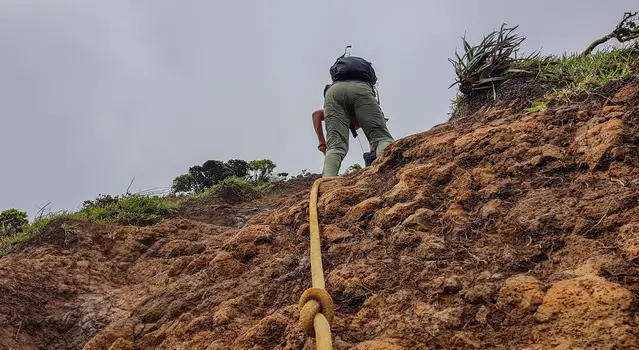
Ropes had been installed in some of the steepest sections, but we never fully trusted them. Still, in a few places, they were essential to pull ourselves up. Once we reached the ridge, the scenery became mind‑blowing. From the narrow crest, we could see the ocean on both sides of the island — a breathtaking moment that made us pause for a sandwich and a well‑earned break.
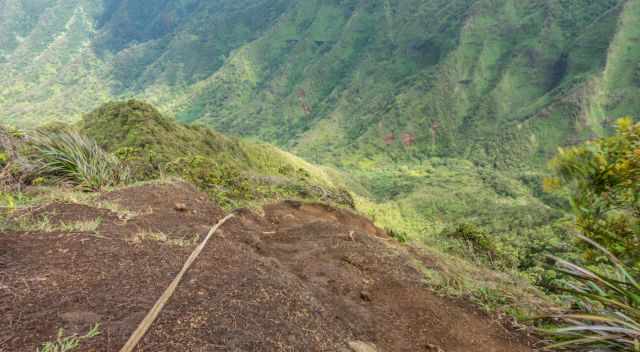
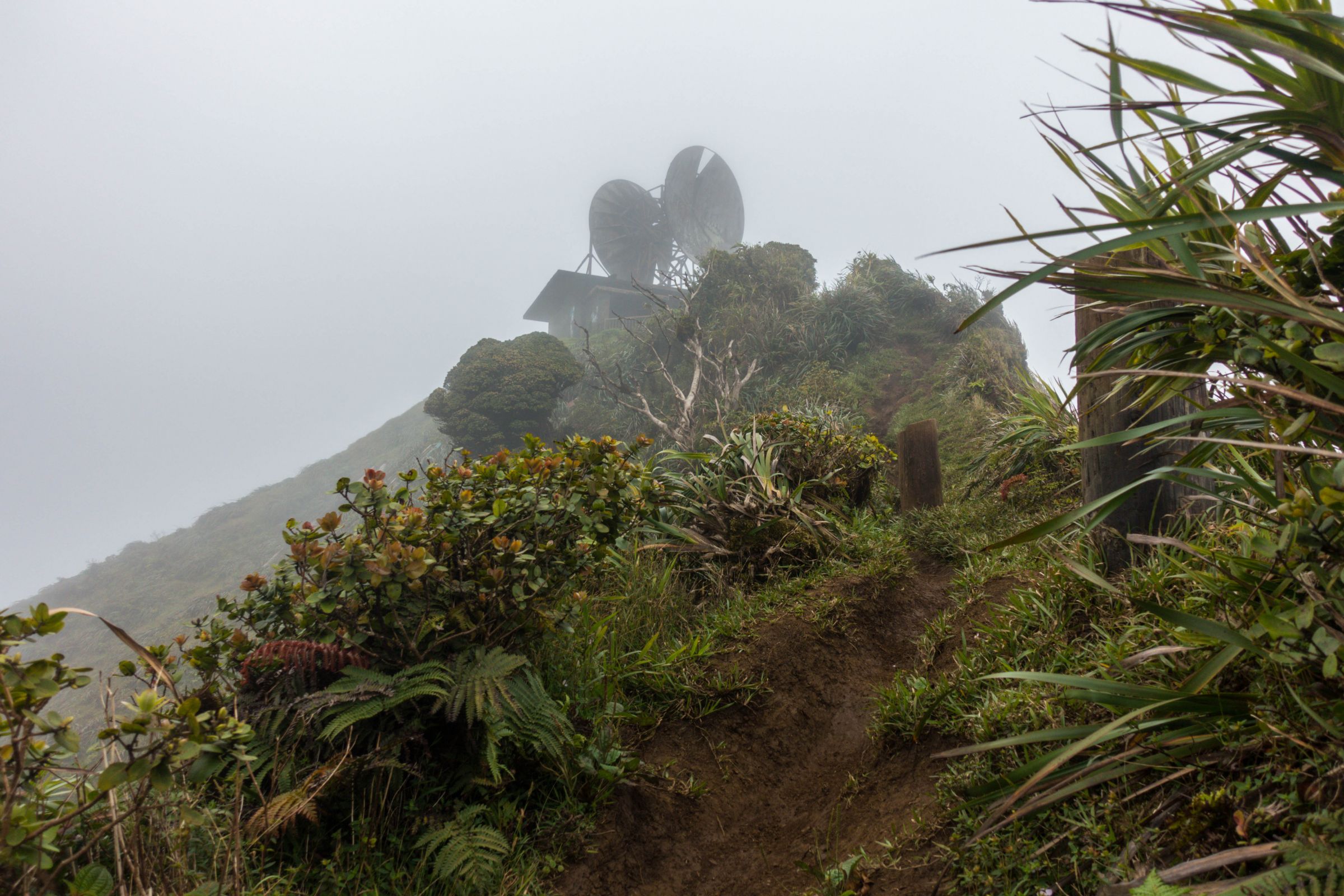
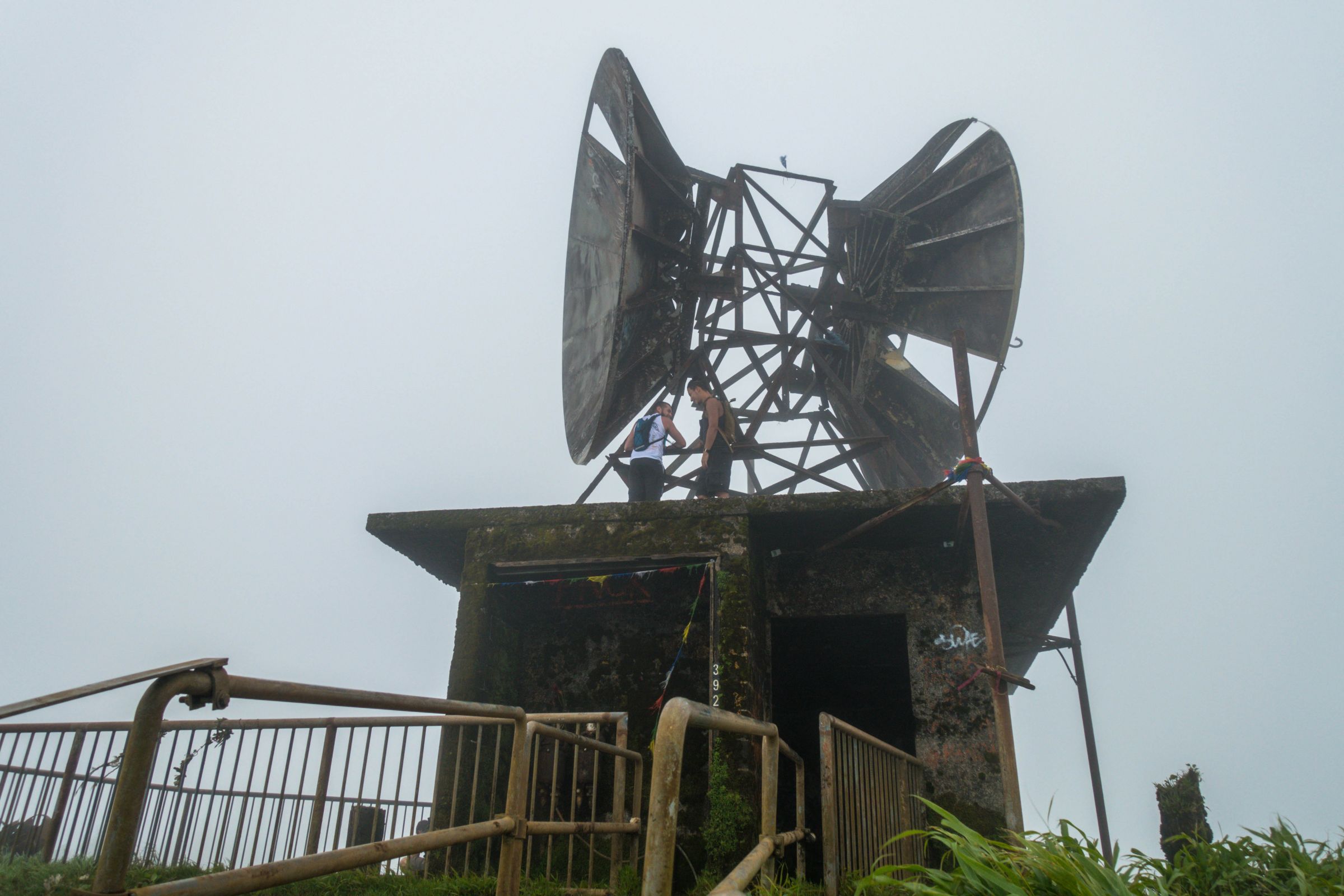
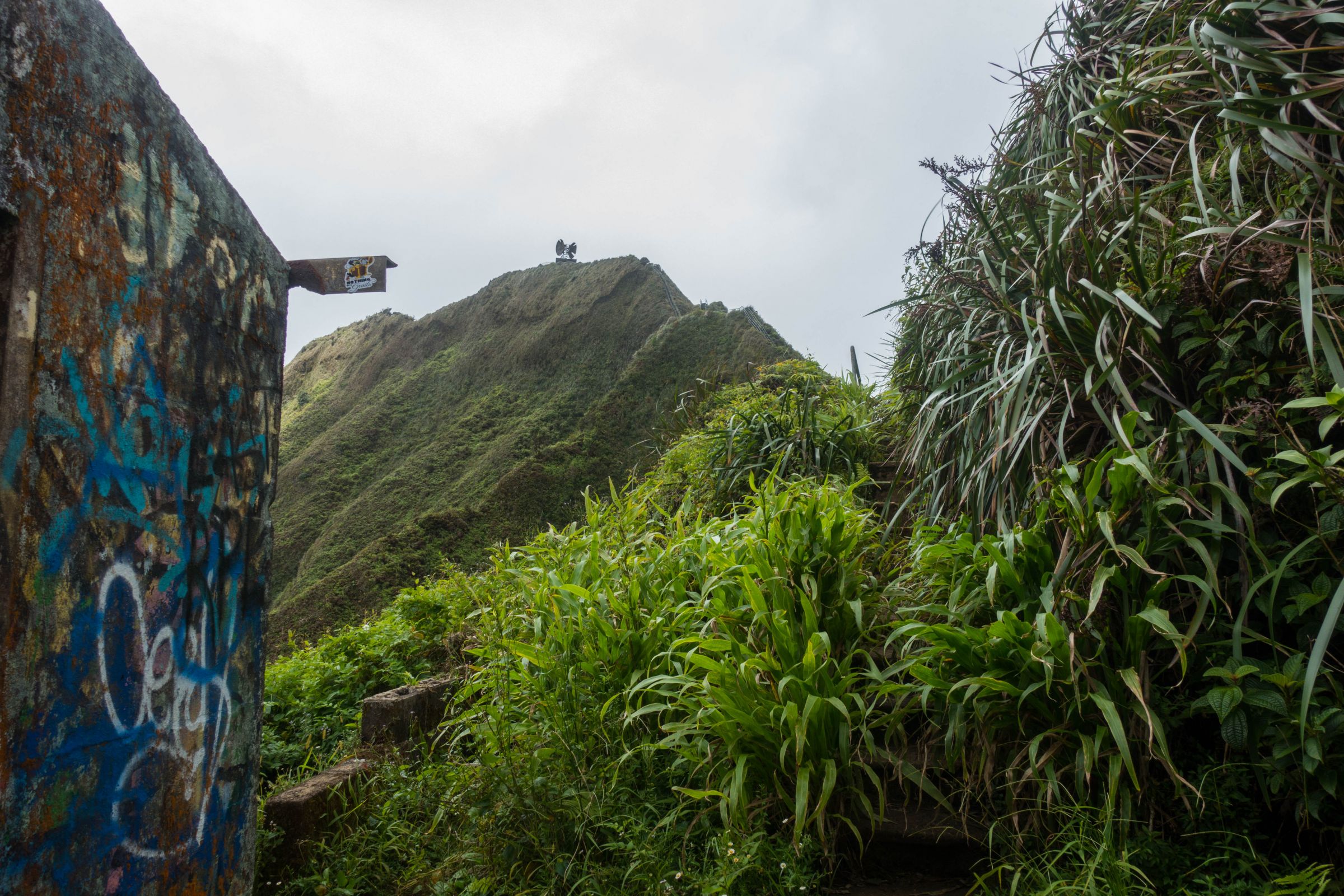
Reaching the summit felt like a huge accomplishment. It took us about four hours to cover 8.4 km (5.2 miles) with 890 m (2,920 ft) of elevation gain. When we arrived, the summit was wrapped in clouds, but we still met a few hikers — two guys from Miami and an elderly man from the Haiku neighborhood who climbed the stairs regularly back then.
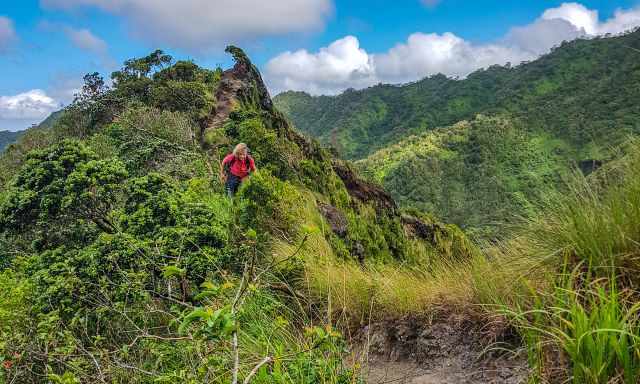
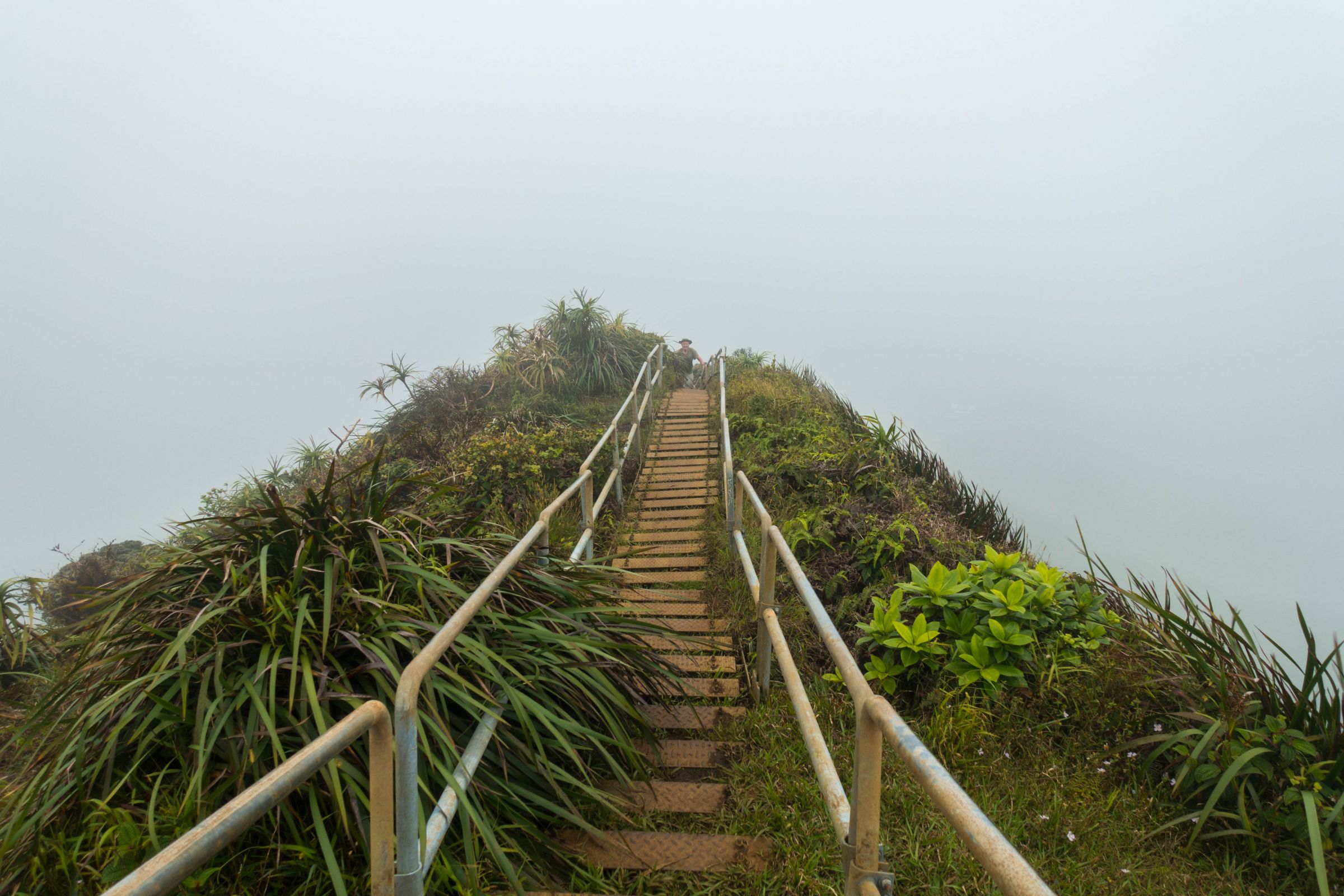
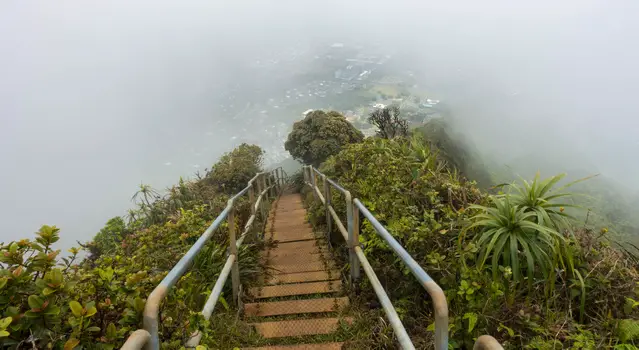
We walked several hundred meters along the Haiku Stairs and met a group of ten hikers with a guide named Mike K., who offered weekly tours at the time. He confirmed that police frequently patrolled the area. A helicopter circled above us shortly afterward — a reminder that even then, enforcement was increasing.
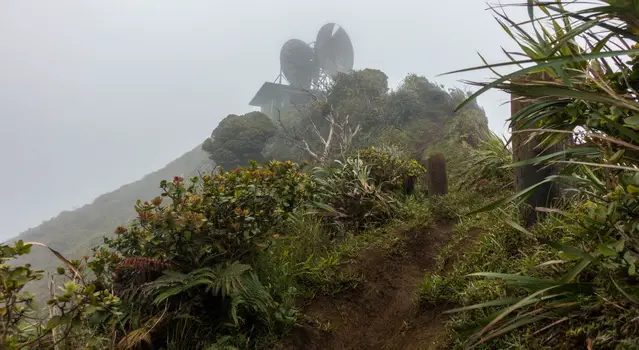
After taking in the views and the surreal atmosphere of the Stairway to Heaven, we returned to the top and followed the Moanalua Valley Trail back to our car. Was it worth it? Absolutely — and we would have done it again in a heartbeat.
From WWII to Closure: The Story of the Haiku Stairs
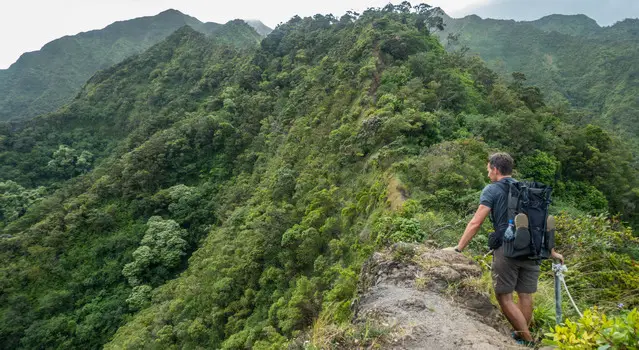
The Haiku Stairs have a long and fascinating history. Built in 1942 during World War II, the original wooden staircase provided access to a secret naval radio station high above Haiku Valley. Later rebuilt in steel, the 3,992‑step structure became one of the most spectacular and unique trails in Hawaii. Although the stairs were officially closed in 1987 due to safety and liability concerns, hikers continued to access them illegally for decades.
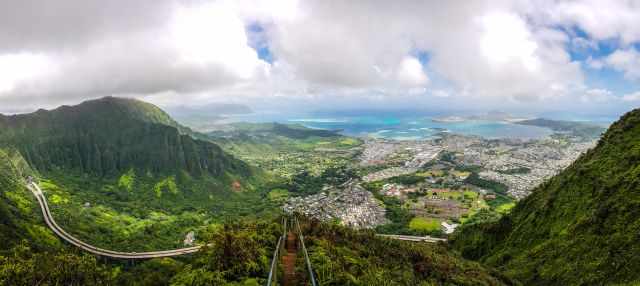
In the early 2000s, the City and County of Honolulu invested nearly one million dollars to restore the staircase with the intention of reopening it. However, ongoing disputes with surrounding landowners, liability issues, and strong neighborhood opposition prevented any legal access.
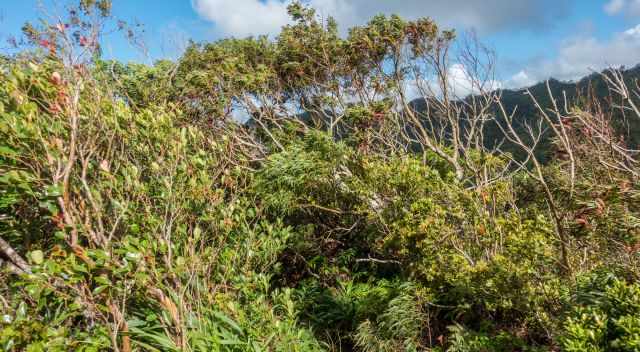
Despite the closure, the nonprofit Friends of the Haʻikū Stairs maintained the structure and kept the route clear, emphasizing its historical value and overall safety.
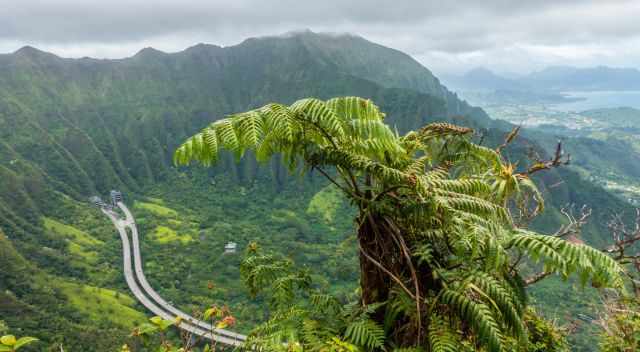
For more than 30 years, no long‑term solution was found. Instead of implementing a permit system — an approach supported by many locals — hikers were pushed toward the far more dangerous Moanalua Valley route. This led to numerous rescues, accidents, and growing frustration among residents and officials. Trespassing through private property to reach the base of the stairs became a major issue, and police enforcement increased steadily.
Former Trail Conditions on the Moanalua Valley Route
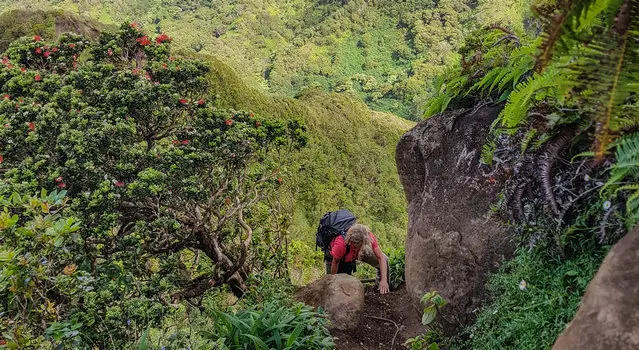
Me, climbing up the steep trail.
Before the closure, the Moanalua Valley Trail and the exposed ridge to the Keahiakahoe summit were known for rapidly changing weather and challenging conditions. Even during the drier summer months, the trail was often muddy, slippery, and affected by frequent rain showers. Strong winds and fog were common along the ridge, making the final ascent especially demanding.

In spring, the valley was usually wet, and hikers often had to cross the Moanalua Stream several times. By early summer, the stream sometimes dried out, making the first part of the hike easier. Temperatures along the trail were warm, but the ridge could feel surprisingly cold due to the constant wind.
Summer brought drier weather but also higher humidity and heat. Autumn was considered one of the best times for this hike, with pleasant temperatures and fewer crowds on the island. Winter, however, was the wettest season, and heavy rainfall frequently turned the trail into deep mud. Flooding in the valley and poor visibility on the ridge made the route particularly dangerous.
These conditions are part of the trail’s history. Today, the Moanalua Valley route is closed, and hiking it is no longer permitted.
Looking for a legal alternative which is free of charge in Oahu? Get all the detailed information for the Koko Head Stairs in my article.

Best Months to Visit
Location and Tips

I hope the Friends of the Haiku Stairs put it through their new solution. Recently I had a correspondence with Dean, a guy from Honolulu; he is concerned although living so close, he never made it to the top, and perhaps he never will.
Packing List - 7 Essentials for Oahu
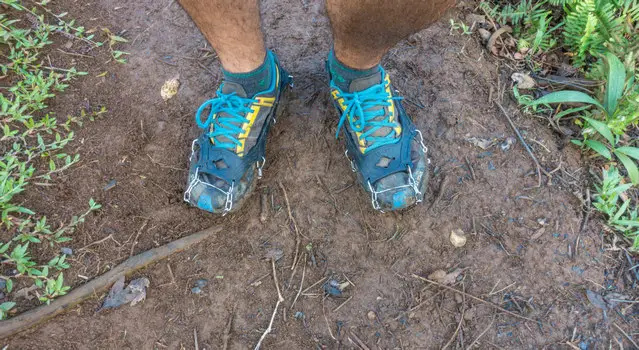
- Crampons - otherwise, the soil is too muddy and slippery on the steeper parts.
Tip: The outdoor shop in Oahu sells crampons for hiking. They are usually used in snow and ice. - Gloves - for more grip and to protect your hands while holding the ropes
- Carry an additional shirt during winter - it's cold on the summit, and you may like to change the wet one.
- Plenty of energy food - the hike is long and strenuous.
- Minimum 3 litres of water for each hiker and electrolytes; you are sweating extremely on this strenuous track.
- Rain and windproof jacket - weather can change quickly, especially at a higher elevation.
- A good camera - for your most thrilling adventure
Who We Are

I am passionate about sharing some of the most beautiful places in the world with you, but I still can't live from my work, and we have regular jobs, too.
It is a tough business nowadays because fake travel websites rewrite content without effort and expense. Want to know more about these schemes, picture theft, and how to unmask them? Check out "The Truth About Fake Travel Websites and Picture Theft"
Do you like my Haiku Stairs Guide and Tips? Please share it with your friends and on social media, subscribe to our YouTube Channel.
Do You Like to Support Me - It's easy; use the Paypal Button below 😍