
When Is the Best Time
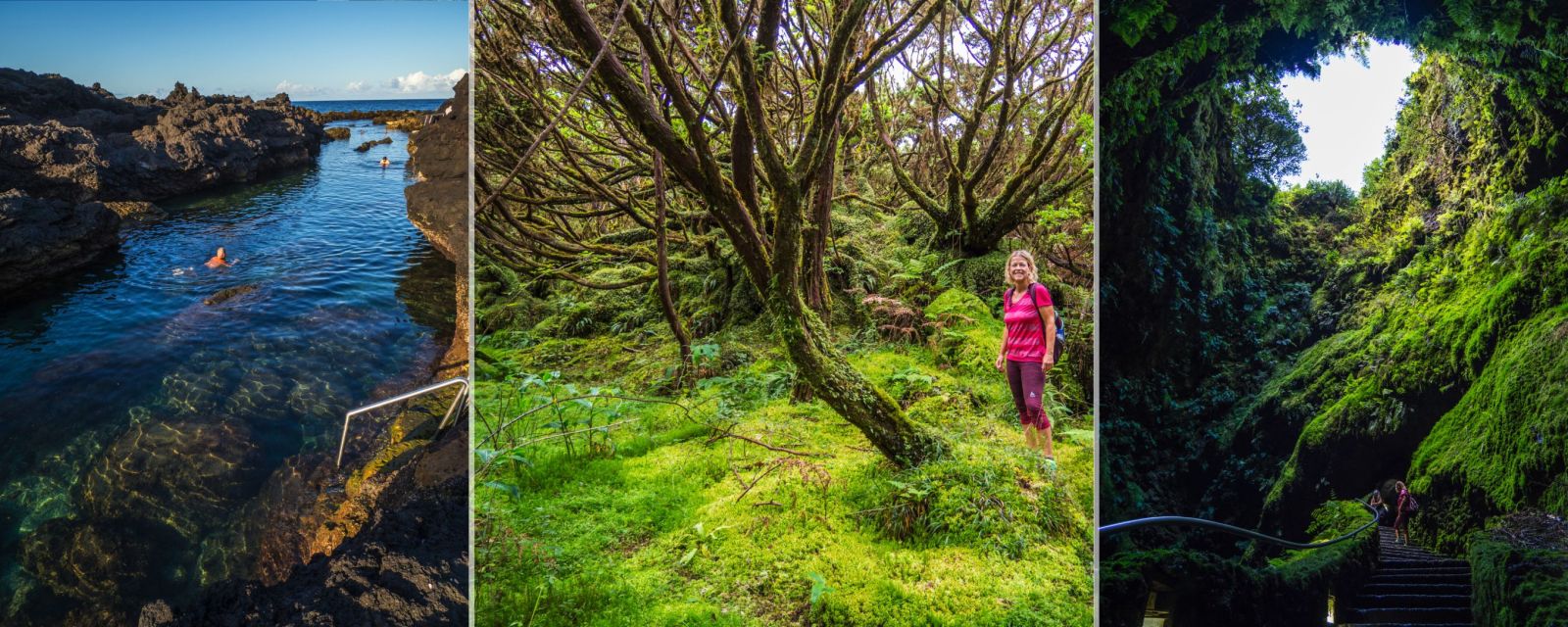
Terceira and the Azores are famous for their majestic volcanic caves — especially Algar do Carvão and Gruta do Natal — but the island offers far more than these geological highlights. As the third‑largest island of the archipelago, Terceira combines beautiful nature, enchanted rainforest hikes, breathtaking viewpoints, excellent natural pools, and outstanding restaurants.
During our recent visit last September, we explored new trails, revisited favourite places, and gathered fresh tips to help you plan your own trip. Whether you’re here for caves, forests, or coastal pools, Terceira delivers an impressive variety of landscapes within just a few kilometres.
Why Terceira Is So Special
Algar do Carvão was the main reason for our trip, and descending the staircase into the volcanic cone is an unforgettable experience. Nearby, you can witness active geothermal vents at Furnas do Enxofre, and later cool off in the most beautiful natural seawater pool in Biscoitos.
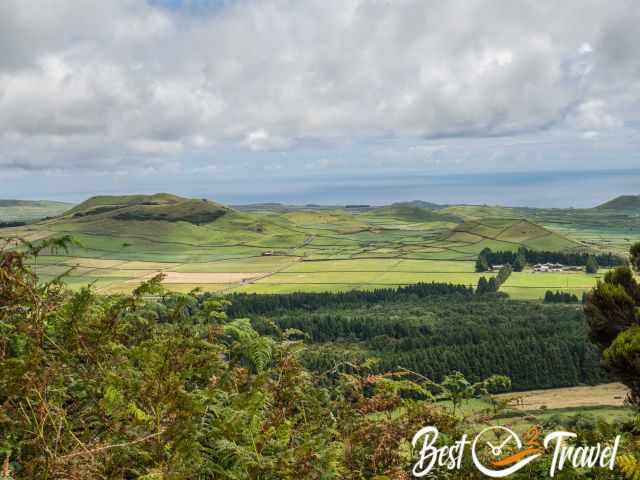
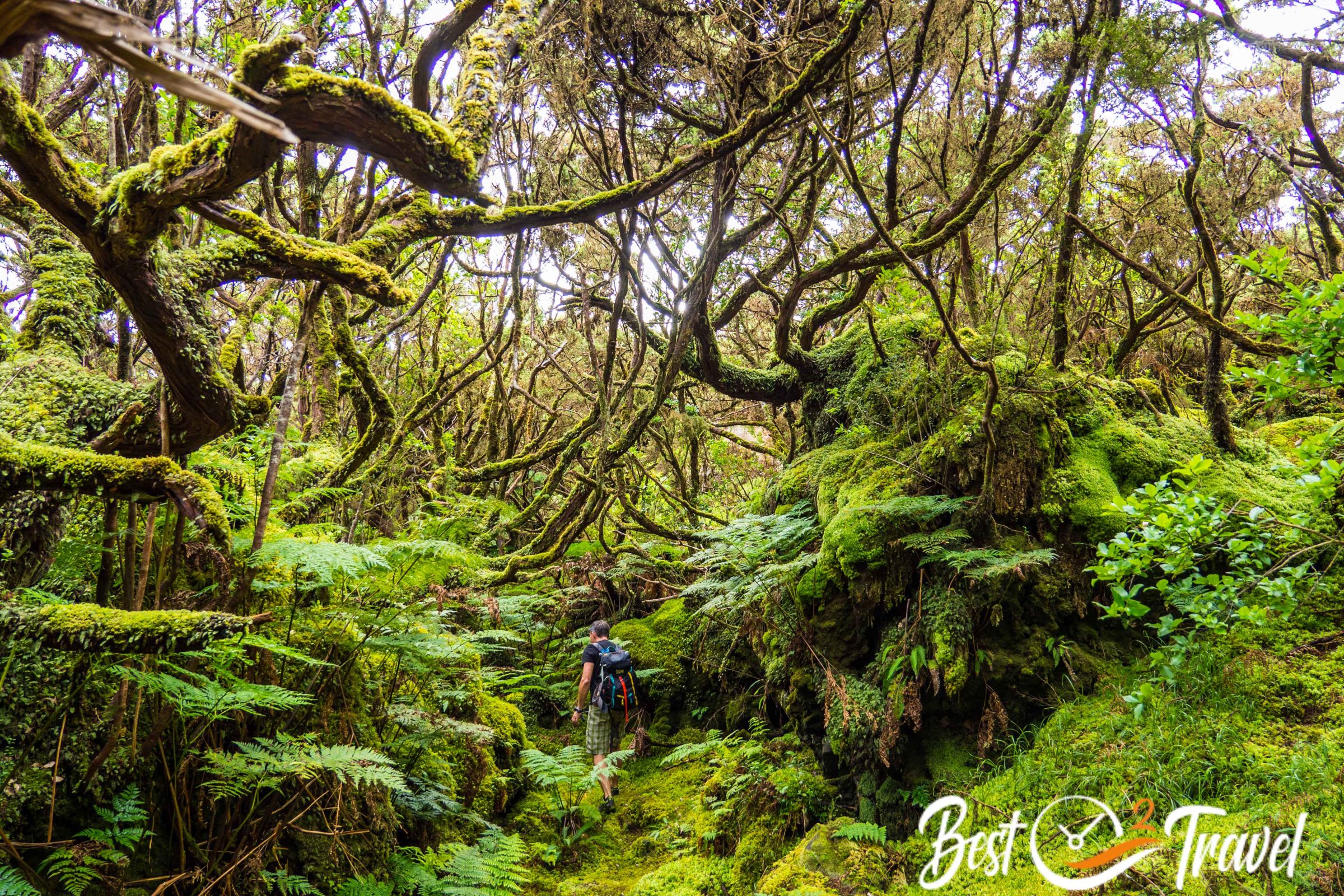
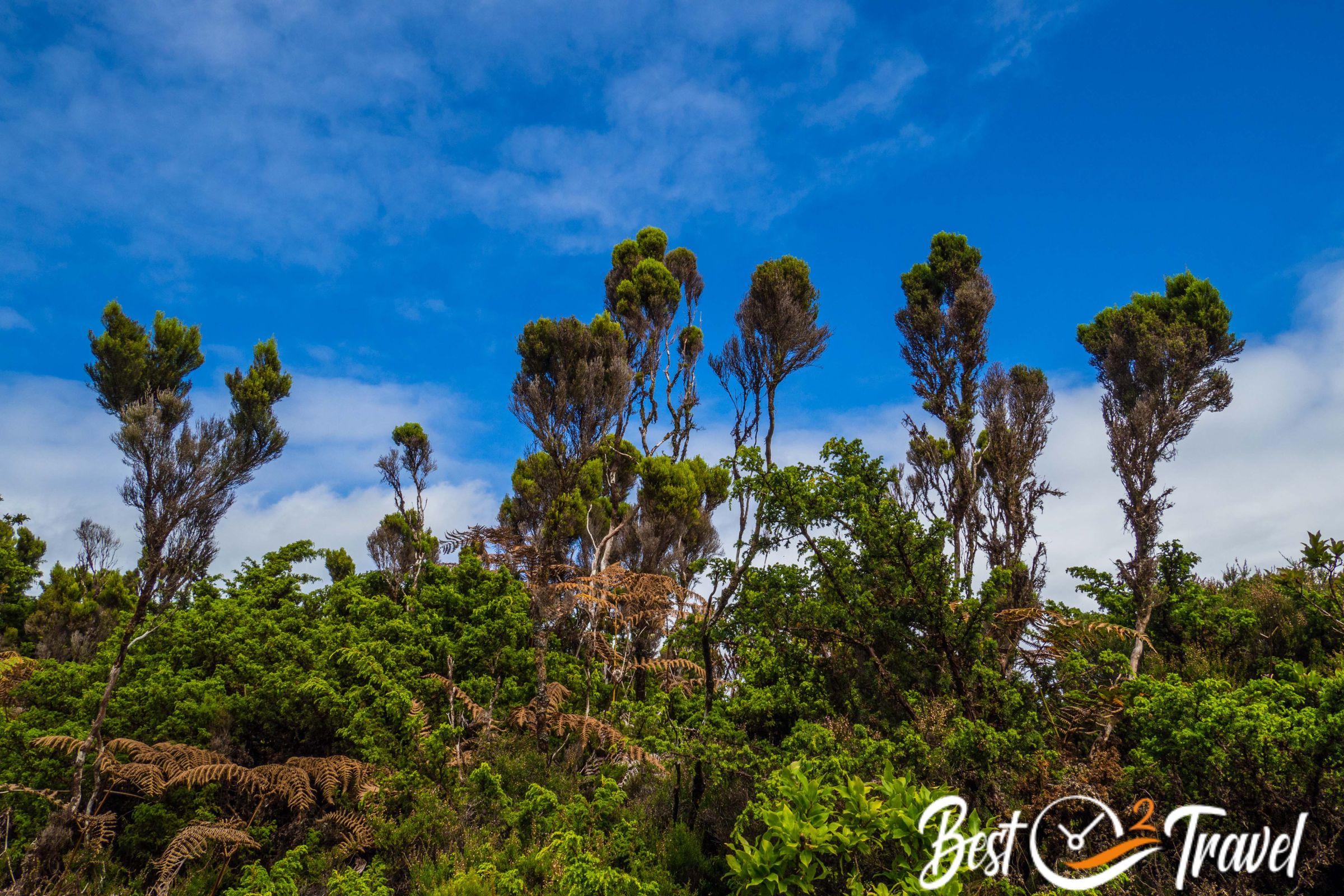
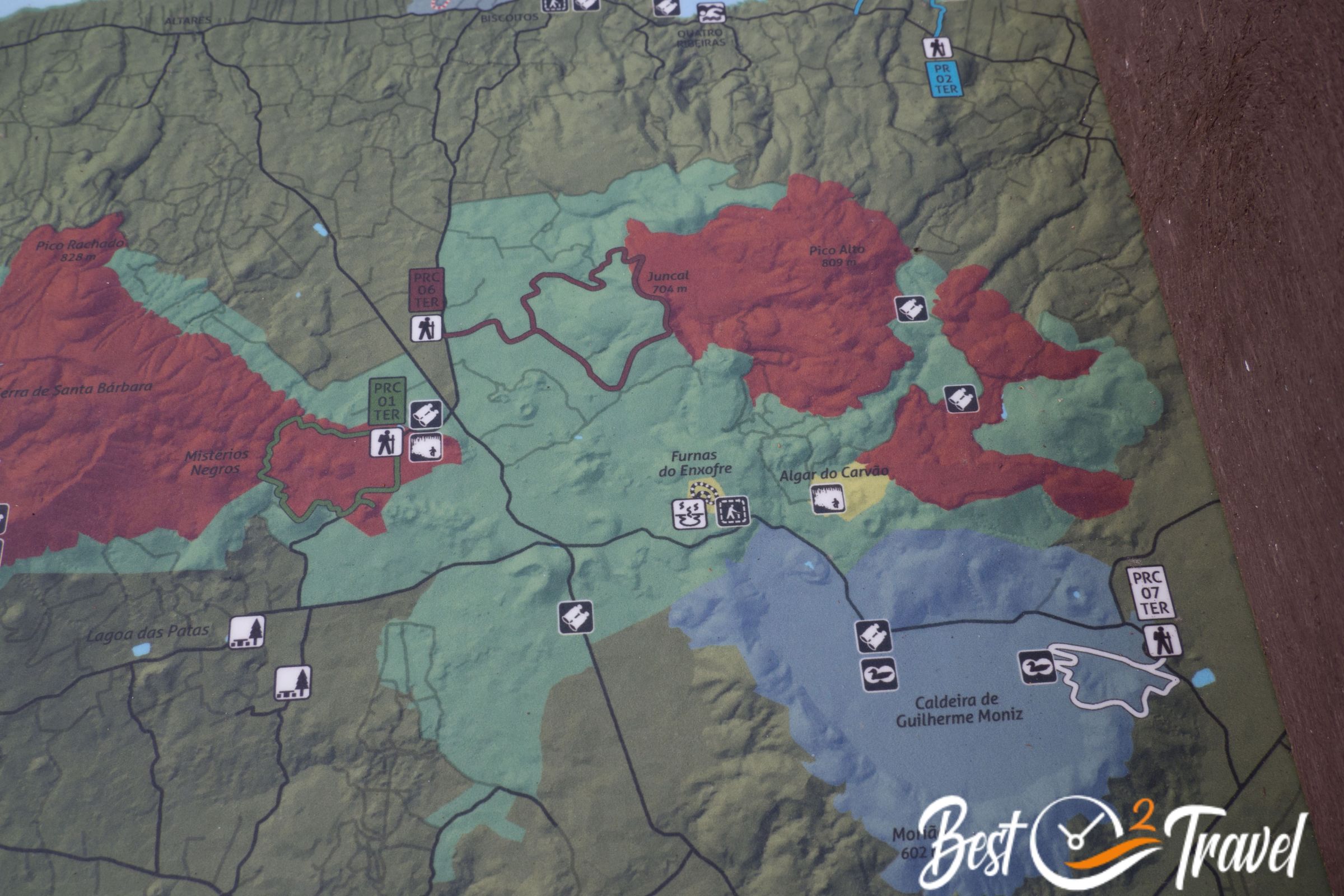
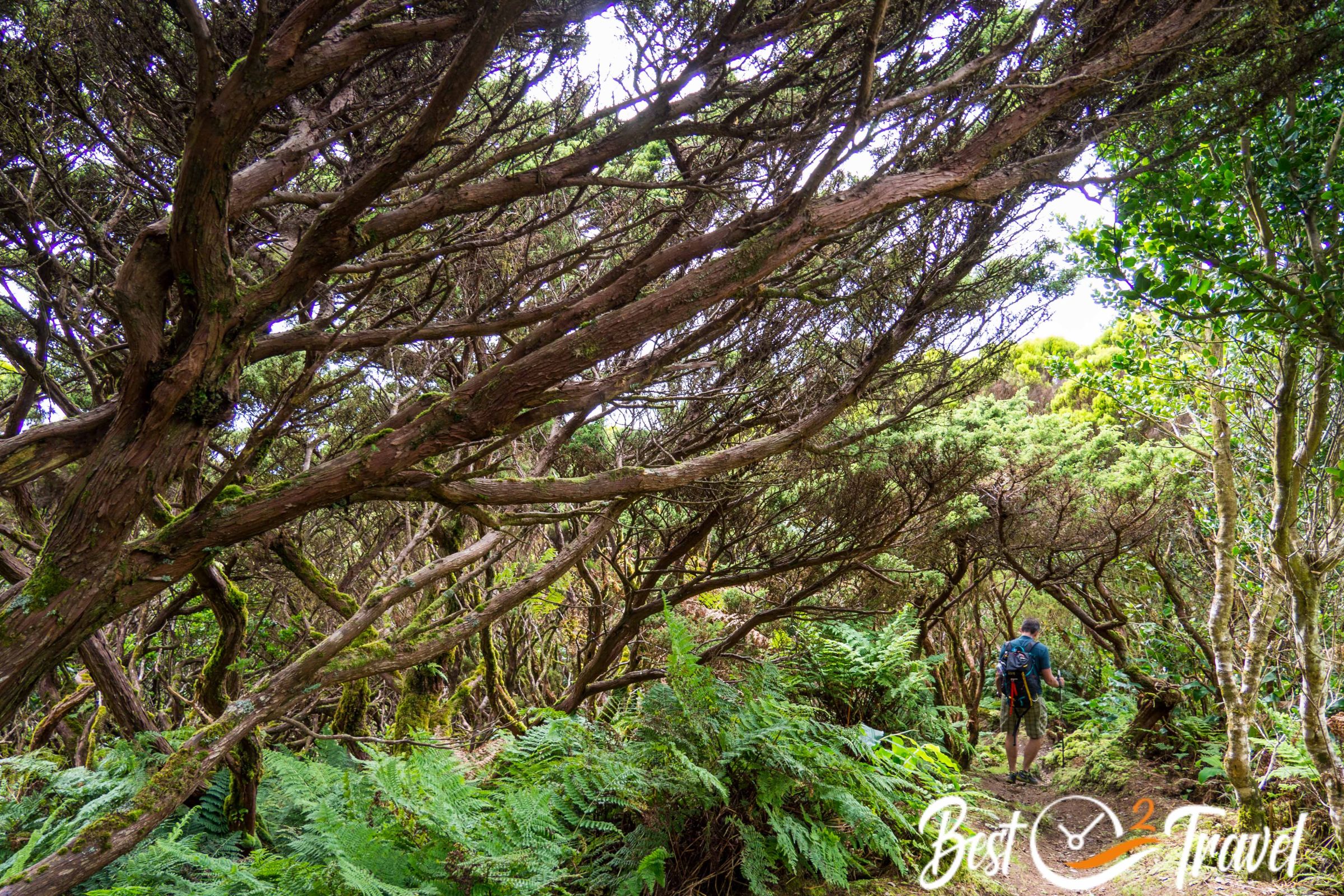
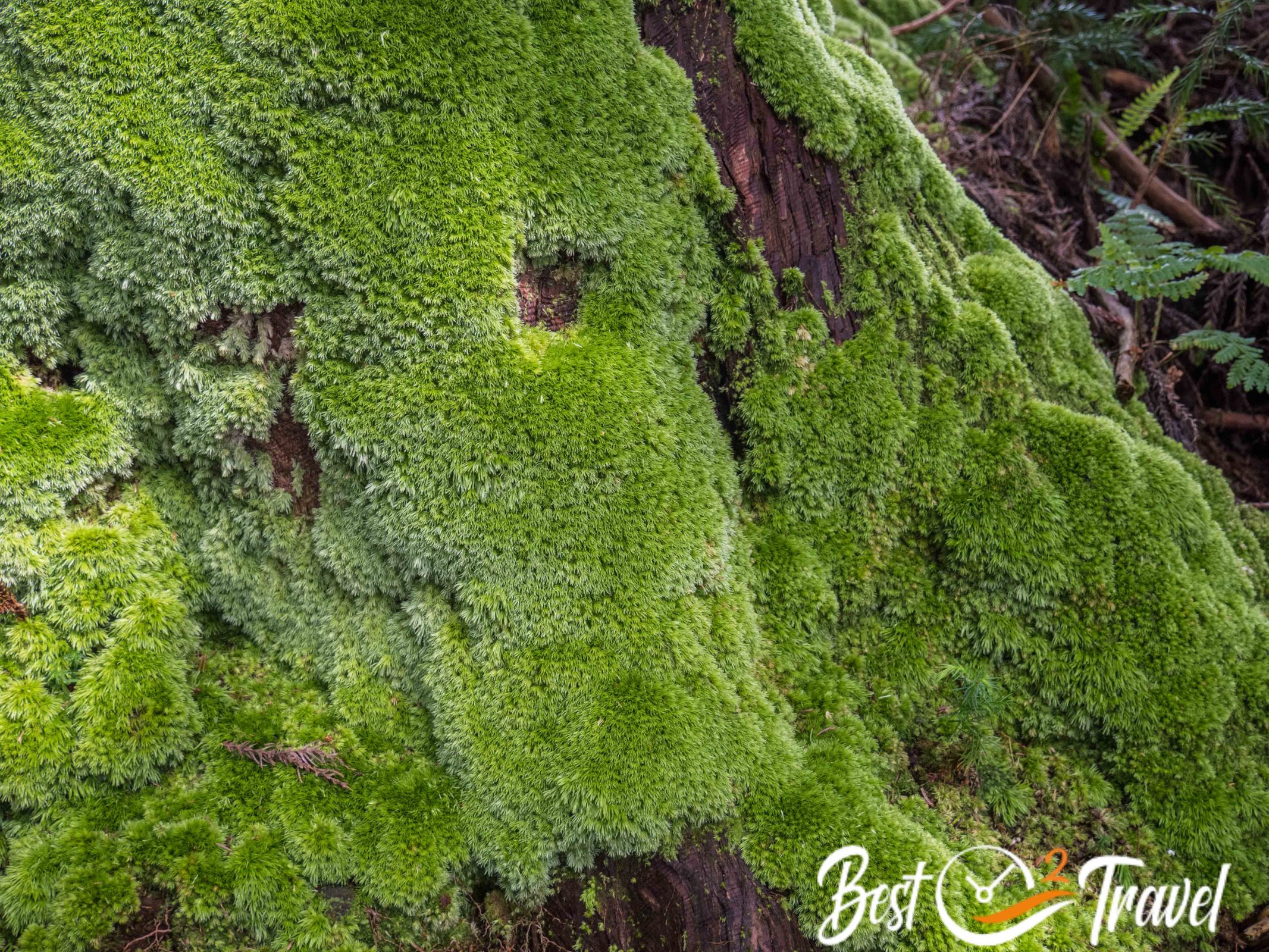
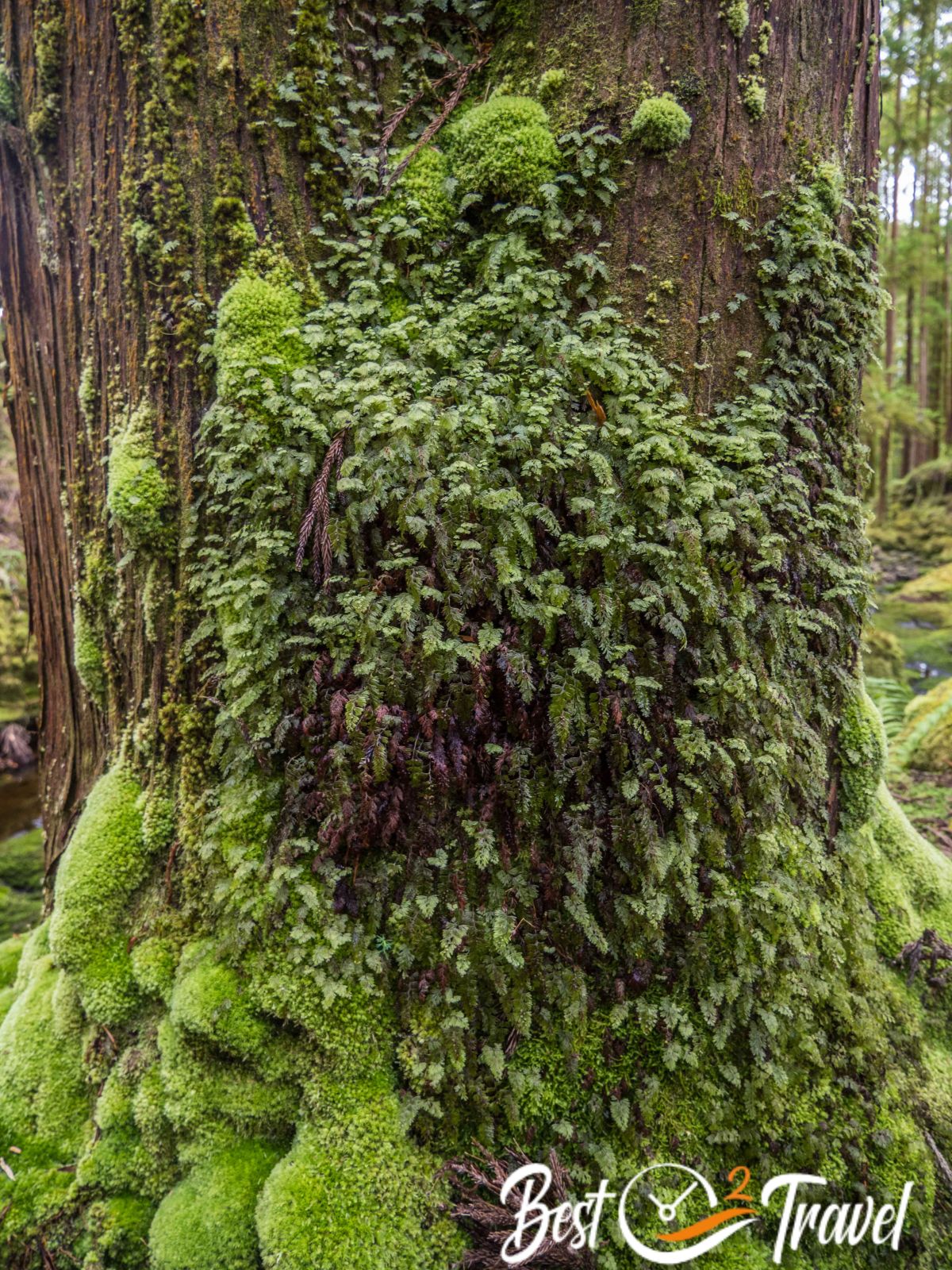
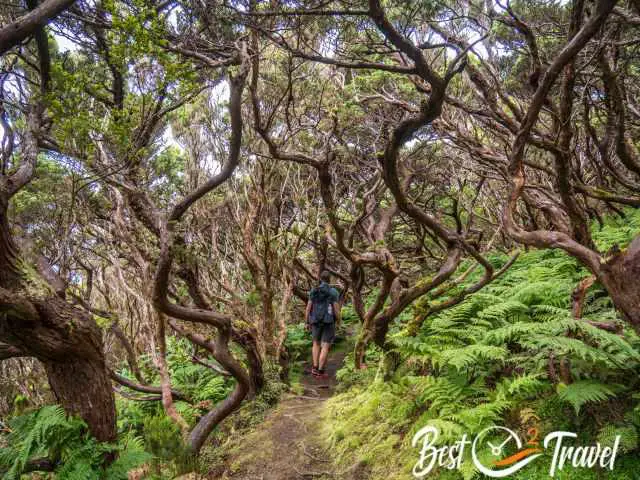
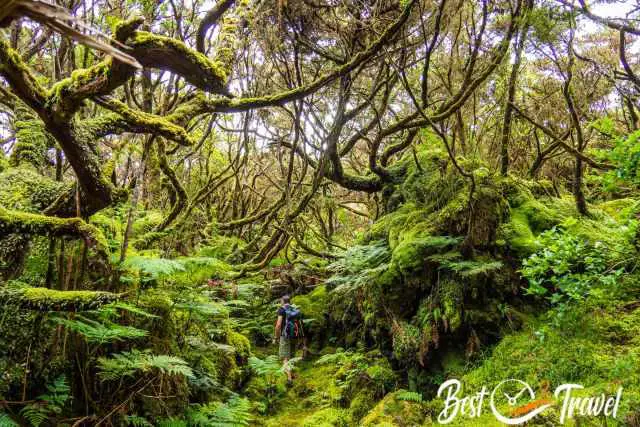
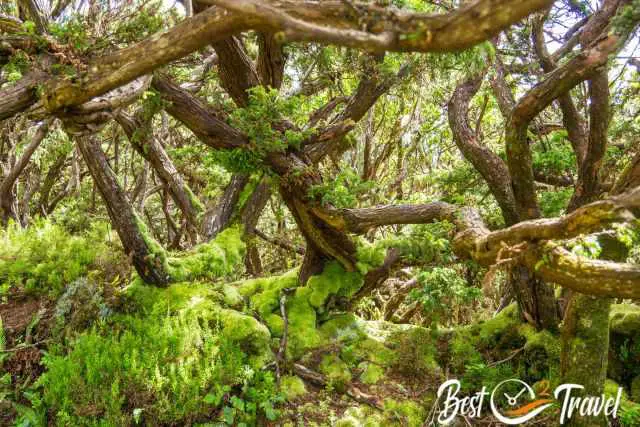
Terceira’s interior reveals the origins of the Azores: grass‑covered craters, ash hills, and lush forests shaped by volcanic forces. Trails like PRC07 TER and Mistérios Negros (PRC01 TER) lead through crooked, moss‑covered trees and landscapes that feel almost otherworldly. With more than 53,000 inhabitants, Terceira has excellent infrastructure, a larger airport, and more shops compared to smaller islands like Flores — making exploration easy and comfortable.
In just two hours, you can circumnavigate the island by car, yet every short detour brings you into untouched nature. Terceira is a paradise for cave enthusiasts, hikers, and forest lovers — and if you’re curious, you’ll find our Top 9 recommendations for a four‑day visit, plus a one‑day itinerary for travellers with limited time.
We also share our favourite restaurants on Terceira — and while these stood out during our last visit, there are many more places across the island offering excellent quality and delicious food.
1 Algar do Carvão - Terceira’s Iconic Volcanic Cave
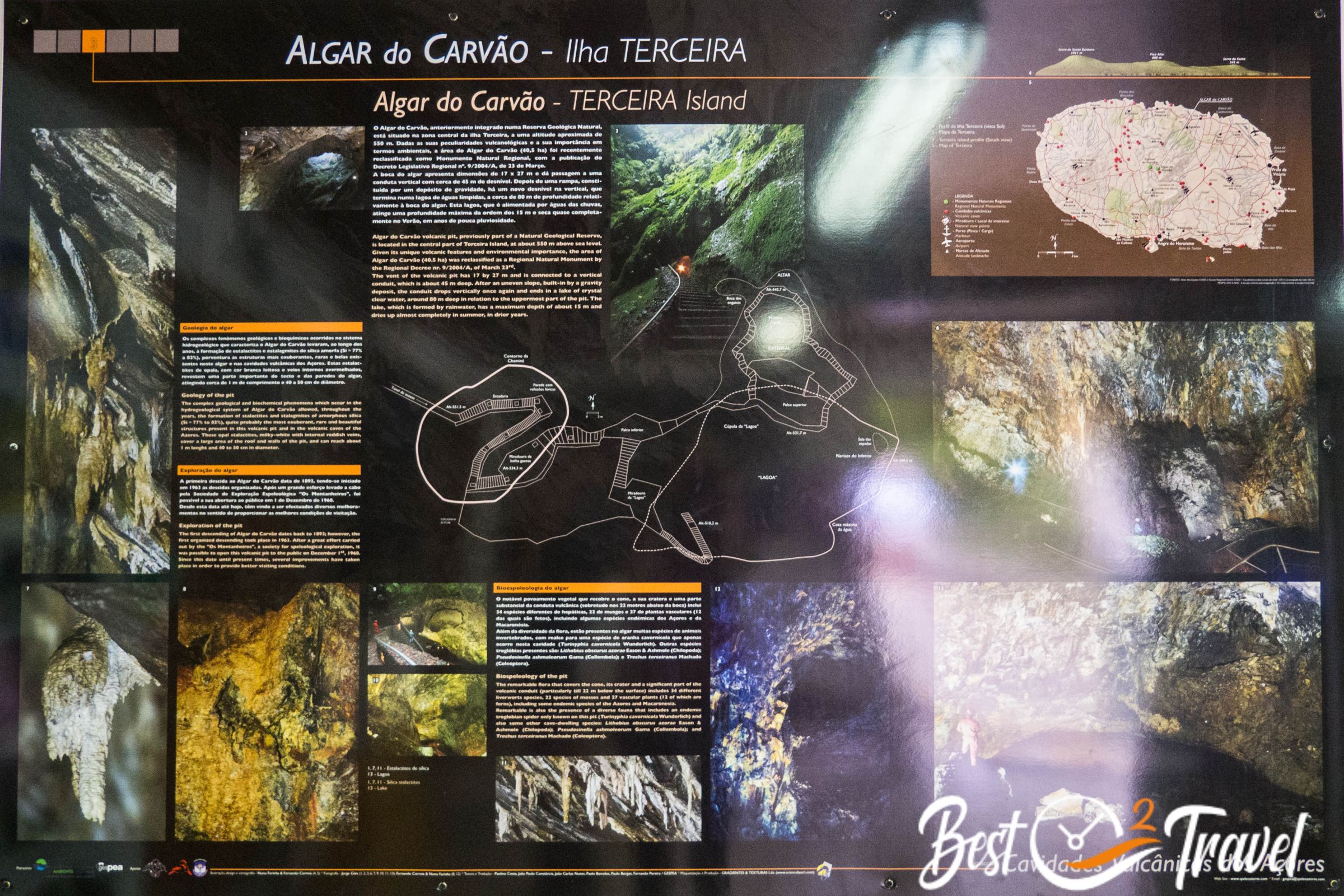
Algar do Carvão on Terceira is one of the top places of striking beauty in the Azores. This volcanic cave is a Natural Regional Monument located in the heart of the island at 550 meters above sea level. Although first explored in 1893, it took decades of effort before Algar do Carvão was finally made accessible to the public in December 1968.
Opening Hours Algar do Carvao and Gruta do Natal
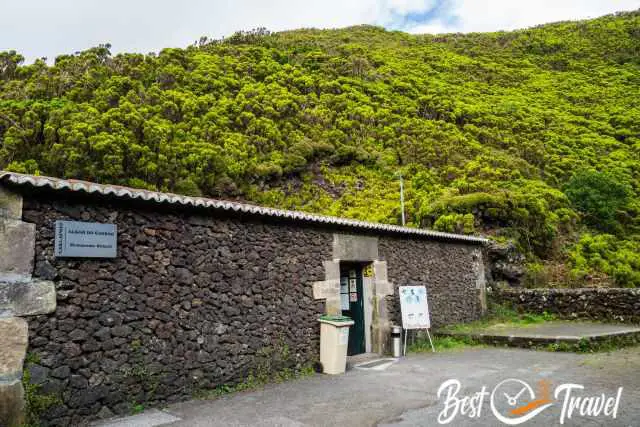
Because of the limited opening hours, we planned our itinerary around Algar do Carvão. However, please check the schedule again after your arrival. Although this information is current as of 2026, changes are always possible.
-
The caves are closed in January and February. From March onward, opening days and times follow a seasonal schedule:
-
March: 14:30–17:00 • Tuesdays, Wednesdays, Fridays & Saturdays
-
April / May: 14:30–17:00 • Daily
-
June – September: 14:00–18:00 • Daily
-
October – December: 14:30–17:00 • Tuesdays, Wednesdays, Fridays & Saturdays
Entrance Fee Algar do Carvão
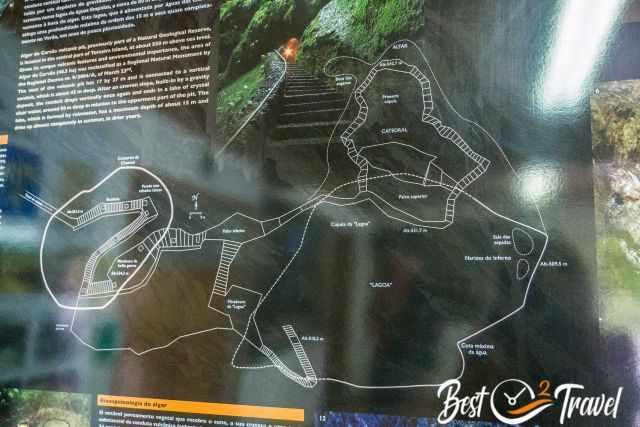
Tickets are cash only and sold exclusively at the caves. You can buy a single ticket or a combination ticket for Algar do Carvão and Gruta do Natal. In summer, it gets busy, and with a strict limit of 150 visitors at a time, you may have to wait in line for access.
-
Single ticket: 10 €
-
Combination ticket (Algar do Carvão + Gruta do Natal): 15 €
-
Free entry for members of Montanheiros, the organization responsible for managing the caves.
If you’re short on time, you can skip Gruta do Natal — but Algar do Carvão is an absolute must‑see.
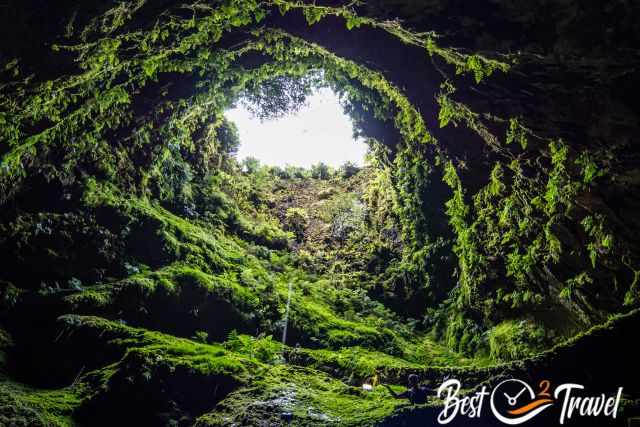
Algar do Carvão is one of the most extraordinary volcanic caves in the Azores — a steep, cathedral‑like vent formed by Pico Alto in two phases between 5,200 and 3,700 years ago. The name translates to a vertical cavity, unlike most horizontal lava tubes on Terceira, and its full meaning is the “charcoal cave.” Because of the limited opening hours, we planned our itinerary around Algar do Carvão. However, please check the schedule again after your arrival. Although this information is current as of 2026, changes are always possible.
Descending Into the Volcanic Underworld
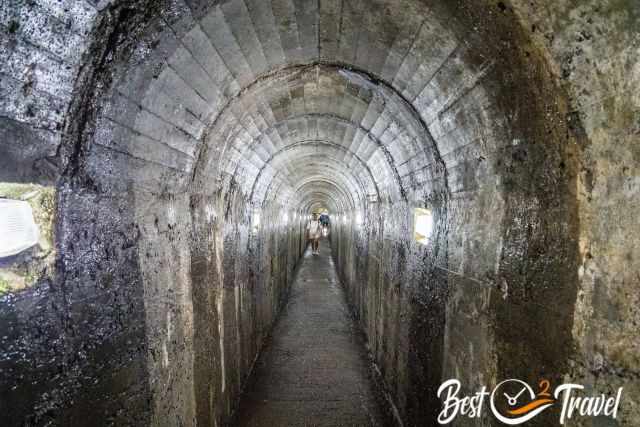
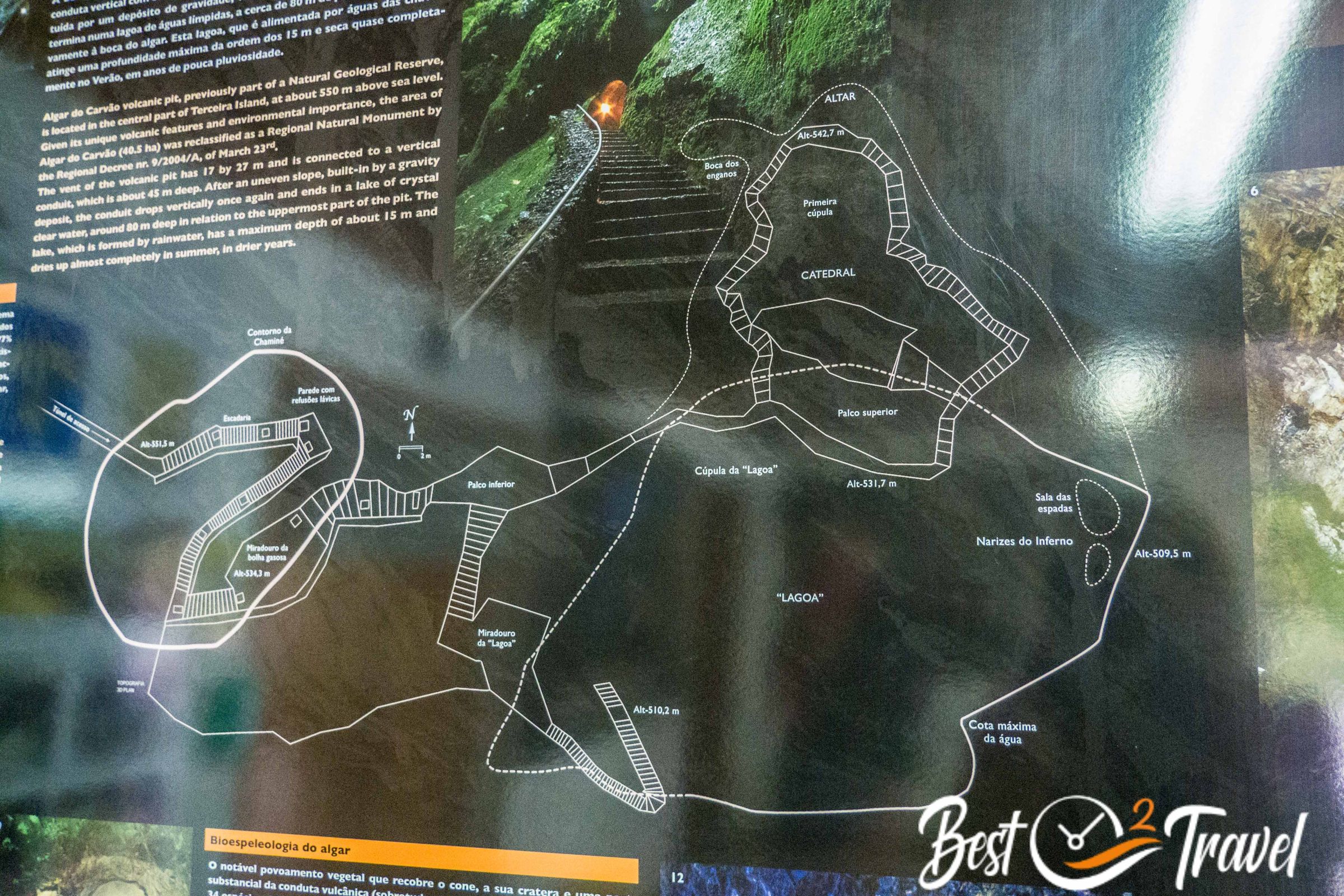
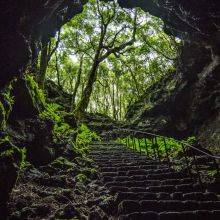
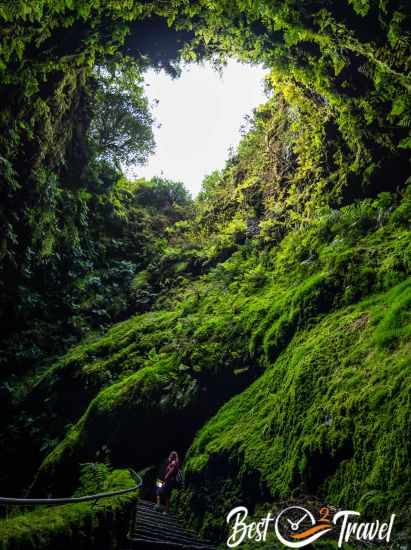
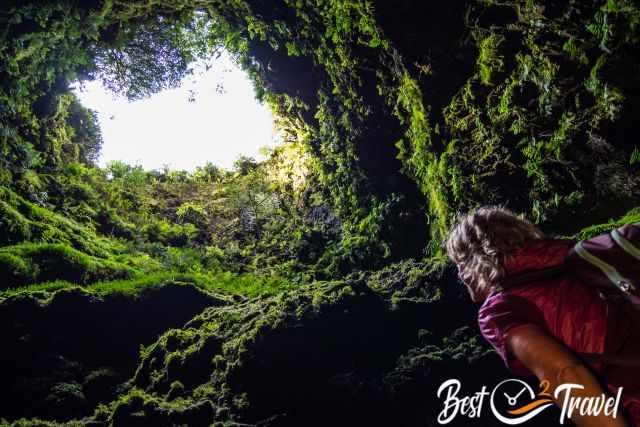
Through the volcanic vent, visitors descend into the surreal underworld of Terceira. From the small entrance hall, a narrow passage — almost like a coal‑mine tunnel — leads into the lush, steep interior of this extinct volcano. The cave maintains a cool temperature of around 14°C and a humidity of roughly 90%, with water constantly dripping from the basalt walls. These conditions create a thriving habitat for mosses, ferns, lichen, and rare mineral formations, giving the cave its iconic emerald glow. A fleece or light jacket is highly recommended.
The Descent — 338 Steps Into the Heart of the Volcano
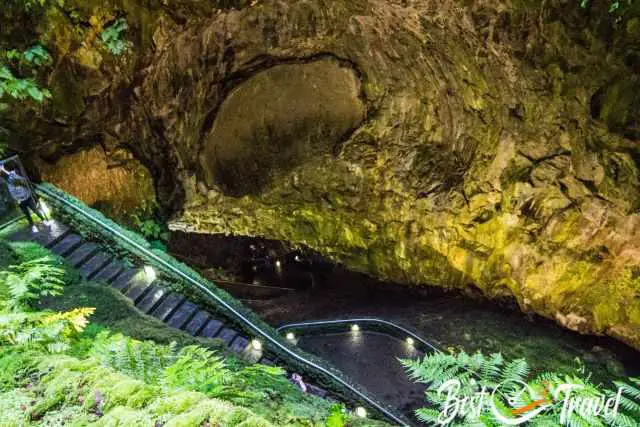
A staircase of 338 steps leads down to three visitor platforms offering spectacular views into the volcanic chamber and toward the lowest point — a crystal‑clear green lagoon. Although there is a handrail, the descent is demanding and not suitable for visitors with mobility issues. Around midday, sunlight penetrates deep into the 45‑meter basalt cone, illuminating the moss, lichen, and ferns and making the entire cave sparkle.
Endemic Life in a Volcanic Sanctuary
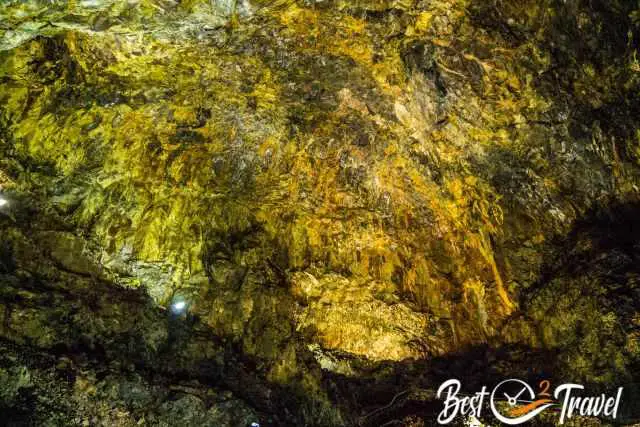
Standing inside the vent feels surreal. In this sheltered microclimate, several endemic species thrive — delicate ferns, thick moss carpets, and cave‑adapted insects such as spiders and hoppers found only here or elsewhere in Macaronesia (Azores, Madeira, Canary Islands and Cabo Verde). The combination of volcanic geology and unique biodiversity makes Algar do Carvão one of the most remarkable natural sites in the Azores.
The Green Lagoon — A Seasonal Underground Lake
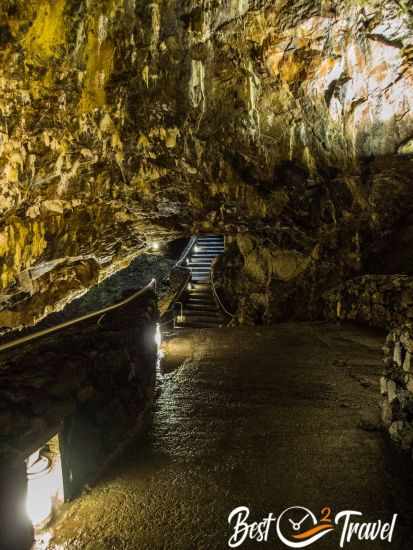
At the bottom of the 80‑meter volcanic chamber lies a crystal‑clear green lagoon. The lake itself can reach depths of up to 15 meters, depending on rainfall. Its water is entirely fed by rainwater seeping through the cave ceiling, meaning the water level is lower in summer and higher in winter. The platforms offer unforgettable views of this shimmering underground lake.
Rare Silica Stalactites — A Geological Treasure
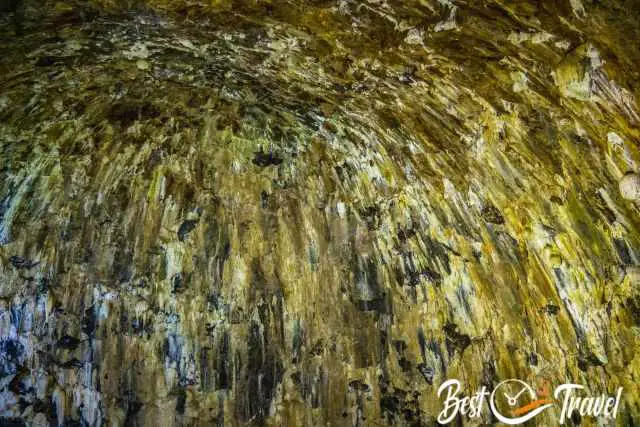
Gas‑bubble explosions in ancient lava flows created massive burnt cavities throughout the cave. On the oldest and highest walls, rare silica stalactites have been forming for thousands of years. These delicate formations grow extremely slowly — only about one centimeter per 100 years — making them one of the cave’s most unusual and scientifically valuable features.
The Cathedral — A Natural Concert Hall
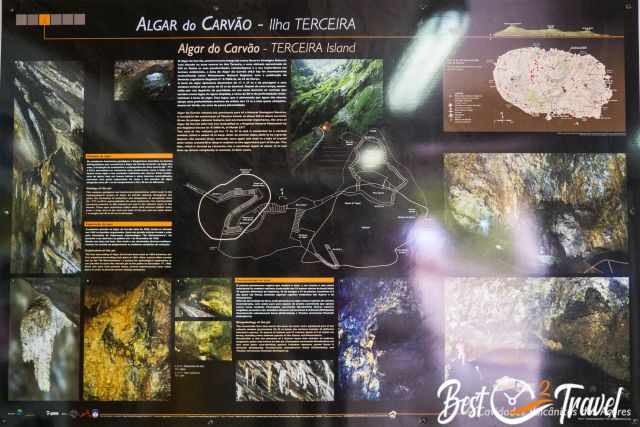
The upper platforms of Algar do Carvão have remarkable acoustics. This area is occasionally used for concerts, earning it the nickname “the cathedral.” Despite the number of visitors, the atmosphere remains peaceful and quiet. Everyone stands in awe of this breathtaking volcanic wonder.
Why Algar do Carvão Is a Must‑Visit
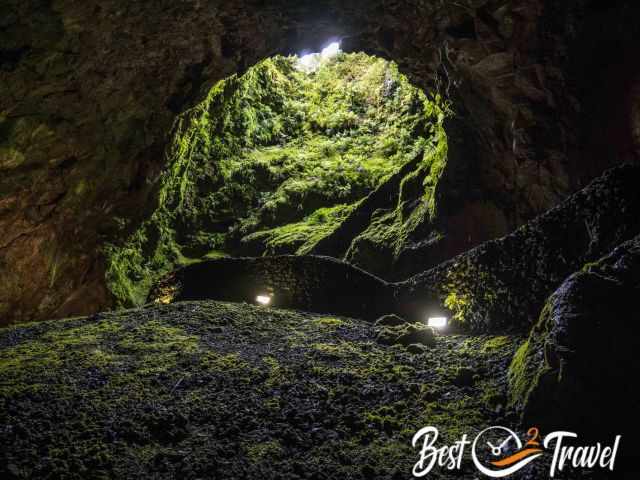
Algar do Carvão is one of the most impressive volcanic caves in the world — a place where geology, biodiversity, and natural beauty come together in a dramatic volcanic setting. It is truly a must‑visit destination on Terceira and one of the highlights of the Azores.
Parking Algar do Carvão: Google Maps Location
2 Gruta do Natal - The Christmas Cave of Terceira
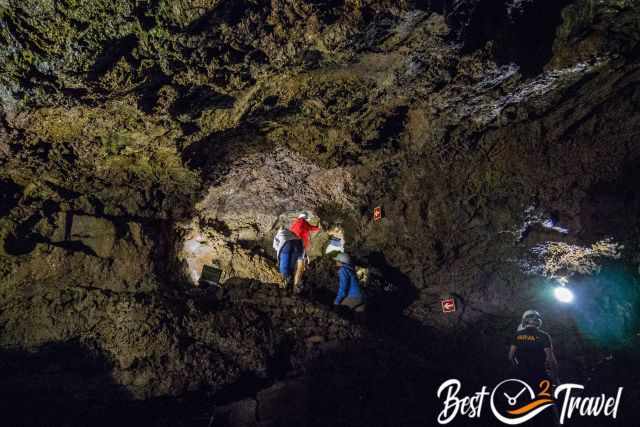
Gruta do Natal (the Christmas Cave) is one of Terceira’s most fascinating lava tubes. The first guided tour was held on 25 December 1969, giving the cave its festive name. At the end of the roughly 200‑meter main tube, visitors reach a rock formation known as the altar, where many locals attend a traditional Christmas Eve service each year. Opening hours are identical to Algar do Carvão, making it easy to combine both caves in one visit.
Location & Access
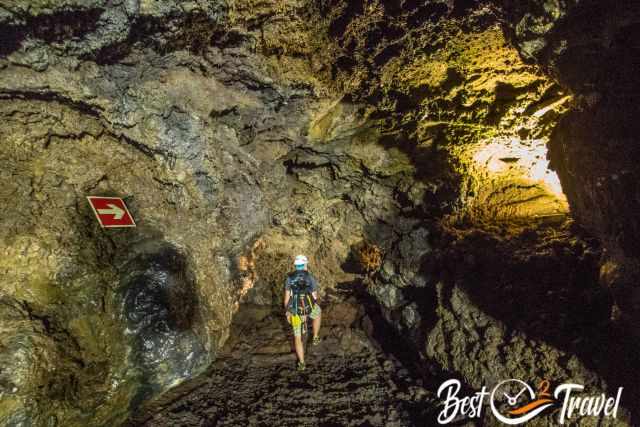
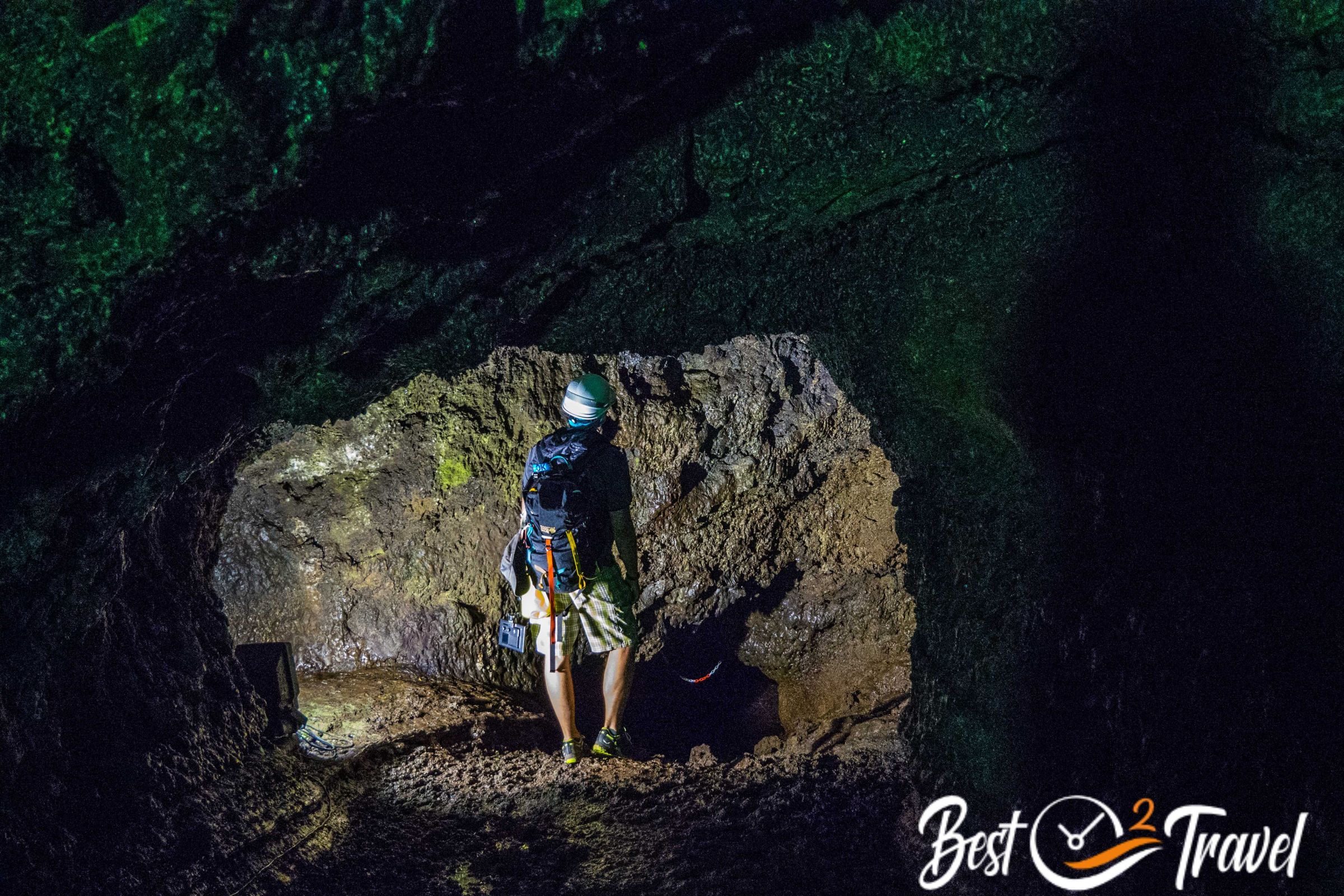
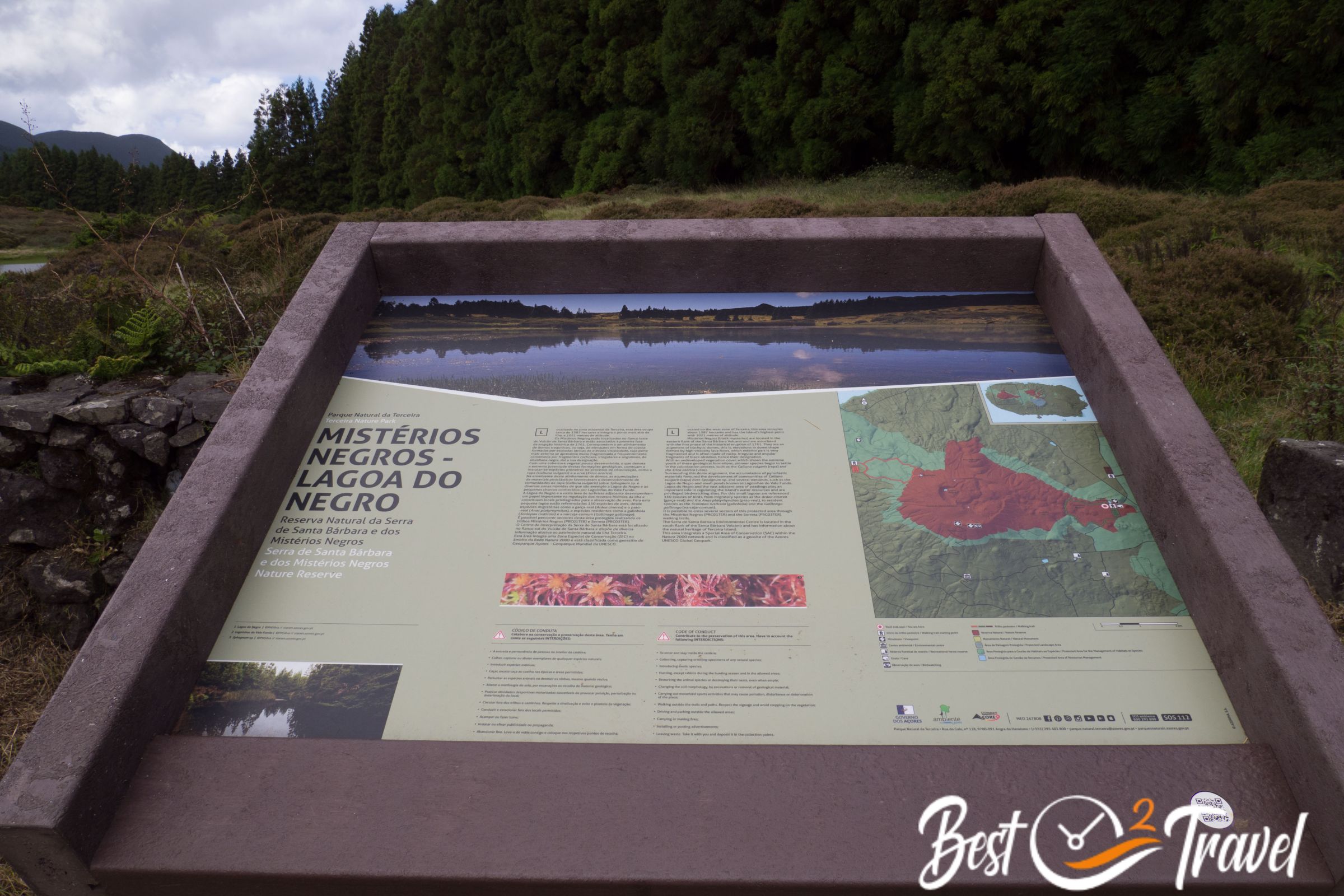
The entrance to Gruta do Natal is hidden inside a small stone house near Lagoa do Negro and the trailhead of Mistérios Negros, both located in the Reserva Natural da Serra de Santa Bárbara. Before entering the lava tunnel, every visitor receives a helmet for the guided tour — mandatory due to the low ceiling and narrow passages.
Guided Tour & Visitor Experience
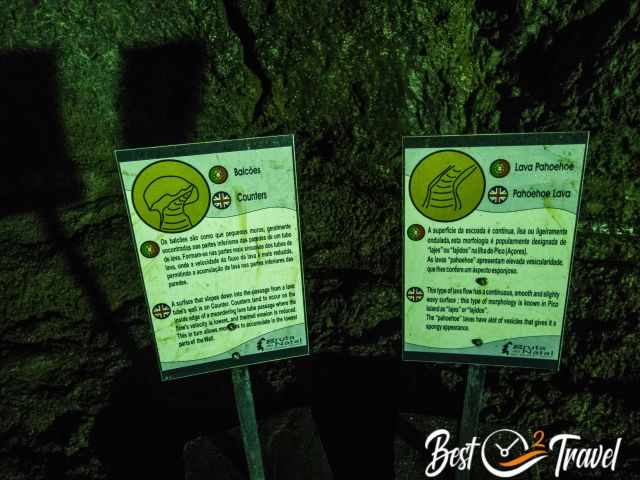
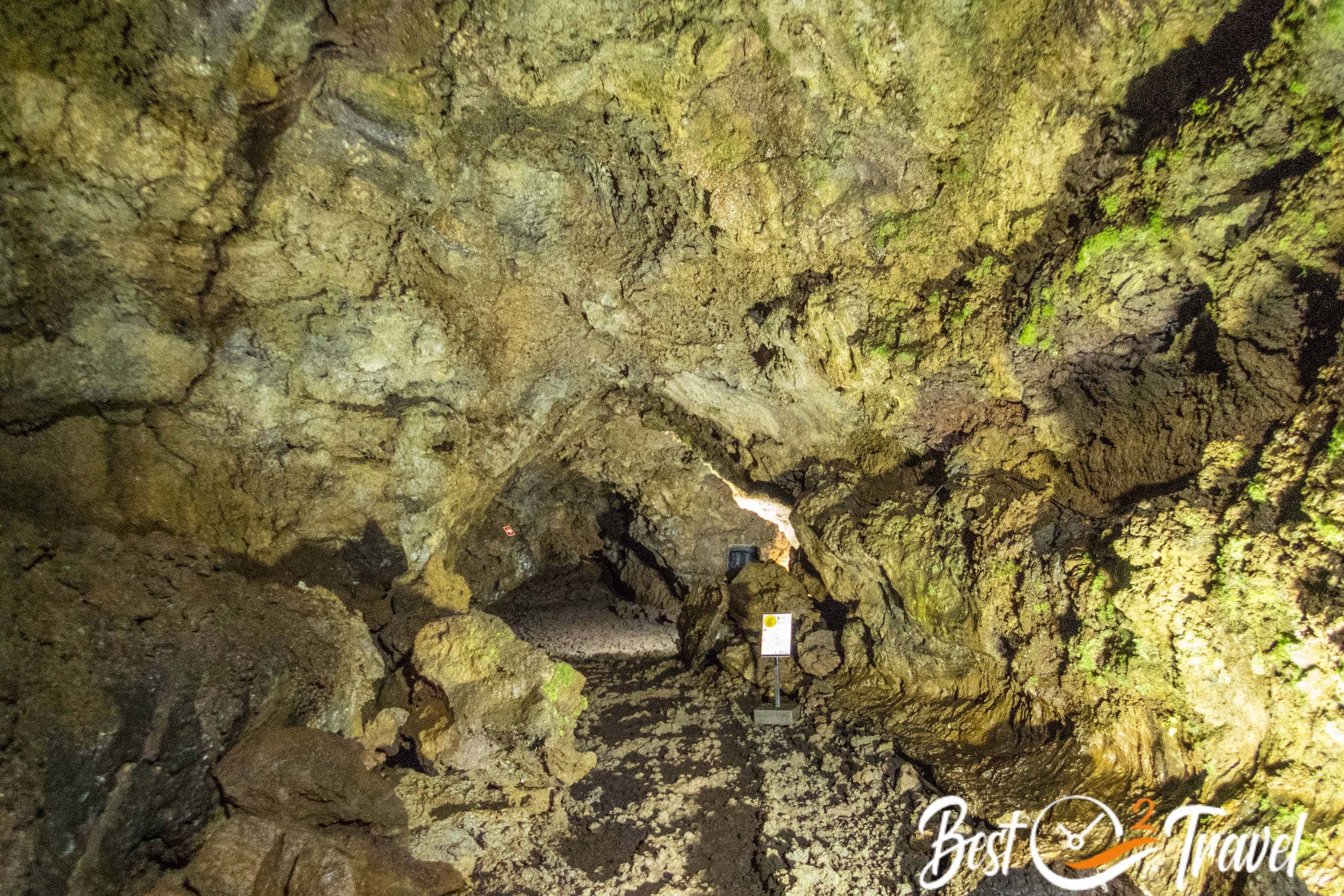
Tours last around 30 minutes, usually conducted in Portuguese with occasional English explanations. The cave is illuminated, and the most important geological features are marked with bilingual information signs. The accessible route is almost 700 meters long, 12 meters wide, and 7 meters high, formed by a volcanic eruption roughly 12,000 years ago. Only a few steps lead into the cave, making it relatively flat compared to other lava tubes on Terceira.
Geology — A Textbook Lava Tube
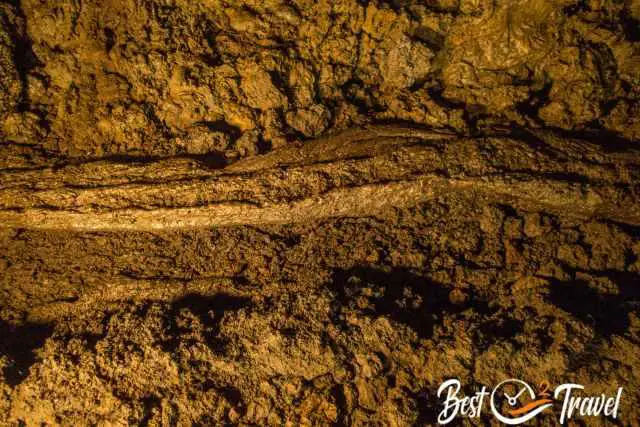
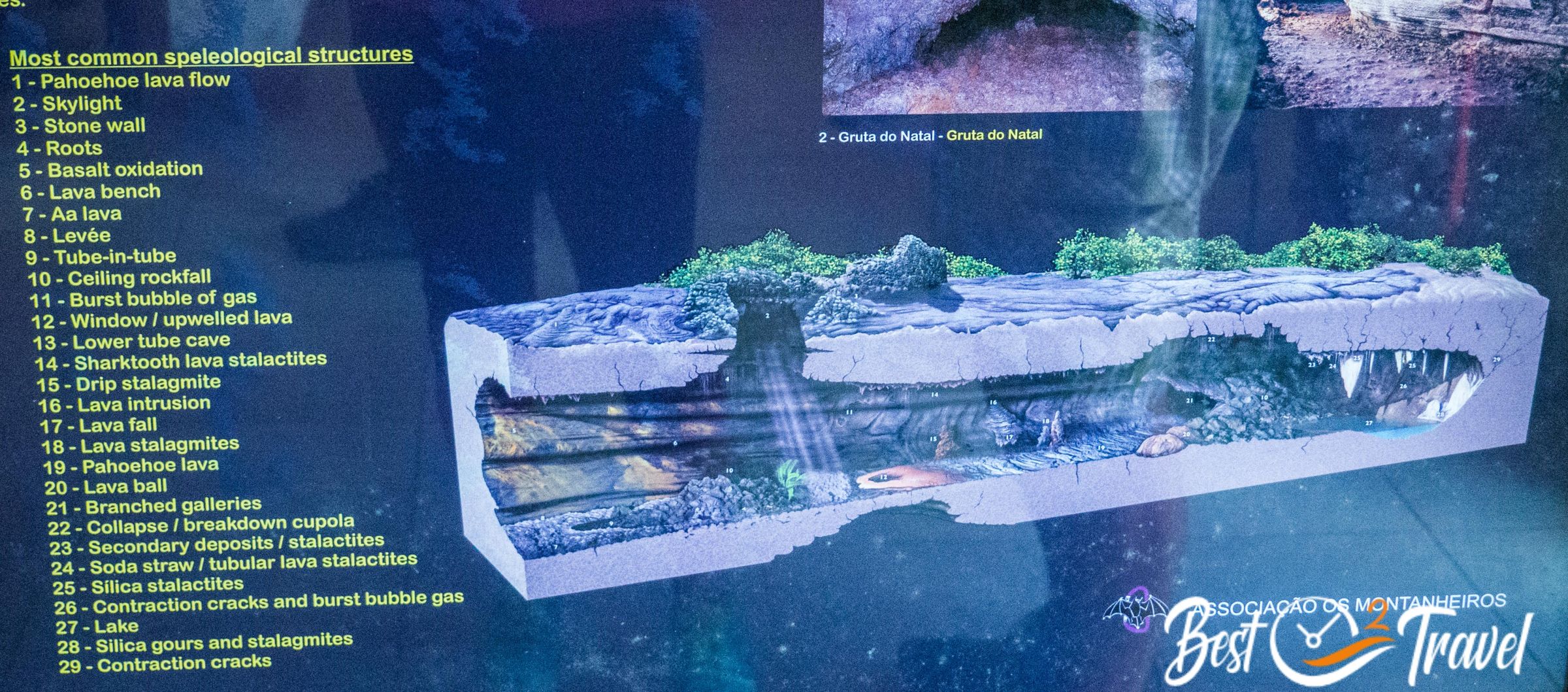
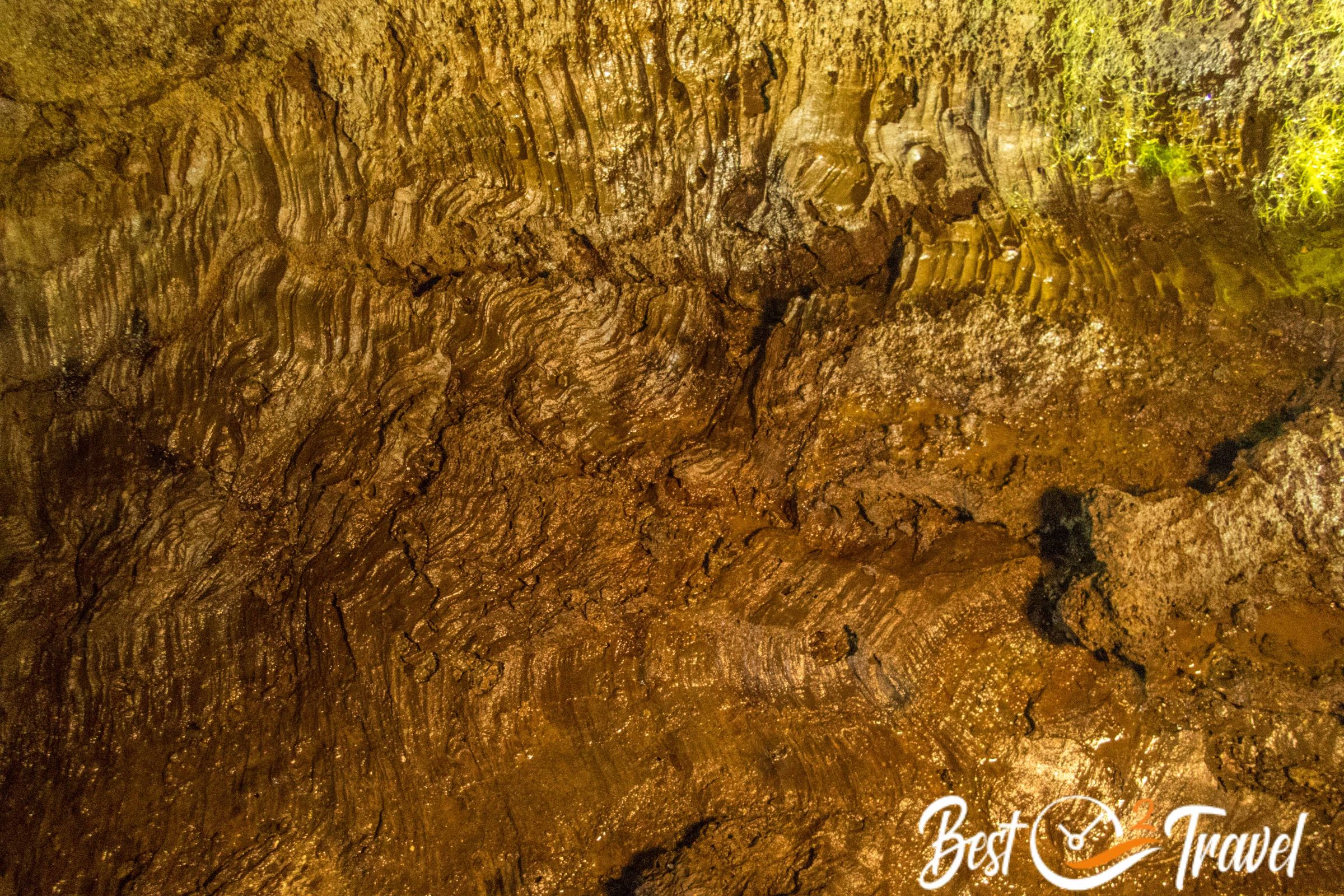
Inside Gruta do Natal, the walls reveal smooth, flowing stripes — clear evidence of fast‑moving lava that once swept through the tunnel. Some side branches are roped off and accessible only to researchers, highlighting the cave’s scientific importance. Although the basalt walls share similar colors with Algar do Carvão, the overall appearance is completely different. Gruta do Natal is a classic lava tube, not a volcanic vent.
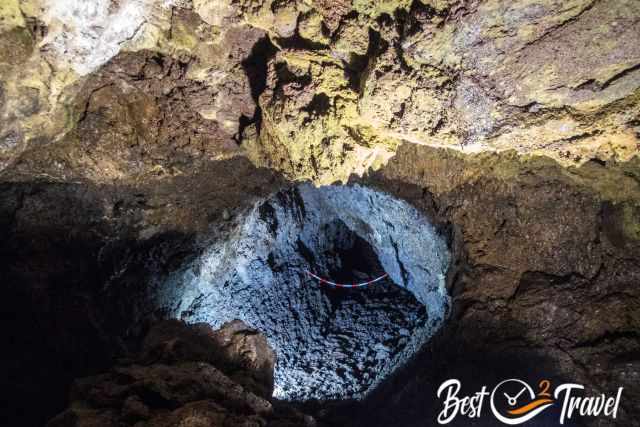
Because the ceiling is only a few meters thick, rainwater cannot dissolve minerals, meaning stalactites and stalagmites do not form here. This makes the cave a perfect example of a pure volcanic tunnel.
Safety & Practical Tips
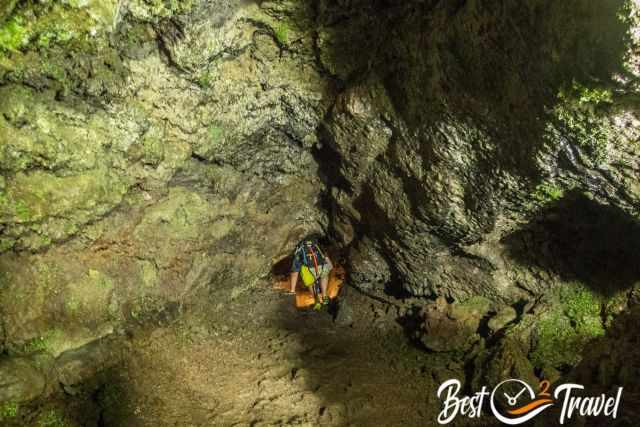
Wear sturdy shoes or trainers to protect your feet from the rough lava floor. The cave is less humid than Algar do Carvão, but some sections are tight, requiring visitors to scramble through narrow openings. Although Gruta do Natal is less documented than Algar do Carvão, the guided tour offers an excellent introduction to the volcanic forces that shaped the Azores and Macaronesia.
Why Visit Gruta do Natal?
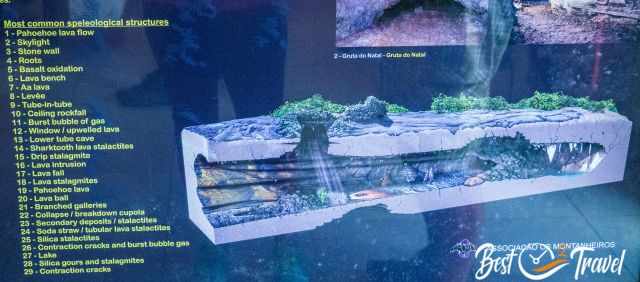
Gruta do Natal is one of the best places on Terceira to experience a true lava tube from the inside. Its combination of geological features, cultural history, and easy accessibility makes it a must‑see for anyone interested in the volcanic origins of the Azores.
Parking Gruta do Natal and Misterios Negros Google Maps
3 Mistérios Negros PRC01 TER – The Enchanted Rainforest Hike
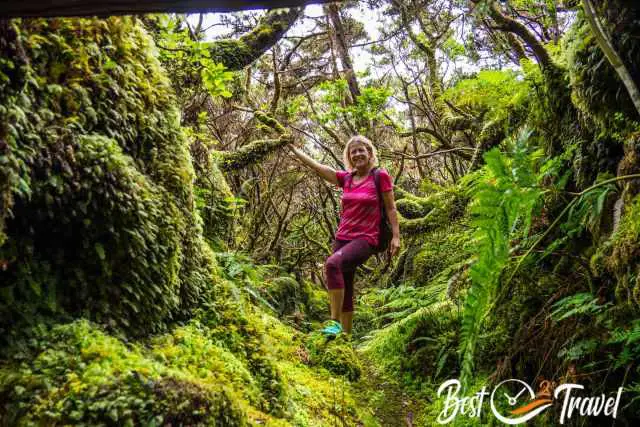
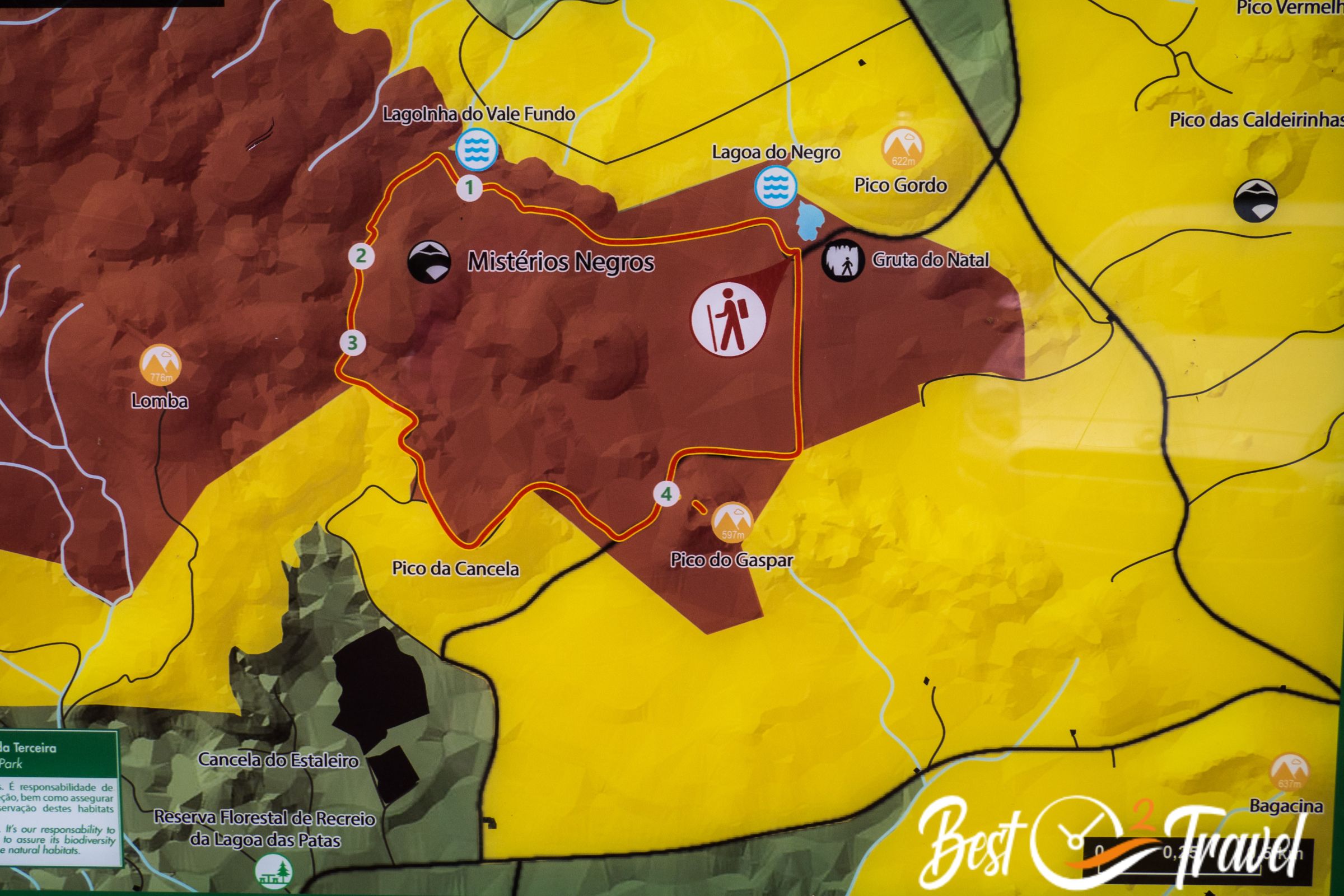
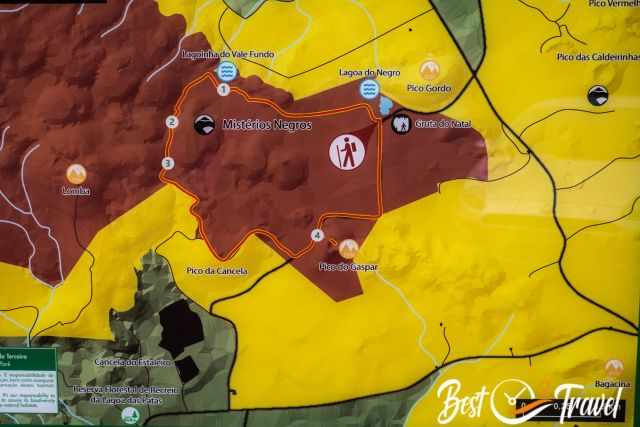
Mistérios Negros (PRC01 TER) is one of the most magical hikes on Terceira — and for me, it became the absolute favourite of all trails in the Azores. We explored it right before visiting Gruta do Natal and Algar do Carvão, starting the two‑hour circular route directly at the Natal Cave trailhead.
A Wild, Untouched Trail Through Terceira’s Rainforest
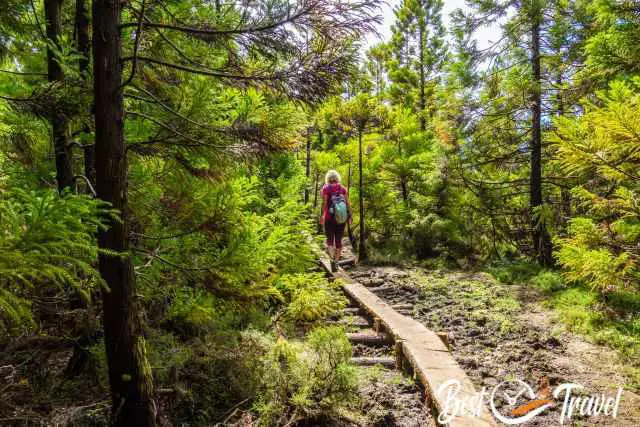
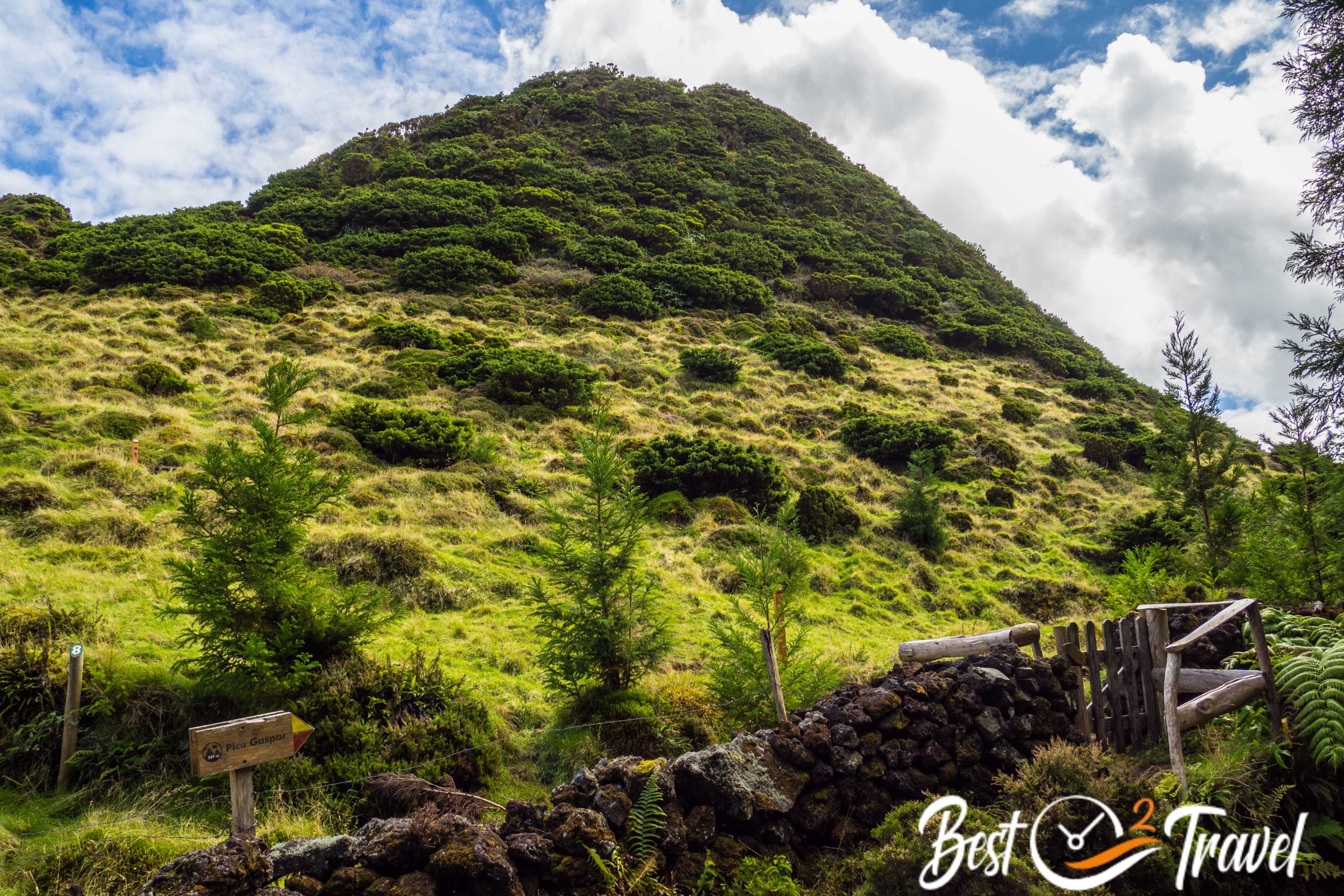
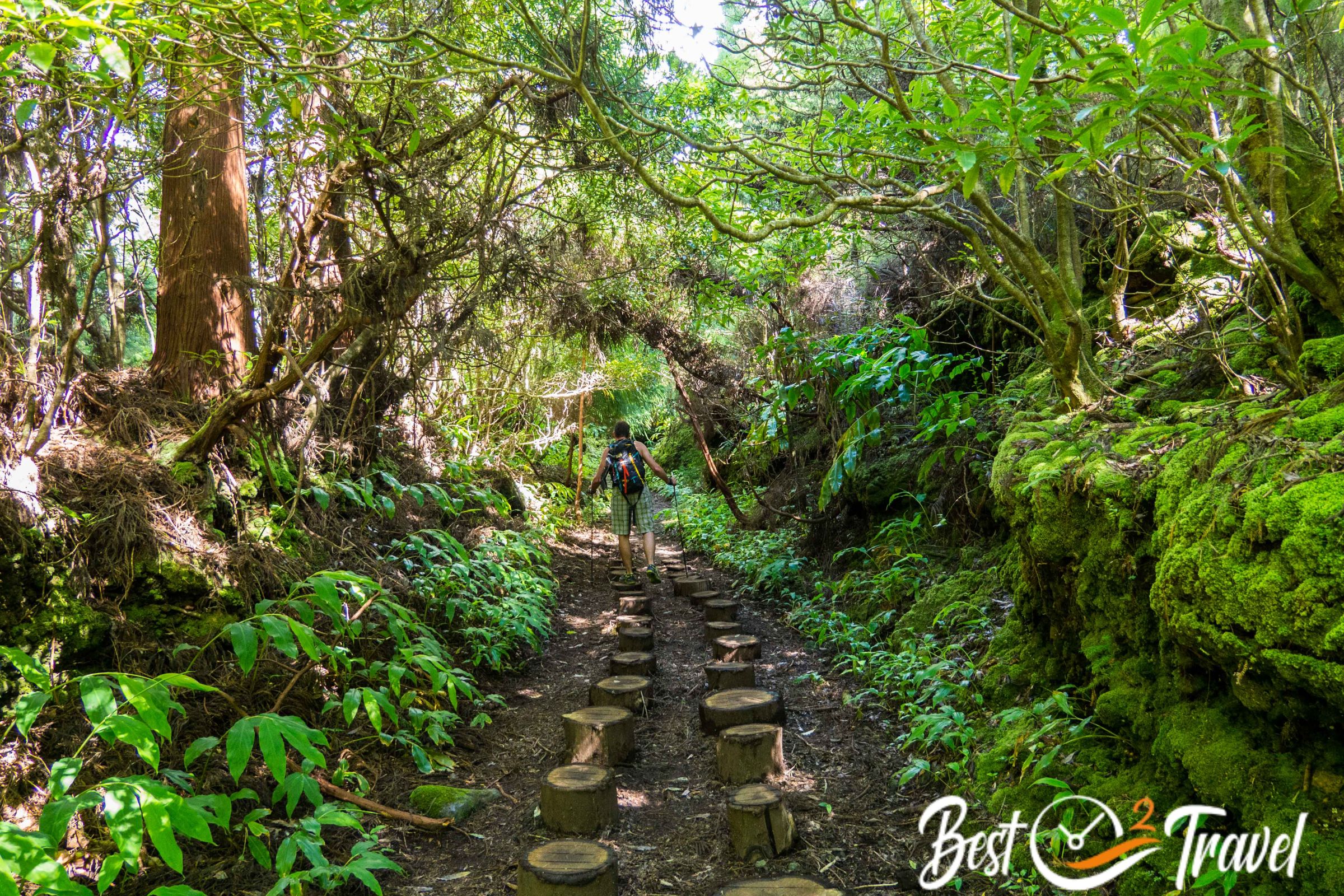
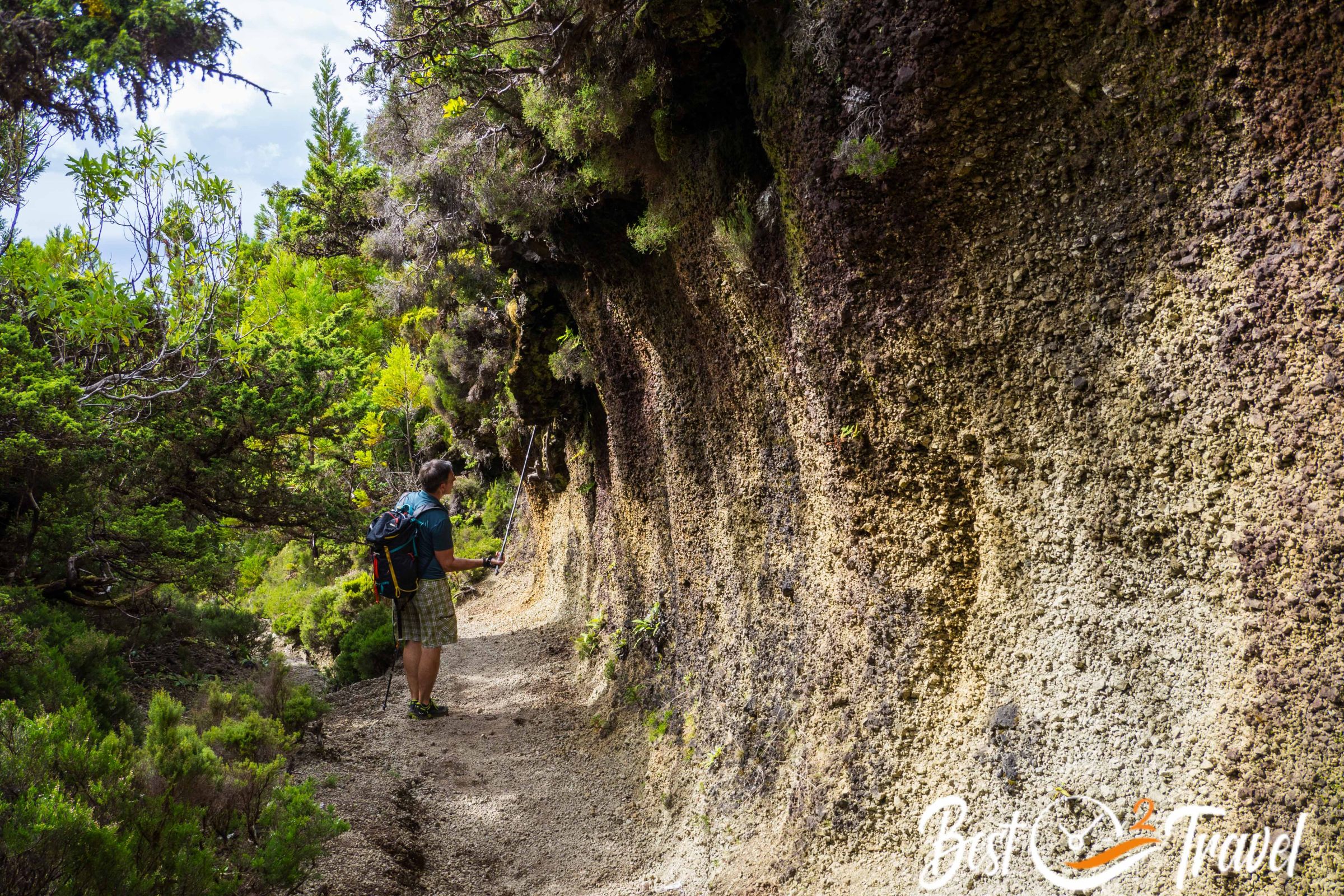
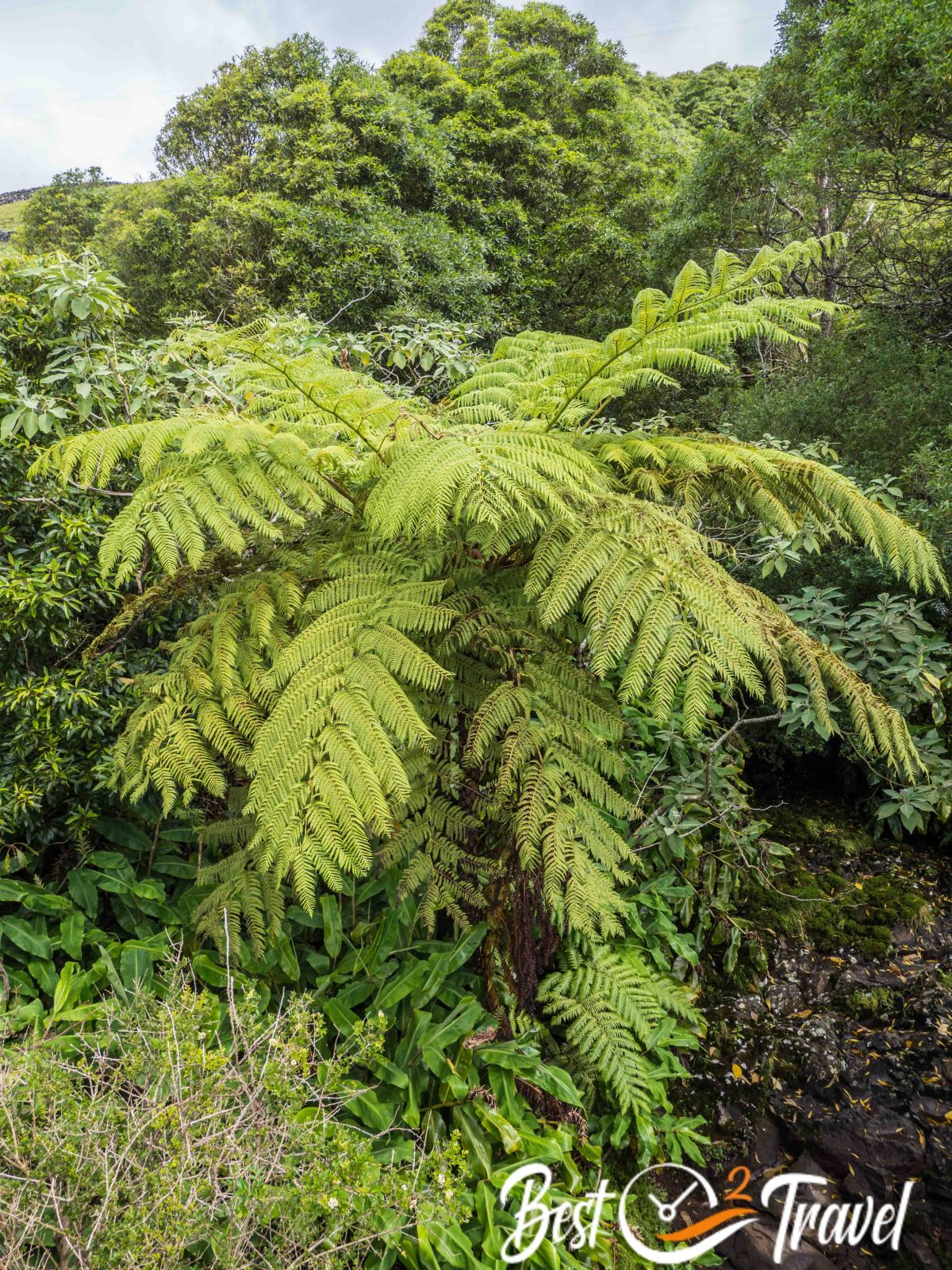
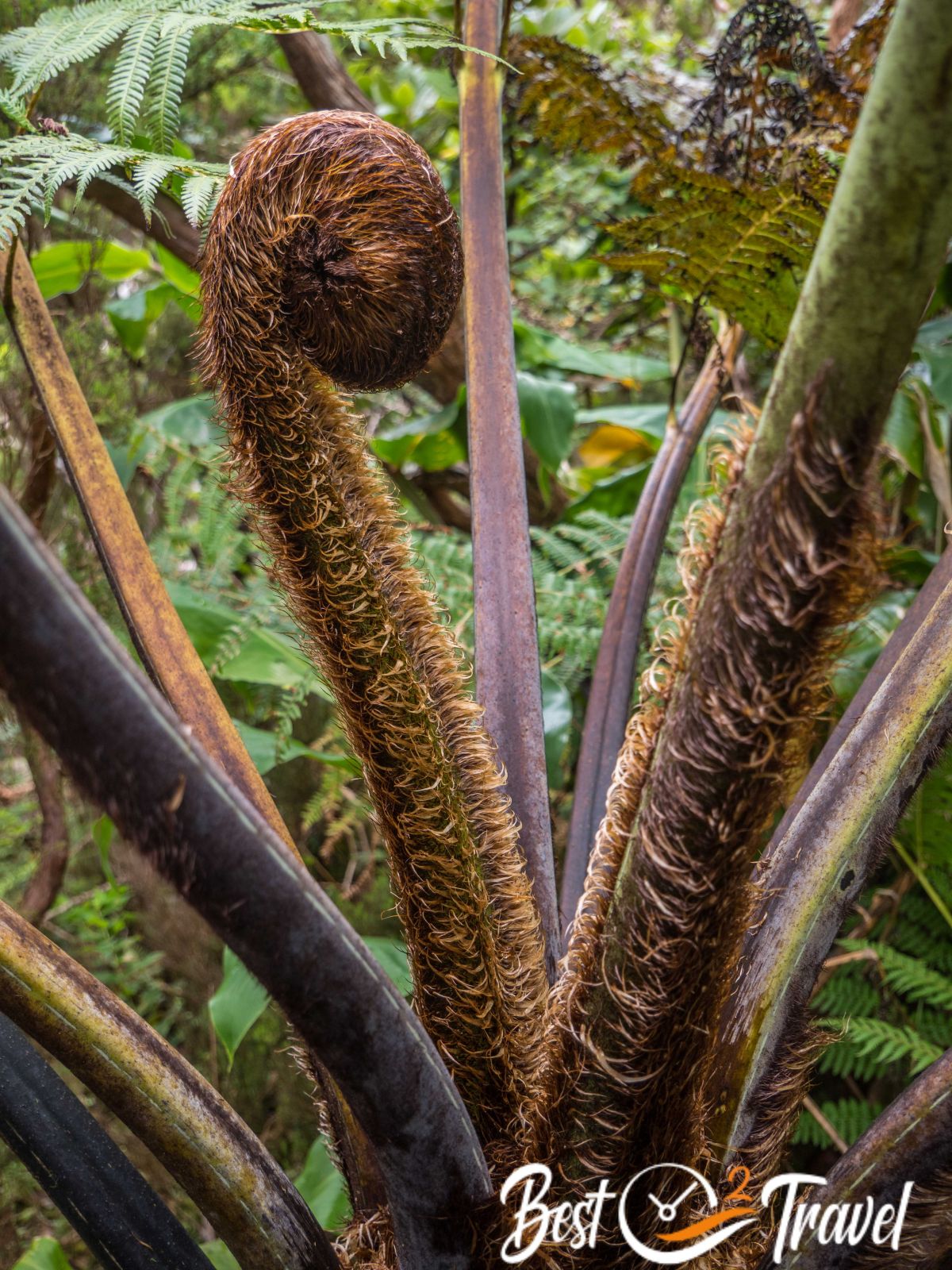
The narrow, wild track leads through the pristine forests of Azores Juniper, Japanese Cedar, and Cape Myrtle, past small swamp lakes and the dark volcanic hills known as the Mistérios Negros. Some sections are uneven, steep, or boggy — but the scenery feels straight out of a fairytale.
I don’t recommend hiking poles here. To protect the delicate vegetation, it’s better to use your hands for balance when needed.
Mud, Roots, and Wooden Planks
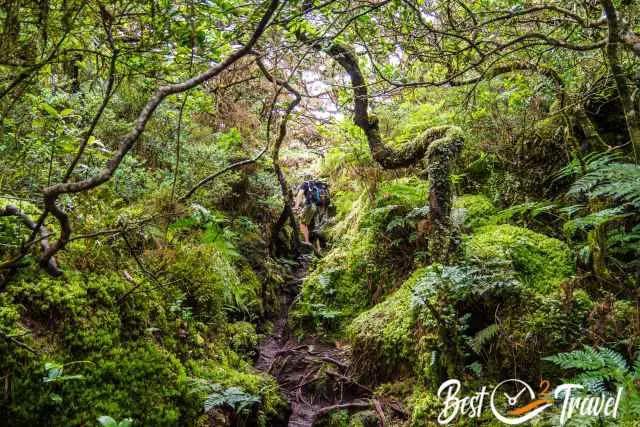
The muddiest parts of the trail are covered with wooden planks or tree stumps, making the route easier to navigate. After completing the forest loop, you reach a small road — simply turn left and follow it back to Gruta do Natal and the car park.
A Lush UNESCO Geopark Rainforest
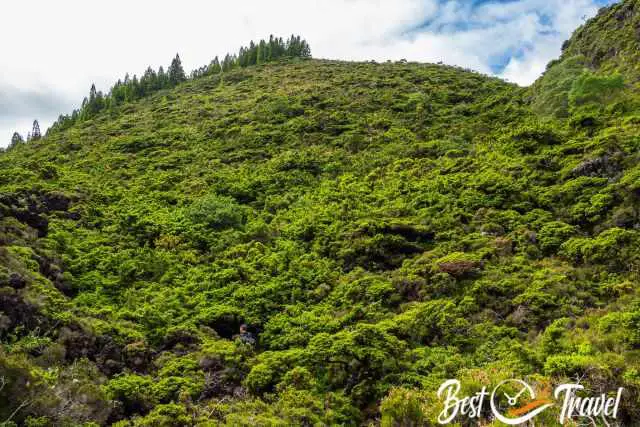
Mistérios Negros lies in the heart of Terceira, inside a protected nature reserve that forms part of the Azores UNESCO Global Geopark. This rainforest exists thanks to the island’s constant rain and fog, creating a dense, emerald‑green ecosystem that feels almost prehistoric.
A rain jacket in your backpack is highly recommended — weather changes quickly here.
Trail Facts
-
Trail name: PRC01 TER – Mistérios Negros
-
Length: 5 km
-
Duration: ~2 hours
-
Elevation gain: ~100 m
-
Difficulty: Moderate (muddy, uneven, narrow sections)
-
Start/End: Gruta do Natal
Why Mistérios Negros Is a Must‑Visit
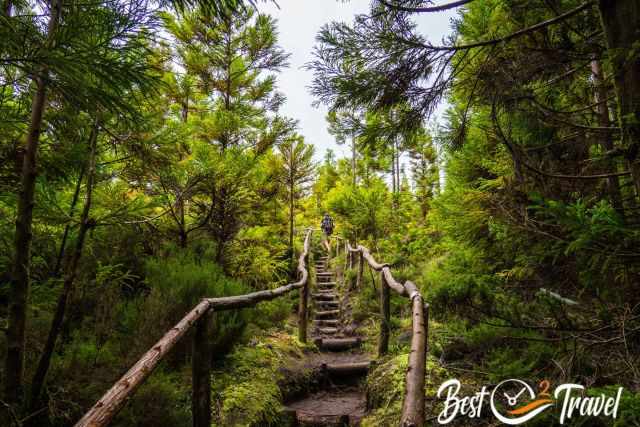
Mistérios Negros is one of the best ways to experience Terceira’s volcanic origins and rainforest ecosystem in a single hike. Its untouched nature, dramatic vegetation, and mystical atmosphere make it a must‑visit for hikers, nature lovers, and anyone exploring the island’s interior.
4 Furnas do Enxofre – The Sulfur Fumaroles of Terceira
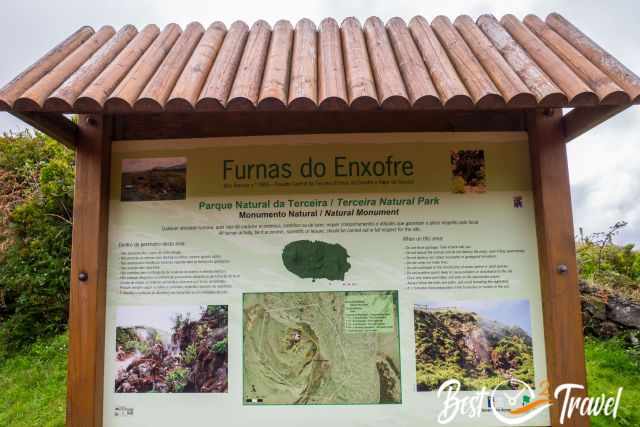
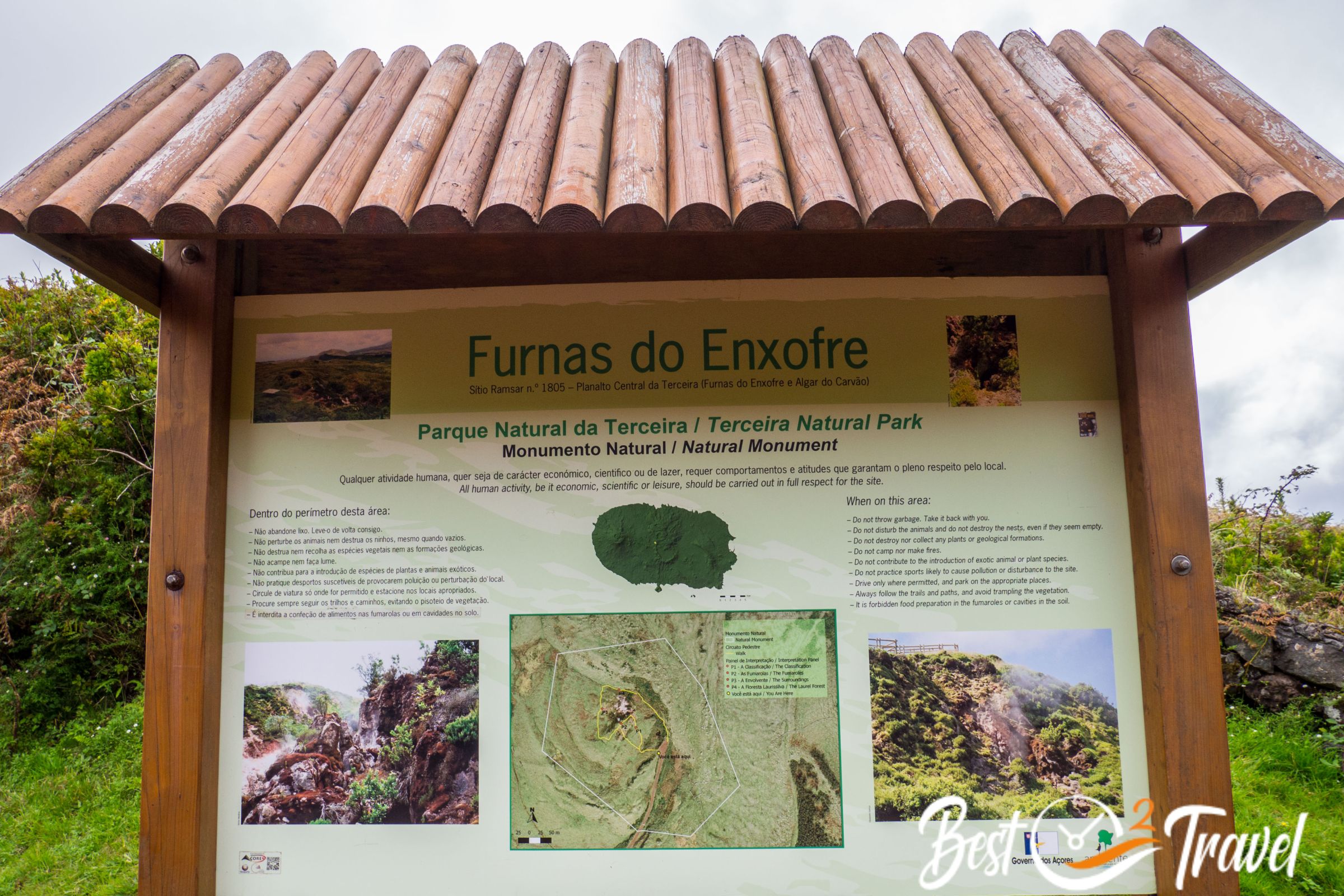
Furnas do Enxofre is one of Terceira’s most fascinating geothermal areas — a compact fumarole field west of Algar do Carvão that showcases the island’s ongoing volcanic activity. It’s the perfect short walk after visiting the cave, offering a close look at secondary volcanism, unique local flora, and the unmistakable smell of sulfur rising from the earth.
Information boards at the parking area and trailhead explain the geology of the fumaroles, which lie along deep geological faults connected to the Pico Alto volcanic system. The walk takes no more than 30 minutes, entrance is free, and parking is limited.
Parking Furnas do Enxofre Google Maps Location
A Boardwalk Through Steam and Sulfur
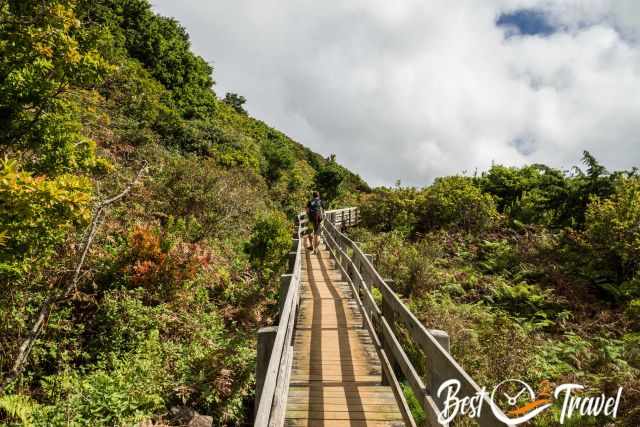
A circular wooden boardwalk leads safely around the most active fumaroles in the nature reserve. Leaving the path is strictly prohibited — and for good reason. The sulfur fumes are toxic, and the ground around the vents is extremely hot, with temperatures close to boiling. This protection also preserves the rare endemic plants and peat mosses that thrive in this unreal environment.
Sphagnum Moss — The Botanical Treasure of Furnas do Enxofre
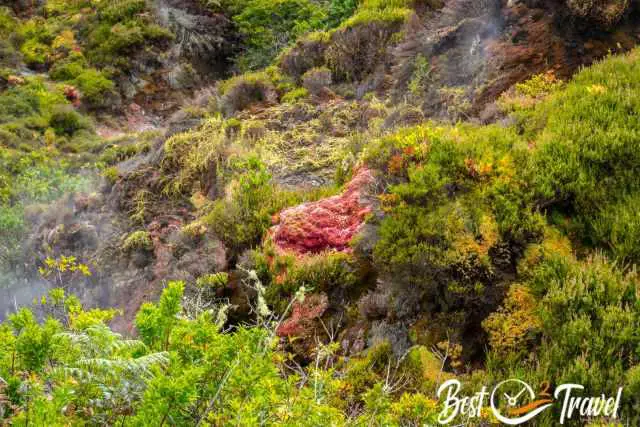
One of the most remarkable features of Furnas do Enxofre is its vibrant sphagnum moss, growing right beside the boardwalk in the boggy areas. These mosses are ecological powerhouses: they never truly die, continuously growing upward while the lower layers slowly decay. They can store up to 30 times their dry weight in water, making them an essential natural reservoir in the Azorean ecosystem.
Best Time to Visit Furnas do Enxofre
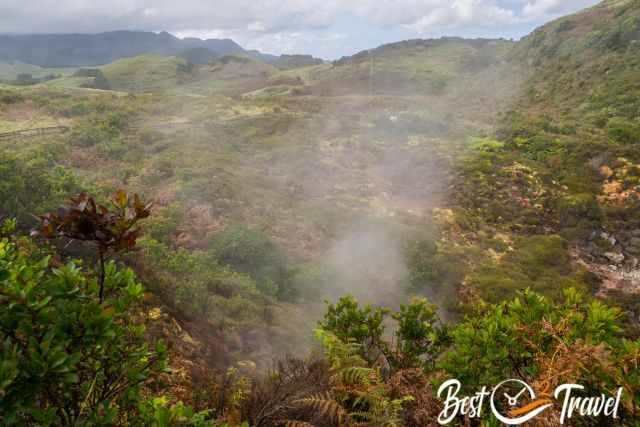
Furnas do Enxofre is most impressive in the early morning or on cool days, when the hot sulfur steam becomes more visible against the cold air. However, even in the afternoon, the fumaroles remain fascinating.
At an elevation of roughly 600 meters, the area is frequently covered in fog. On foggy days, the steam blends into the mist, making the fumaroles harder to see — but adding an atmospheric, almost mysterious feel to the landscape.
Why Furnas do Enxofre Is a Must‑Visit
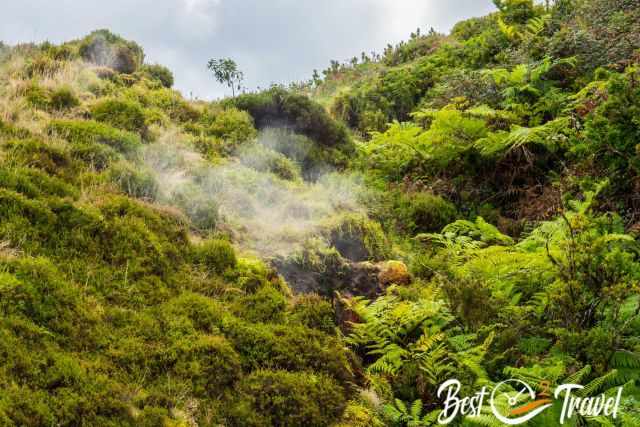
Furnas do Enxofre is one of the best places on Terceira to witness active geothermal phenomena up close. Its combination of volcanic steam vents, rare mosses, and protected boardwalks makes it an essential stop for anyone interested in the geology, ecology, and volcanic origins of the Azores.
Terceira One Day Itinerary
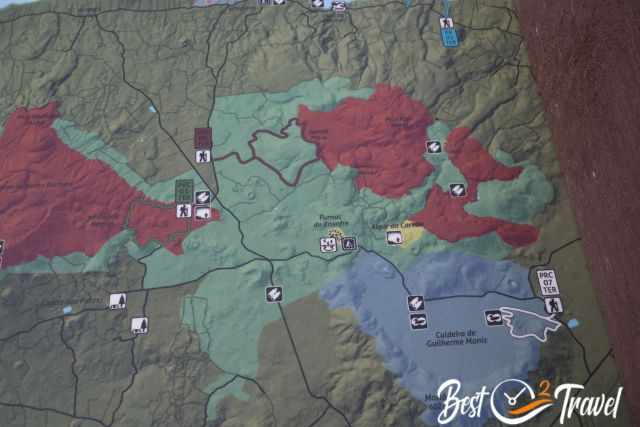
Four volcanic and rainforest highlights in the heart of the island. This itinerary combines the first four must‑visits — all located close to each other in Terceira’s volcanic inland. It’s a perfect full day of nature, caves, rainforest, and steam vents.
- Start your day mid‑morning with the rainforest hike Mistérios Negros, located right next to Algar do Carvão. The 5 km circular trail takes about two hours and leads through pristine forest, boggy sections, volcanic hills, and lush vegetation. It’s the most atmospheric hike in Terceira’s interior.
- After the hike, continue to Gruta do Natal. This lava tube is a short but fascinating visit — especially after walking Mistérios Negros, since the trail starts right beside it.
- Next, head to the volcanic chimney Algar do Carvão. Arrive at least one hour before closing (more above). Descending into this vast volcanic chamber is one of the most impressive experiences on Terceira.
- End your day with a walk around the steaming fumaroles of Furnas do Enxofre. The circular boardwalk takes about 30 minutes and leads past sulfur vents, colourful mosses, and geothermal features connected to the Pico Alto volcanic system.
Practical Tips
-
Bring water and a sandwich — there are no cafés in this volcanic interior.
-
Wear sturdy shoes and pack a rain jacket; fog and drizzle are common.
-
Parking is available at all four stops, though Furnas do Enxofre has limited space.
-
This itinerary works best on days with stable weather, since fog can reduce visibility at the fumaroles.
5 Angra do Heroismo and the Colourful "Impérios"
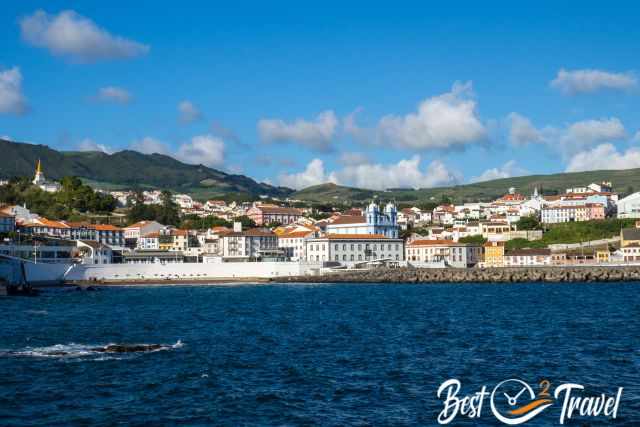
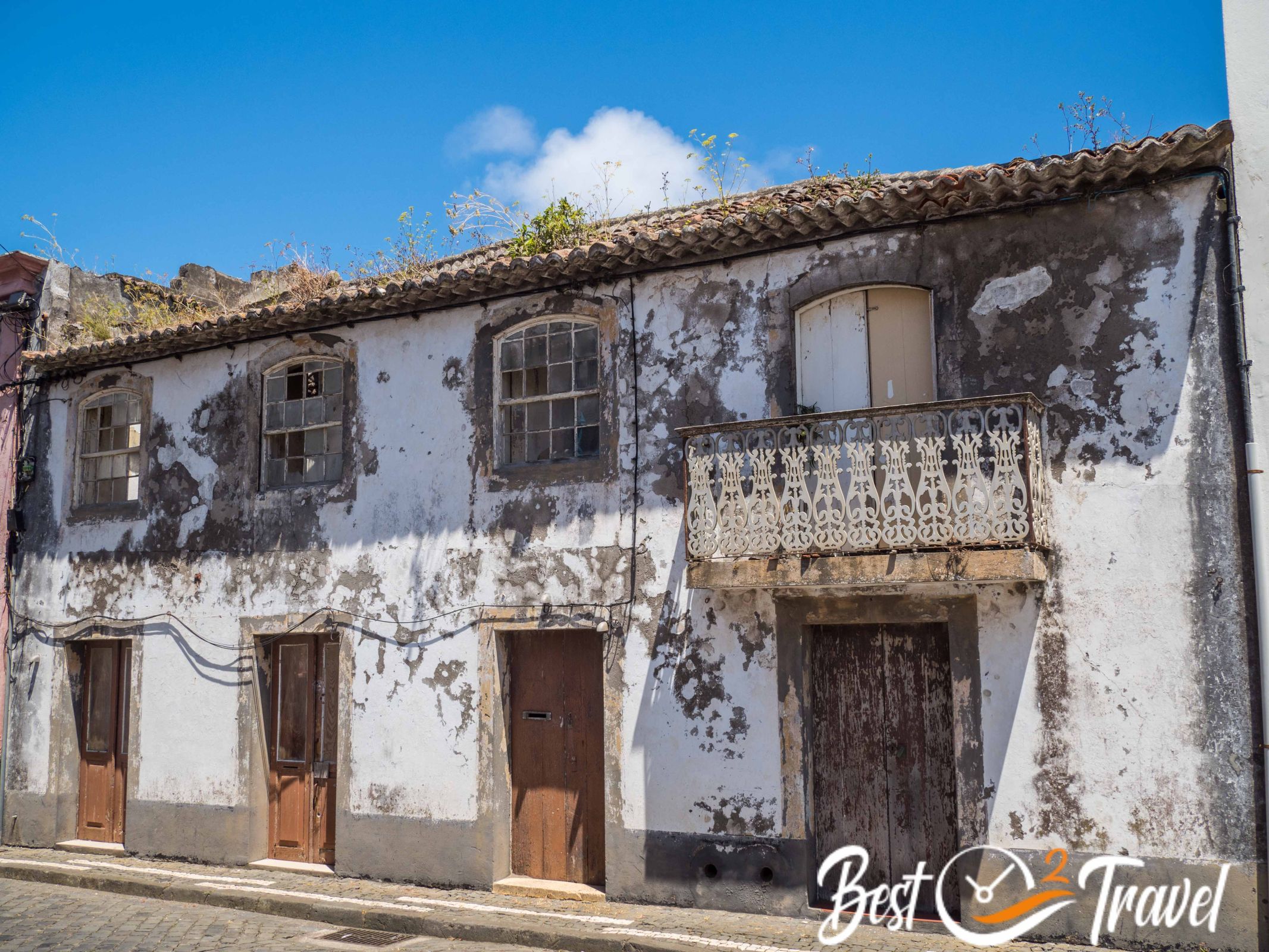
Angra do Heroísmo is the cultural heart of Terceira — a city full of history, pastel colours, and elegant architecture. After the devastating 1980 earthquake, the old town was rebuilt in record time with UNESCO’s support, preserving its unique charm and earning its World Heritage status in 1983.
Walking through Angra feels like stepping into a vibrant open‑air museum. Almost every house proudly displays a colourful façade, creating one of the most beautiful cityscapes in the Azores.
Igreja da Misericórdia – The Blue Church
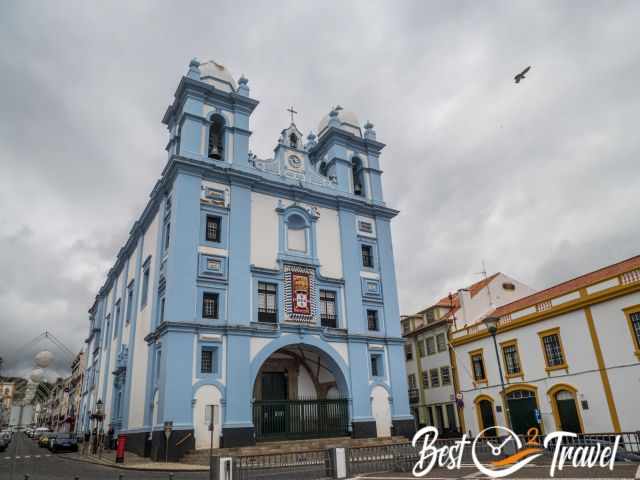
The striking blue Igreja da Misericórdia stands at the harbour and is one of Angra’s most iconic landmarks. Built in the 18th century, it occupies the same location as the first hospital in the Azores, founded in the late 15th century. Its bright colour and elegant architecture make it a perfect anchor point for exploring the historic centre.
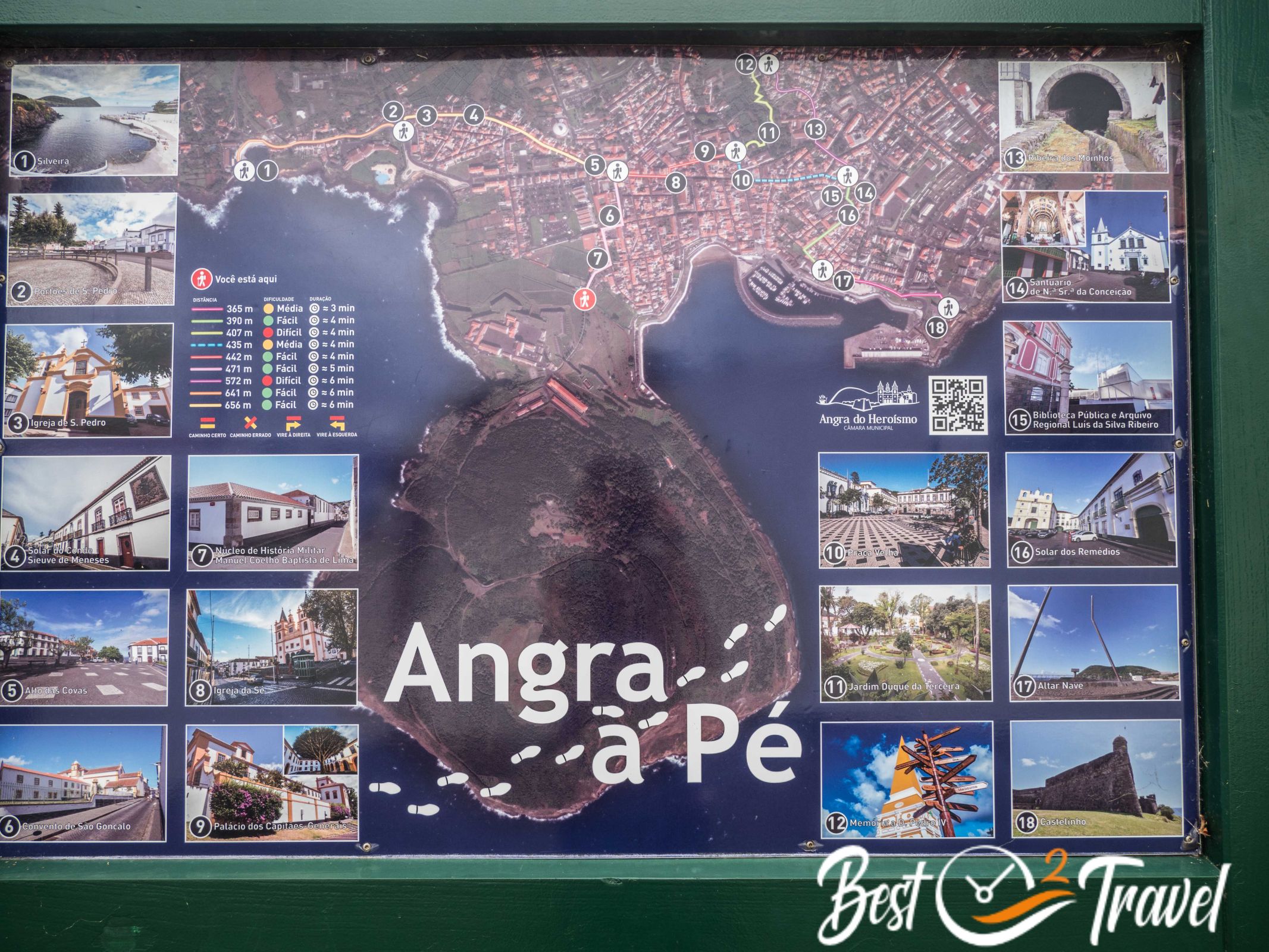
Explore Angra on Foot
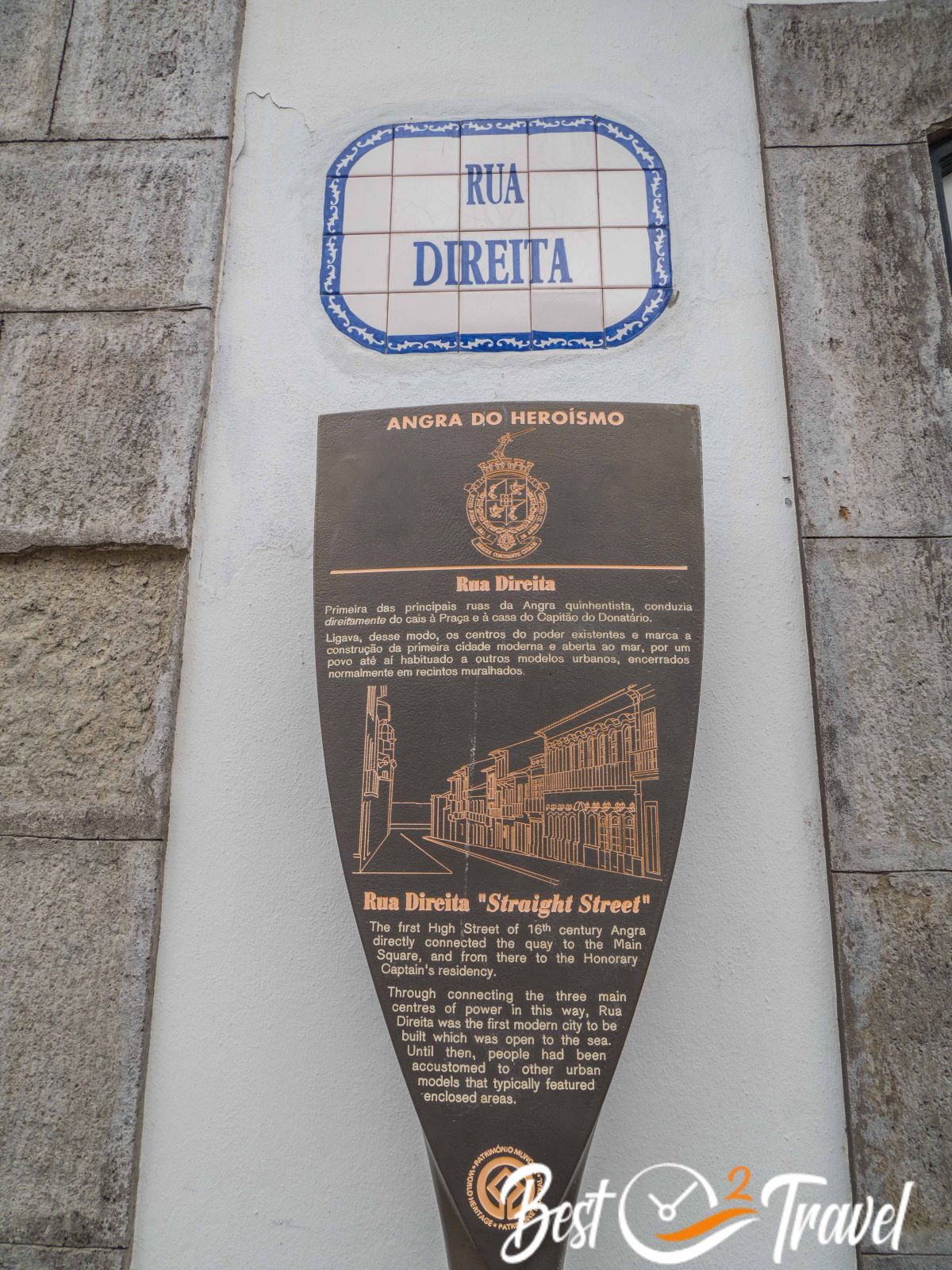
The best way to discover Angra is simply to walk. Follow the cobbled streets, read the historical information panels, and enjoy the relaxed atmosphere of this coastal city. You’ll pass charming squares, old churches, and viewpoints that reveal Angra’s layered history.
For a structured walk, you can follow the Angra city walk with its marked sights and viewpoints.
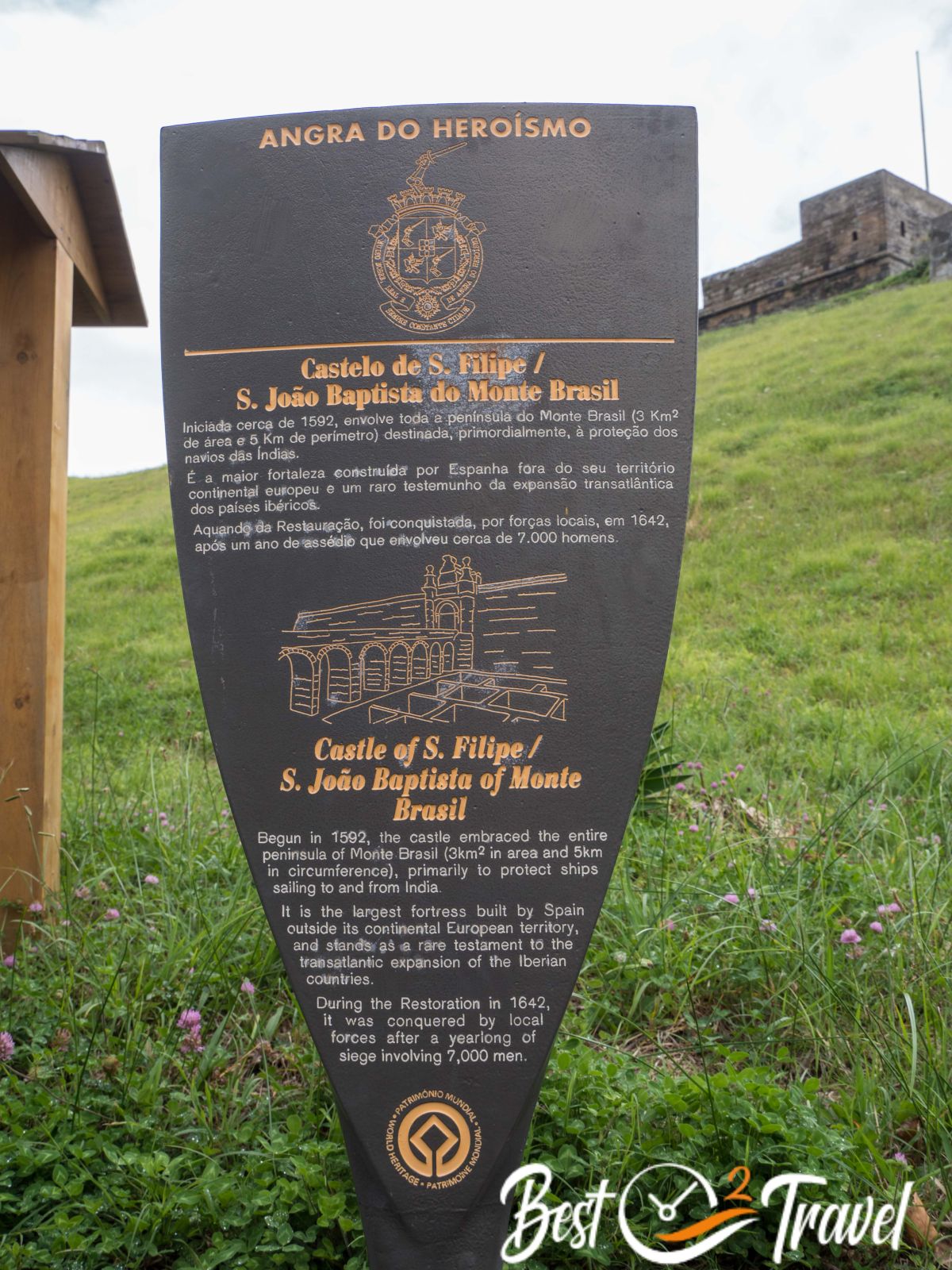
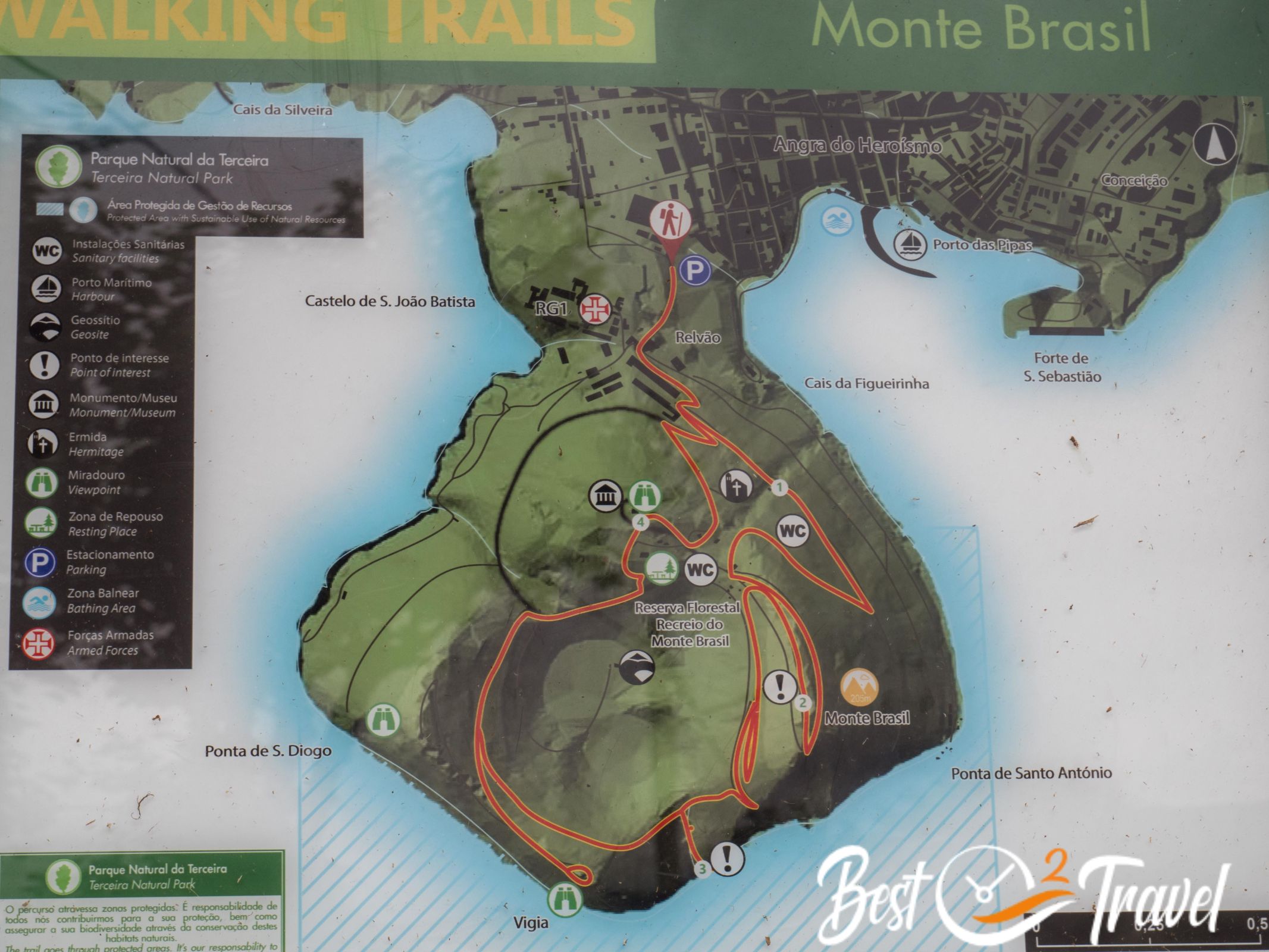
Monte Brasil — Beautiful, But Not a Must
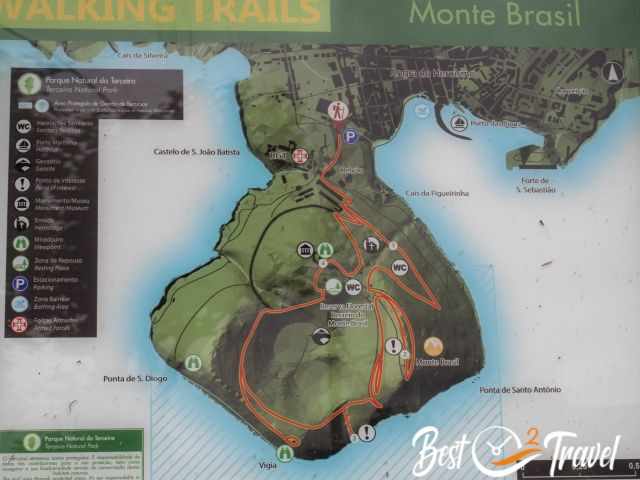
Monte Brasil rises behind Angra and offers panoramic views over the city. One of Terceira’s hiking trails, PRC 04 TER, leads to the top, but there is also a paved road for easy access. Because the viewpoint is shared with many visitors and Terceira has more fascinating natural highlights, Monte Brasil is not part of your “must‑visit” list — though the view is undeniably beautiful.
Vasco da Gama — A Piece of Portuguese History
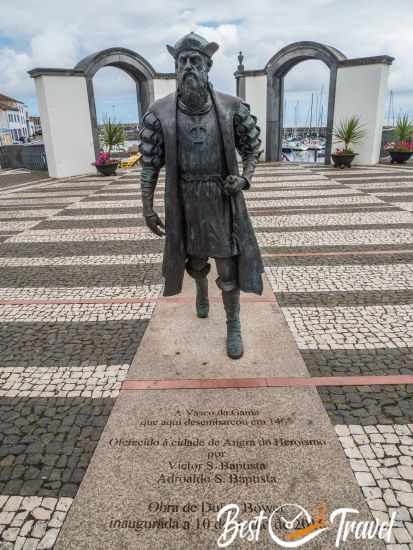
Angra honours Vasco da Gama (1460–1524), one of Portugal’s most famous explorers. His connection to the Azores is part of the island’s maritime heritage, and you’ll see references to him throughout the city.
The Colourful “Impérios” of Terceira
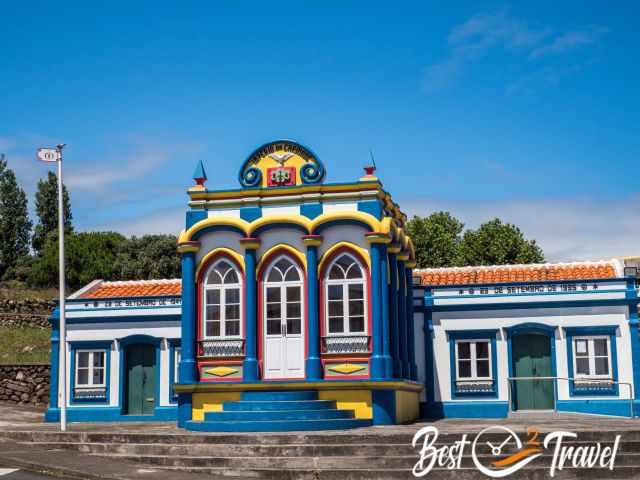
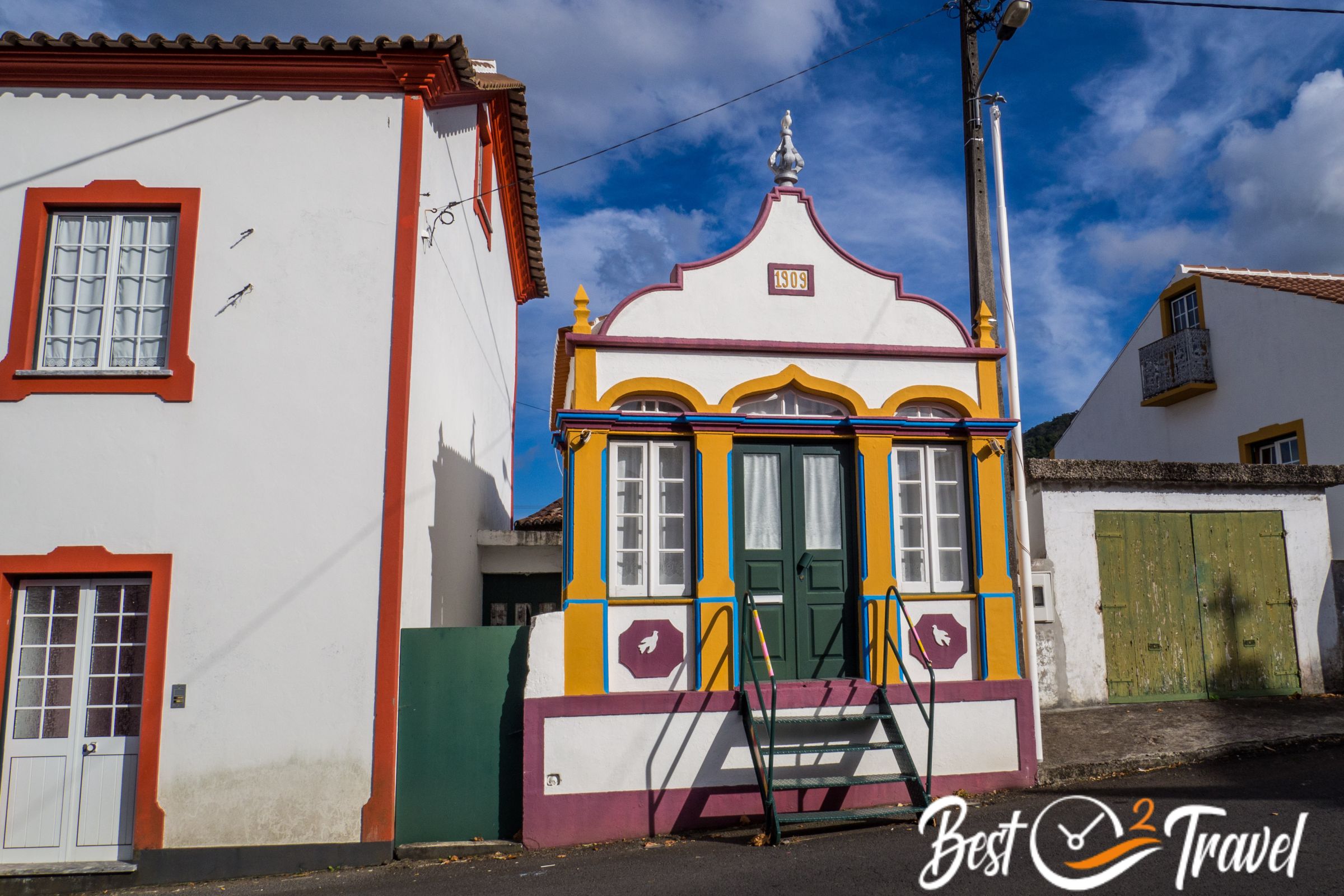
One of the most charming cultural features of Terceira is its abundance of Impérios — small, colourful chapels dedicated to the Holy Spirit. They exist on all Azorean islands, but Terceira has the highest number: over 70. Every town or neighbourhood has its own beautifully decorated Império do Espírito Santo, often painted in bright colours and lovingly maintained by the community.
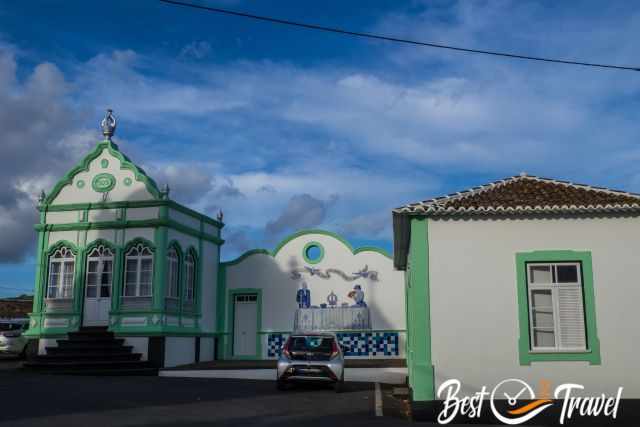
You’ll spot many of them while driving around the island in your rental car. These chapels are central to local traditions, and around them, residents hold magnificent festivals celebrating the Holy Spirit — a tradition deeply rooted in Azorean culture.
Why Angra and the Impérios Matter
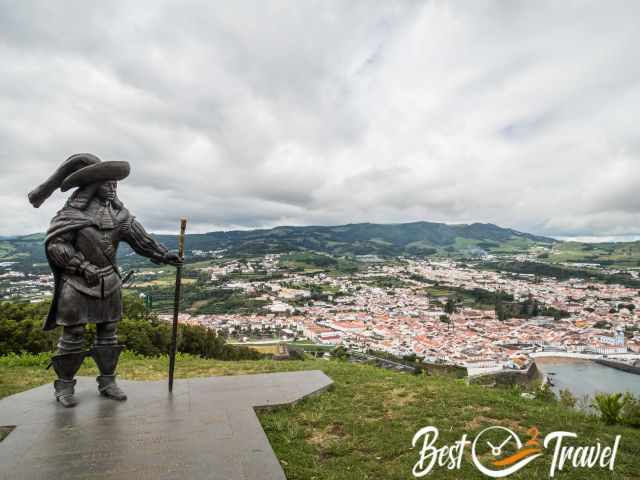
Angra do Heroísmo offers a perfect blend of history, architecture, and culture. The Impérios add a unique, colourful layer to the island’s identity, making Terceira feel both festive and deeply rooted in tradition.
Together, they form an essential part of understanding Terceira beyond its volcanic landscapes.
6 Lagoinha Forest and Lake Walk - PRC03 TER
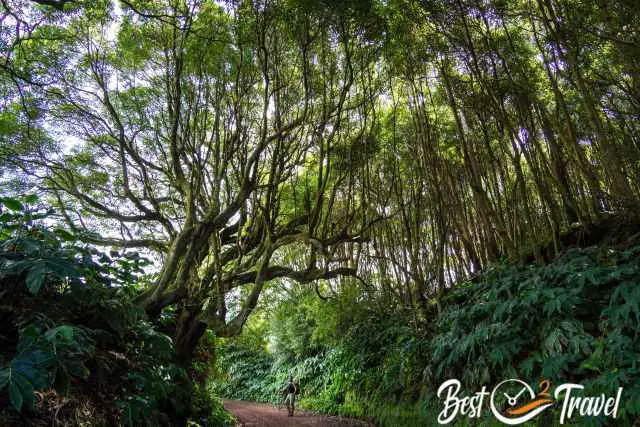
The Lagoinha Forest and Lake Walk (PRC03 TER) is one of Terceira’s most beautiful circular trails — more moderate to difficult than the rainforest walk at Mistérios Negros, but equally rewarding. The trailhead and parking are located along a dirt road in the island’s protected nature reserve. Parking Google Maps Location
A Lush, Wild, and Rewarding Hike
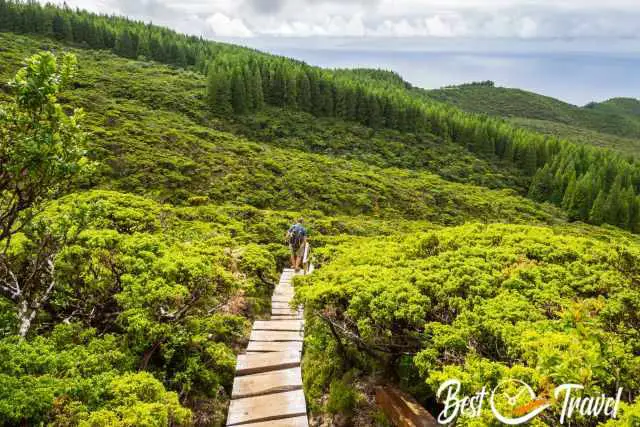
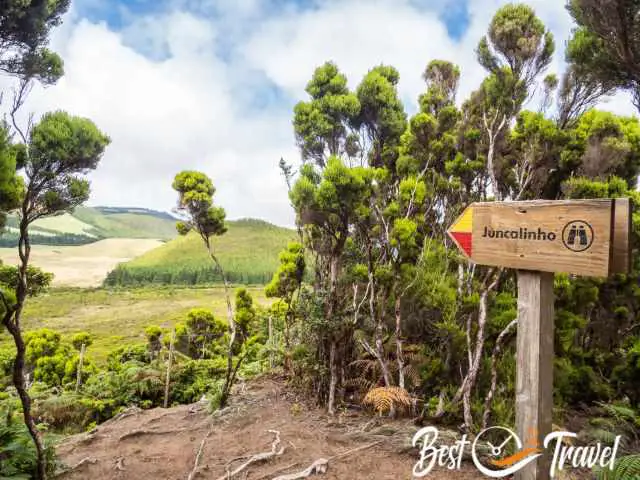
This 6.8 km trail leads through dense vegetation, mossy slopes, and sections of native and endemic Azorean plants. Some parts are muddy, especially after rainfall, but the path is clearly marked with yellow and red trail signs. Boardwalks and wooden steps have been installed in sensitive areas to protect the flora and soil.
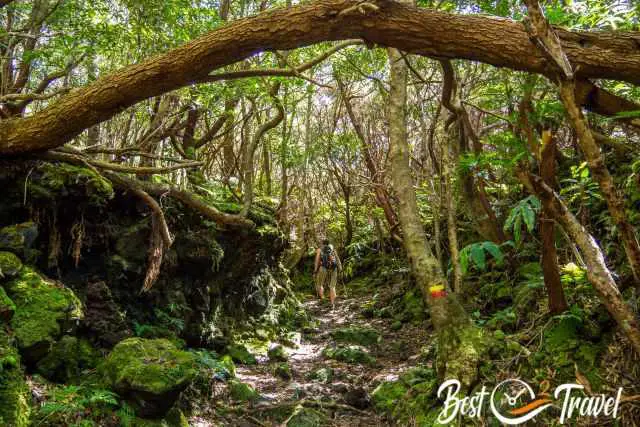
As you climb higher, you’re rewarded with excellent views over the forested hills and volcanic terrain — a landscape that feels untouched and wonderfully remote. It’s one of those hikes where you feel small compared to the surrounding nature.
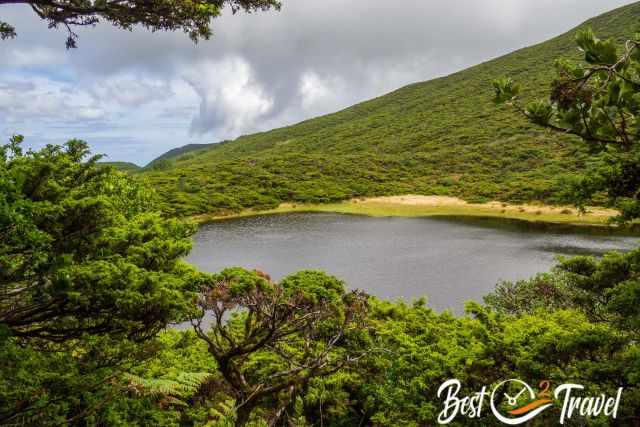
The trail leads to Lagoinha, a small crater lake surrounded by fragile vegetation. Approaching the lake is prohibited to protect the ecosystem, but the viewpoint offers a peaceful, almost mystical atmosphere.
Trail Facts
-
Length: 6.8 km
-
Duration: approx. 2.5 hours
-
Elevation gain: ~400 m
-
Difficulty: moderate to difficult
-
Markings: yellow and red
-
Setting: nature reserve with endemic flora
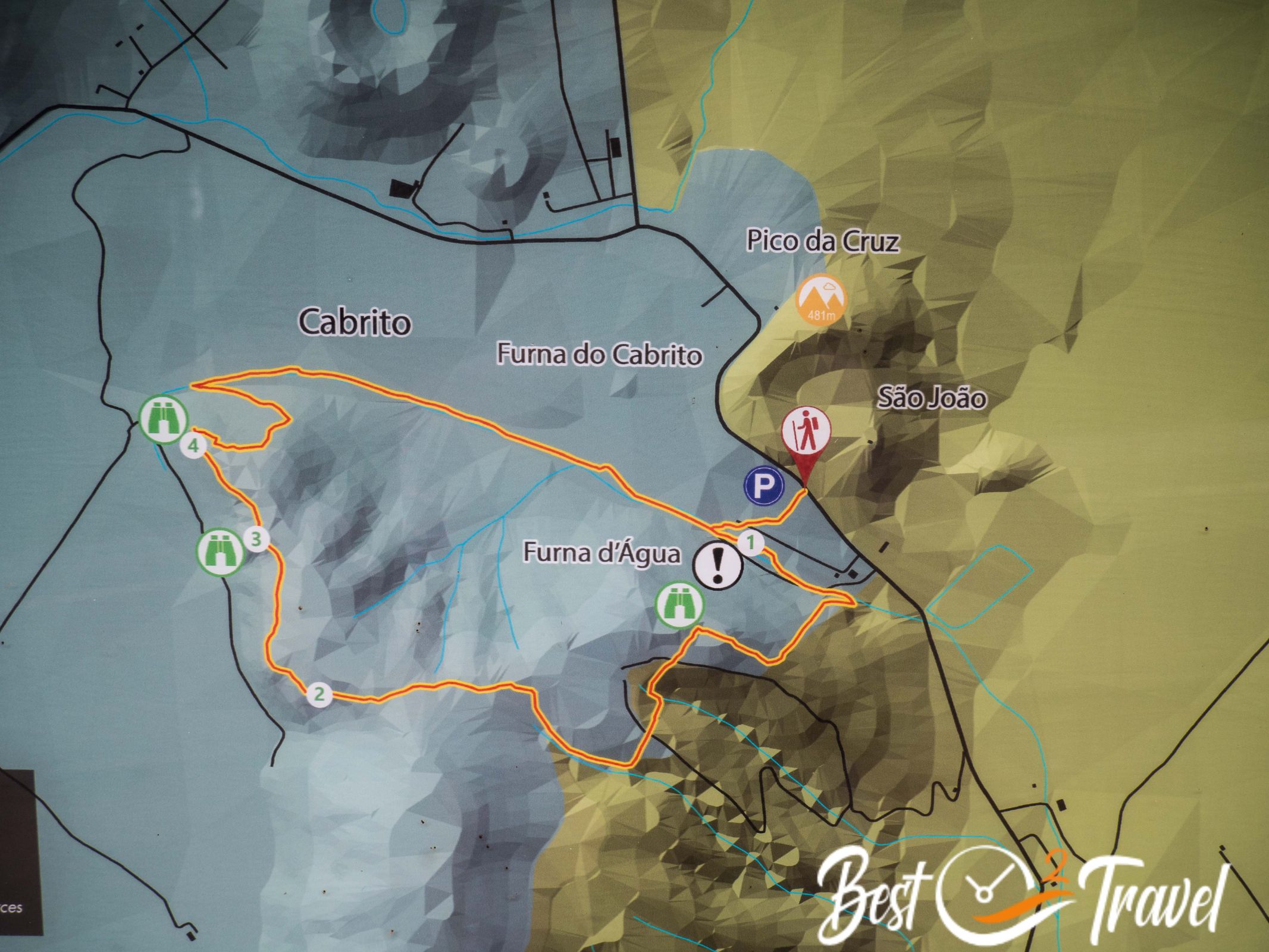
7 PRC07 TER - Passagem das Bestas & Furna d'Agua
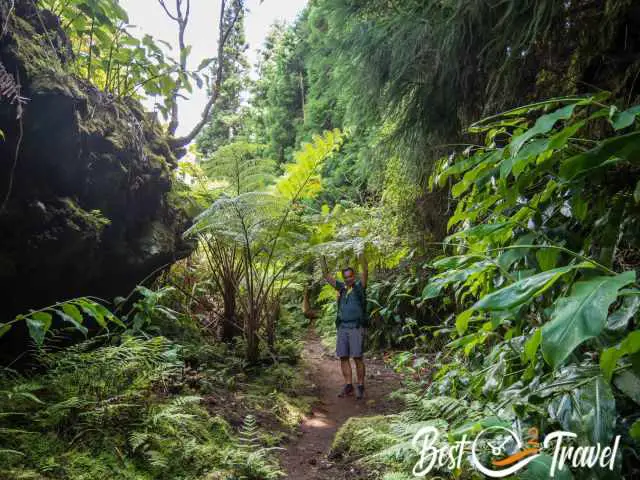
A short circular trail through lush forests and volcanic history.
Shortly after leaving the old oxcart track, the trail leads into a beautiful, dense forest — one of the most atmospheric sections of PRC07 TER. This short circular hike combines lush vegetation, Japanese cypress trees, natural springs, and sweeping views into the Caldeira de Guilherme de Moniz.
The Forest of Japanese Cypress Trees
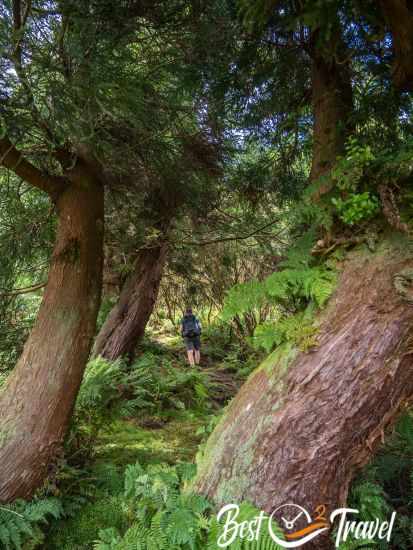
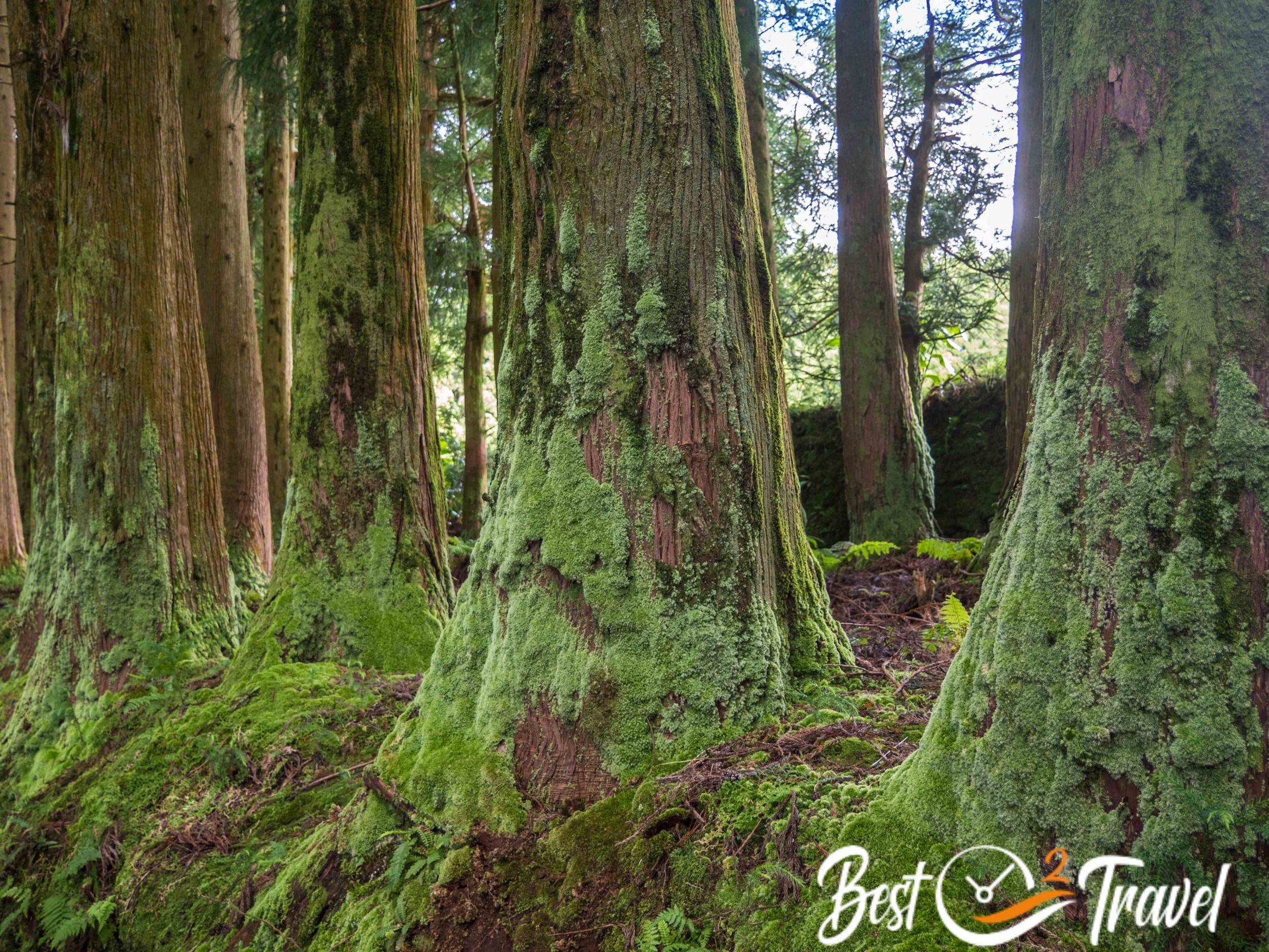
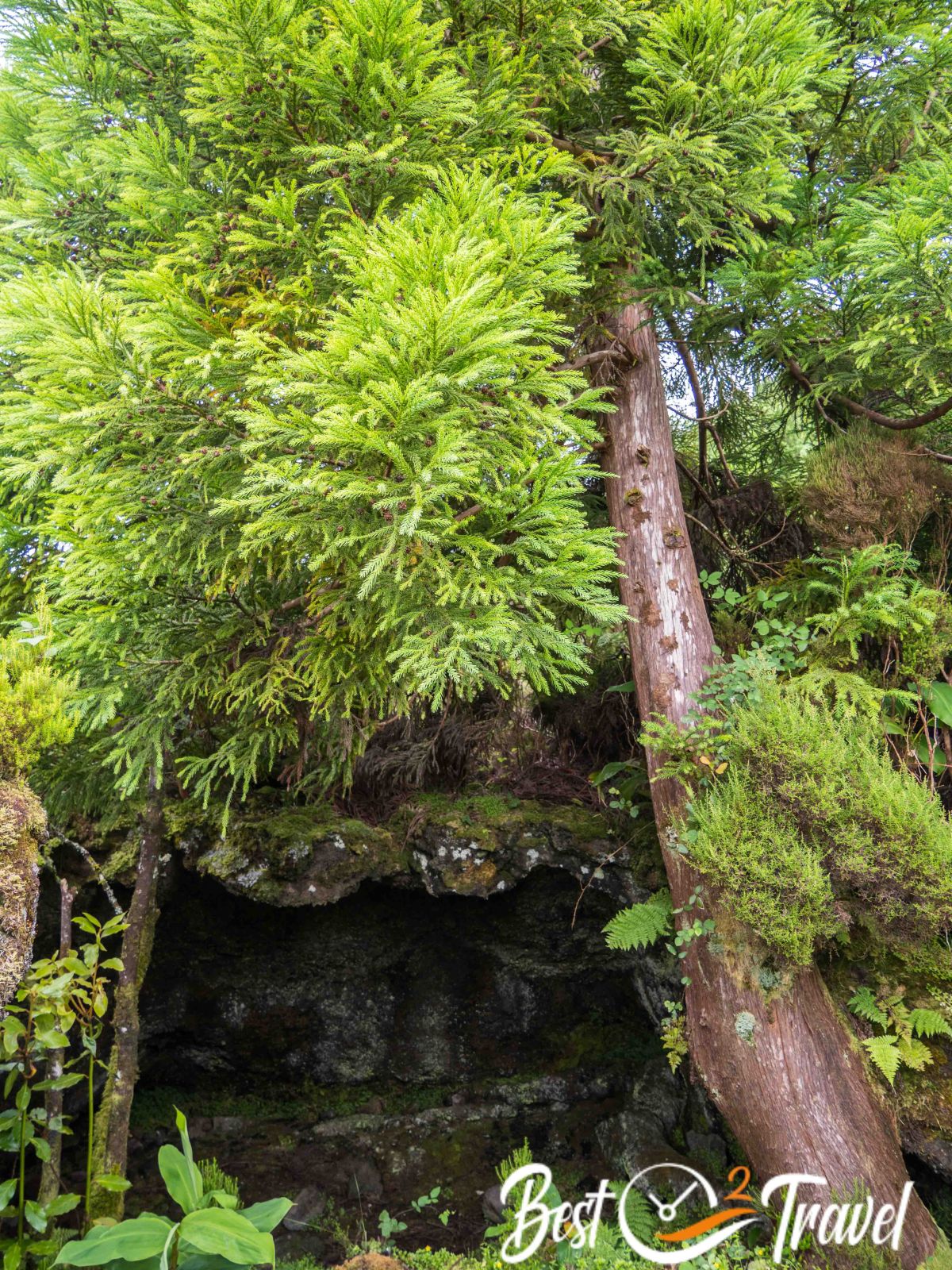
The hike begins along the historic oxcart track once used to transport wood from higher elevations. Soon after, you enter a forest of Japanese cypress trees, where the ascent becomes steeper but the path remains well‑marked and easy to follow. The filtered light and cool air make this part of the trail especially enjoyable.
Several natural springs appear along the way at Furna d’Água, adding to the lush, humid atmosphere. The vegetation becomes richer here, with ferns, mosses, and junipers thriving in the volcanic soil.
Views into the Caldeira de Guilherme de Moniz
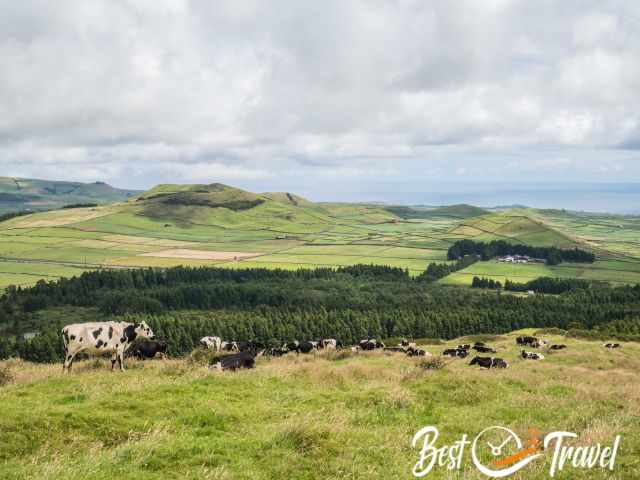
About half of the trail is shaded, but the open sections offer impressive views. You cross a meadow with vistas of volcanic craters and then reach viewpoints into the enormous Caldeira de Guilherme de Moniz — a volcanic depression formed 23,000 years ago. Around 2,000 years ago, basaltic lava from the Algar do Carvão volcanic system flowed into this caldera, creating the fertile soil that supports today’s dense vegetation.
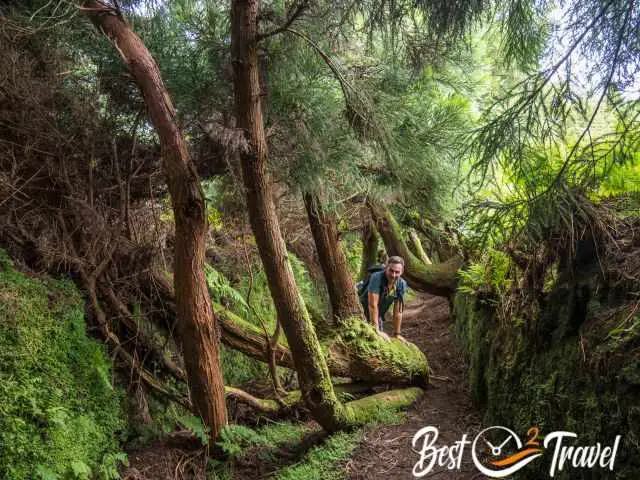
This hike is excellent in summer thanks to its shaded sections and cooler forest air. After enjoying the higher viewpoints, the trail descends through a ravine and reconnects with the oxcart track, leading back to the car park.
Trail Facts
-
Length: 4 km
-
Duration: officially 2.5 hours — we completed it in 2 hours with plenty of photo stops
-
Elevation gain: ~120 m
-
Difficulty: easy to moderate
-
Markings: yellow and red
-
Highlights: Japanese cypress forest, Furna d’Água springs, caldera viewpoints
- Hiking Map
8 Natural Lava Pools and a Sheltered Ocean Pool
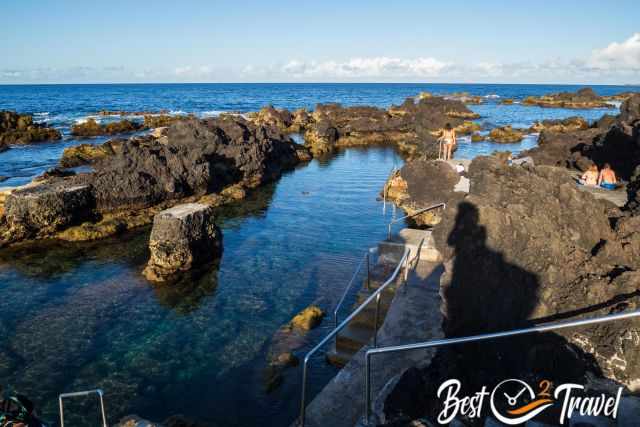
Piscinas Naturais dos Biscoitos - Natural Lava Pools
This is an excellent spot for swimming from May until October. During low tide, you can access several pools close to the rough Atlantic. During high tide, the large pool near the shore is safer and easier to enter.
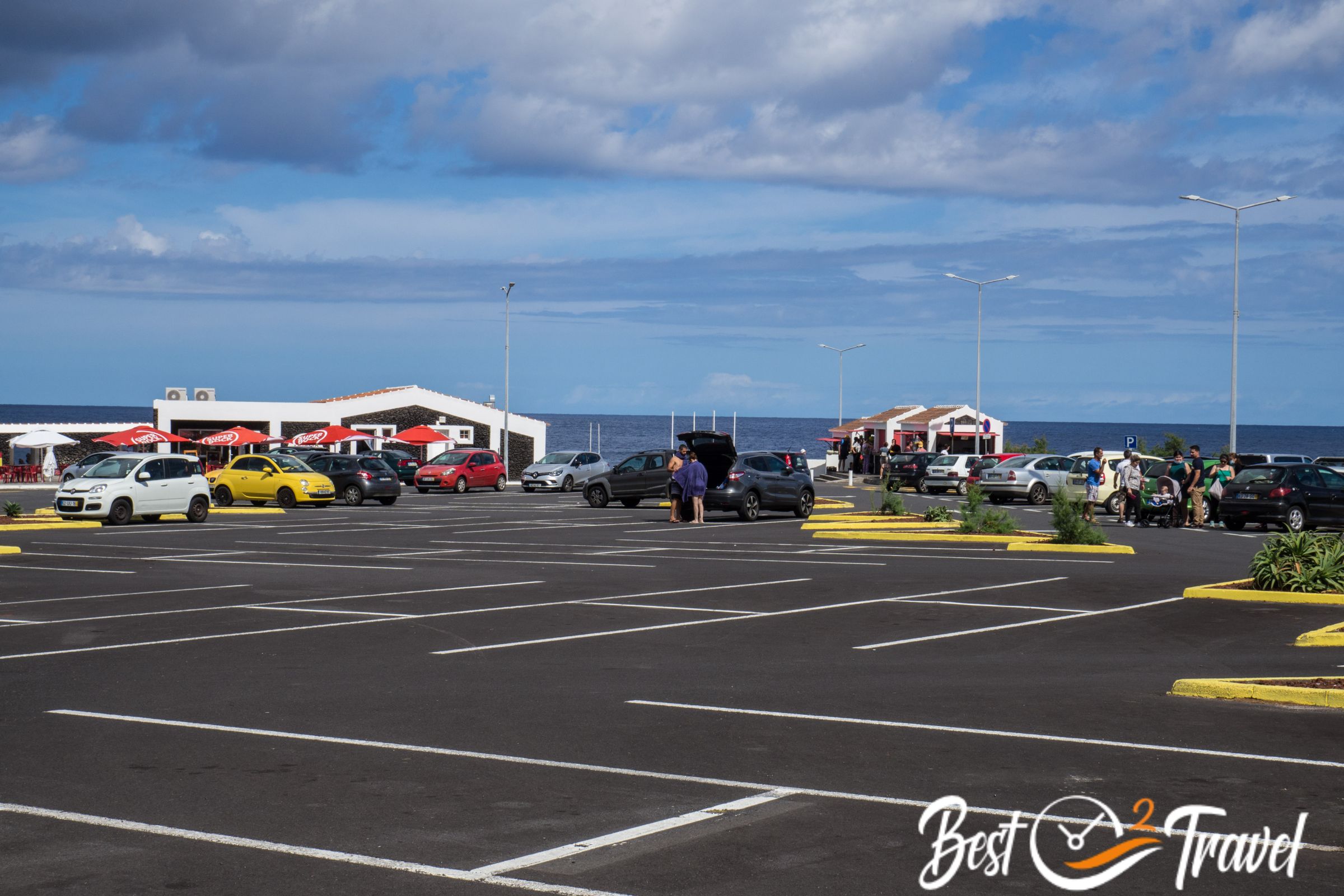
Lifeguards are on duty from mid‑June to mid‑September, the official bathing season. Facilities include a food truck, fruit and veggie vendors, restrooms, showers, a restaurant, and a café — everything you need for a relaxed beach day.
Biscoitos (Google Maps Location)
Huge carpark (Google Maps Location)
Snorkelling & Diving
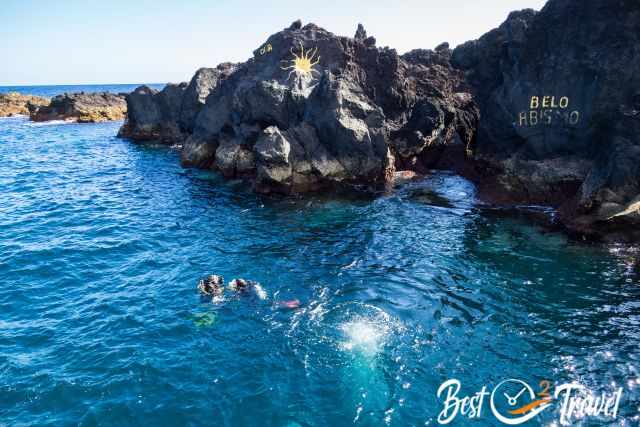
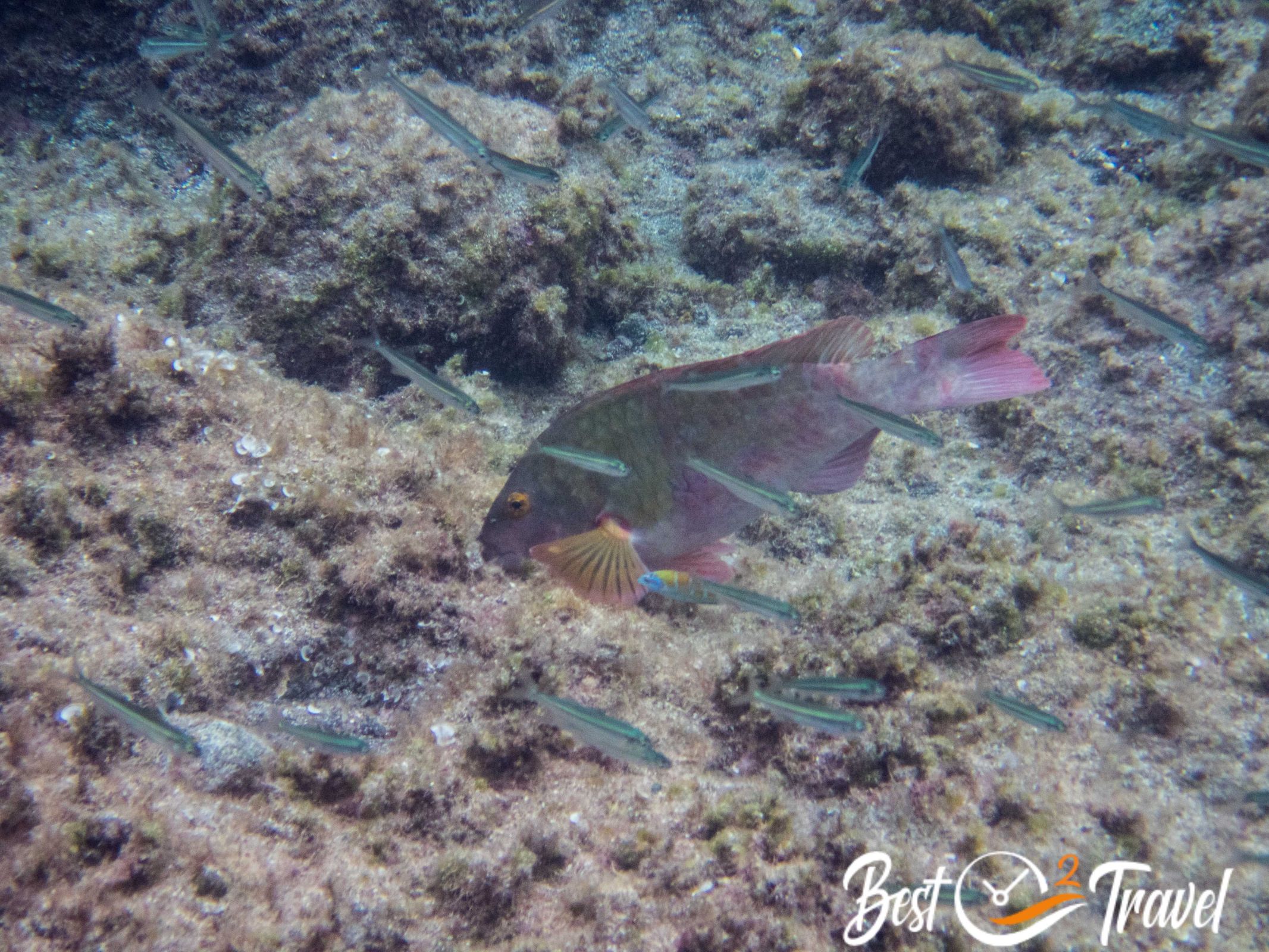
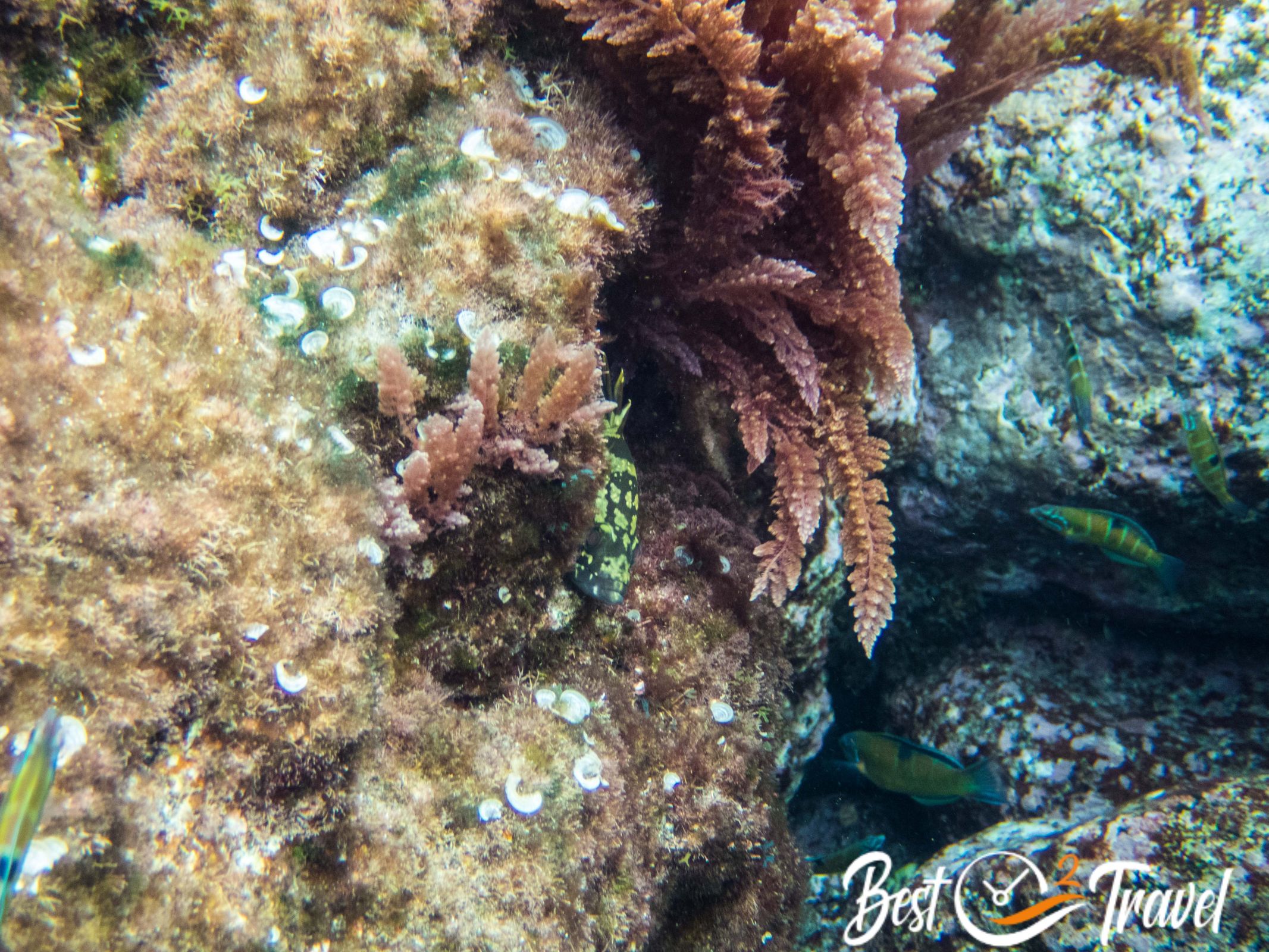
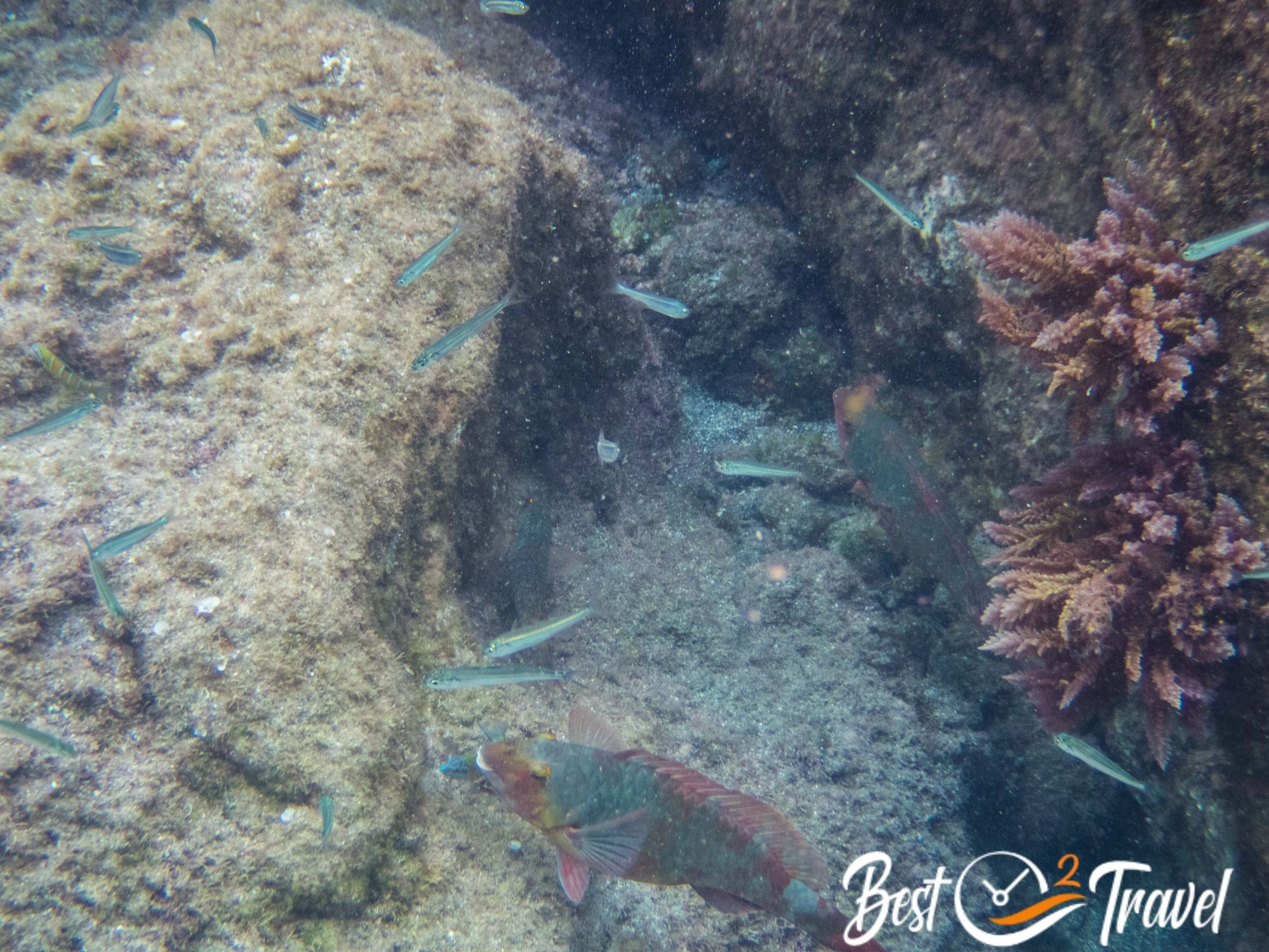
Biscoitos is also a great place to snorkel in the protected pools or in a sheltered bay suitable for experienced snorkellers. Divers love this area too, thanks to the clear water and volcanic underwater landscape.
One of the large pools is accessible for people with disabilities, which is rare for natural pools and a wonderful feature.
Excellent Water Quality
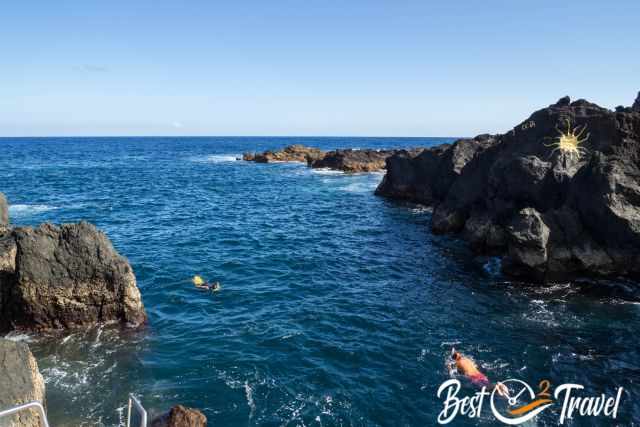
The water quality is regularly monitored and was excellent during our visit. Visibility was fantastic — that’s you with the yellow fins in your photo. There is plenty of free parking nearby.
Sunset at Biscoitos
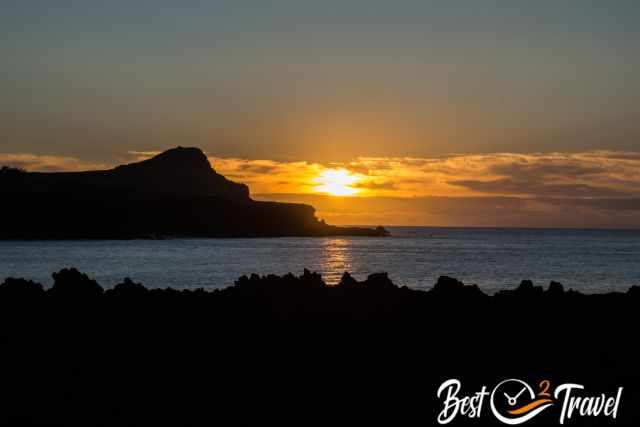
Biscoitos is especially beautiful at sunset. In September, we enjoyed a breathtaking evening light over the lava formations and pools — a perfect way to end the day.
Practical Tips
-
Wear water shoes — the lava rocks are sharp.
-
Weekends and summer afternoons can be busy, but there is plenty of space for everyone.
-
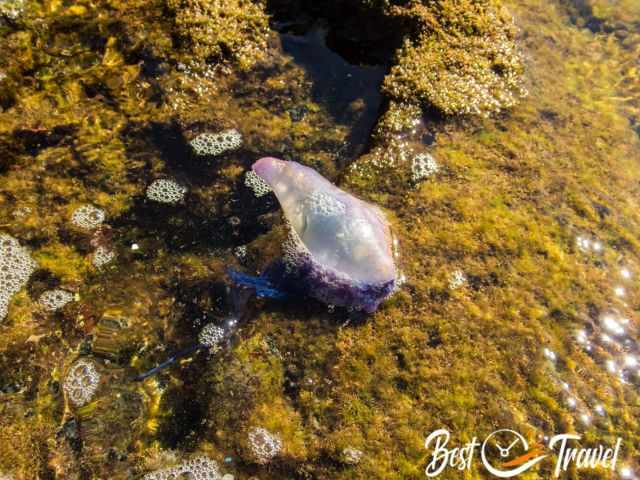
Be aware of Portuguese Man‑o‑War jellyfish. We saw three small ones on a windy day in September, but none in July.
-
For calmer conditions, aim for low tide or early morning.
Zona de Banhos do Fanal close to Angra (Google Maps Location)
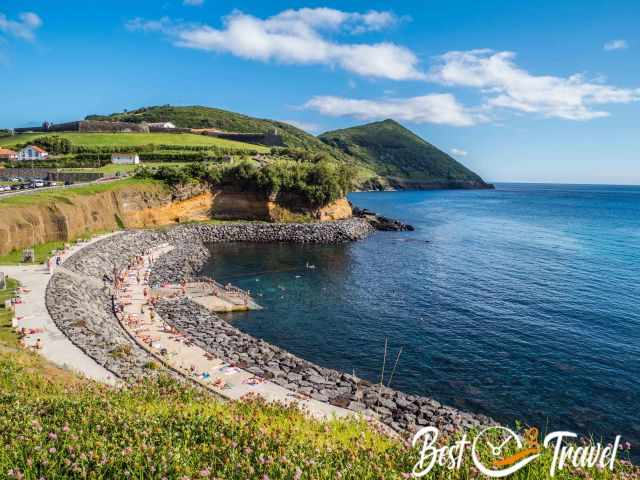
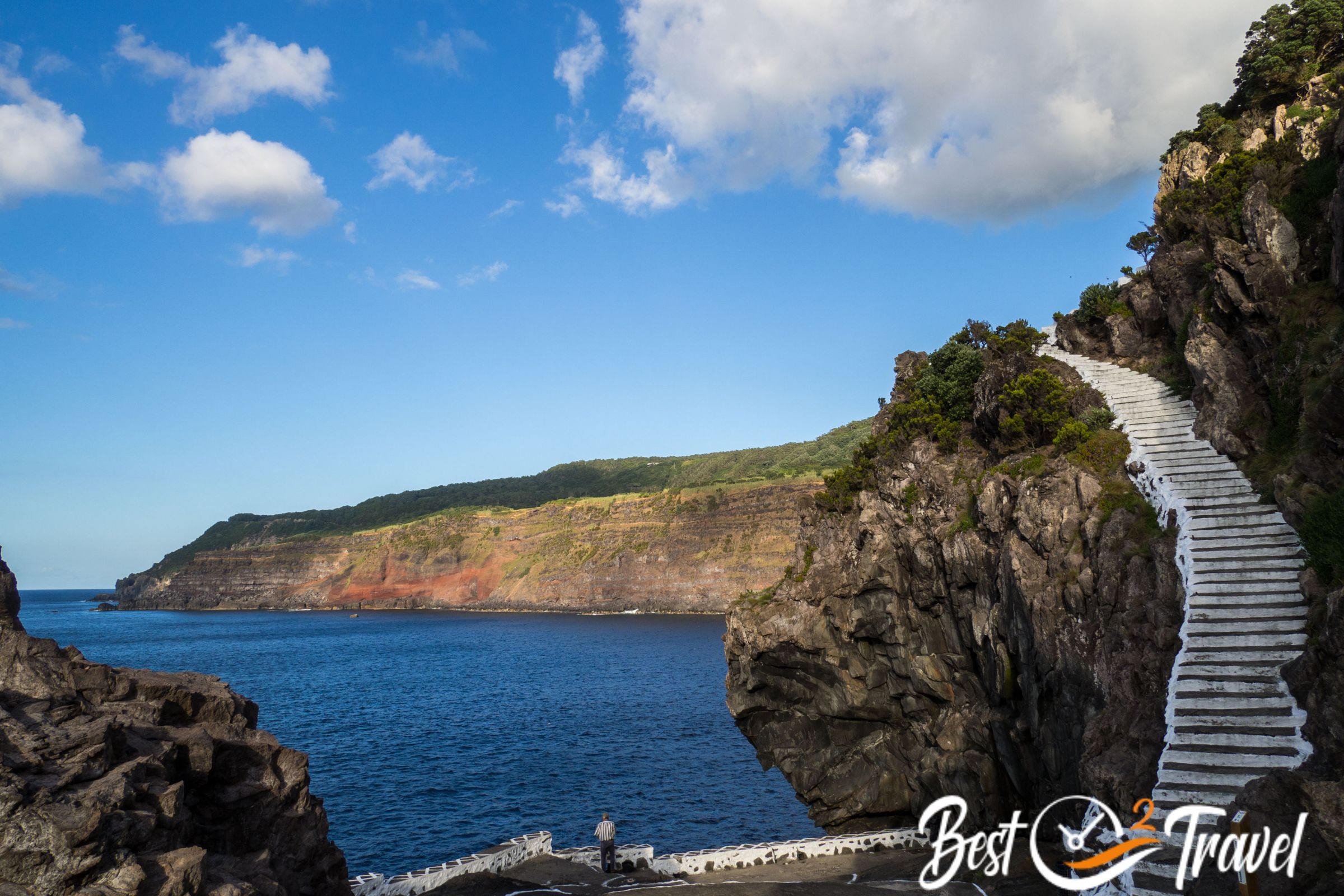
Zona de Banhos do Fanal is one of the best places to swim near Angra do Heroísmo. This sheltered bay is protected from the strong Atlantic surf, making it an easy and comfortable spot to enter the water — even without water shoes. Showers are available, and there’s plenty of space to relax and enjoy the sunset over Monte Brasil.
A Spot for Swimmers Only
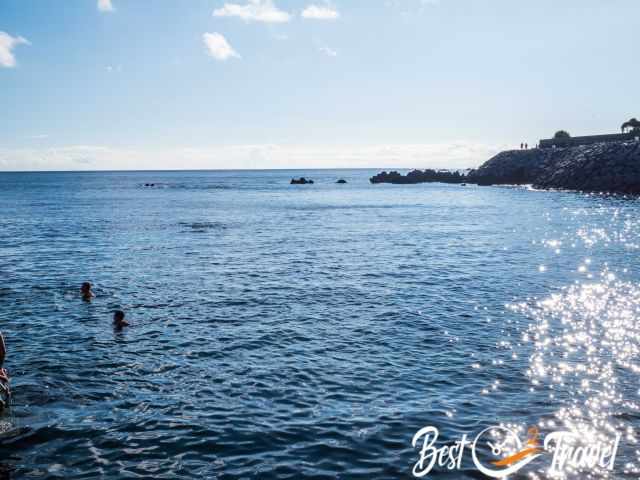
There are no lifeguards at Zona de Banhos do Fanal, so this area is recommended for confident swimmers. During July and August, it gets a little busy, especially in the afternoons, because it is a popular spot by locals. However, we always found a parking spot. A paved path runs along this part of the coast, making it easy to explore the shoreline.
9 Miradouro da Serra do Cume
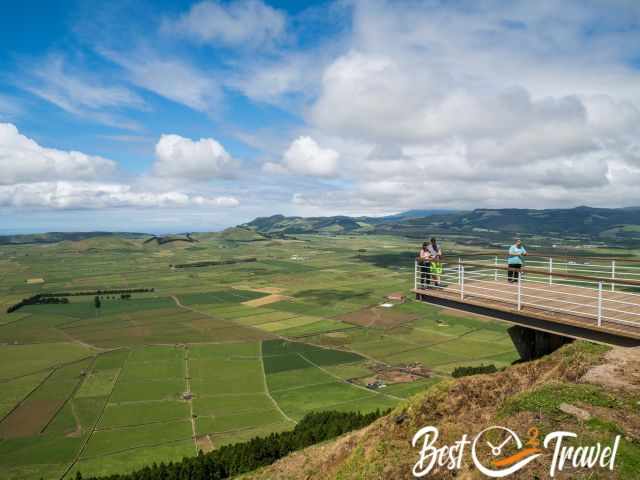
The Miradouro da Serra do Cume received a newly installed lookout platform in summer 2023, and it truly elevates the experience. On a sunny day, this viewpoint in the east of Terceira is incredibly beautiful — a sweeping panorama of volcanic craters, patchwork fields, and the island’s dramatic green landscape.
When the wind turbines on the ridge are covered in clouds, it’s usually not worth driving up. At 542 m elevation, Serra do Cume is often windy, and visibility can change quickly.
The Panoramic View and Lajes Airport in the Distance
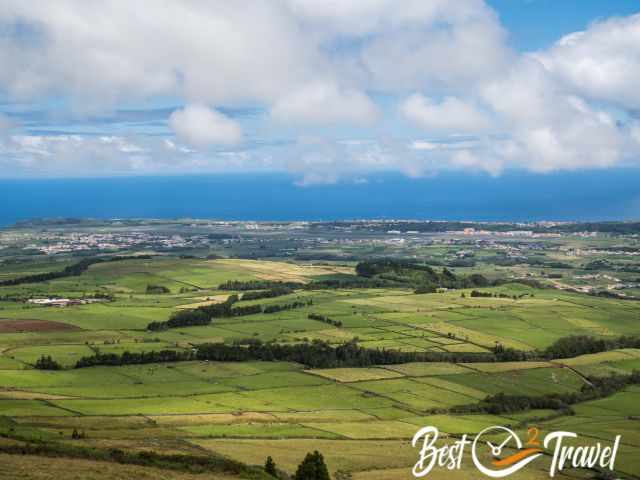
From left to right, you see Pico Rachado, Pico de Vime, and Pico do Malhão — a volcanic skyline that looks almost painted. Information panels explain how these craters formed and how the landscape evolved over thousands of years.
This viewpoint is also a fantastic place to watch the sunset, but bring a jacket even during the day. The wind here is no joke.
From the platform, you can spot Lajes Airport far below — a reminder of how high you’ve climbed and how vast the eastern plains of Terceira really are.
Getting There
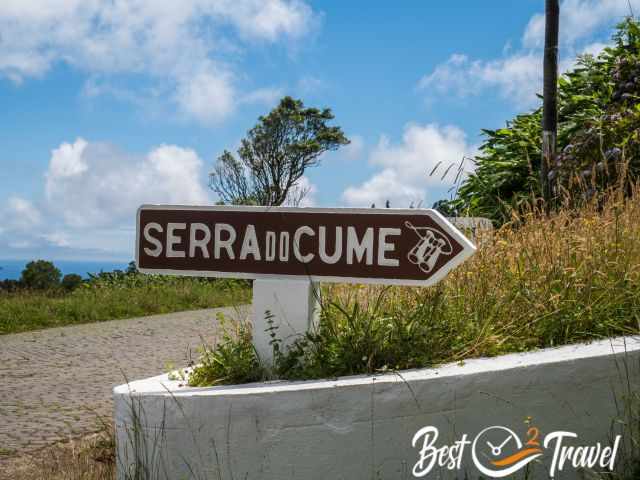
If you navigate with Google Maps, follow the old road signs instead of the suggested route. Google tends to send you through narrow roads that are not ideal. The traditional signs marked “Serra do Cume” lead you quickly and safely to the top.
“50 Shades of Green”
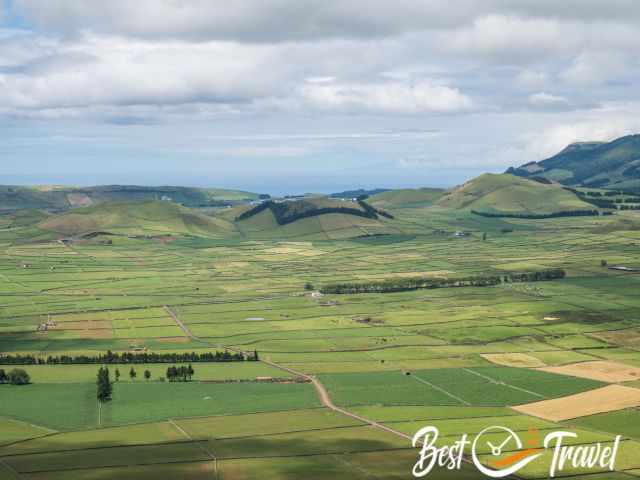
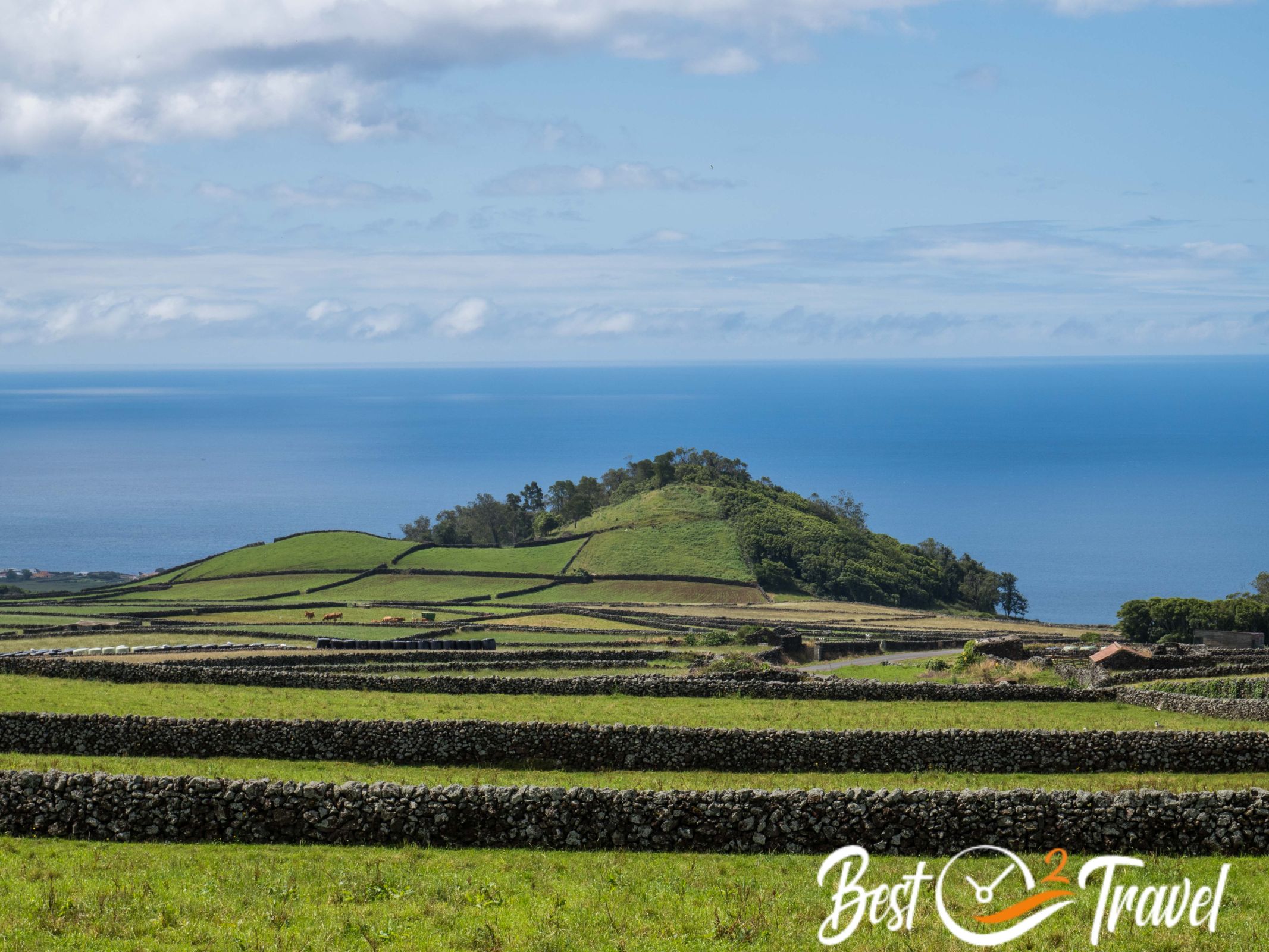
From Serra do Cume, you can enjoy what locals lovingly call the “50 shades of green” — a mosaic of fields divided by volcanic stone walls, stretching across the entire plain. It’s one of the most iconic landscapes of the Azores.
Don't miss out on:
- My 9 Azores Islands Guides
- Our YouTube Short about Terceira
- The Ultimate Azores Guide - 19 Must-Visit Places on YouTube
We are real travellers; we took all these pictures and footage. I provide honest content from our own experience, not generated by AI!
Top Tip for the Winter
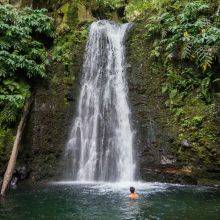
A hidden waterfall that only appears in the rainy season
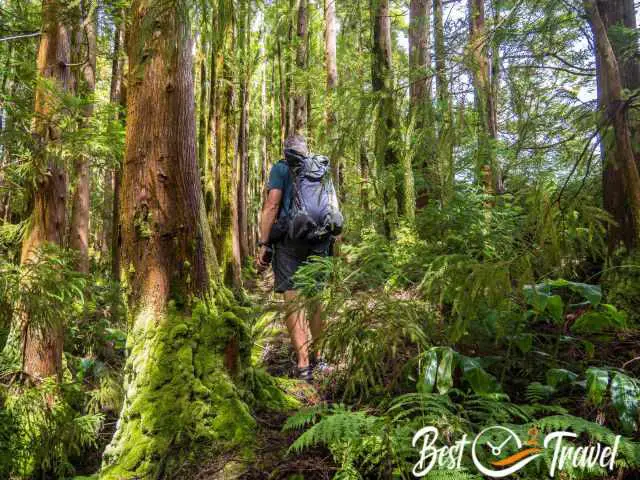
When you arrive at Terceira Airport, you’ll notice a promotional photo from Explore Terceira showing a beautiful forest waterfall. We were curious and figured out where this spot is — but the waterfall only appears in the wetter winter months. Rain or shine, there is always a reason to visit Terceira.
A Track That Isn’t Marked
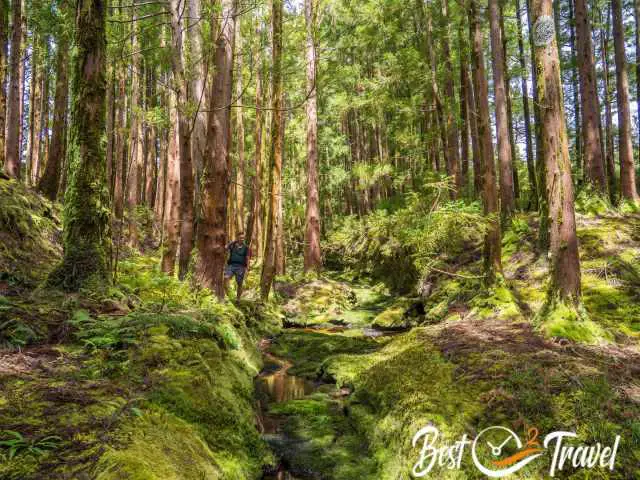
This trail is not officially marked, but walking here is permitted. It took us a while to find the exact location, so I added a Google Maps link with both the parking area and the trailhead.
You simply follow the stream for about 500 meters, crossing the water three to four times. In winter, bring a waterproof bag to protect your valuables and camera. It took us less than half an hour to reach the waterfall.
A Short Adventure
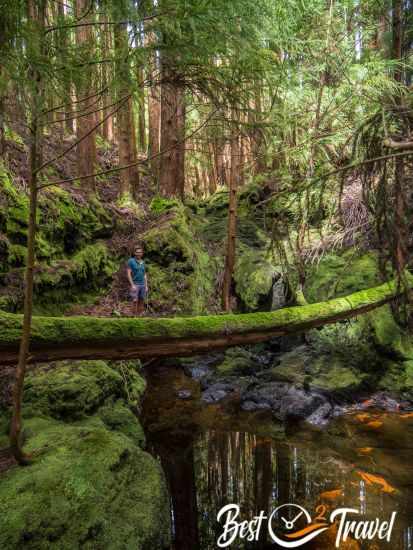
The path feels like a small adventure — quiet, green, and wonderfully remote. You walk along the stream, listening to the water and watching the forest close in around you. In summer, this waterfall may not exist at all, but in winter it becomes a magical hidden spot.
Restaurant Tips
Our new favourite: Restaurante O Pescador in Praia da Vitória
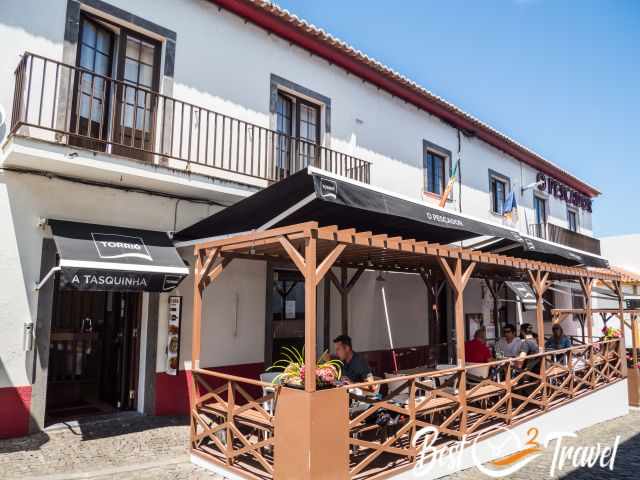
We tried several new restaurants during our stay on Terceira, and Restaurante O Pescador in Praia da Vitória quickly became our favourite place for seafood. The Lapas, Arroz de Marisco, and Tuna were outstanding — fresh, flavourful, and beautifully prepared.
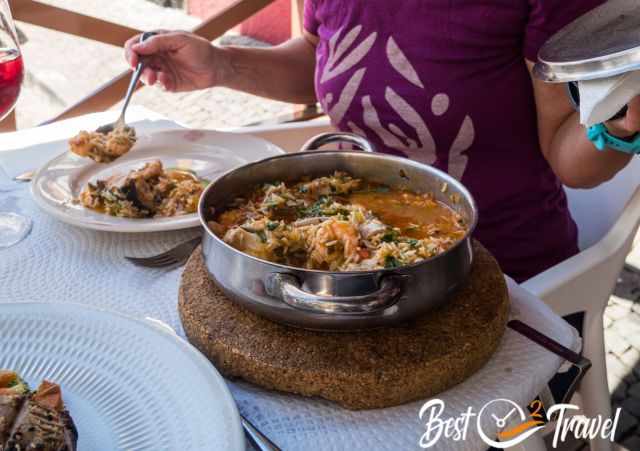
The Arroz de Marisco with gambas and swordfish was absolutely delicious. Service was excellent as well: Diego spoke perfect English, explained every dish, and made us feel genuinely welcome.
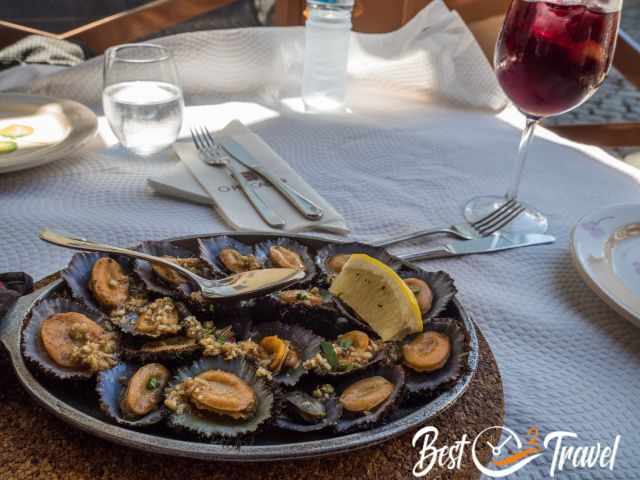
I always order Lapas with fresh lemon first. If the lapas are good, we usually know the rest will be worth ordering — and here, everything was fabulous. Some visitors mention it’s a bit pricey, but for us, it was worth every Euro.
Although the restaurant is large inside, it is fully booked even during the week, so I highly recommend reserving a table in advance.
Restaurant location Google Maps
Telephone: +351295513495
Restaurant R3
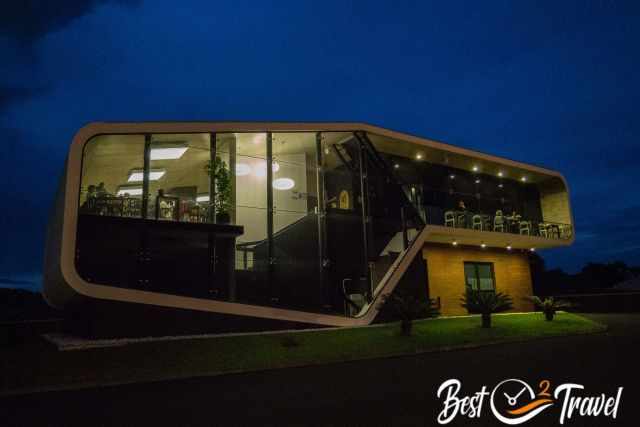
Like everywhere in Portugal and the Azores, plenty of excellent restaurants offer outstanding seafood for an affordable price.
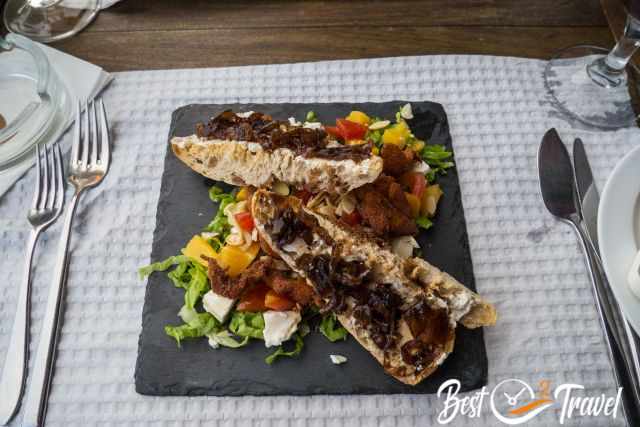
By accident, we had dinner at Restaurant R3 opposite our hotel during our first visit, and we returned on our last evening in Terceira. The staff was super friendly and the food absolutely delicious.
Restaurant R3 Google Maps Location
Hotel Tip
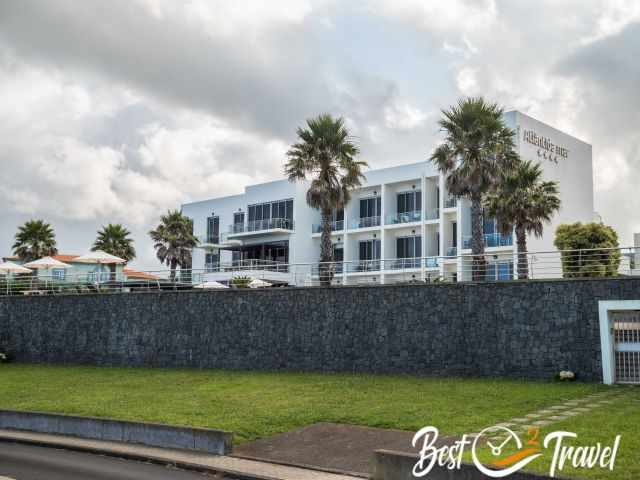
Atlântida Mar Hotel – A perfect base for your first days on Terceira
The 4-star Atlântida Mar Hotel was perfect for our first four‑night stay on Terceira. We had a spacious room with a kitchenette and a balcony overlooking the ocean, which made mornings and evenings especially beautiful.
Breakfast was included and absolutely excellent, with plenty of fresh options. The staff was wonderful, and the location couldn’t have been better — quiet, coastal, and ideal for exploring Praia da Vitória and the eastern part of the island.
How to Get to the Azores and Terceira?
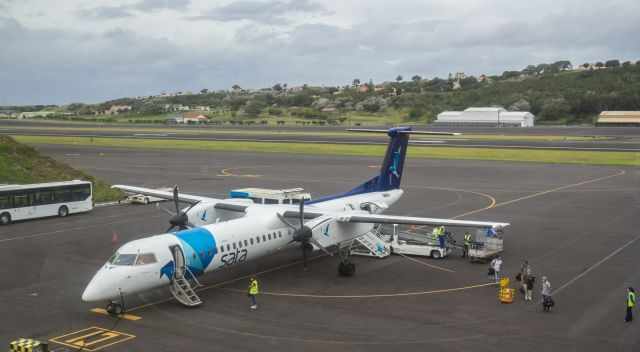
São Miguel (Ponta Delgada) is the main international hub of the nine Azores Islands. From mainland Portugal, the flight from Lisbon to Ponta Delgada takes around two hours.
There are also direct transatlantic flights operated by SATA Azores Airlines and TAP Air Portugal from:
-
Boston
-
New York
-
Toronto
These flights take roughly 5–6 hours and connect to São Miguel, Pico, Terceira, and Horta. From Europe, direct flights are also available — for example from Frankfurt.
Getting Between the Islands
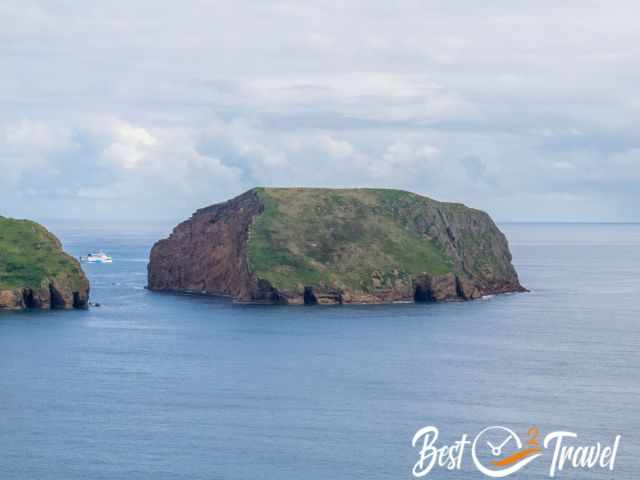
Traveling from one island to the next is easy and affordable. You can choose between:
-
SATA Air Açores
-
Ferries operated seasonally
SATA offers exceptional service. You can change your inter‑island flight without additional costs, simply by calling them. Sport and diving equipment is transported free of charge — you only need to add it to your booking.
Why Credit Matters
Honest travel content deserves recognition
We visited Terceira twice and explored all these places ourselves. Every detail in this guide comes from real experiences, and I gathered all this information for you. If you enjoyed the article, I’d be happy if you shared it with friends or on social media. If you want to support me, subscribe to our YouTube Channel — you may find inspiration for your next vacation there. Also check out our YouTube Terceira Short and Azores Video.
A Personal Note About Photo Use
If you wish to use any of my photos, please contact me. I will take action against picture theft.
Why mention this here? Hundreds of my photos are used worldwide without any credit, and without asking for permission. I don’t mind giving permission — but I want to be asked and properly mentioned. The web has changed a lot, and rewriting honest travel content has become a business model for many fake travel websites.
If you want to learn how to spot such sites quickly, read my article: “The Truth About Fake Travel Websites and Picture Theft.”
These are my recommended tours for the centre of Terceira via GetYourGuide. Thx for booking via my website! With your support, I am able to provide all information first-hand. Tour prices are at no extra cost!
Best Months to Visit
Location and Tips

Terceira is the third largest island of the Azores, with 403 km². In two hours, you can easily circumnavigate the island by car - 80 km on developed roads.
Terceira stands out for its untouched and enchanted forests that can be discovered in the hinterland. In addition, there are two famous caves close to each other, yet not connected.