
When Is the Best Time
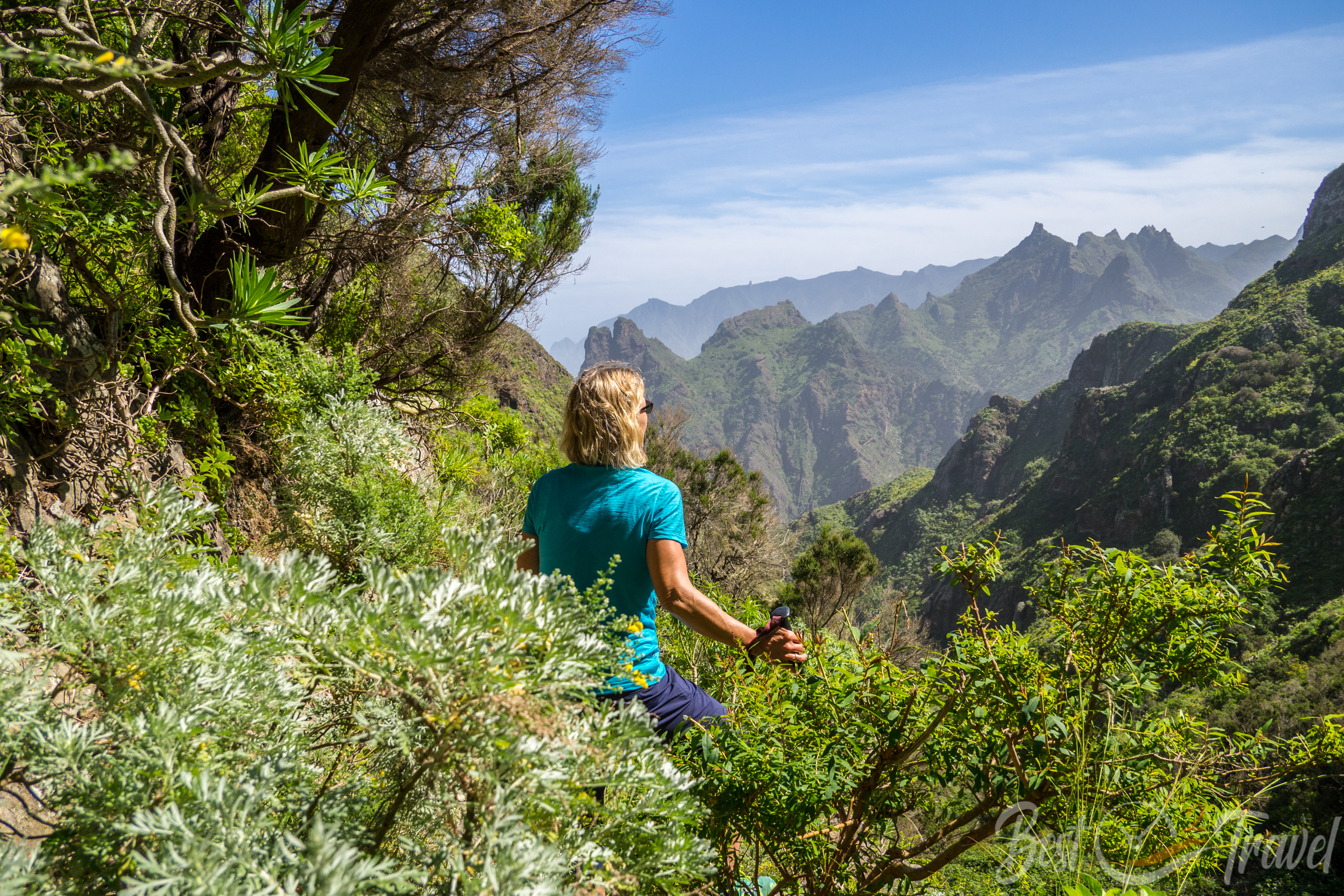
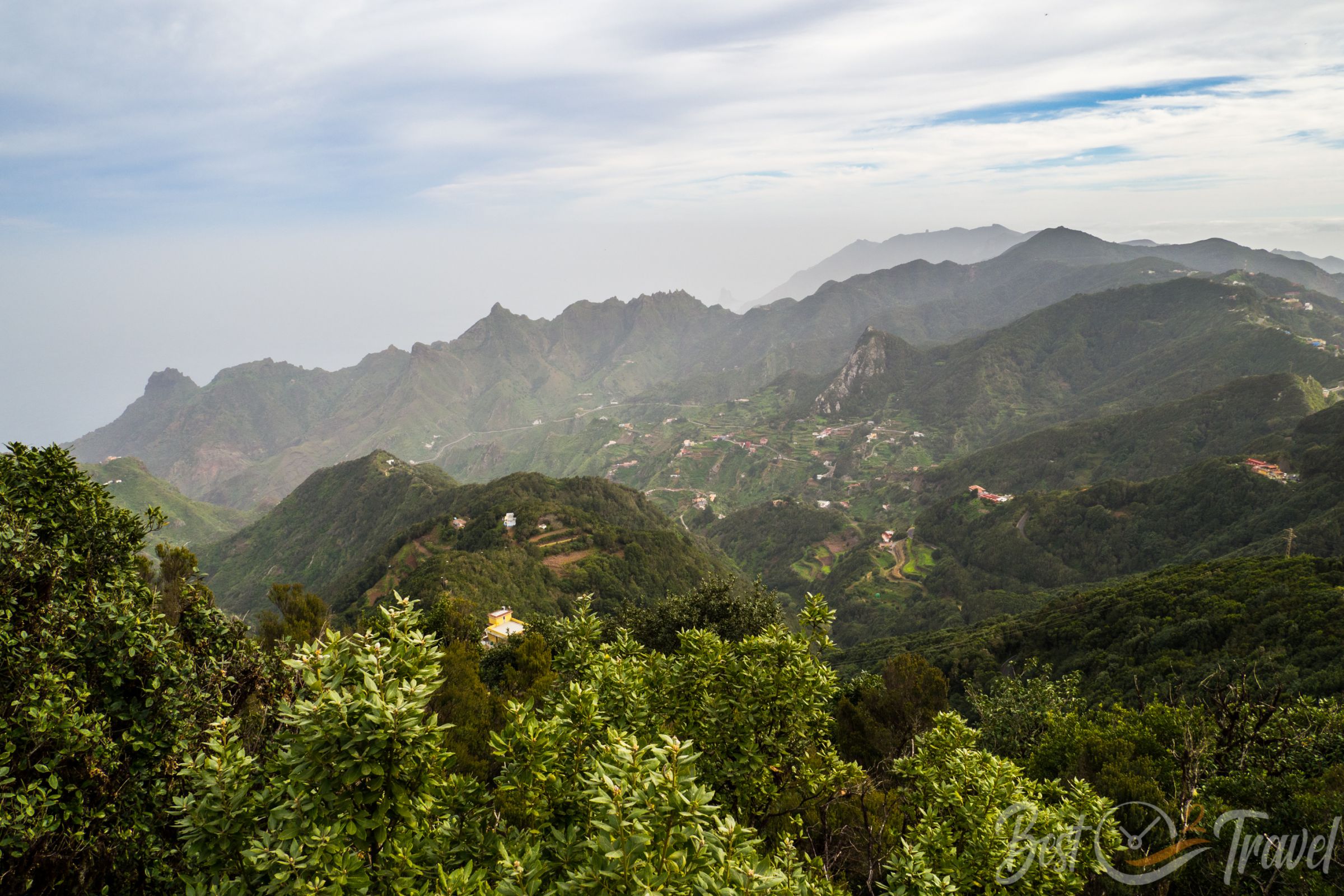
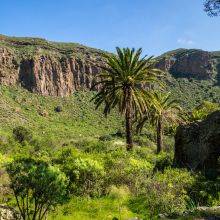
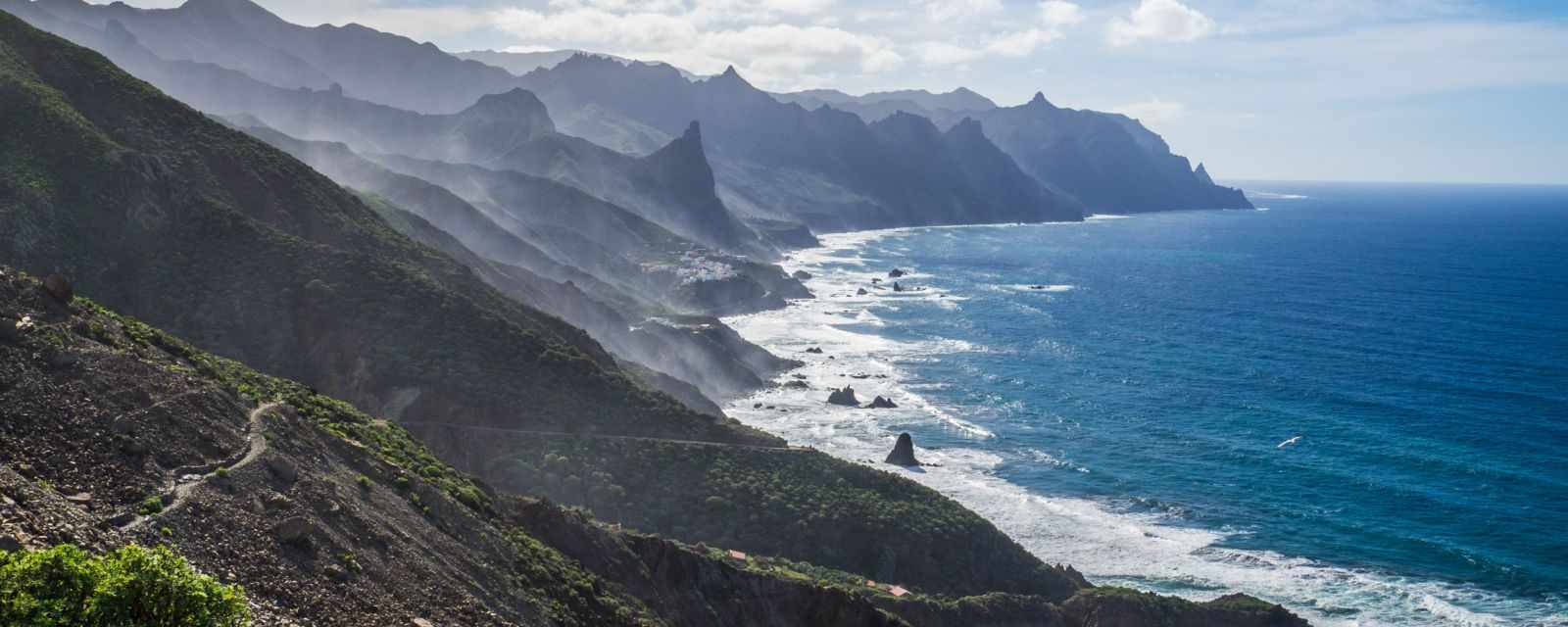
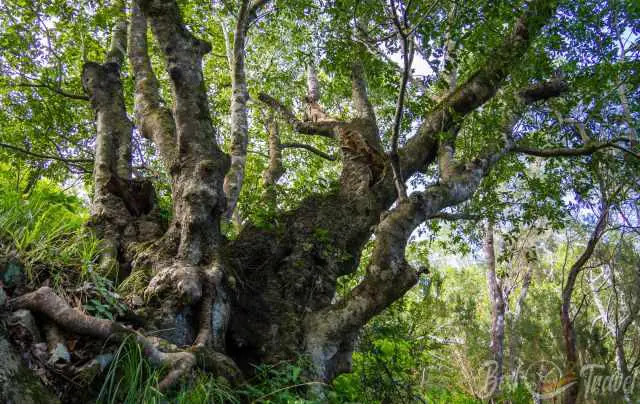
Anaga is one of the most magnificent parts of Tenerife — a true hiker’s paradise with lush vegetation you would never expect if you only know the dry south. What makes Anaga unique is its ancient laurel forests, a type of primary forest that develops clouds and has been protected for generations. The inhabitants deeply respect their environment and do not lumber these valuable ecosystems.
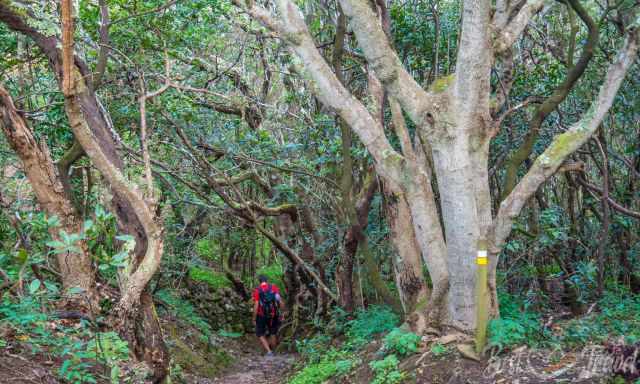
These primary forests with laurisilva, savin juniper and other endemic plants occur only in the Canaries, Madeira and the Azores. Anaga became a UNESCO Biosphere Reserve in 2015 because of its exceptional biodiversity in flora and fauna.
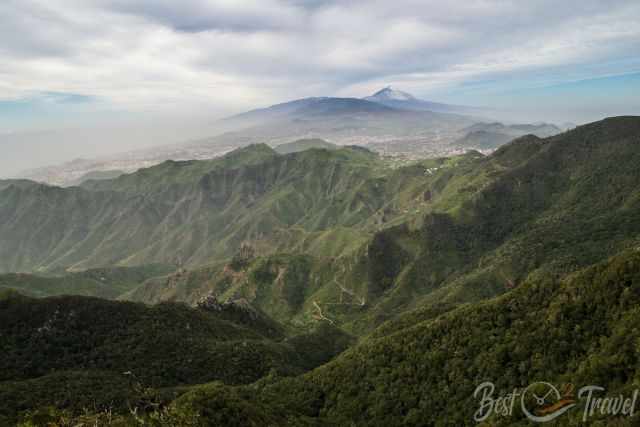
You could easily hike in Anaga for weeks, but most visitors only have one or two. That’s why I introduce you to the three most beautiful and rewarding hikes in the Anaga Rural Park — each with exact locations, distance, difficulty, duration and plenty of pictures so you get a real impression of the scenery. For every trail, I also provide where to park your car, which is essential in this mountainous region.
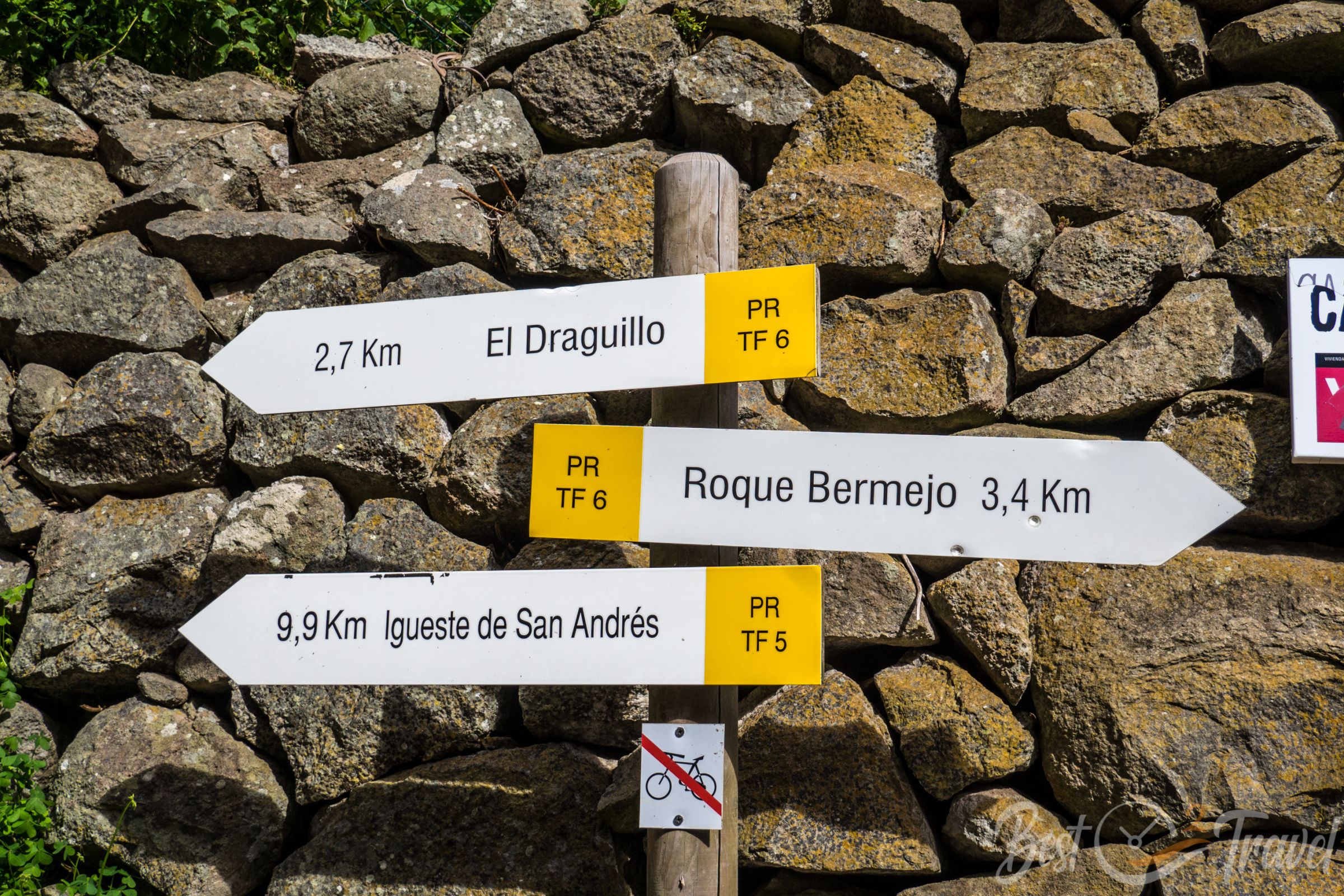
1 Chamorga – Roque Bermejo – El Draguillo PR TF 6
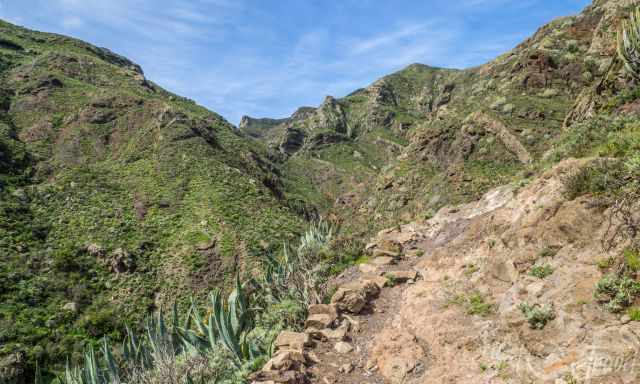
- Distance: 13 km
- Elevation Gain: 815 m
- Duration: 5–6 hours
- Difficulty: Moderate
- Parking: At the entrance of Chamorga (narrow roads in the village) Google Maps
- Trail Type: Circular
- Highlights: Canyon views, Roque Bermejo, Faro de Anaga, Las Palmas de Anaga, cloud forest ascent
- Map: PR TF6 Map Hiking Route
- Locus Map Our hiking Route
Overview
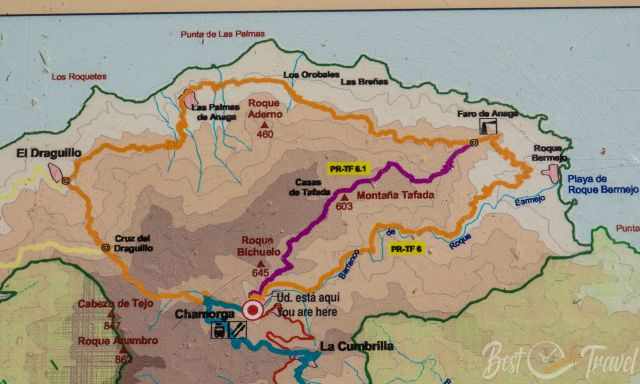
For me, this is the most picturesque trail in the entire Anaga Massif on the eastern tip of Tenerife. If you are short on time, this is the hike I recommend above all others. It starts in Chamorga, the largest village in the northeast, located at the end of a winding mountain road.
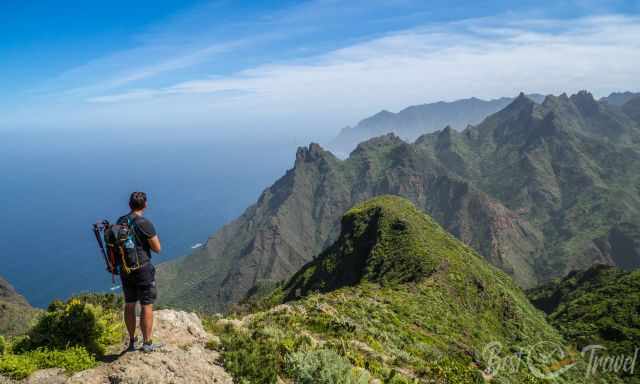
The trail immediately rewards you with sweeping views into the Barranco de Chamorga, a deep canyon stretching all the way down to the coast.
Roque Bermejo
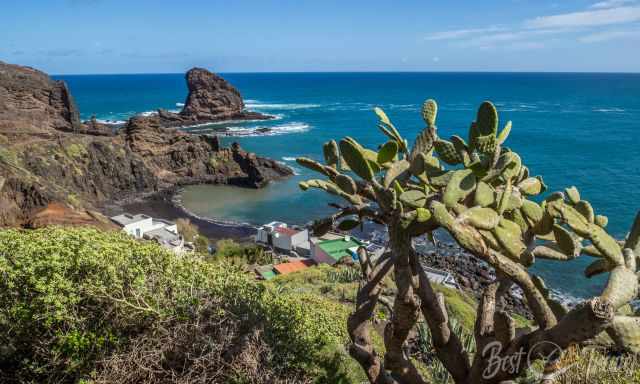
You descend through a canyon parallel to a small stream until you reach the tiny coastal village of Roque Bermejo — just a handful of houses and a quiet beach. From here, the trail continues along a spectacular coastline.
Faro de Anaga
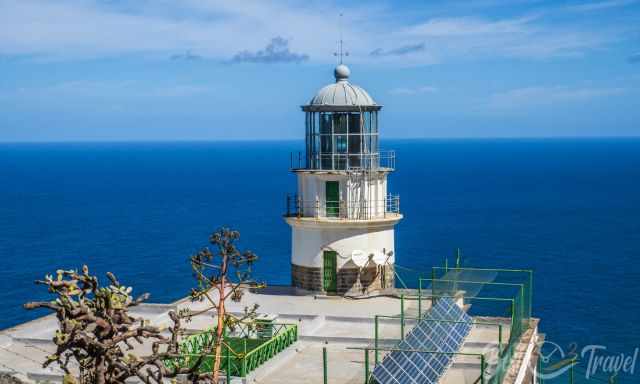
One of the highlights is the Faro de Anaga, perched at 247 m above sea level. The lighthouse is not open to the public, but the views from the trail are outstanding.
Las Palmas de Anaga
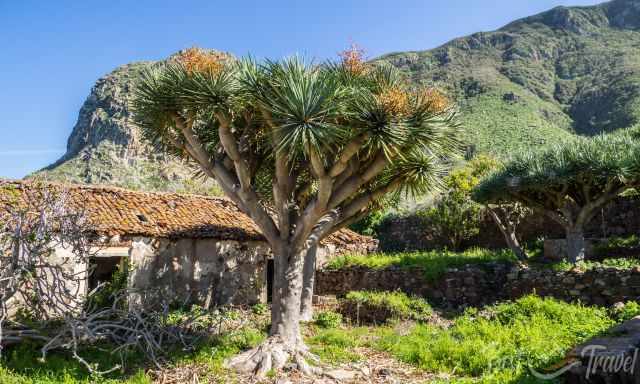
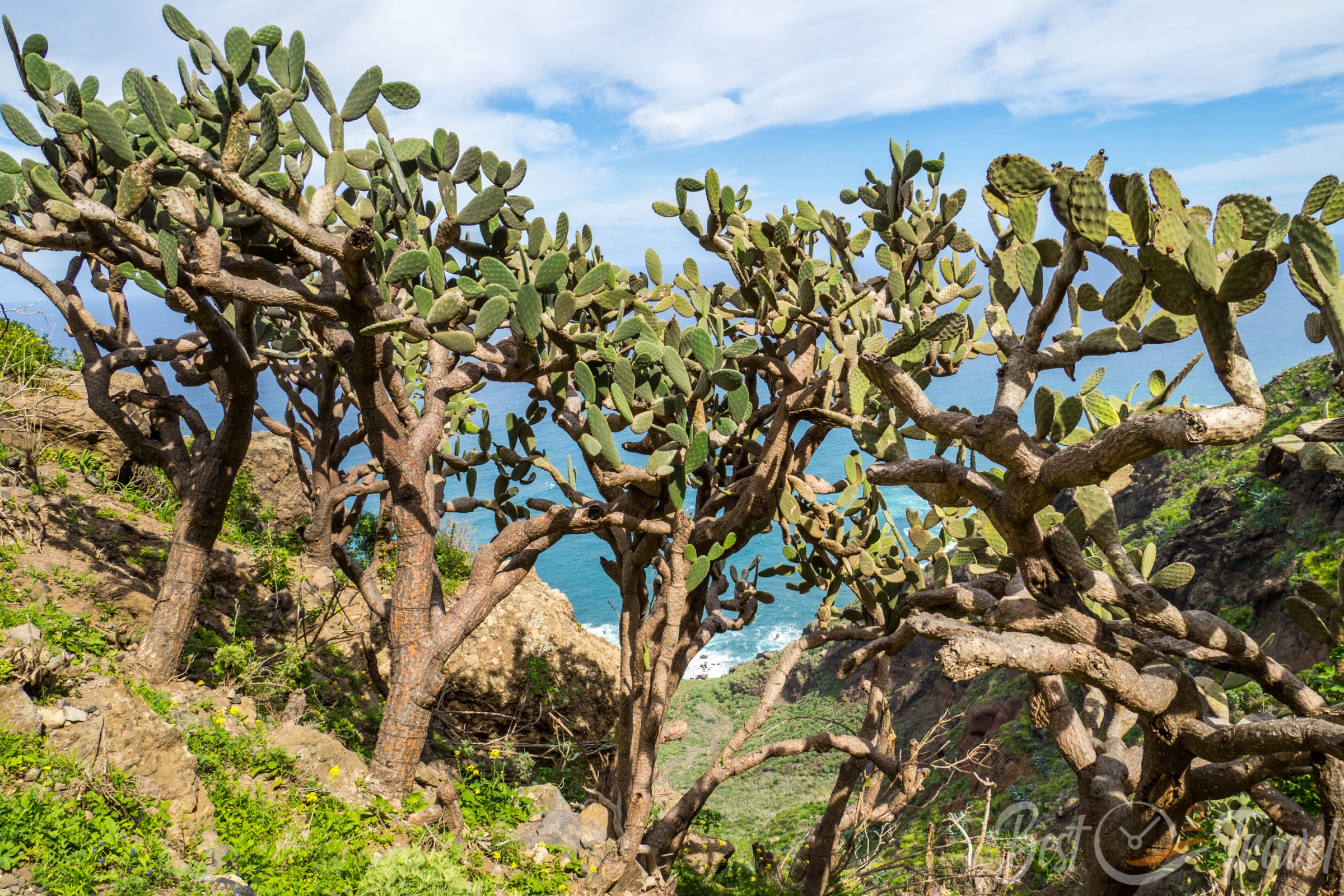
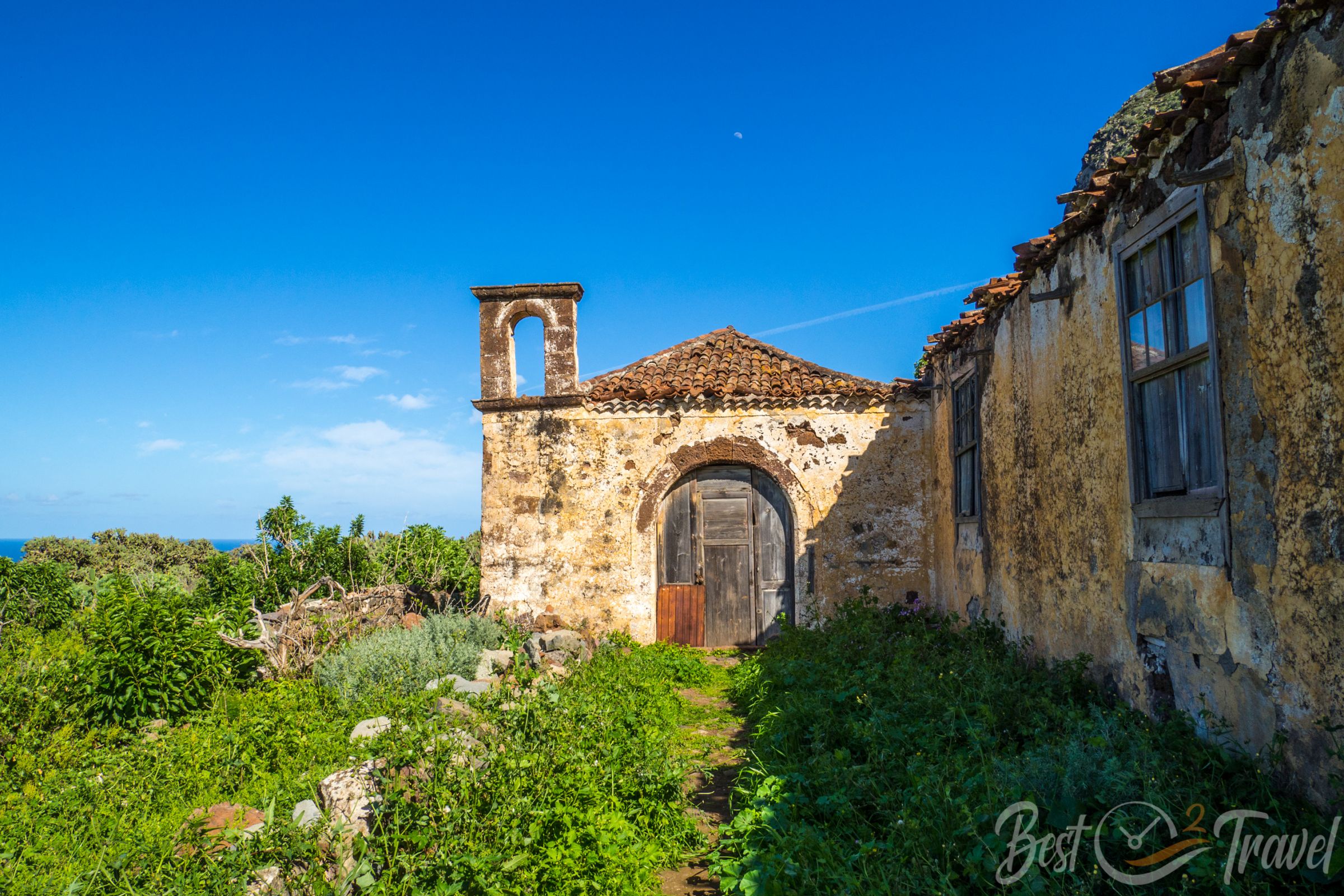
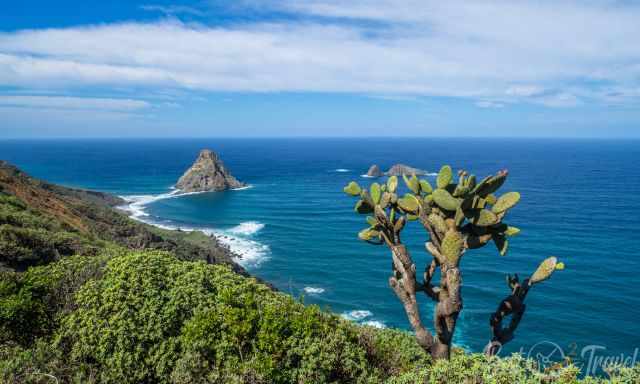
Further along the coast, you reach Las Palmas de Anaga, a remote hamlet declared a natural heritage site in 2014. The old hacienda is slowly being reclaimed by nature — its courtyard shaded by two dragon trees, and former fields now transformed into a forest of prickly pears.
Roque de Anaga
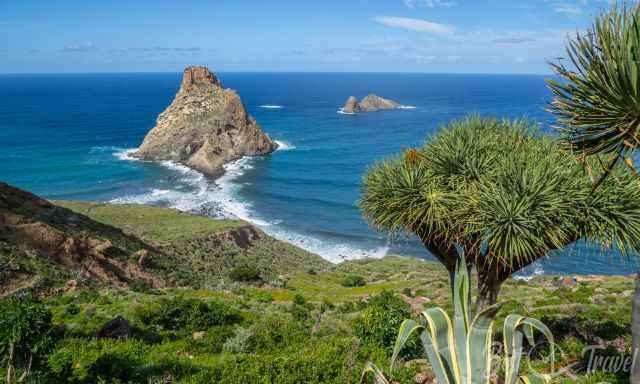
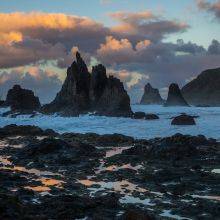
Soon after, the trail passes two striking volcanic sea stacks: Roque de Anaga and its smaller sibling 800 m away. Both are protected nature areas and home to seabirds. Access is prohibited, but the viewpoint is one of the most dramatic on the route.
El Draguillo & Cloud Forest Ascent
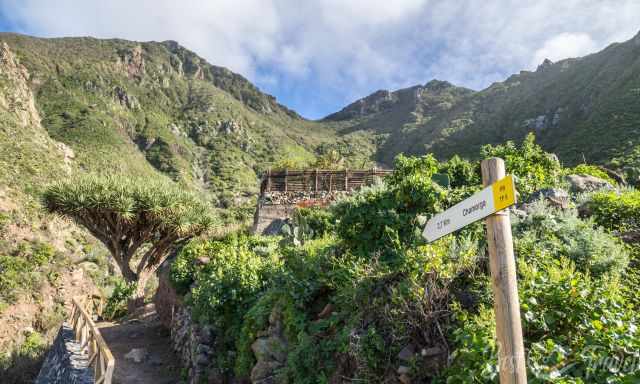
The ascent begins in El Draguillo, a tiny village with officially three residents. A steep path climbs through dense cloud forest back to Chamorga — a beautiful and atmospheric finish to the circular hike.
Optional Extension
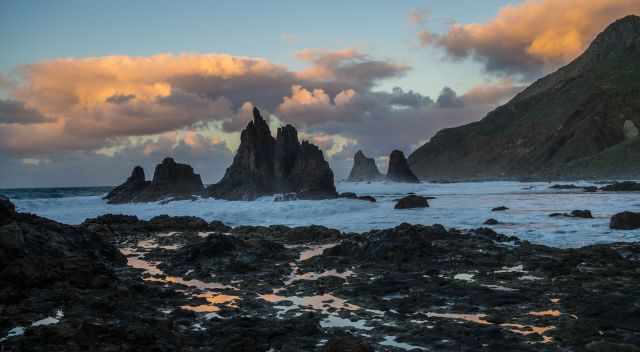
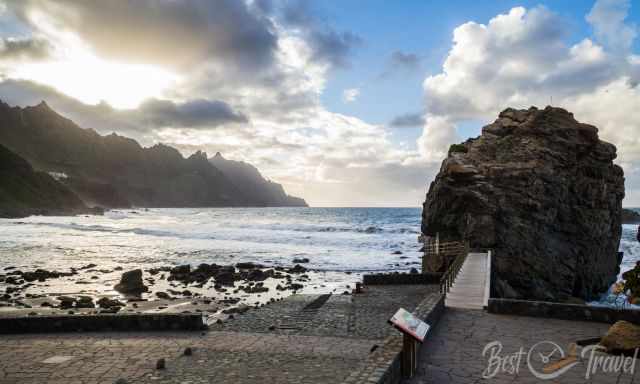
From El Draguillo, you can continue along the coast for 2 km to the exceptional Benijo Beach and then return to Chamorga. Adds: ~4 km total. More about Benijo Beach in my Tenerife sunsets guide.
2 Afur or Taborno – Tamadite – Taganana PR TF 8
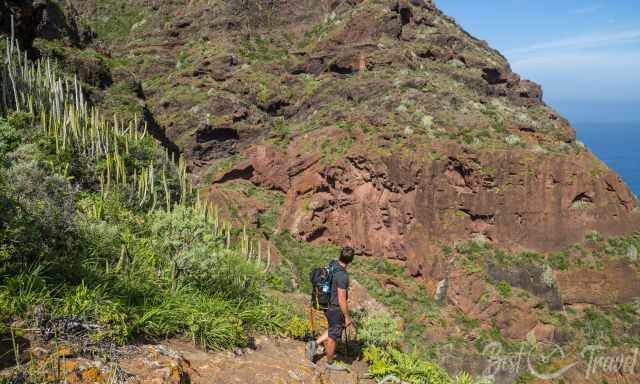
There are two hiking options for the PR TF 8 trail:
-
Option A: Start in Afur — the classic circular route
-
Option B: Start in Taborno — shorter, wilder, and even more spectacular
Hiking Details – PR TF 8 (both options)
-
PR TF 8 from Afur — 14 km, 800 m elevation, 5 h, challenging
-
PR TF 8 from Taborno — 10 km, 600 m elevation, 4 h, moderate
Option A: PR TF 8 from Afur
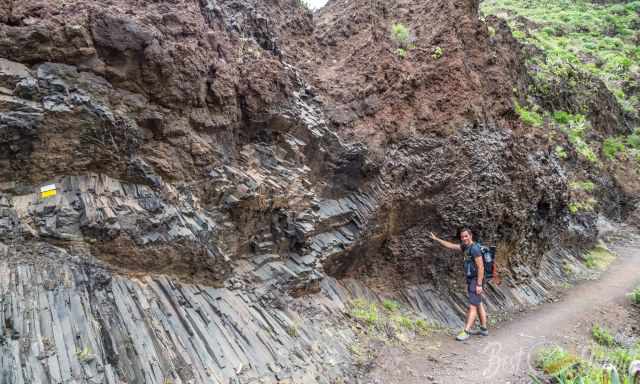
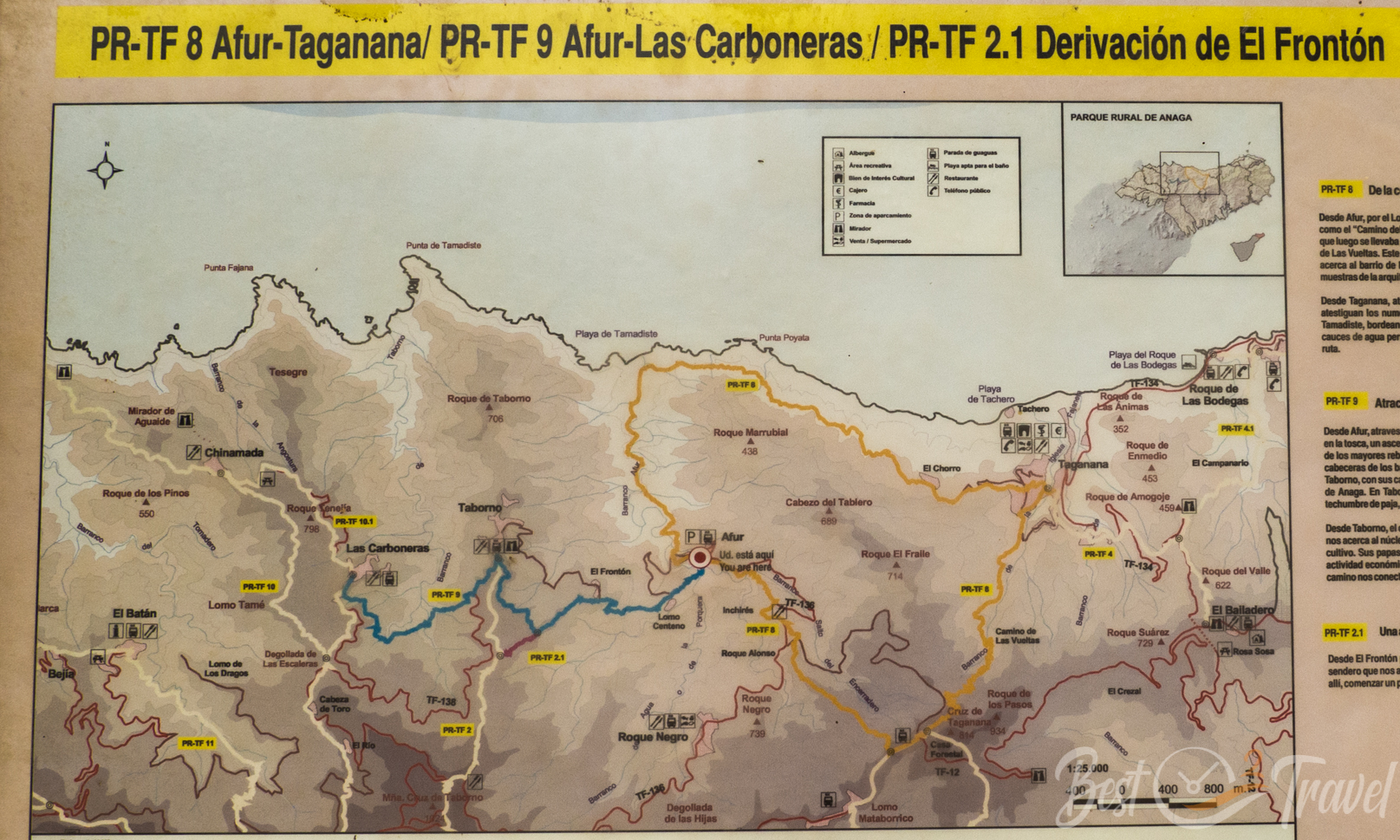
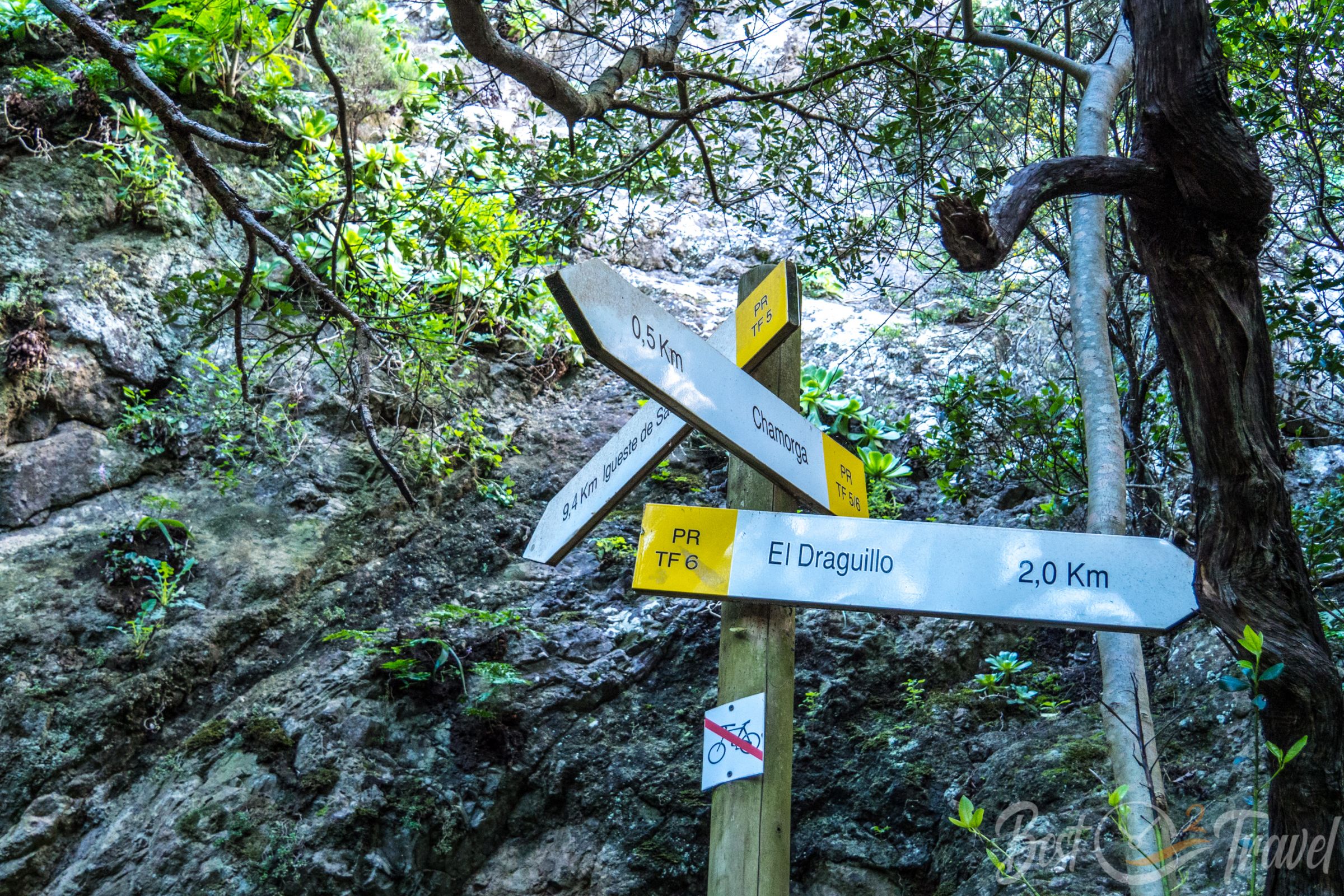
This circular trail from Afur to Playa Tamadite and Taganana is one of the most popular hikes in Anaga — we’ve already done it several times. The first part from Afur to Tamadite is especially fascinating, with basalt formations resembling pipes along the trail. The path is marked yellow‑white and leads left into the ravine.
Parking
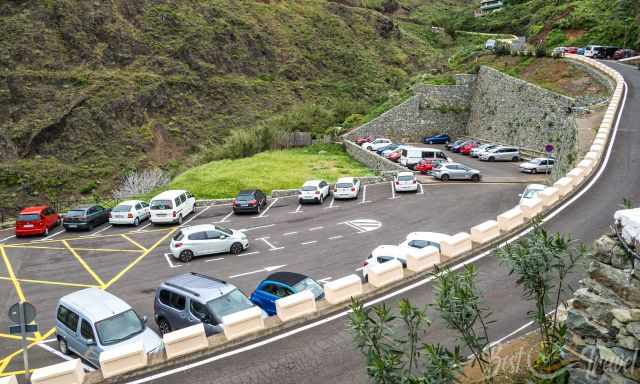
Parking in Afur is limited and fills up quickly on weekends. Google Maps parking
Landscape & Climate
Afur lies in one of the wetter parts of Tenerife, but sunshine is still frequent. Historically, the slopes around Taganana were used for viticulture in the 17th and 18th centuries — wine from Taganana was traded from Almáciga.
Map
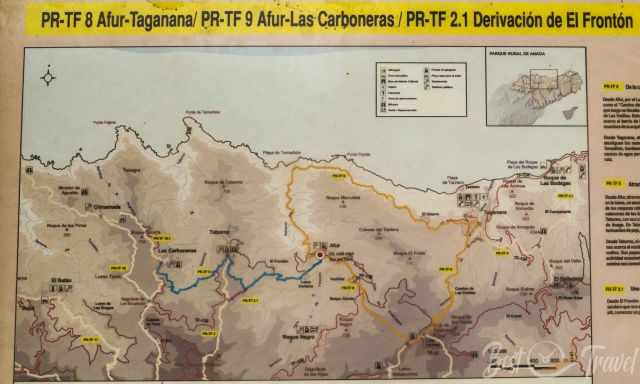
- Hiking Map PR TF8 Map from above in high resolution
- PR TF 8 Hiking Map by Locus Map Option A
You can start the hike either in Afur or in Taganana. The slopes around Taganana have been traditionally used to grow grapes for viticulture in the 17th and 18th centuries.
Anaga is wetter than the rest of Tenerife but experiences lots of sunshine, too. The wine from Taganana was traded from Almaciga.
Option B: PR TF 8 from Taborno (Roque Taborno – Tamadite – Afur)
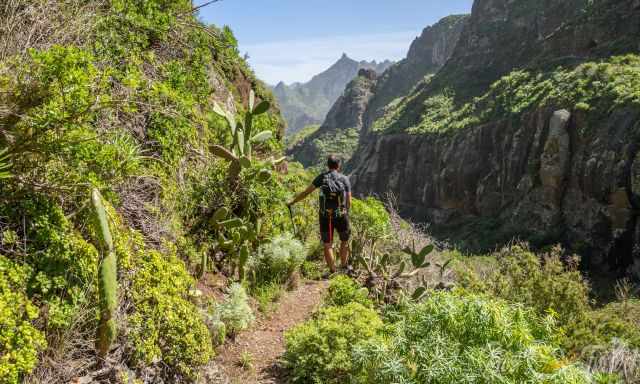
This alternative route is a hidden gem — even more spectacular than Masca, and completely crowd‑ and permit‑free. We only met a group of three hikers on this canyon route. c
- Locus Map option B Hiking Route
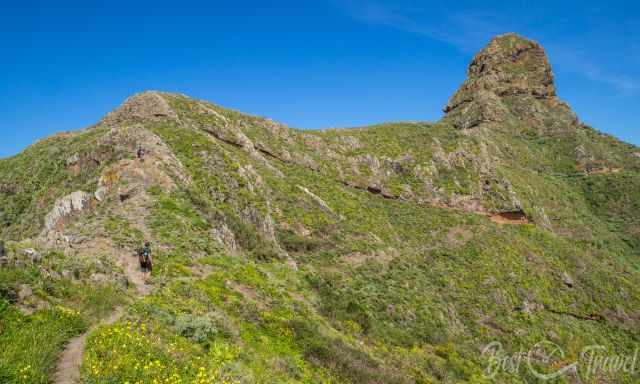
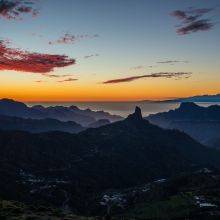
The ravine from Taborno down to Tamadite is lush, wild and dramatic. Shortly after the trailhead, you get a fantastic view of Roque de Taborno, one of the most iconic rock formations in Anaga.
Parking
Because of the narrow roads, we parked at the entrance of Taborno village (589 m above sea level). Google Maps Parking
Forest & Ravine
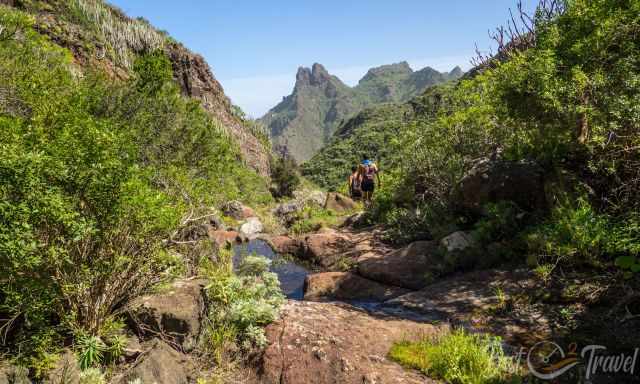
The pristine forest around Taborno and the Barranco de Palos Hincados is breathtaking — dense, green, untouched. This ravine easily competes with Masca’s beauty, but only a few hikers choose this route.
Playa Tamadite
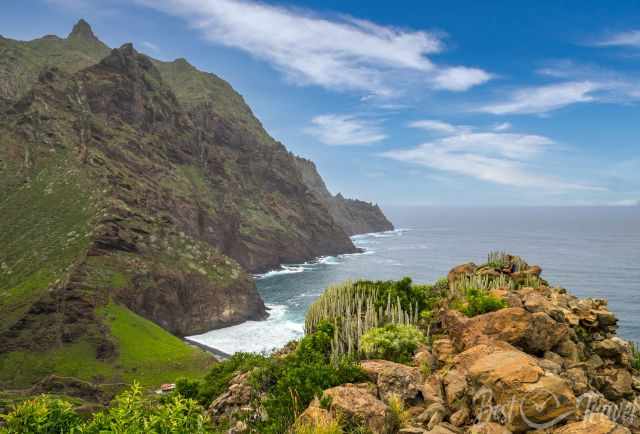
At Playa Tamadite, the atmosphere changes — it’s no longer tranquil, but the coastal path is incredible. From here, you follow PR TF 8 along the coast toward Taganana, looking for a lunch spot with exceptional views down to Tamadite.
Return to Afur
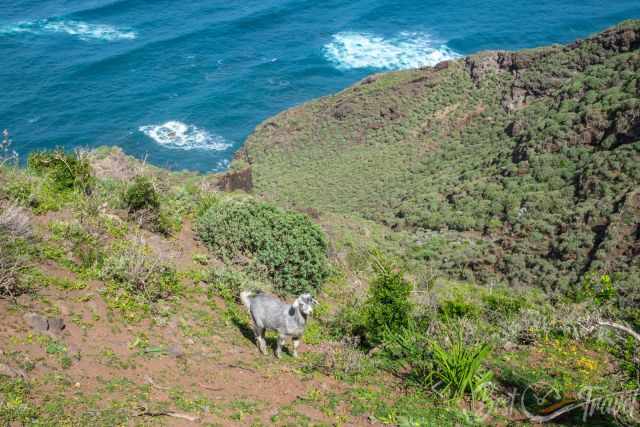
After the coastal section, you return to the fork and climb up to Afur on PR TF 8. This part of the trail is wider and well maintained because it is used more frequently.
3 La Punta del Hidalgo to Chinamada or Cruz del Carmen PR-TF 10
Two route options:
-
Option A: Punta del Hidalgo → Chinamada (out‑and‑back)
-
Option B: Punta del Hidalgo → Chinamada → Cruz del Carmen (longer continuation)
Hiking Details – PR TF 10
-
Distance: 5.3 km one way / 9.7 km return
-
Elevation Gain: 600 m
-
Duration: ~2 hours one way
-
Difficulty: Moderate
-
Parking: Parking at Mirador Punta del Hidalgo Google Maps
-
Trail Type: Out‑and‑back or through‑hike
-
Highlights: Wild coastline, Barranco del Río, Chinamada cave houses, euphorbia vegetation, panoramic views
-
Locus Pro Hiking Trail Route
Wild Coastal Start
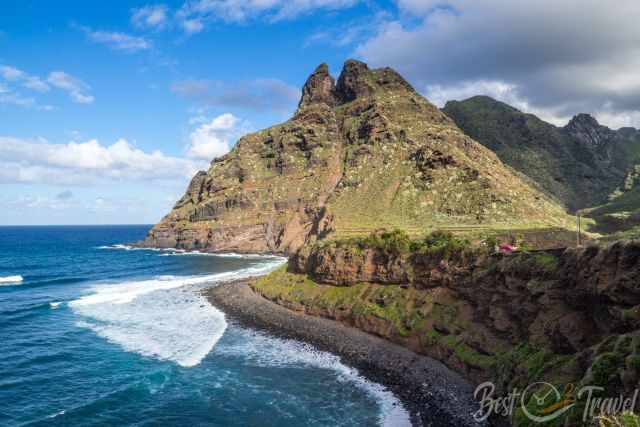
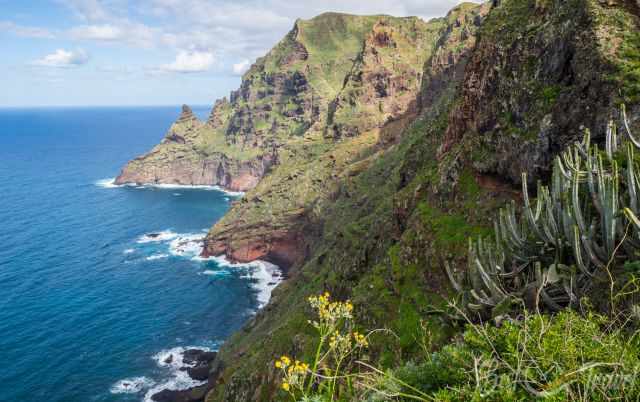
This hike begins along the wild and rugged coastline of Punta del Hidalgo — a dramatic landscape that feels a bit like Kauai, Hawaii with its steep green cliffs dropping into the Atlantic.
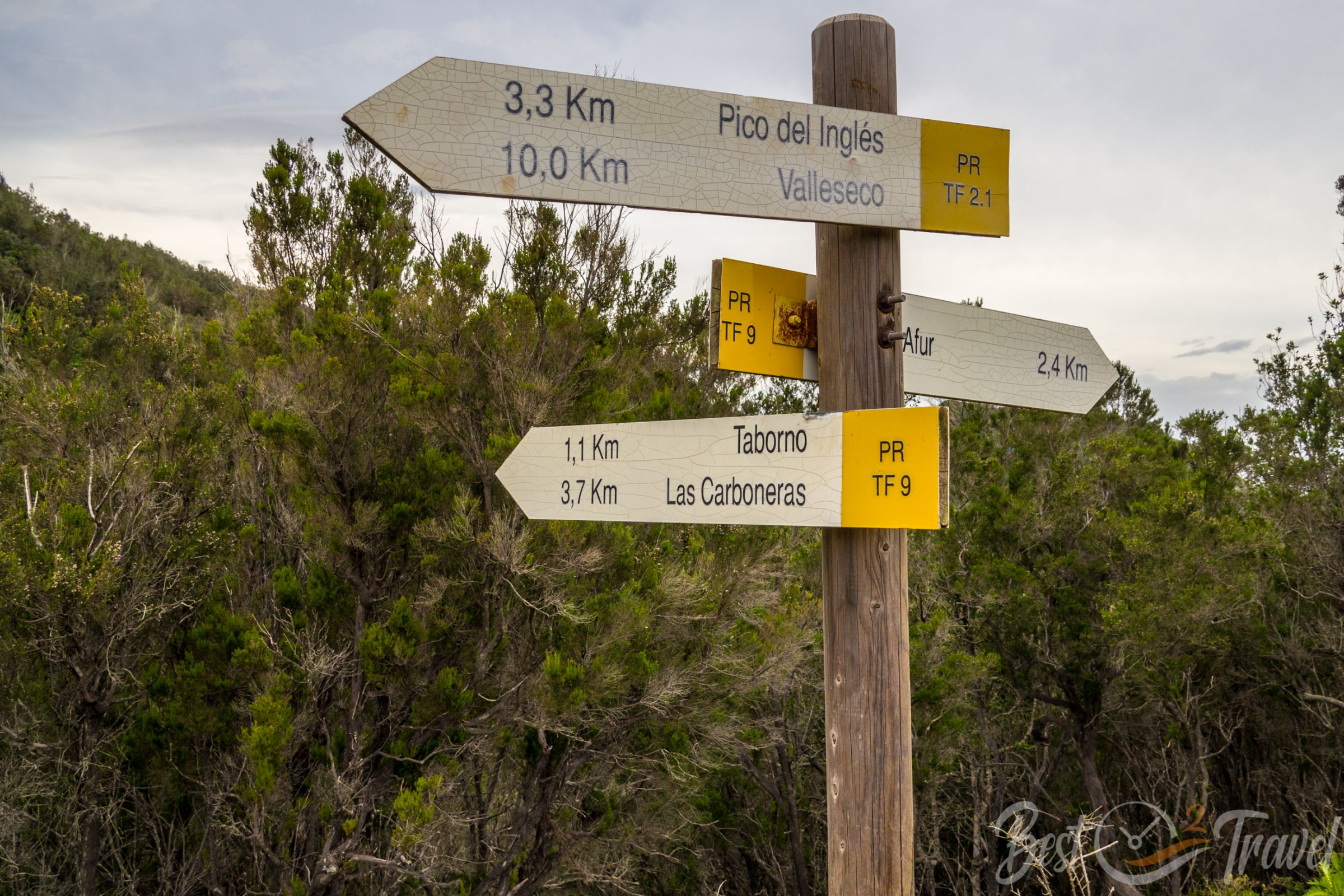
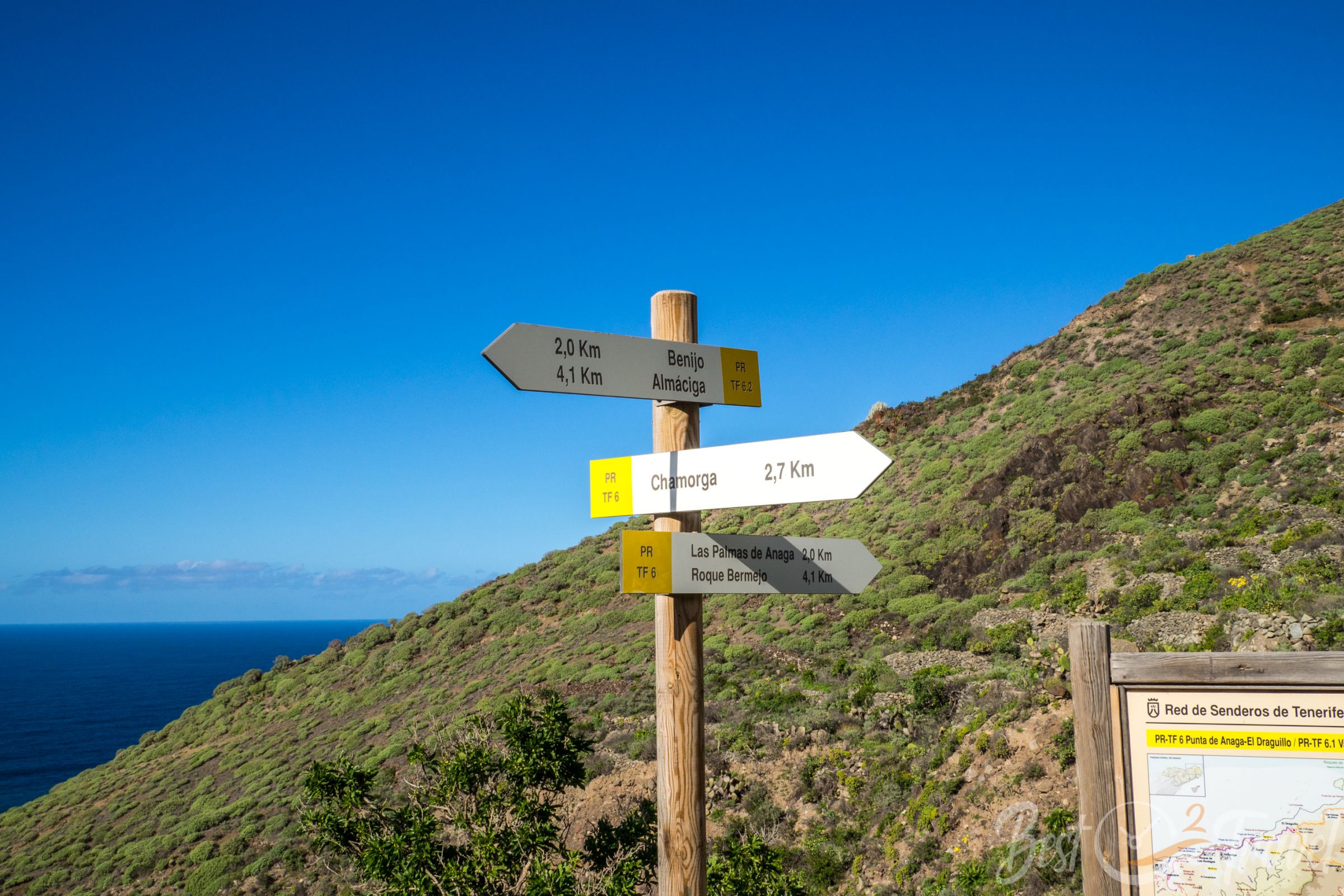
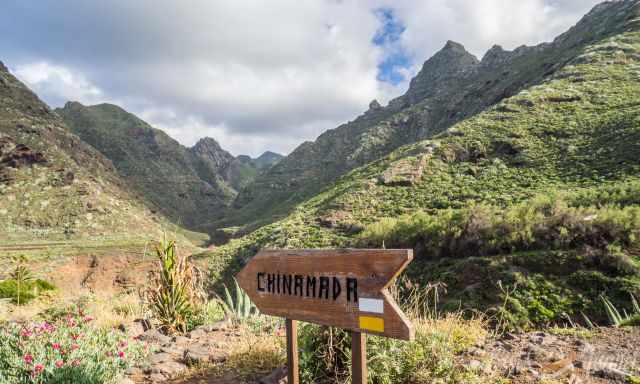
Shortly after the trailhead, you’ll see the first yellow‑white sign to Chinamada, marking PR TF 10.
Barranco del Río
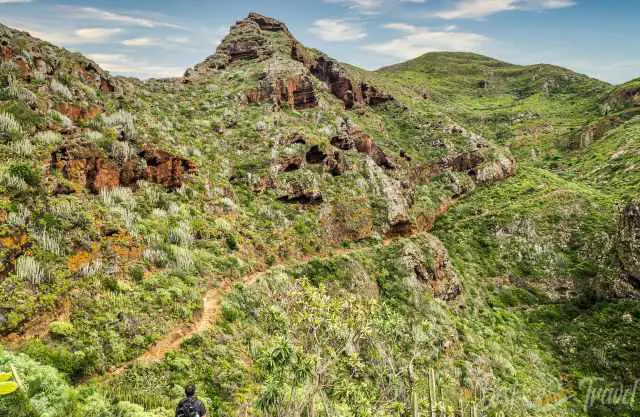
From Punta del Hidalgo, a steep and partly exposed trail climbs through the Barranco del Río. The path is mostly wide and sun‑exposed, offering magnificent views of:
-
sheer vertical cliffs
-
the rugged Anaga coastline
-
the deep canyon behind you
-
the blue Atlantic stretching out below
The trail is well marked with yellow‑white PR signs.
Chinamada
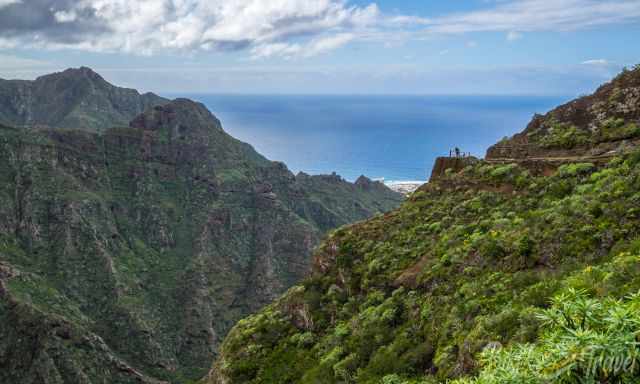
Shortly before reaching Chinamada, you get a beautiful view back through the canyon toward Punta del Hidalgo.
Chinamada is famous for its traditional cave houses, carved into the rock and still inhabited. It’s a unique cultural highlight in Anaga.
Lunch Stop
The Restaurante La Cueva in Chinamada is an excellent home‑style restaurant. Their mojo “polvito” is one of the best I’ve ever eaten — absolutely worth planning a break here.
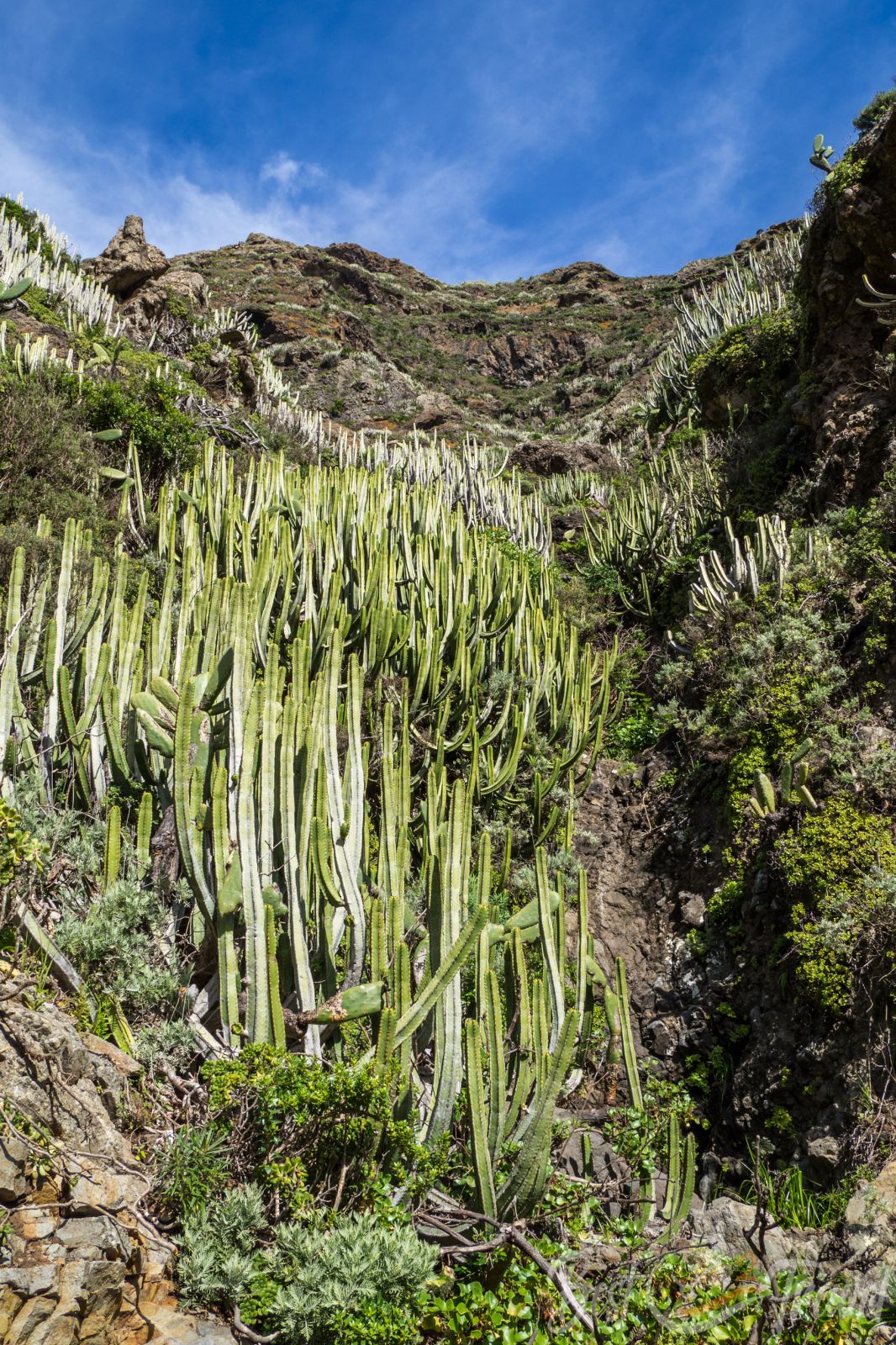
Euphorbia Vegetation
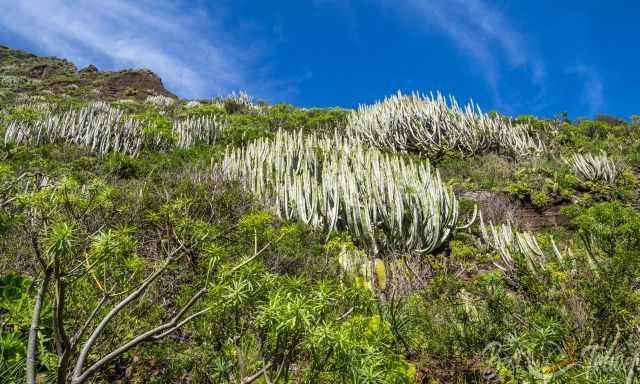
Along the canyon walls, you’ll find euphorbia, a characteristic spurge species thriving in the dry, sun‑exposed slopes of Anaga.
Route Options
- Option A: Return the same way - Perfect if you want a shorter, scenic out‑and‑back.
- Option B: Continue to Cruz del Carmen - A longer, rewarding extension through forested terrain.
- Option C: Bus back - Bus line 105 runs from Chinamada back to Punta del Hidalgo — ideal for a one‑way hike. bus line 105
Weather in Anaga Rural Park
Anaga’s climate is shaped by its cloud forest, which creates the lush, green landscape that makes this part of Tenerife so unique. The old saying “Where there is rainforest, there is rain” fits perfectly here. Moisture from the forest once sustained life in the mountains, and the fertile slopes supported agriculture and viniculture in Taganana during the 17th and 18th centuries.
You can hike in the Anaga Rural Park throughout the entire year, but the conditions vary noticeably. Summer is the driest season and can reach 30°C, especially along the coast. Winter behaves differently: frequent showers, misty days and overcast skies are common, and November brings the highest rainfall. Temperatures fluctuate between around 10°C during rain and up to 20°C when the sun breaks through.
For most hikers, the best time to explore the Anaga mountains and coastline is spring and autumn. From March to June and again in September and October, the weather is usually stable, pleasantly warm and ideal for longer routes. October still offers excellent hiking conditions, although rainfall gradually increases toward the end of the month.
We’ve visited Tenerife and Anaga many times in winter and always checked the weather forecast daily to pick the best hiking days. With a bit of planning, we consistently enjoyed comfortable temperatures, clear skies and fantastic conditions for exploring the rugged trails of the Parque Rural de Anaga.
Where to Stay in Tenerife
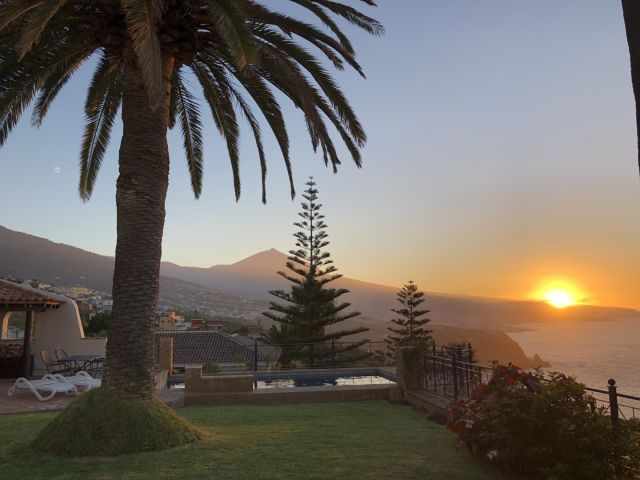
Choosing the right base makes a big difference when exploring the Anaga Rural Park. Although Tenerife offers many accommodation areas, the north is by far the most rewarding if you love lush landscapes, cooler air and authentic island life. The climate here is greener and cooler than in the south.
Puerto de la Cruz is, in my opinion, the most beautiful place to stay in Tenerife. The town sits in a subtropical, green environment with palm trees, botanical gardens, natural pools, and volcanic coastlines shaped by the Atlantic. It’s not as dry or barren as the south, and the atmosphere is far more charming. On clear days, you get spectacular views of Mount Teide rising above the valley — a backdrop that makes every morning special.
From Puerto de la Cruz, you can reach the Anaga Rural Park in about an hour, making it an excellent base for hikers who want a comfy stay, greenery and easy access to the island’s most exciting trails.
Spectacular view from Montaña Guajara to Teide
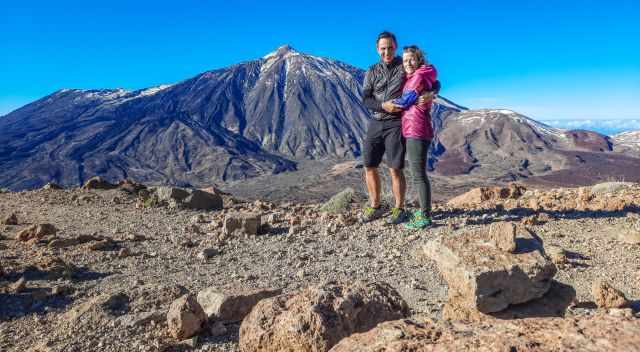
The panorama from Montaña Guajara is one of the most impressive viewpoints in Tenerife. From this 1,000‑metre lower elevation, Teide rises even more dramatically, framed by the vast caldera and the rugged volcanic landscape around you. If you enjoy moderate hikes with rewarding scenery, this route offers one of the finest perspectives of Teide you can get without tackling the summit itself.
Do you want to experience Teide from its best angles and learn more about the different viewpoints and hiking options? My Teide Guide provides detailed tips for planning your visit and finding the most spectacular views across the national park.
These are my recommended tours via GetYourGuide. Thx for booking via my website! With your support, I am able to provide all information first-hand. Tour prices are at no extra cost!
Best Months to Visit
Location and Tips

Anaga, in the east of Tenerife, is a terrific area during all seasons, providing shade or a breeze along the coastal hikes. I will give you all the information for the three most picturesque trails: the exact location, the distance, difficulty and the duration, plus plenty of pictures to get an idea of the beauty. I highly recommend hiking at least one of these magnificent tracks.