
When Is the Best Time
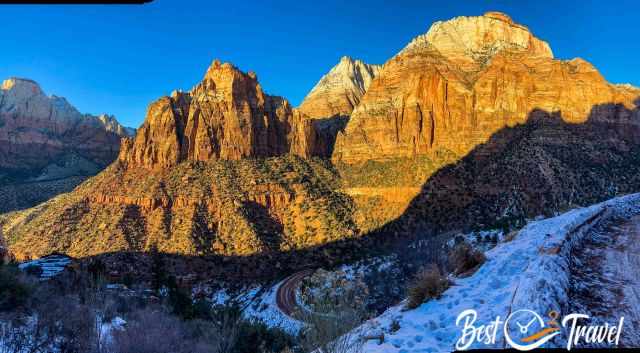
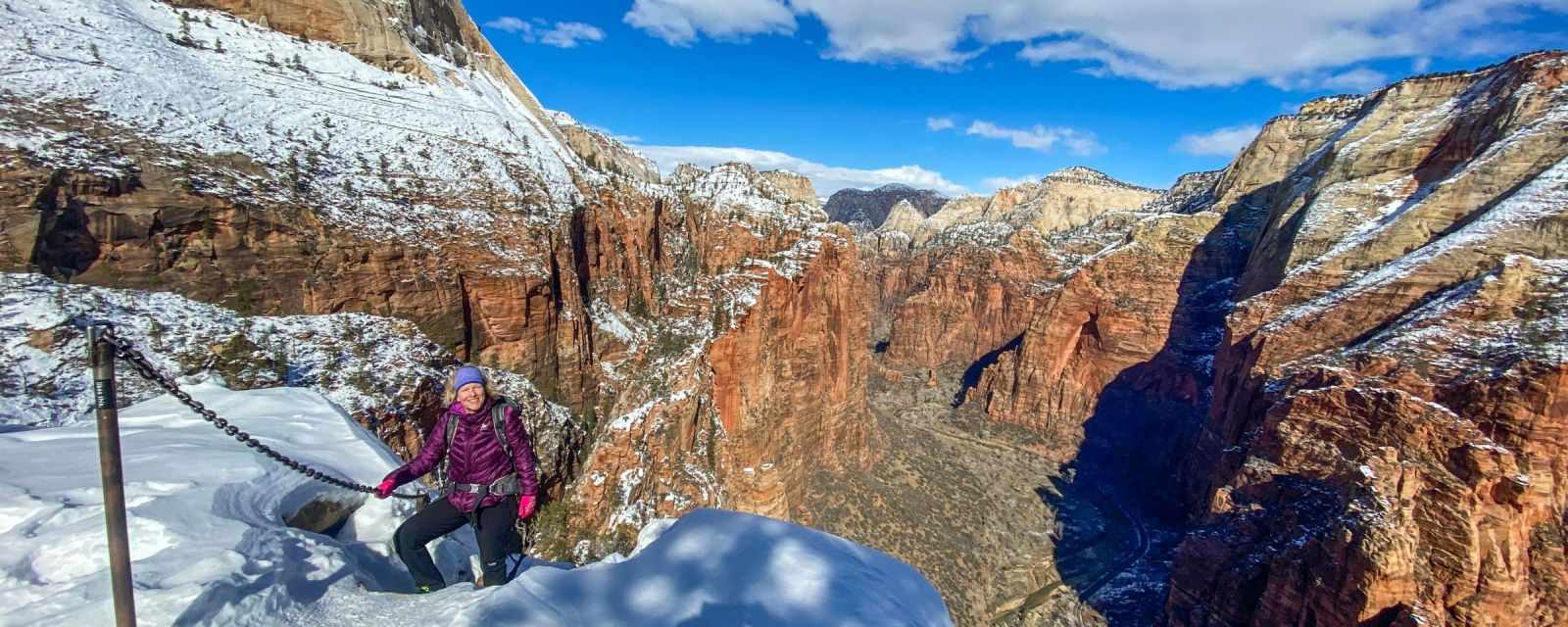
Hiking Angels Landing in Zion had been on our bucket list for years, but getting a permit in summer is almost impossible. The trail is packed, temperatures are scorching, and on top of that, Zion now uses time‑entry permits and strict quotas. So we decided to plan our trip for January, when it’s much easier to win an Angels Landing permit and the park is far less crowded.
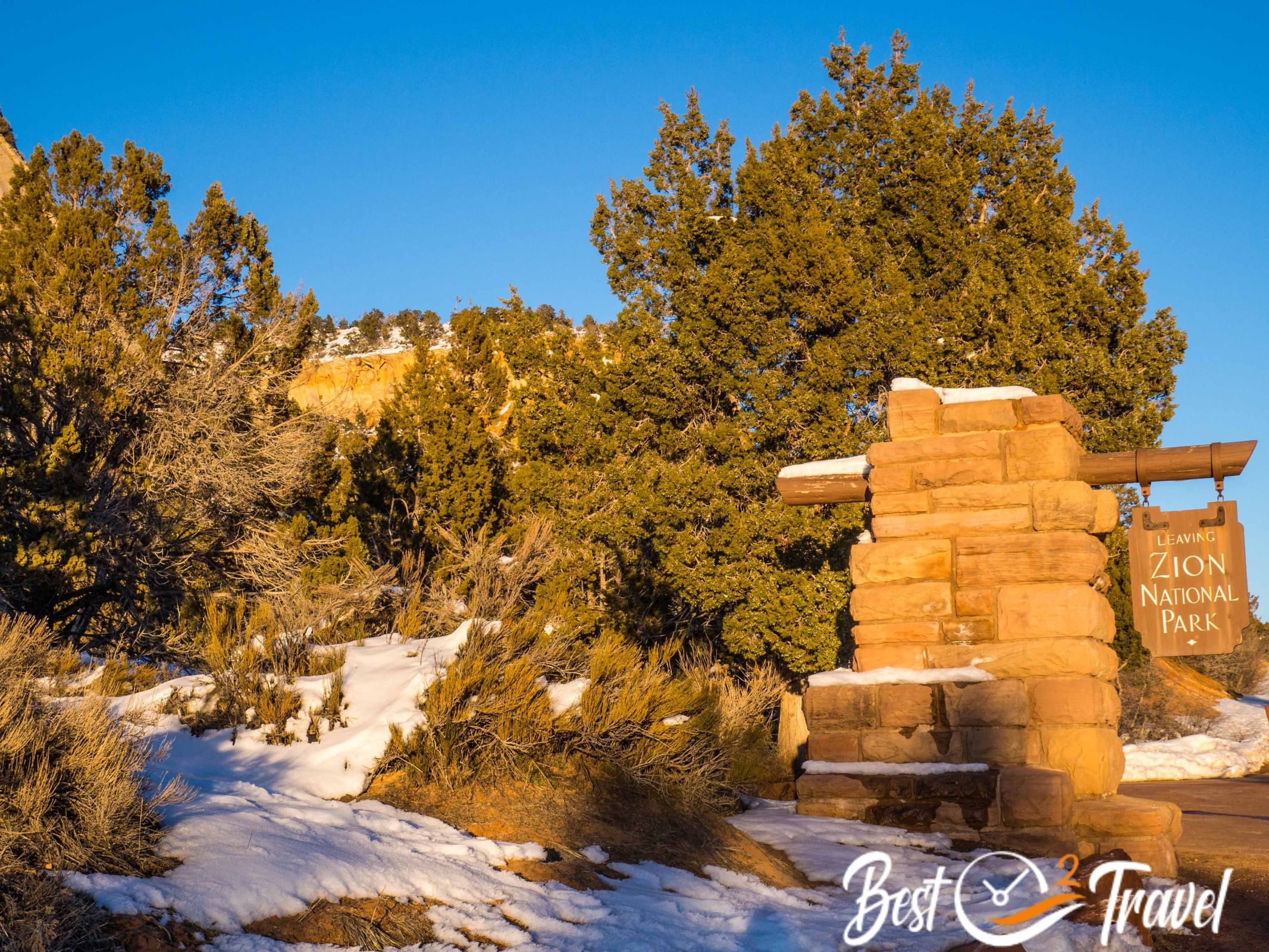
Visiting in winter changed everything. The shuttle isn’t running, so you can drive your own car through Zion Canyon, park directly at The Grotto trailhead, and enjoy a level of solitude that simply doesn’t exist from June to August. We got our Angels Landing permit just one day before, shared the trail with only a few other hikers, and everyone we met was amazed at how quiet Zion is in winter.
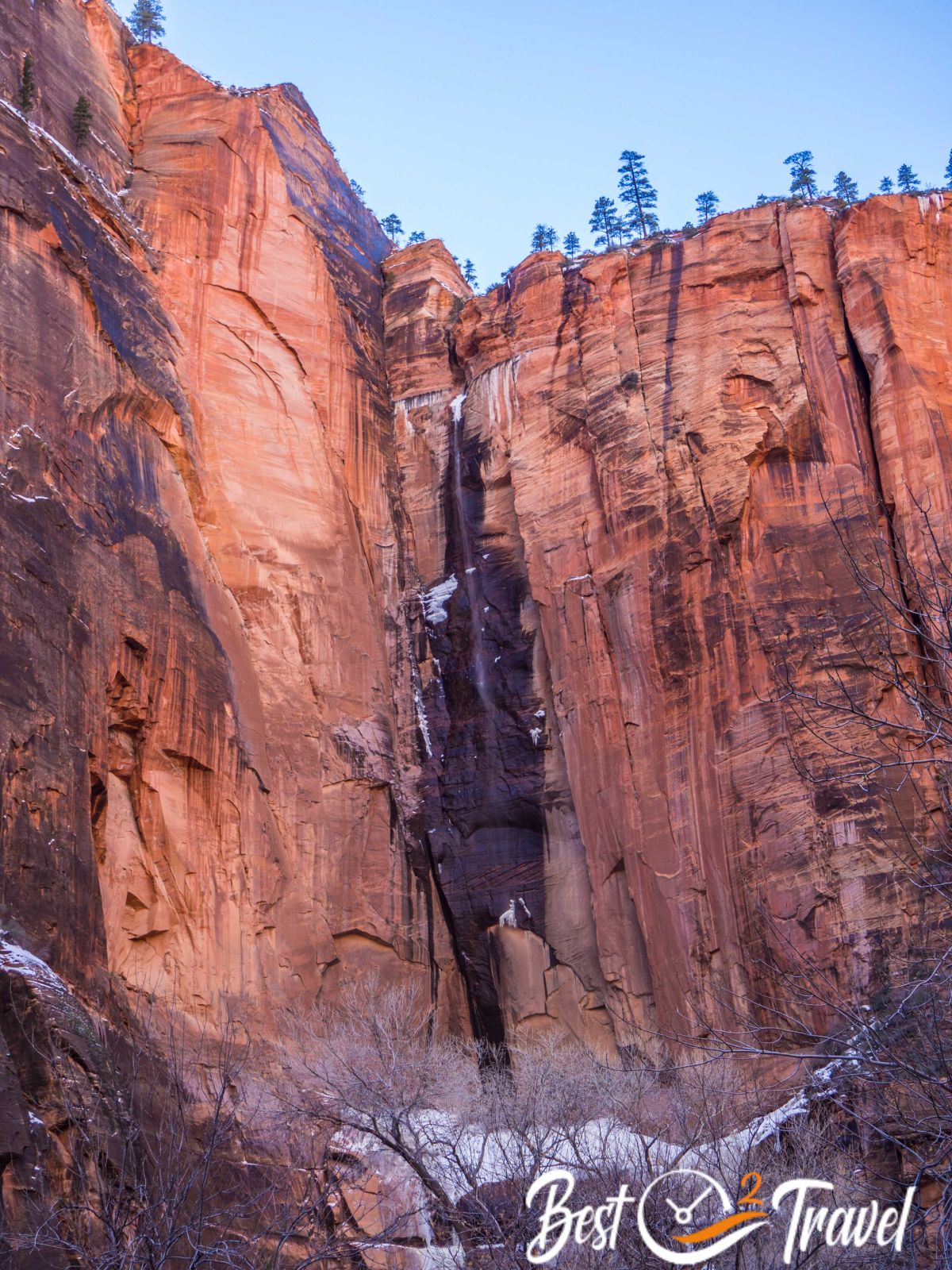
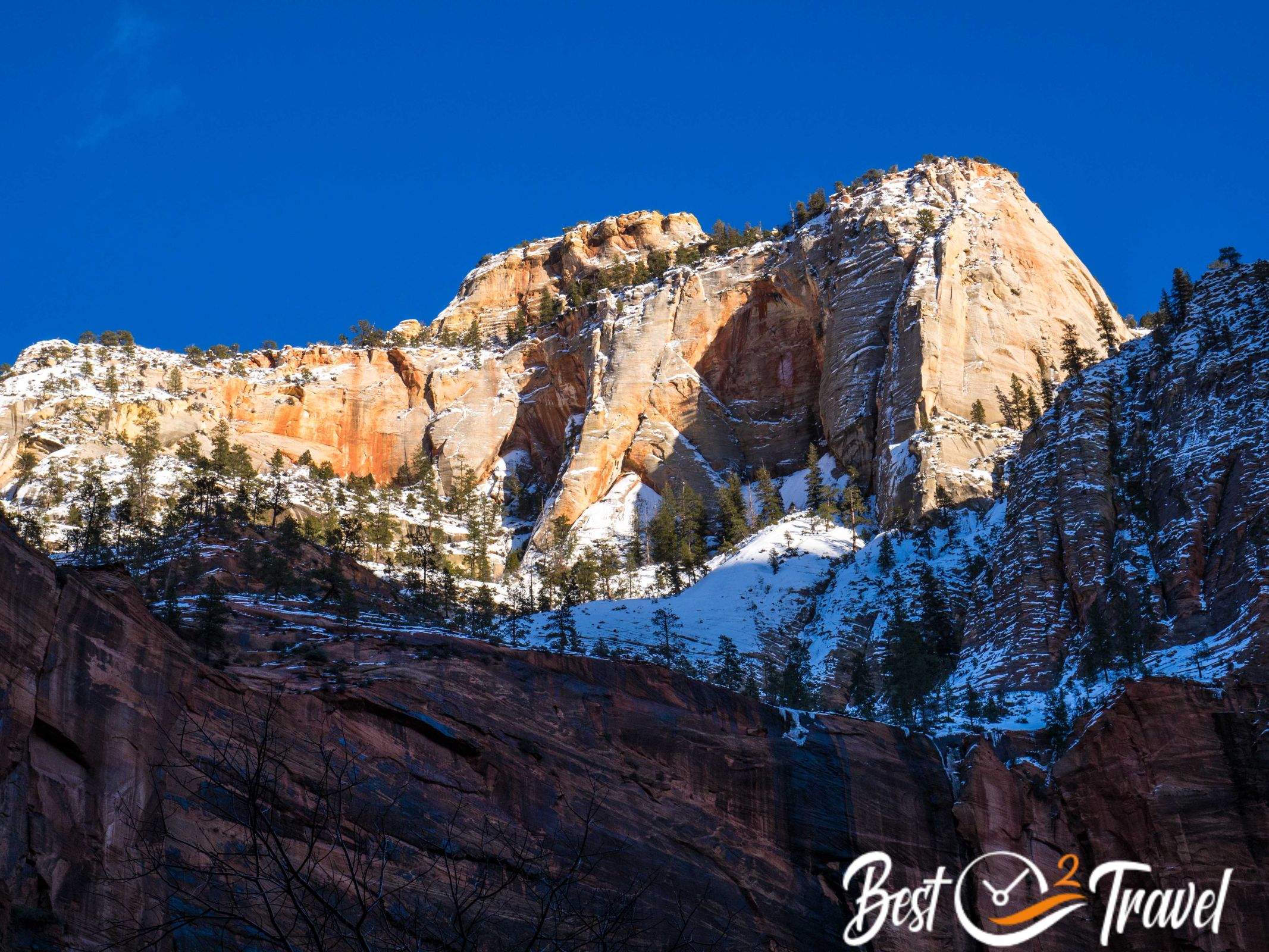
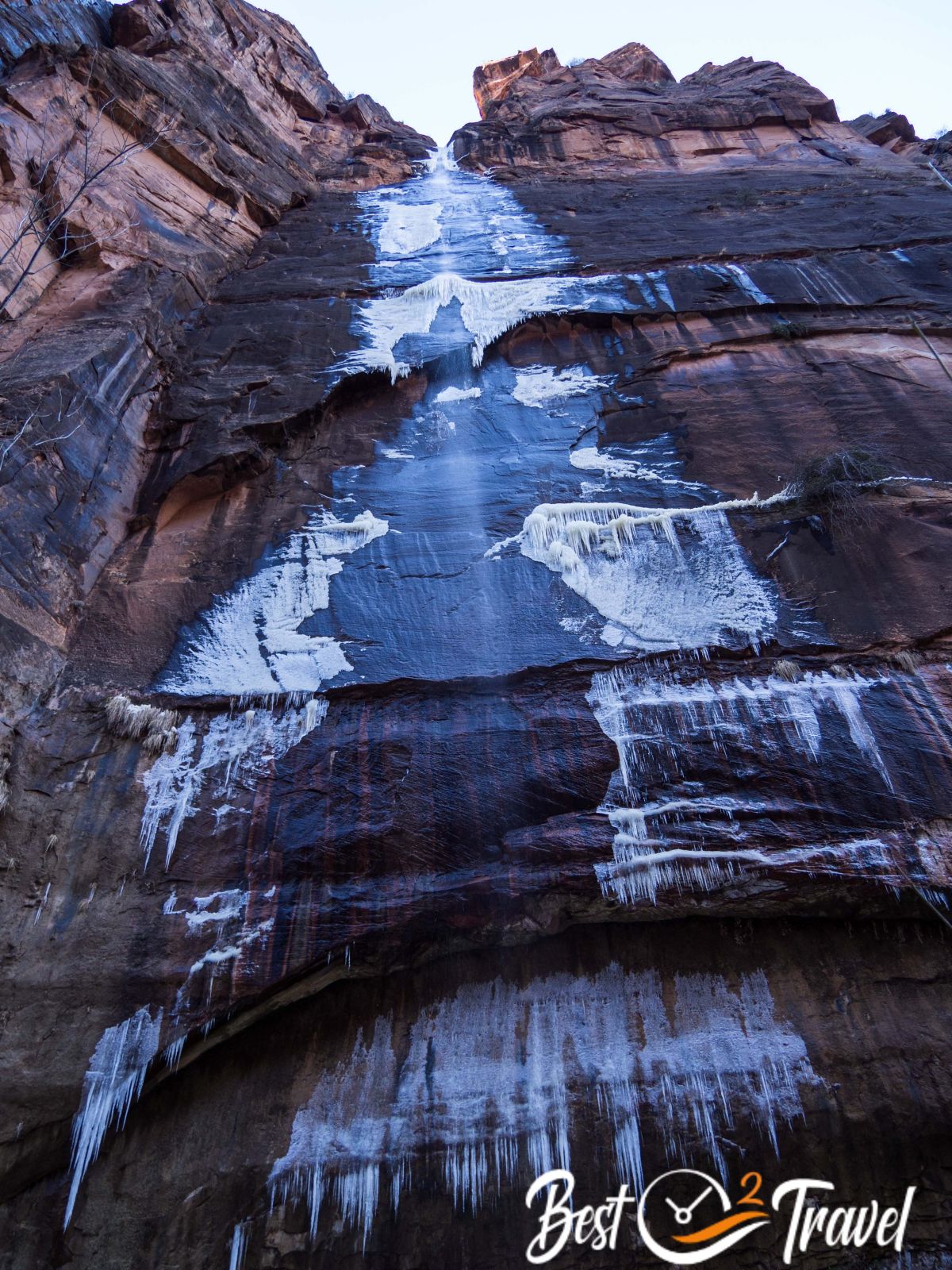
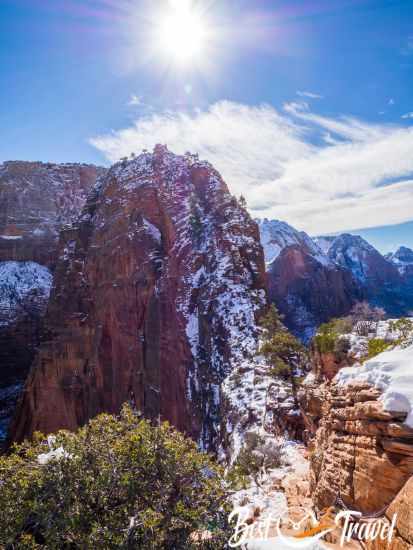
Winter also brings crisp, clear days and deep‑blue skies, perfect for photography and far better than the hazy summer atmosphere. While summer is the worst time for this hike—too hot, too crowded, and permits highly competitive—winter is the opposite: calmer, cooler, and surprisingly accessible.
Below, you’ll find everything you need for a winter visit to Zion and how to master Angels Landing in winter—including permit tips, trail conditions, safety advice, and packing lists for every season.
Angels Landing Trail Facts
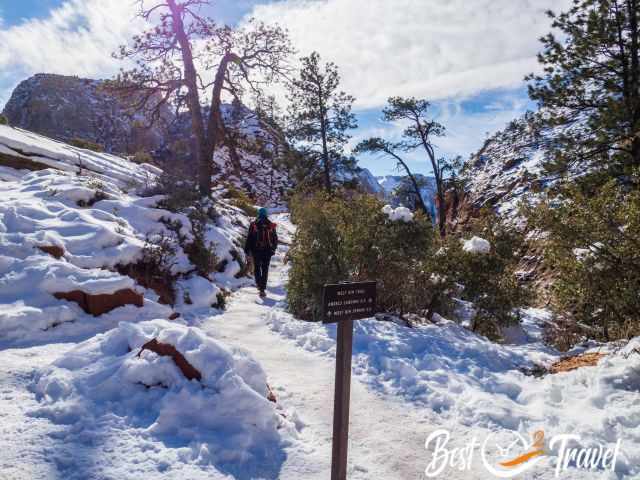
- Distance — 5.4 miles / 8.7 km round‑trip
- Elevation Gain — 1,488 ft / 454 m
- Duration — 3–4 hours return
- Difficulty — Moderate to strenuous, depending on experience
- Permit System — 800 permits are issued daily (Seasonal + Day‑Before Lottery). This reduces crowding but does not guarantee an empty trail in peak season.
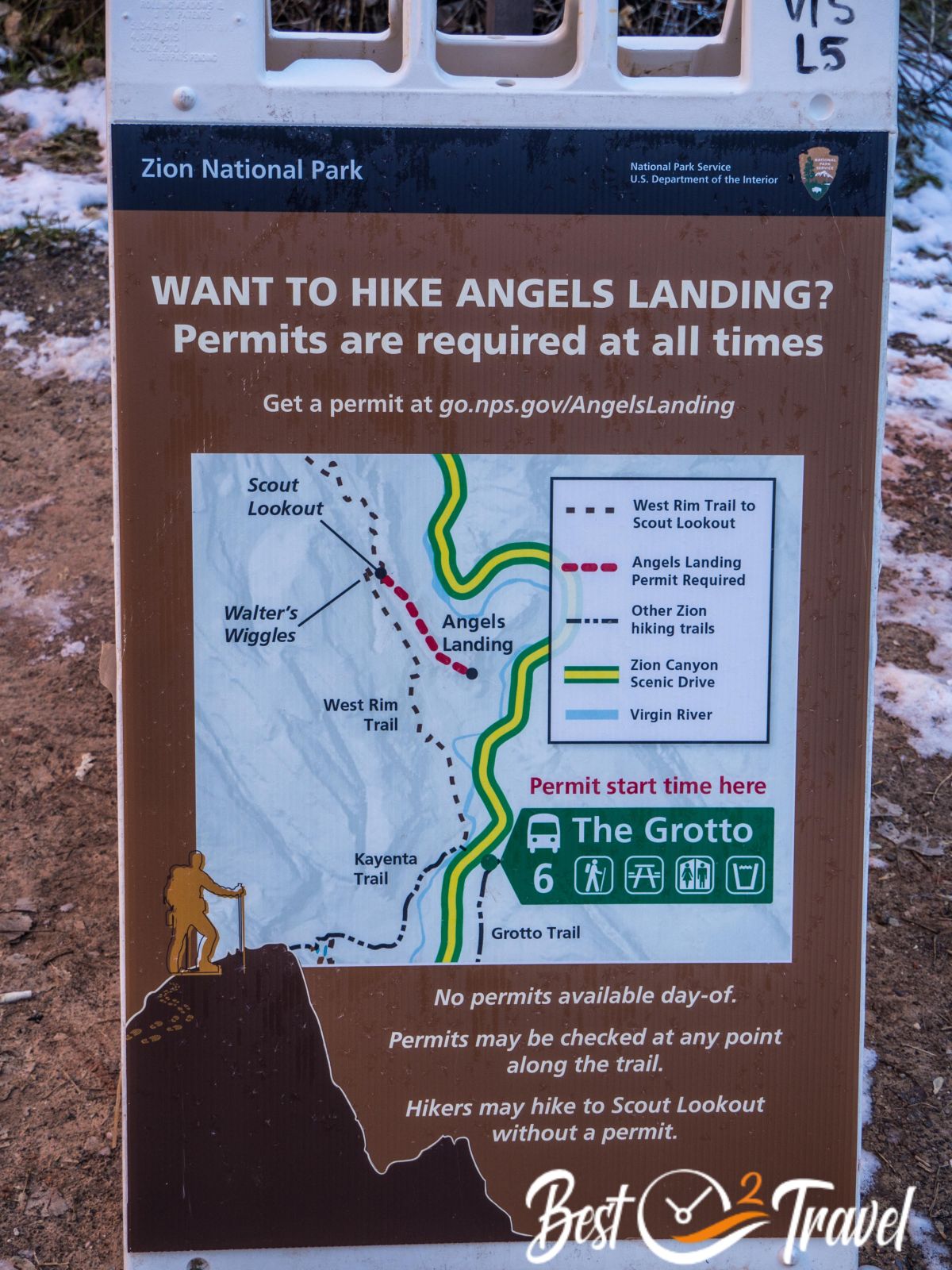
- Trail Route — West Rim Trail → Scout Lookout → final 0.5 miles on the chain section
- Map — A hiking map from apps like Locus Map or AllTrails gives a great overview - Hiking Map by Locus Map App
This section is perfect right after your intro because it gives readers the essential facts immediately.
Angels Landing Trail Description
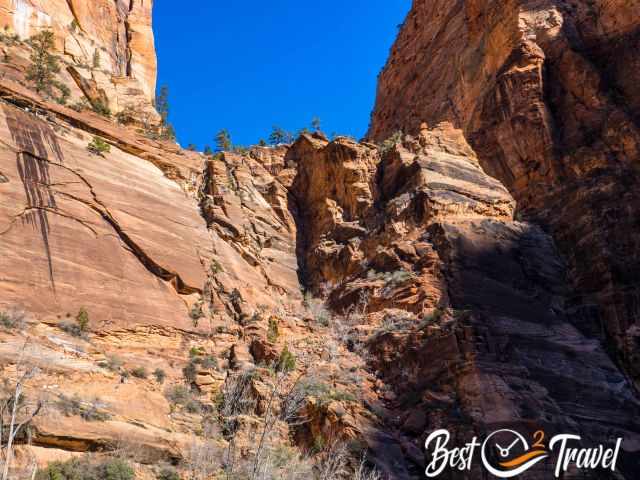
The hike to Angels Landing begins at The Grotto (Shuttle Stop #6), one stop after Zion Lodge. Cross the road, walk over the bridge above the Virgin River, and follow the signs for the West Rim Trail and Angels Landing. The first section is a wide, paved path that gradually climbs and already offers beautiful views into Zion Canyon.
Refrigerator Canyon
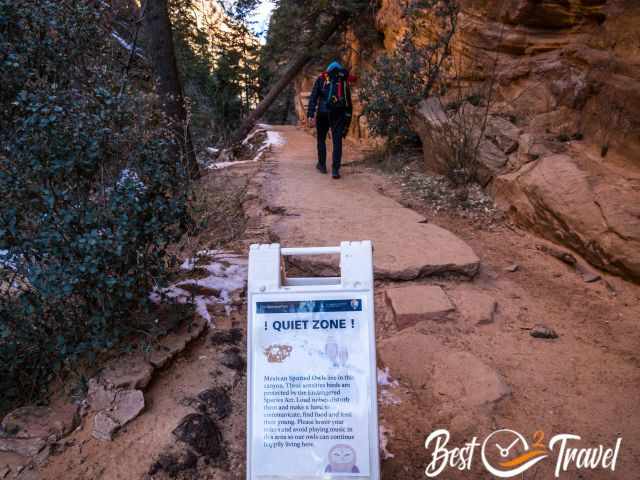
After the initial ascent, the trail narrows and enters a tall, shaded canyon with massive walls on both sides. This is the Quiet Zone, created to protect the endangered Mexican Spotted Owl. Refrigerator Canyon is the coolest part of the hike — a welcome break in summer and a chilly section in winter.
Walter’s Wiggles
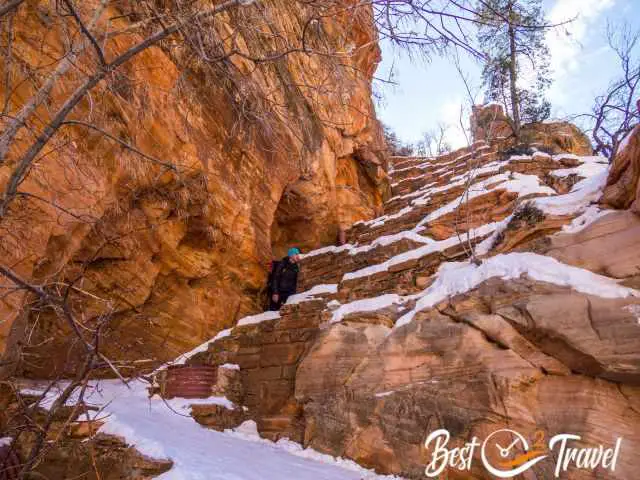
At the end of Refrigerator Canyon, you reach the famous Walter’s Wiggles — 21 tight switchbacks carved into the rock. This section is steep but short. In winter, it can be icy because it stays in the shade, so microspikes are extremely helpful.
Scout Lookout
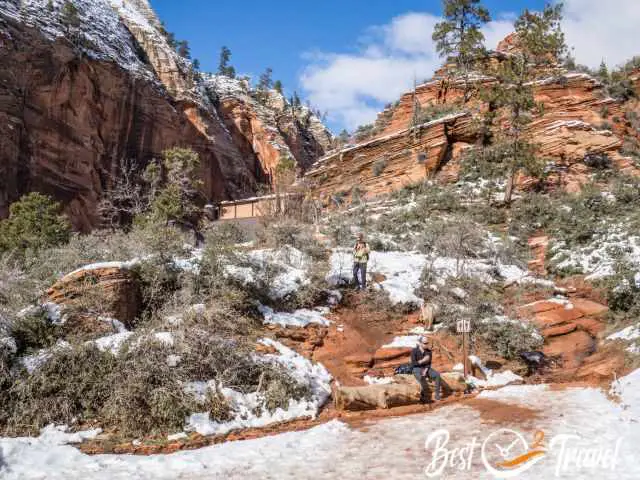
After a brief narrow stretch, you arrive at Scout Lookout, a wide viewpoint with restrooms and space to take a break. Here the West Rim Trail continues left, while the route to Angels Landing turns right. This is also the permit checkpoint — only hikers with a valid permit may continue.
Scout Lookout already offers fantastic views and is a great turnaround point for anyone with a fear of heights.
The Chain Section: The Final 0.5 Miles
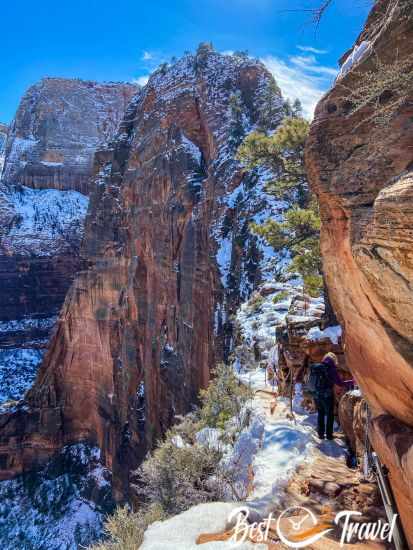
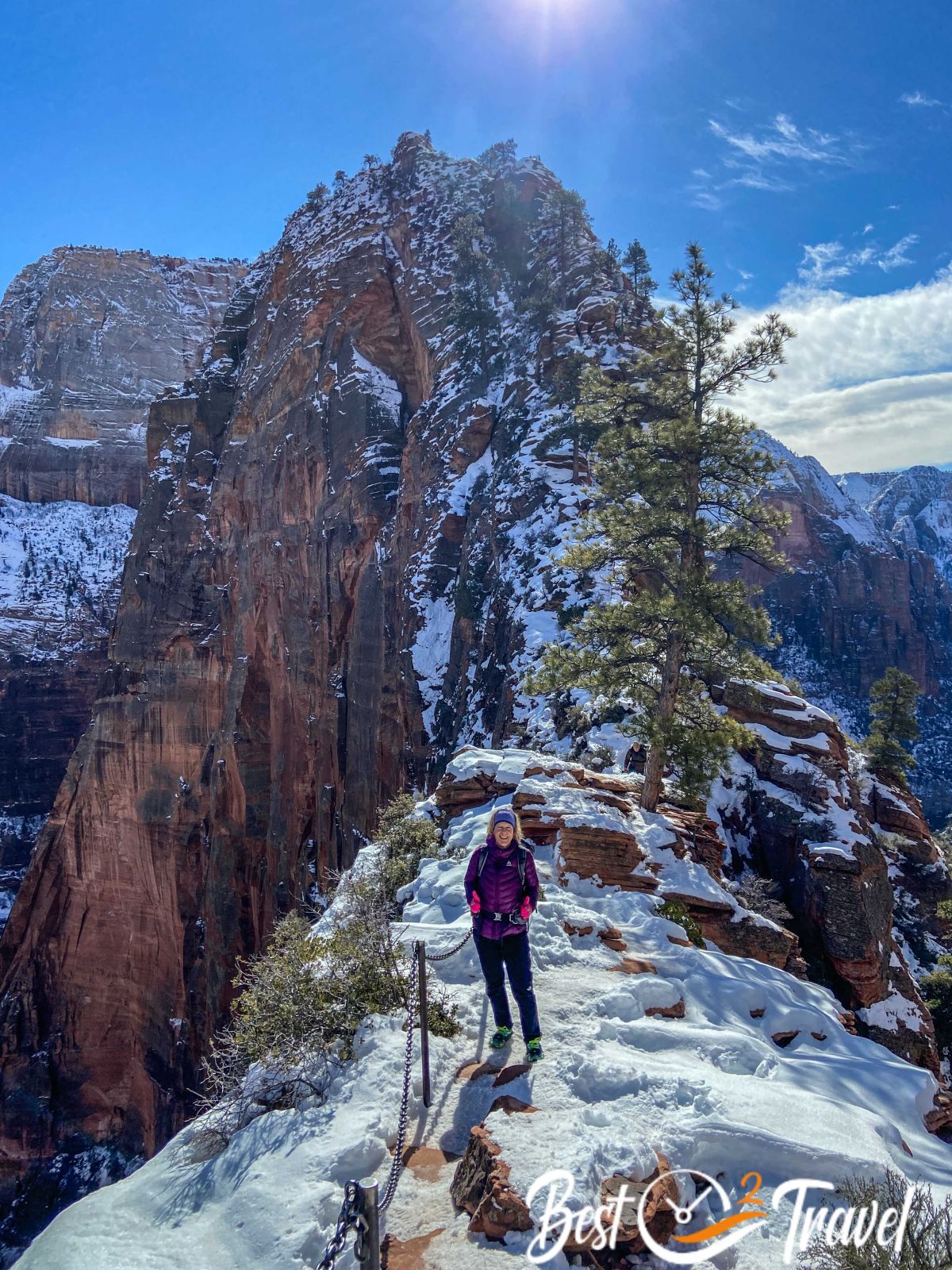
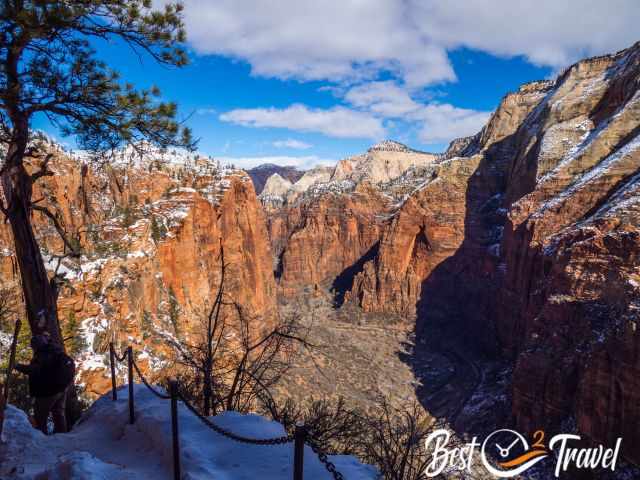
This is the most challenging and exposed part of the hike. The ridge is narrow — sometimes only 4–5 feet wide — with steep drop‑offs on both sides. If you feel uncomfortable, this is the place to turn around.
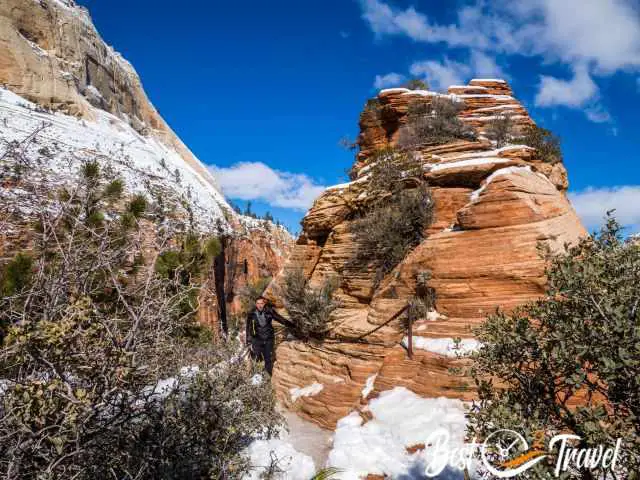
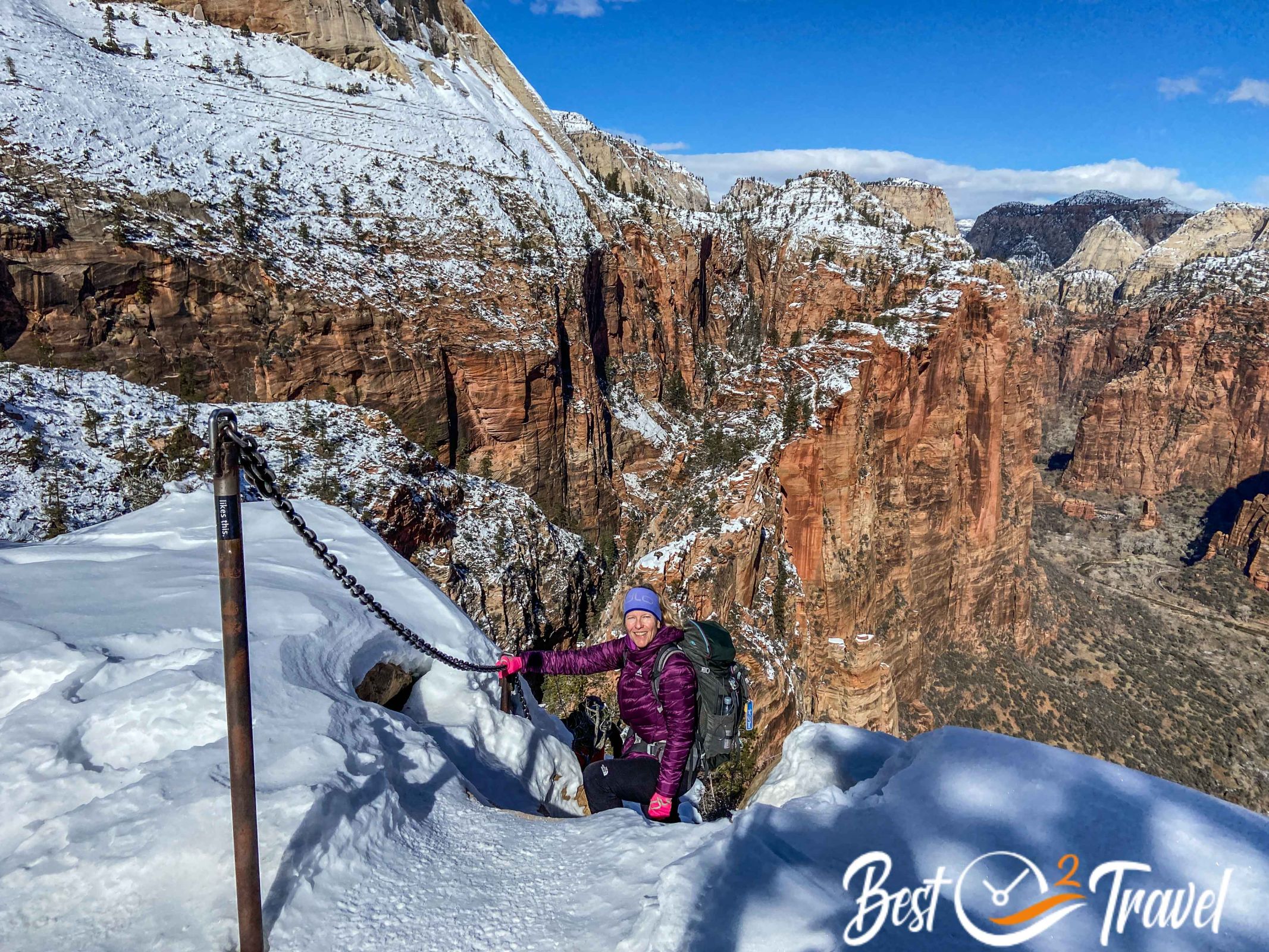
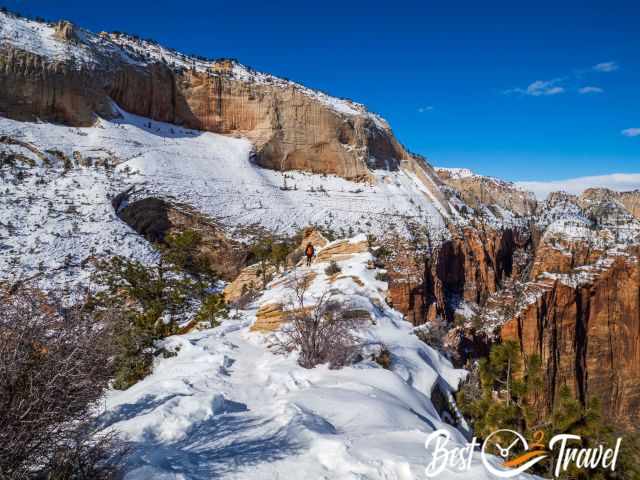
Despite its reputation, many hikers find the chain section less scary than expected, especially in winter when snow softens the visual exposure. The chains provide excellent grip, and with crampons or microspikes, traction is solid even on icy patches.
Take your time, stay focused, and let other hikers pass safely.
The Summit of Angels Landing
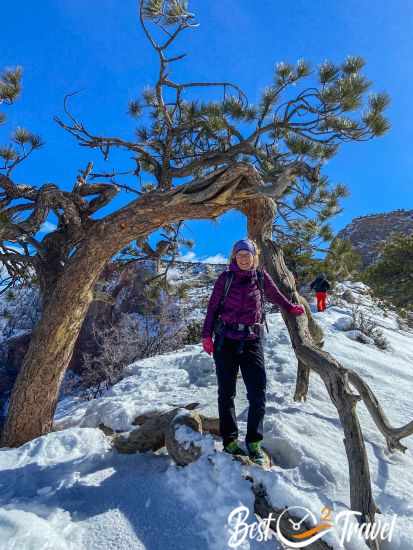
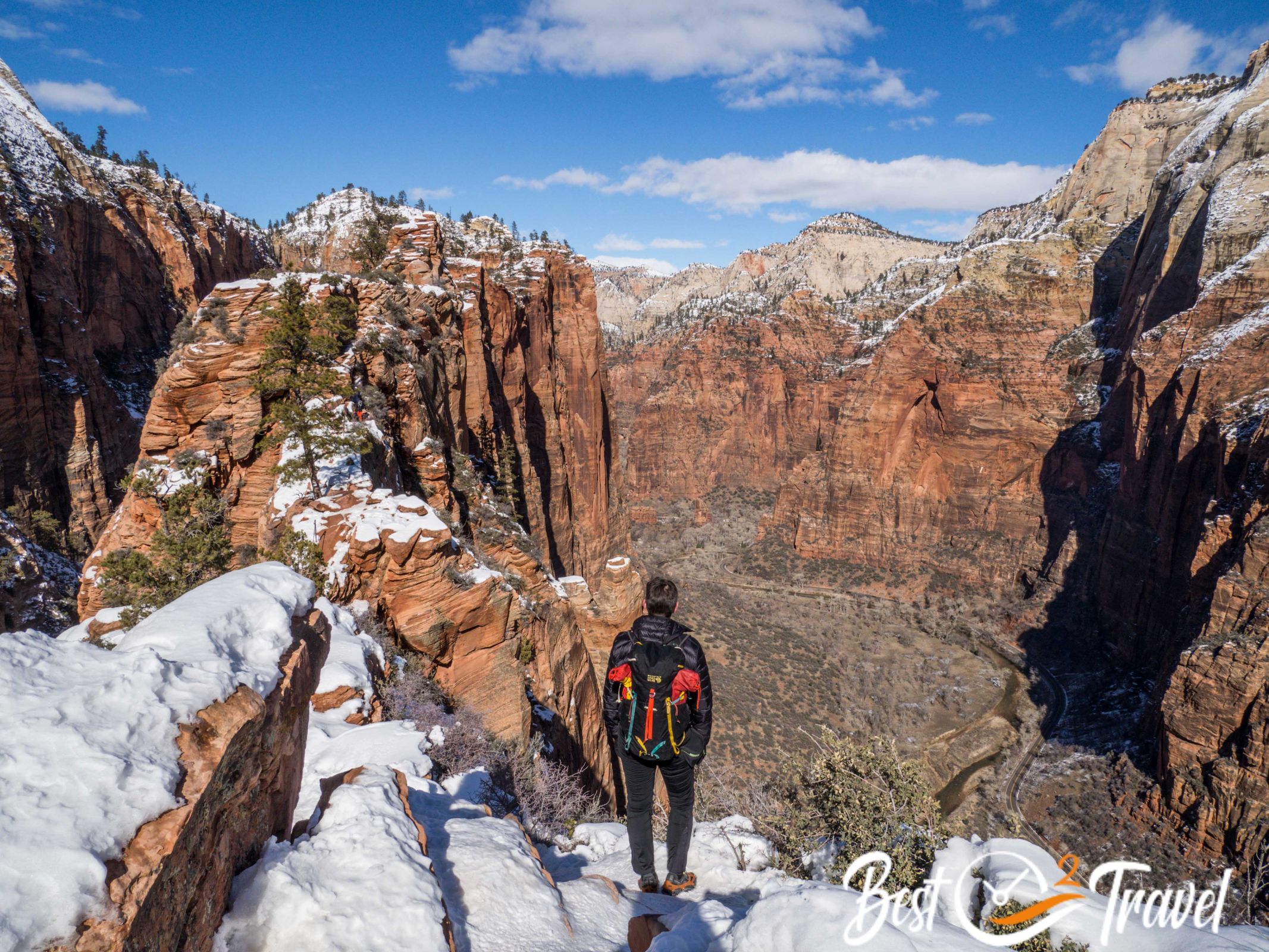
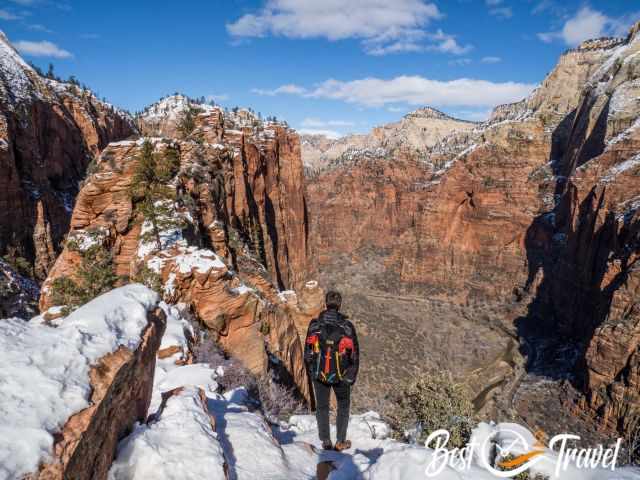
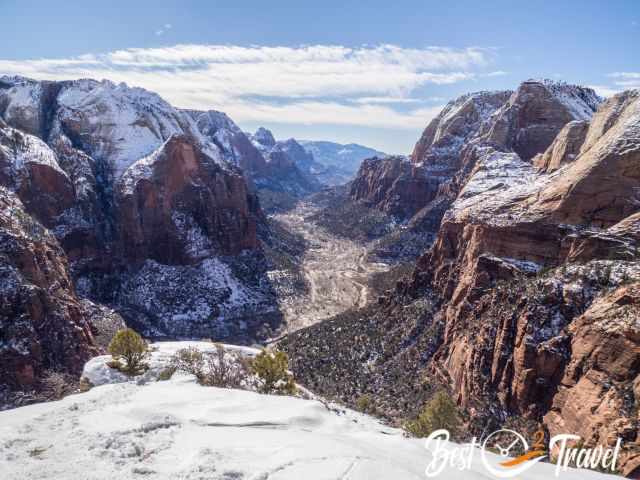
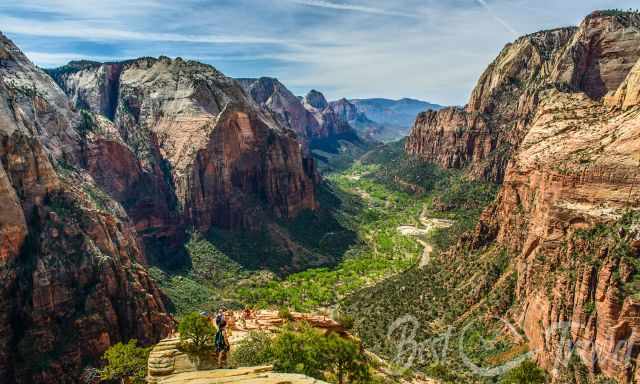
At the top, you’re rewarded with one of the most iconic views in the United States:
- the deep, winding Zion Canyon
- the orange and red sandstone cliffs
- the miniature‑looking Scenic Drive far below
- Observation Point towering across the canyon
This is the perfect place to rest, enjoy a snack, and soak in the scenery. We enjoyed a hot tea here — unforgettable.
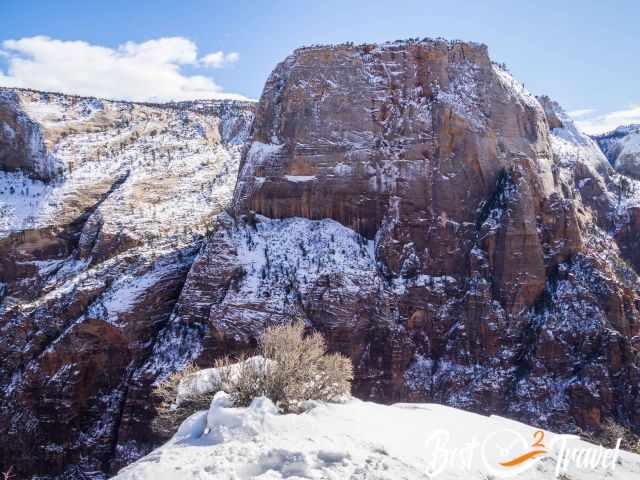
The return hike feels easier because you already know the tricky parts. Stay fully concentrated on the chain section until you’re back at Scout Lookout.
Final Thoughts
The Angels Landing Trail is an unforgettable adventure — steep, exposed, and thrilling, but incredibly rewarding. With the right preparation and respect for the terrain, it’s one of the best half‑day hikes in the world.
Parking for Angels Landing in Winter
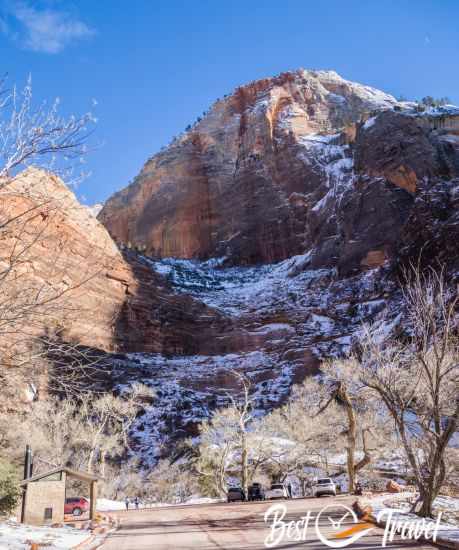
Parking at The Grotto (Trailhead) is limited, even in winter. If the lot is full, you can park at Zion Lodge and walk from there. In winter, this is easy because you can drive your own vehicle through Zion Canyon — a huge advantage compared to the rest of the year. Google Maps Location
Shuttle Bus for Angels Landing
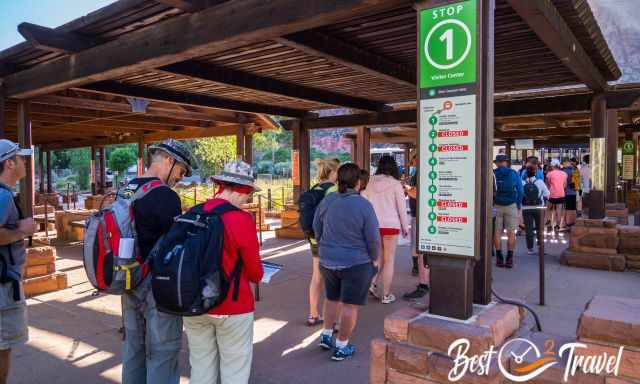
From March to November, and on some holidays, you must take the Zion Shuttle from Springdale or the Visitor Center to Shuttle Stop #6 – The Grotto.
During busy months, the shuttle system can add 1–2 hours to your start time. If you have a permit, staying at Zion Lodge gives you more flexibility because you can board the shuttle directly from the lodge.
Winter Exception
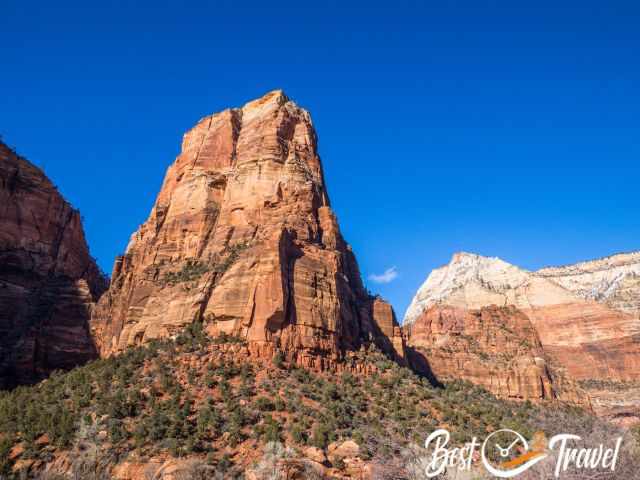
From December to February, the shuttle does not operate (except around Christmas/New Year). This means you can:
- drive your own car
- park at The Grotto
- start your hike whenever you want
This is one of the biggest advantages of hiking Angels Landing in winter.
Where to Stay
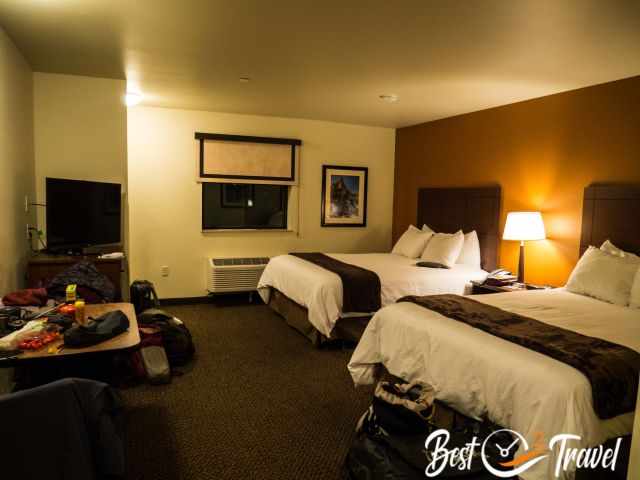
Our Hotel Recommendation Close to Zion
If you’re looking for a comfortable and affordable place to stay near Zion National Park, we highly recommend My Place Hotel in Hurricane. We’ve stayed here several times and love it for its:
- quiet rooms
- friendly staff
- kitchenette with a huge fridge
- washing machine and dryer
- plenty of parking
- windows you can actually open
- well‑equipped supermarket nearby
It’s the perfect base for Angels Landing, Zion Canyon, and Kanarra Falls, and the prices are reasonable even in peak season.
👉 Check availability at My Place Hotel in Hurricane
The Best Time to Hike Angels Landing
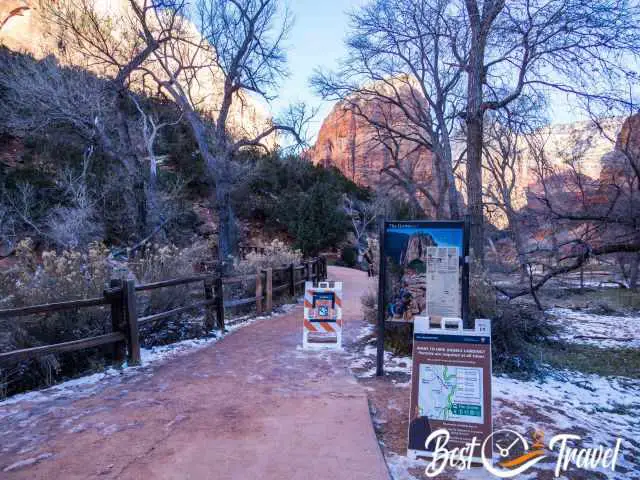
The best seasons for comfortable temperatures on Angels Landing are spring and fall. Weather is mild, days are longer, and the trail is usually dry. But despite this, our absolute favorite time to hike Angels Landing was winter. It wasn’t too cold, the sun was shining, and — best of all — the trail was almost empty. With a good weather window, you can experience one of the most iconic hikes in the U.S. in near solitude.
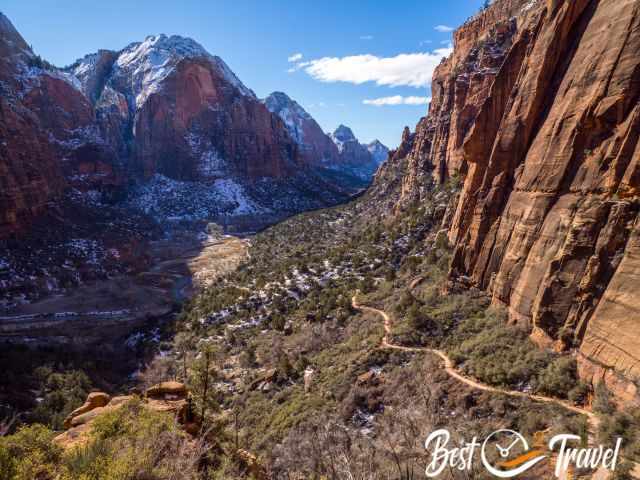
In summer, the experience is completely different. The trail has almost no shade, so you’re forced to start extremely early. Most hikers must take the first shuttle at 6 a.m., and even then, the heat builds quickly. Afternoon thunderstorms are common, making the rocks slippery and dangerous. If you don’t get an early time slot for the Angels Landing permit, you’re pushed into hiking during the hottest part of the day.
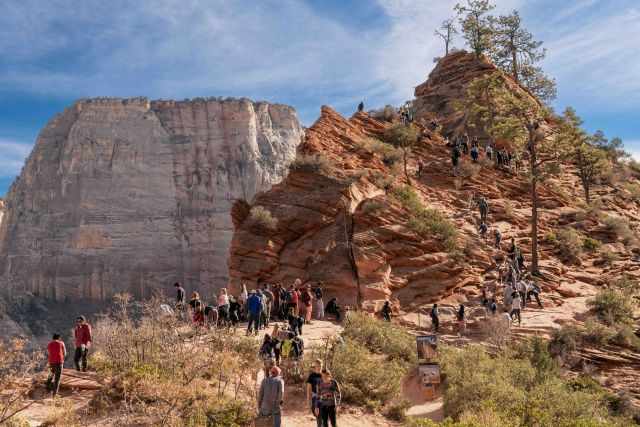
Winter avoids all of this. No shuttle, no heat, no crowds, no time-entry permit — just crisp air, blue skies, and a peaceful canyon. With the right gear and a bit of luck with the weather, winter can easily become the best time to hike Angels Landing.
Angels Landing – The Most Popular Hike in Zion
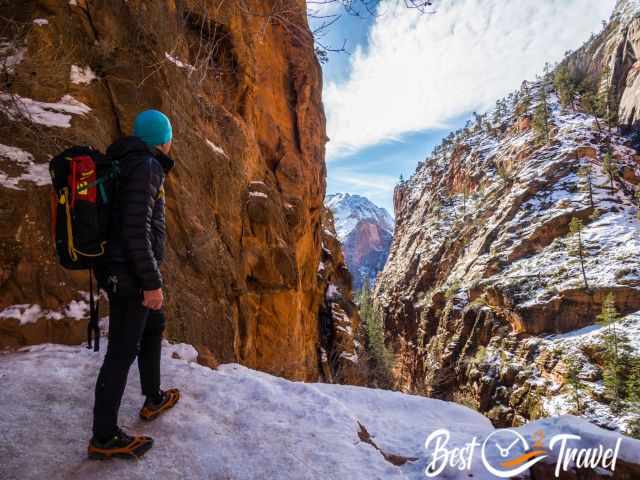
Angels Landing (5,787 ft / 1,764 m) is one of the most iconic half‑day hikes in Zion National Park. Because the narrow, exposed chain section became dangerously crowded, the National Park Service introduced a permit system in April 2022. This system dramatically improved safety and reduced congestion on the final ridge.
Angels Landing Permit Lottery
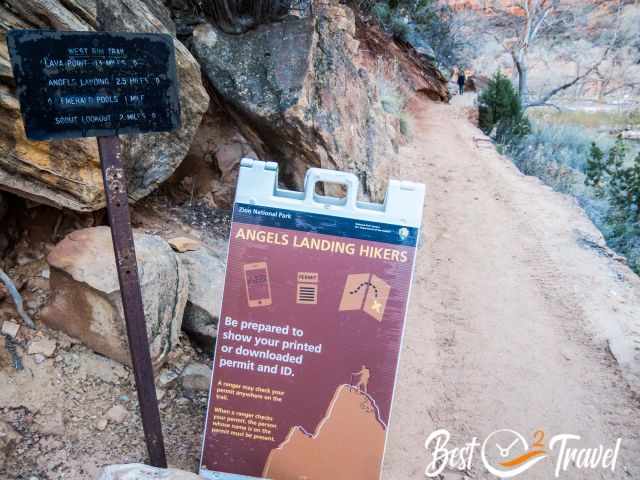
Zion uses a lottery system similar to The Wave or Half Dome. There are two types of lotteries:
- Seasonal Lottery (apply months in advance)
- Day‑Before Lottery (apply one day before your hike)
Both are explained below.
Seasonal Lottery
| Apply Date | Hiking Months | Notification |
| January 1-20 | Spring from March 1 until May 31 | January 25 |
| April 1-20 | Summer June 1 until August 31 | April 25-July 20 |
| July 1-20 | Fall 1st September until 30th Nov. | July 25-20 Oct. |
| October 1-20 | Winter December 1 until February 29 | October 25th |
The Seasonal Lottery is ideal if you want to plan your trip ahead of time.
- You can apply from the 1st to the 20th of the month.
- You apply for a future hiking month (e.g., apply in January for April).
- You can choose up to 7 preferred dates.
- Results are emailed on the 25th of the same month.
Tip: Mid‑week dates have the lowest demand, especially in winter.
Day‑Before Lottery
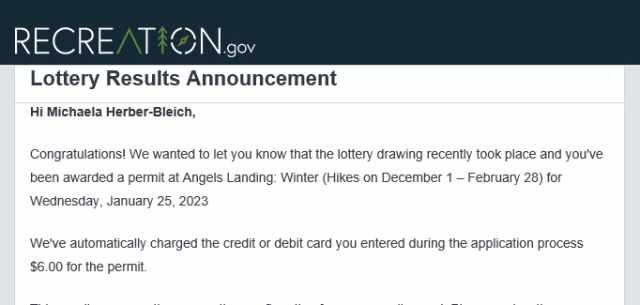
This is the lottery you used — and it’s perfect for winter hikers.
- Applications open from 12:01 pm to 3 pm (Mountain Time) one day before your hike.
- You receive results around 4 pm the same day.
- This allows you to pick the best weather day during your trip.
Permit Fees
- $6 non‑refundable application fee (covers up to 6 people)
- $3 per person if you win a permit
For two people: $12 total For four people: $18 total
Angels Landing Starting Times
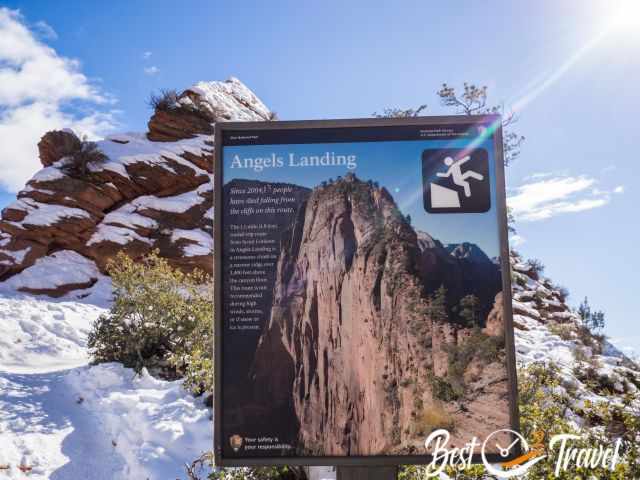
To spread hikers out on the chain section, Zion uses three starting windows:
- Before 9 am
- 9 am – 12 pm
- After 12 pm
These times are based on starting at The Grotto trailhead.
Important: If the shuttle is running (spring–fall), it can take 1–2 hours to reach the trailhead. In winter, you can drive directly to The Grotto.
Best Time to Win an Angels Landing Permit
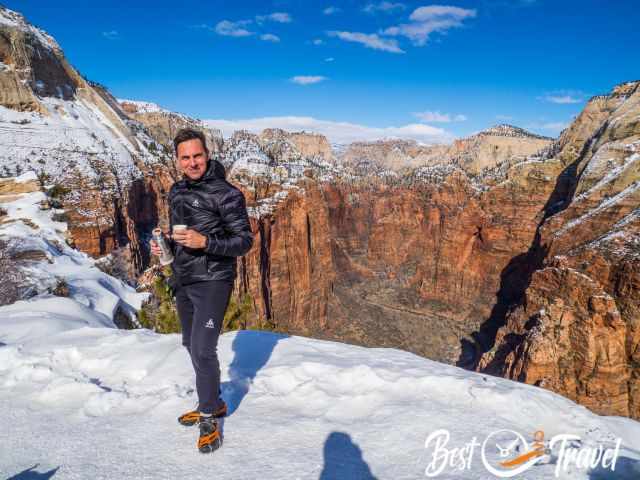
Winter is the easiest season to win a permit.
- Fewer hikers apply
- More permits remain available
- Weather windows can be excellent
- You can choose your day based on the forecast
- Hotels are easier to book last‑minute
You did exactly the right thing: You watched the weather, stayed flexible, and applied the day before. This strategy works extremely well from December to February. Zion Weather Forecast
4 Reasons Why We Applied for an Angels Landing Permit in Winter
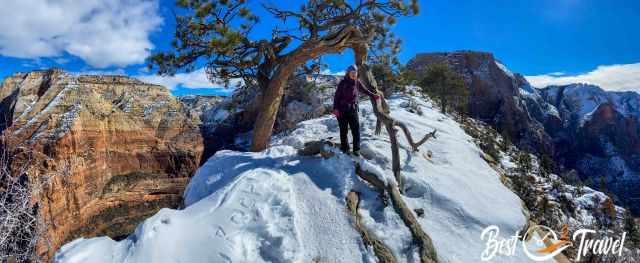
Winter is by far the easiest and most enjoyable season to secure an Angels Landing permit, and our experience confirmed it. Here are the four reasons why we chose to apply in January — and why we would do it again.
1) More Permits Than Applicants
During mid‑week in winter, the number of people applying is often lower than the number of available permits. We met only around 10 hikers on the entire chain section and at the summit — despite perfect blue‑sky weather. The solitude made the experience unforgettable.
2) Freedom to Start at Any Time of Day
In winter, you’re not forced to start at sunrise. There’s no shuttle, no heat, and no pressure to beat the crowds. You can begin your hike whenever the temperature feels comfortable. Just keep in mind that parking at The Grotto is limited, so arriving earlier still helps.
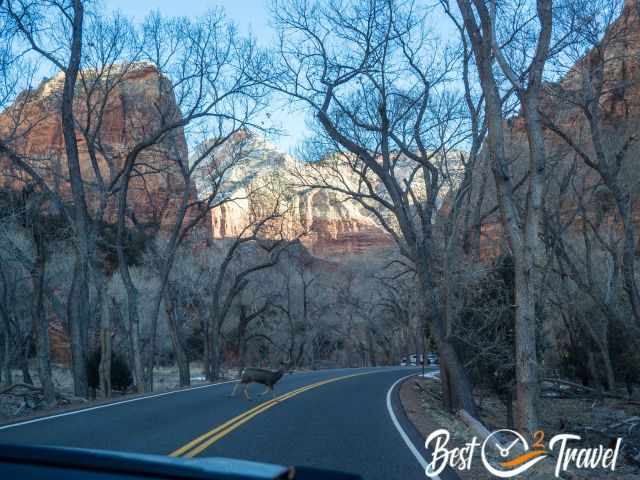
3) You Can Drive Through Zion Canyon
From December to February, the shuttle is paused (except around Christmas/New Year), so you can drive your own car along the Zion Canyon Scenic Drive. For us, this was the biggest advantage: We could stop wherever we wanted, enjoy viewpoints in peace, and experience Zion like in former times — without crowds or shuttle schedules.
4) Lower Accommodation Prices
Winter is the off‑season, and hotel prices drop significantly. We paid half the price for our room in Hurricane compared to June. None of the hotels we stayed at were fully booked, and last‑minute reservations were easy.
Bonus Tip: Apply Last Minute
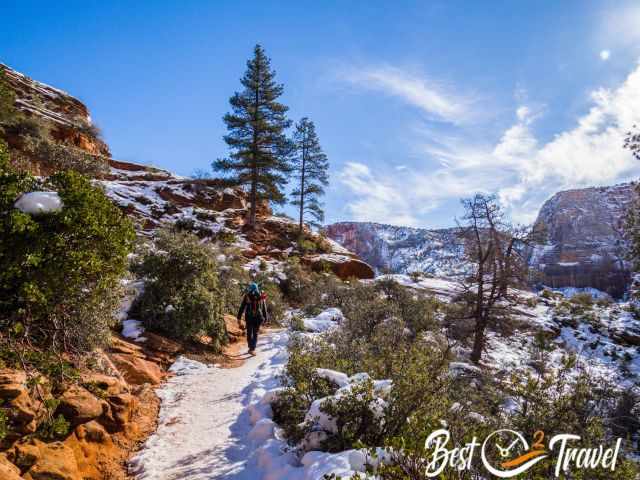
For winter, we strongly recommend applying via the Day‑Before Lottery. This strategy worked perfectly for us and allows you to:
- choose the best weather day
- avoid storms or icy conditions
- react if the NPS temporarily closes the trail
Which Days Are Best to Win an Angels Landing Permit?
You increase your chances significantly when you apply mid‑week.
- Wednesday has the lowest demand
- Monday and Friday are busier
- Weekends are the hardest
In winter, the odds are even better. On our January hike, we met only about 10 hikers on the chain section and at the summit — despite perfect blue‑sky weather. If the forecast looks good and it’s not raining or snowing, winter is an excellent time to apply. Just make sure you have the right gear.
Can I Hike Angels Landing Without a Permit?
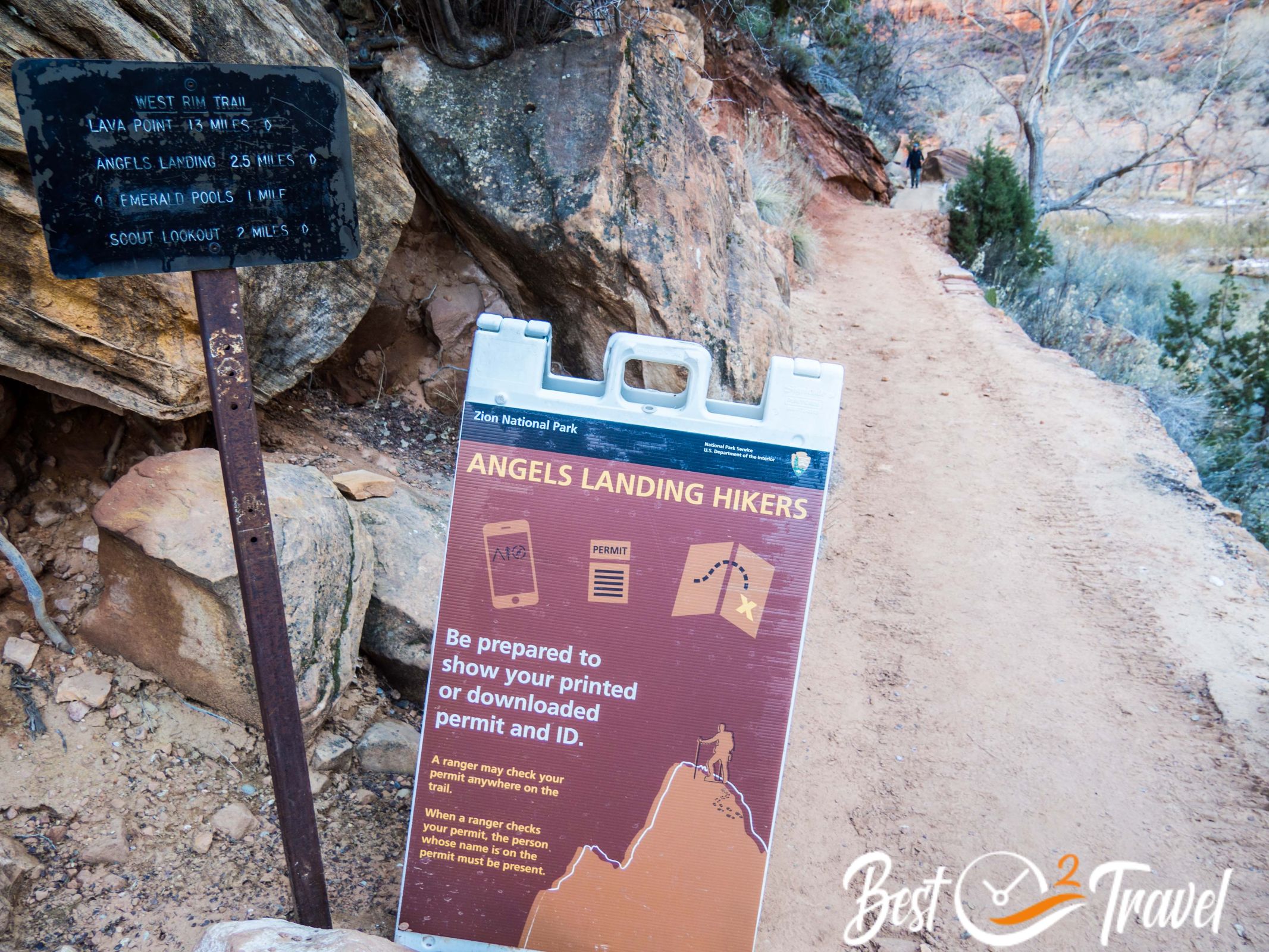
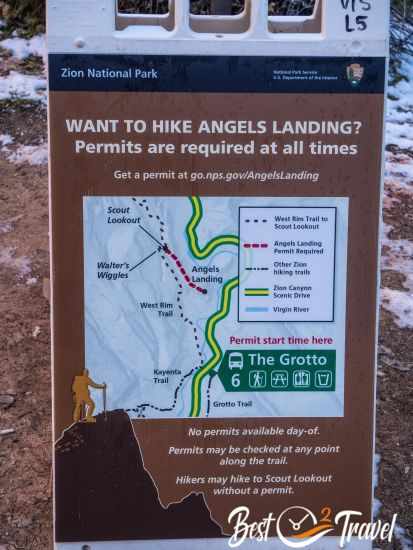
No — you MUST have a permit for the final 0.5 miles from Scout Lookout to the summit, day or night.
If you get caught without a permit:
- Fines can reach up to $5,000
- You may even face jail time
- Rangers check permits and IDs regularly
You are allowed to hike to Scout Lookout, which is already a fantastic viewpoint. Many hikers turn around here when they see how narrow and exposed the ridge is.
But do not continue past the sign without a permit — rangers patrol this section continuously.
Can I Change or Cancel My Angels Landing Permit?
You cannot:
- change the date
- change the time slot
- change the group size
- transfer the permit to someone else
You can cancel the permit so others get a chance. If someone in your group can’t join, please cancel — it helps other hikers.
Can You Do Angels Landing and The Narrows in One Day?
My honest answer: No — not realistically.
Here’s why:
1) Angels Landing is physically demanding
You need water, food, and recovery time afterward.
2) The Narrows is a full‑day hike
Even in summer, hiking to Big Spring and back takes the entire day, including shuttle time. We did it in June — it took us all day. My detailed Narrows Guide plus Packing Tips
3) You need extra gear for the Narrows
- water shoes
- neoprene socks
- dry bag
- hiking poles
You don’t want to carry all this in your backpack to the top of Angels Landing.
Better alternative
After Angels Landing, enjoy the scenery and hike something shorter like Emerald Pools.
Is Angels Landing Safe to Hike?
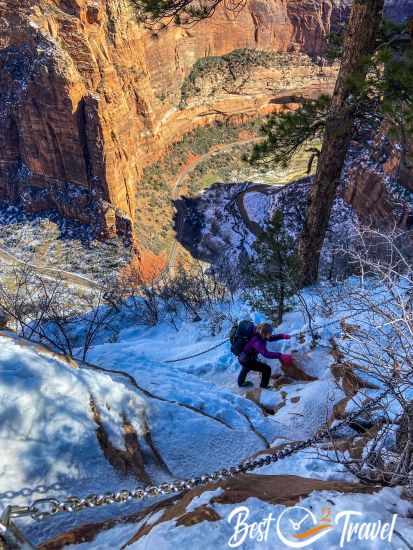
Accidents and fatalities have happened — but preparation makes a huge difference.
Ask yourself:
- Did you sleep well?
- Are you confident today?
- Do you have a fear of heights?
If you’re anxious or unsure, consider stopping at Scout Lookout.
Winter safety
- Spikes/crampons are essential
- Ice forms on shaded sections
- Traction makes the chain section much safer
Summer safety
- Drink plenty of water
- Add electrolytes
- Start early to avoid heat
The NPS maintains the trail extremely well, and the permit system has made the chain section much safer by reducing crowding.
But remember: Your life is more important than any summit and selfie. If you or your partner feel unwell, or if weather changes — turn around.
Is It Worth Hiking Angels Landing or Just Until Scout Lookout?
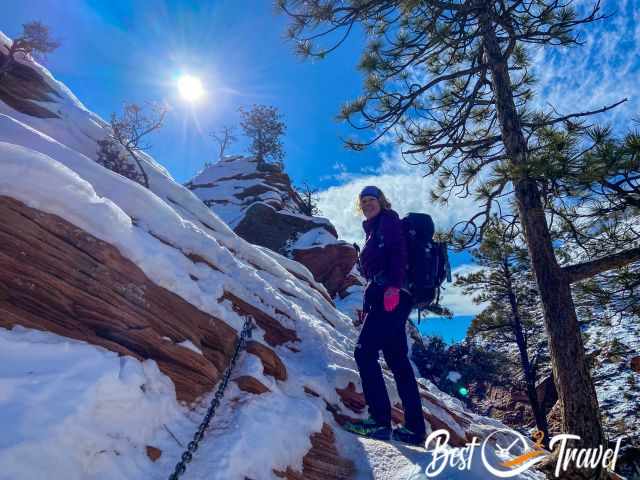
Scout Lookout offers breathtaking views, and many hikers stop here — especially those with fear of heights.
But here’s the truth:
- If you don’t have a permit, I personally would skip the hike. Standing at the sign that says “0.5 miles to Angels Landing” and being forced to turn around is frustrating.
- If you do have a permit, the final ridge is one of the best half‑day hikes in the world.
If you’re not experienced or you’re afraid of heights, Scout Lookout is a perfect and safe turnaround point.
Watching the Sunrise from Angels Landing
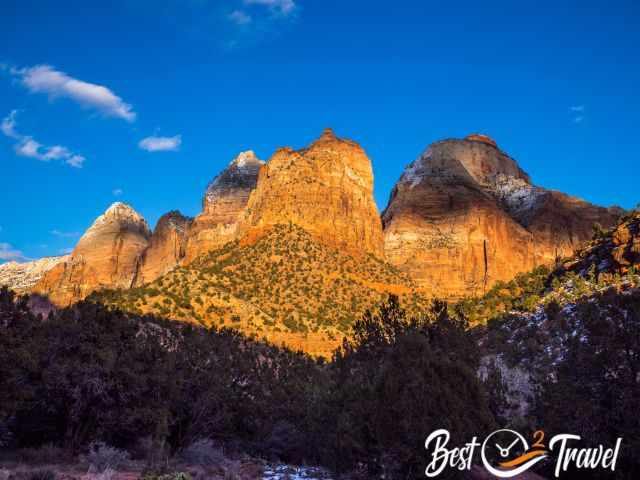
Some people recommend watching sunrise from the summit — but I do not recommend this neither in summer nor winter unless you already know the trail extremely well.
Why? First of all, you would hike the exposed chain section in the dark with headlamps only which is extremely dangerous! A mistake here can be fatal. Instead, enjoy the sunset from Zion Canyon — it’s spectacular and safe.
Packing List for Angels Landing in Winter
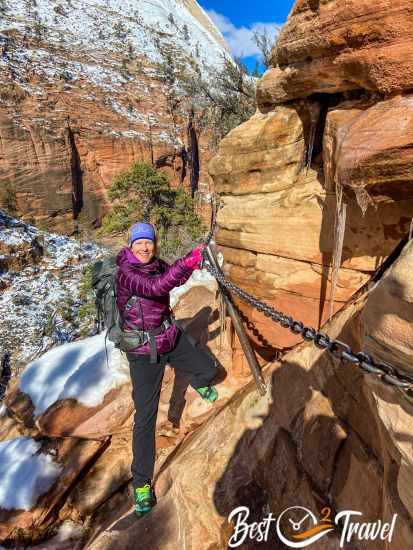
Winter conditions in Zion can be icy, windy, and cold — especially on the shaded chain section. The right gear makes the hike not only safer but far more enjoyable.
- Spikes / Crampons — Essential for traction on icy sections, especially Walter’s Wiggles and the chain ridge.
- Layered Clothing — Merino base layer, down jacket, down vest. Merino keeps you warm even when sweating.
- Warm Accessories — Gloves (critical for the cold chains), beanie, scarf or buff.
- Hiking Poles — Useful for the first 2 miles, but you must stow them for the final 0.5 miles because you need both hands on the chains.
- Insulated Bottle — We carried hot tea, which was perfect at the summit where a cold wind was blowing.
- Windproof Outer Layer — The summit can be windy even on sunny days.
- Good Footwear — Waterproof or water‑resistant hiking shoes with excellent grip.
Packing List for Angels Landing from Spring to Fall
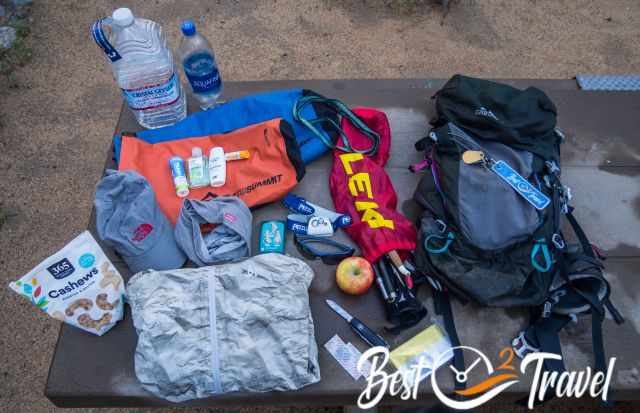
Temperatures rise quickly, shade is minimal, and the chain section can heat up. Hydration and sun protection are key.
- Plenty of Water — There is no water refill on the trail.
- Electrolytes — I always add electrolytes during hot hikes for energy and better concentration.
- Snacks — Nuts, fruit, or energy bars for quick fuel.
- Shoes with Good Traction — Don’t go in sneakers. I’ve used INOV for years and love their flexibility and grip.
- Half‑Finger Gloves — Mountain‑bike style gloves protect your hands on the chains.
- Sun Protection — Sunscreen, hat, sunglasses. Even in winter, there is almost no shade.
- Light Layers — Mornings can be cool, afternoons hot.
I only recommend gear I personally use. I’m not paid by any brand — I simply love INOV shoes, Odlo clothing, and Merino wool layers and socks for hiking.
Zion Tip: Don’t Miss the Subway — Zion’s Hidden Gem
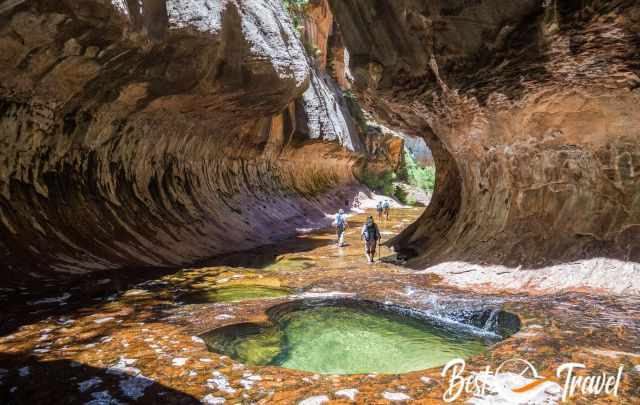
If you’re looking for another unforgettable adventure in Zion, consider the Subway (Left Fork) — a spectacular slot canyon shaped like a tunnel. It’s far less known than Angels Landing, but also requires a permit, with only 80 permits issued per day. The good news: the chance of getting a last‑minute permit is much higher than for Angels Landing.
We hiked the Subway in May and absolutely loved the wilderness feel, the solitude, and the unique rock formations. If you want to escape the crowds and experience a true backcountry trail, the Subway is one of Zion’s best hidden gems.
➡️ Read more in my full Subway Hiking Guide
Where We Stayed Near Zion
We stayed at My Place Hotel in Hurricane and loved it — quiet rooms, friendly staff, a kitchenette with a huge fridge, laundry facilities, plenty of parking, and a supermarket next door. It’s great value in every season and a perfect base for Zion and Kanarra Falls.
👉 Check availability at My Place Hotel in Hurricane
Who We Are
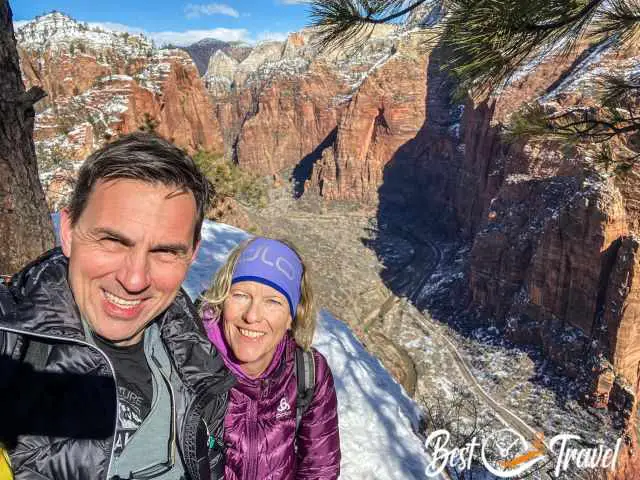
We’ve been travelling the world together for more than 25 years, always searching for the most beautiful landscapes, the quietest trails, and the kind of moments you never forget.
I’m passionate about sharing these places with you — honestly, transparently, and based on real experience. Travel writing today is tough: many fake travel websites rewrite content without ever visiting the destinations, and picture theft has become a serious issue. If you want to learn more about these schemes and how to spot them, read my article The Truth About Fake Travel Websites and Picture Theft.
If you enjoyed my Zion and Angels Landing Guide, it would mean the world to me if you shared it with friends, on social media, or subscribed to our YouTube Channel. Your support helps keep this website alive — and helps me continue creating detailed, honest guides for hikers and nature lovers.
Best Months to Visit
Location and Tips

Enjoy Zion National Park in all its glory and visit in the winter. In summer, you may leave Zion disappointed when lining up for hours waiting for the shuttle bus, sticking around hundreds of other hikers.